


How to Relieve Urinary Tract Pain Quickly and Safely
That raw, sharp burn when you pee gets your full attention fast. So does the weird mix of pressure, urgency, and frustration when your bladder keeps yelling “go now” and then gives you almost nothing.
If that's where you are, you probably don't want a lecture about wellness. You want to know how to relieve urinary tract pain right now, what's worth trying at home, and when it's time to stop guessing and get help.
Here's the blunt version. Some home tactics really can take the edge off. Heat helps. Water helps. Emptying your bladder fully helps. A few over the counter options can help a lot. But plenty of popular remedies are overhyped, and none of them should talk you into ignoring warning signs.
Table of Contents
- What Urinary Tract Pain Actually Feels Like and Why It Happens
- Immediate At-Home Steps to Calm the Burning and Pressure
- Popular Home Remedies and What the Evidence Actually Says
- Over-the-Counter Options That Target Bladder Pain Directly
- Supportive Habits That Reduce Ongoing Irritation
- When Urinary Tract Pain Means You Need a Clinician
- Your Recovery Plan and What Comes Next
What Urinary Tract Pain Actually Feels Like and Why It Happens
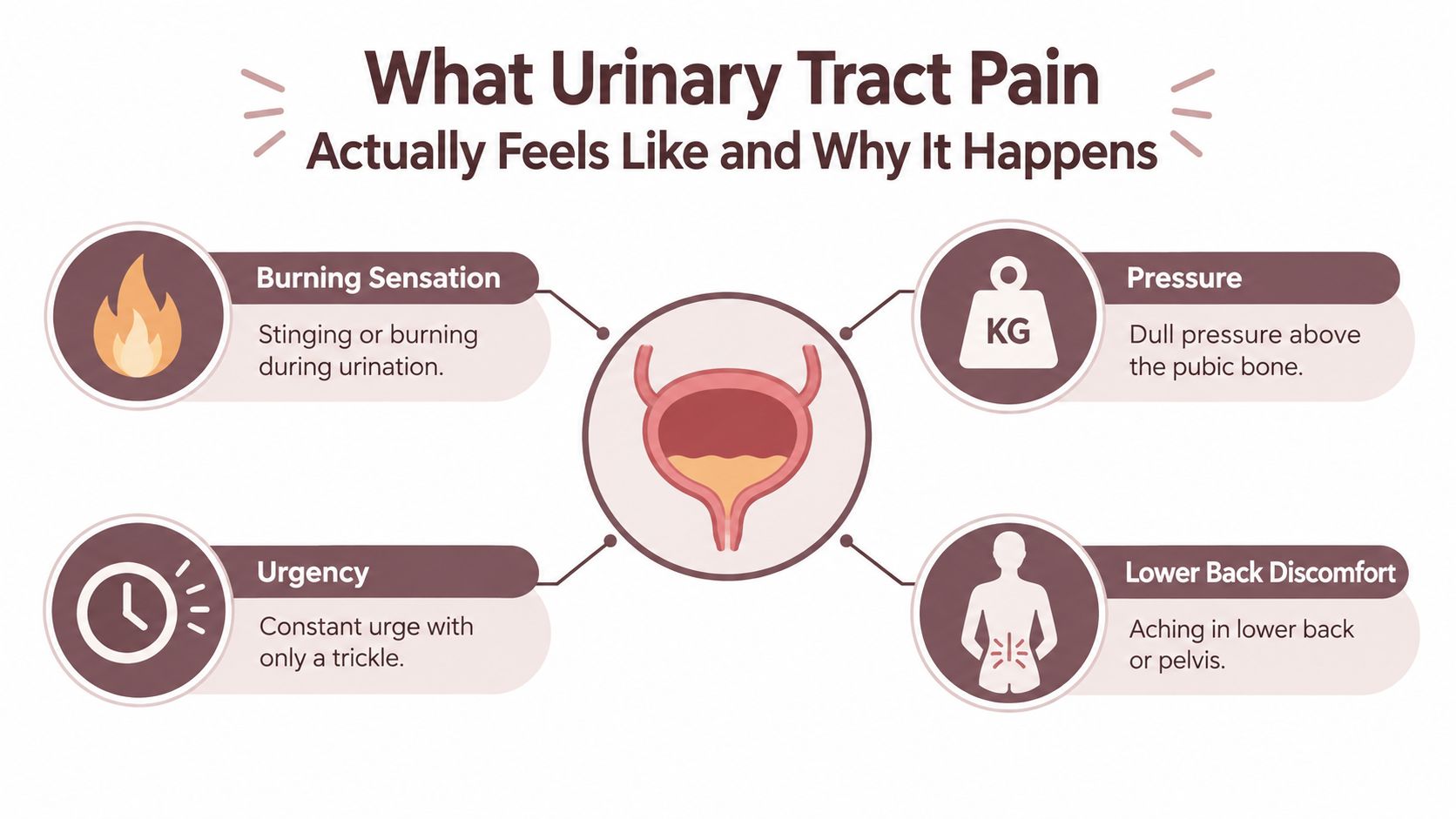
Urinary tract pain usually has a very specific misery to it. It's the sting as urine passes. It's the heavy, irritated pressure low in the pelvis. It's the constant urge to pee, followed by a disappointing trickle. Sometimes it's a deeper ache that makes you wonder whether this is still “just bladder irritation” or something more.
This isn't a niche problem. In 2019, urinary tract infections were estimated at 404.61 million cases worldwide, with 236,790 deaths and 520,200 DALYs, and the estimated case count was up 60.40% from 252.25 million in 1990 according to global UTI burden data summarized in this PMC review. The same review notes that older NIDDK data found lifetime UTI prevalence exceeded 53% in women and 14% in men, which tells you why so many people end up looking for fast relief.
Where the pain shows up matters
If the pain feels right at the urethra, it often shows up as stinging or razor-like burning during urination. If it feels centered above the pubic bone, that's more typical bladder irritation. If it shifts into the low back or flank, especially with nausea or feeling generally unwell, your kidneys may be involved and the situation gets more serious.
The reason these sensations feel so intense is simple. The lining of the urethra or bladder gets inflamed. Most often that's from bacterial irritation, but it can also happen with friction, dehydration, harsh cleansing products, menopause-related tissue changes, or bladder-irritating foods and drinks. Inflamed tissue doesn't like concentrated urine passing over it, so the burn gets louder every time you pee.
Practical rule: Burning plus urgency plus pressure usually points to irritation in the lower urinary tract. Add back pain, fever, chills, or vomiting, and you need medical evaluation, not just comfort care.
What home care can and can't do
Home care can reduce pain. It can calm spasm. It can make the next few hours more manageable. It cannot tell you for sure whether you have a UTI, a vaginal infection, a stone, an STI, pelvic floor tension, or another cause of urinary pain.
If you want a broader look at symptom patterns and supportive care, Momotaro's guide to urinary tract discomfort is a useful companion. But if you're in active pain, focus first on relief and on spotting red flags early.
Immediate At-Home Steps to Calm the Burning and Pressure
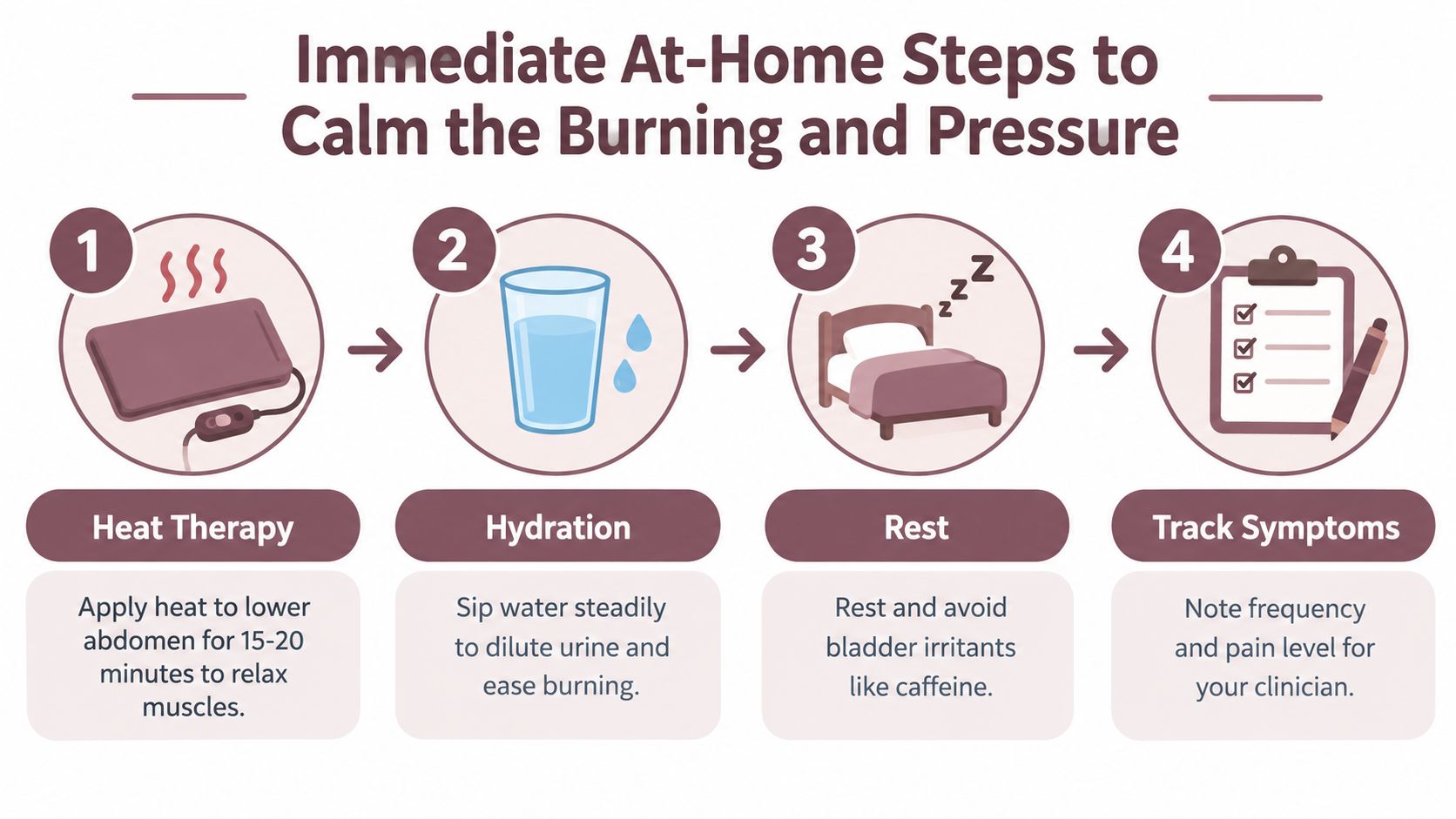
Start with a simple goal. You're trying to dilute urine, relax the bladder, and stop making the irritation worse. That's what works in the first half hour.
Your first 30 minutes
-
Put heat on the lower abdomen
Use a heating pad or hot water bottle over the bladder area for 15 to 20 minutes. This won't cure an infection, but it often reduces cramping and that clenched, miserable pressure feeling.
-
Drink a full glass of water
Do it right away. Then keep sipping 200 ml every 20 minutes for the next stretch if fluids are safe for you. The point isn't to flood yourself. The point is to make your urine less concentrated so each trip to the bathroom hurts less.
-
Go when the urge hits
Don't hold it. Holding urine raises pressure inside an already irritated bladder and usually makes the pain feel sharper.
-
Empty more completely
After you pee, lean forward slightly, wait a moment, and try again. That second small release can matter. If your bladder empties poorly, irritation tends to linger.
What to stop immediately
Some things make active urinary pain worse fast. Cut them out for now.
- Coffee and energy drinks because caffeine can ramp up urgency.
- Alcohol because it can dehydrate you and irritate the bladder.
- Citrus drinks because acidic liquids can sting on the way out.
- Carbonated drinks because many people notice more pressure and irritation.
A practical guide to quick relief for UTI discomfort can help if you want a short checklist to follow while symptoms are active.
A short visual walkthrough can also help when your brain is fried from discomfort:
What relief should feel like
You're not looking for magic. You're looking for a drop in intensity. Burning may ease first. Pressure usually softens next. The urge to pee often lingers longer than you'd like, even when the pain starts backing off.
If your pain spikes instead of easing over the next few hours, stop treating this like a simple home-care problem and get evaluated.
Popular Home Remedies and What the Evidence Actually Says
Hear the same recycled list. Cranberry juice. Baking soda. Vinegar. Supplements. Random internet hacks. Some are reasonable support measures. Some are mostly noise.
Here's the honest ranking.
What actually helps
These are the home remedies I'd put at the top because the logic is solid and the relief is real for a lot of people.
| Remedy | Tier | Why It Earned That Rating |
|---|---|---|
| Hydration | Actually helps | It dilutes urine, which often reduces burning and may help flush irritants through the bladder. |
| Heat therapy | Actually helps | A heating pad or hot water bottle can ease bladder cramping and lower abdominal discomfort. |
Mostly harmless but limited evidence
These aren't my first-line comfort tools, but they're not ridiculous either.
| Remedy | Tier | Why It Earned That Rating |
|---|---|---|
| D-mannose | Mostly harmless but limited evidence | Some people use it when E. coli is suspected, but it's not a fast pain reliever and it's not a substitute for diagnosis. |
| Probiotic supplementation | Mostly harmless but limited evidence | It may support vaginal and gut balance over time, but it won't quickly shut down burning during an active flare. |
| Baking soda water | Mostly harmless but limited evidence | Some people find it soothing, but the sodium load can be a problem and it's not a smart choice for everyone. |
If you have blood pressure issues, kidney disease, or you've been told to watch sodium, skip baking soda unless a clinician says otherwise.
Overhyped and often disappointing
These get talked about far more than they deserve.
| Remedy | Tier | Why It Earned That Rating |
|---|---|---|
| Cranberry juice | Overhyped | It's better framed as a prevention habit for some people than a frontline fix for active pain. |
| Apple cider vinegar shots | Overhyped | There's no good reason to expect it to calm urinary pain, and acidic liquids may irritate you more. |
| Vitamin C megadosing | Overhyped | More isn't better here, and large doses can upset your stomach without giving meaningful symptom relief. |
Don't confuse “common” with “effective.” The best home remedies for urinary pain are boring: water, heat, rest, and bladder-friendly habits.
Over-the-Counter Options That Target Bladder Pain Directly
If you need more than heat and water, over-the-counter medication can help. Used correctly, it can buy you comfort while you rest, hydrate, and decide whether you need a clinician.
The main options worth knowing
| Product Type | How It Works | Onset | Key Warning | Avoid If |
|---|---|---|---|---|
| Phenazopyridine | Numbs the lining of the urinary tract to reduce burning and urgency | Often within about an hour | Can turn urine bright orange and stain fabric or contact lenses. Follow the label's short-term use warning | Pregnancy, kidney disease, G6PD deficiency, or if a clinician has told you not to use it |
| Bladder-focused analgesics such as Cystex | Targets bladder discomfort with urinary pain relief ingredients | Varies by product | Check the ingredient panel carefully before combining with other meds | If ingredients overlap with medications you already take |
| NSAIDs such as ibuprofen | Lowers inflammation-driven pain | Usually fairly quick | Can irritate the stomach and isn't right for everyone | Kidney disease, stomach ulcer history, pregnancy in some cases, or clinician advice against use |
My opinion on what helps most
Phenazopyridine is the most targeted option for the classic “fire while peeing” kind of pain. It doesn't treat the cause. It treats the misery. That distinction matters.
If you need a reputable place to buy Pyridium Phenazopyridine, that product page gives you a direct reference point for the medication itself. Just use it as a short-term comfort tool, not as permission to ignore worsening symptoms.
Important cautions people miss
The orange urine side effect surprises people every time. It can stain underwear, pads, towels, and soft contact lenses. Don't panic when you see it. That part is expected.
The bigger issue is overstacking products. People take one urinary pain product, then add ibuprofen, then grab another “bladder support” formula without checking ingredients. That's sloppy and unnecessary. Read the label. Know what you're taking.
A pain reliever can calm symptoms enough for you to function. It should not talk you out of getting a urine test if symptoms persist or intensify.
I also like pairing medication with practical support instead of relying on pills alone. Hydration, heat, and rest are still doing useful work in the background.
Supportive Habits That Reduce Ongoing Irritation
Once the sharpest pain eases, your job changes. Now you're trying to stop re-irritating sensitive tissue while your body settles down.
Wear things that let the area breathe
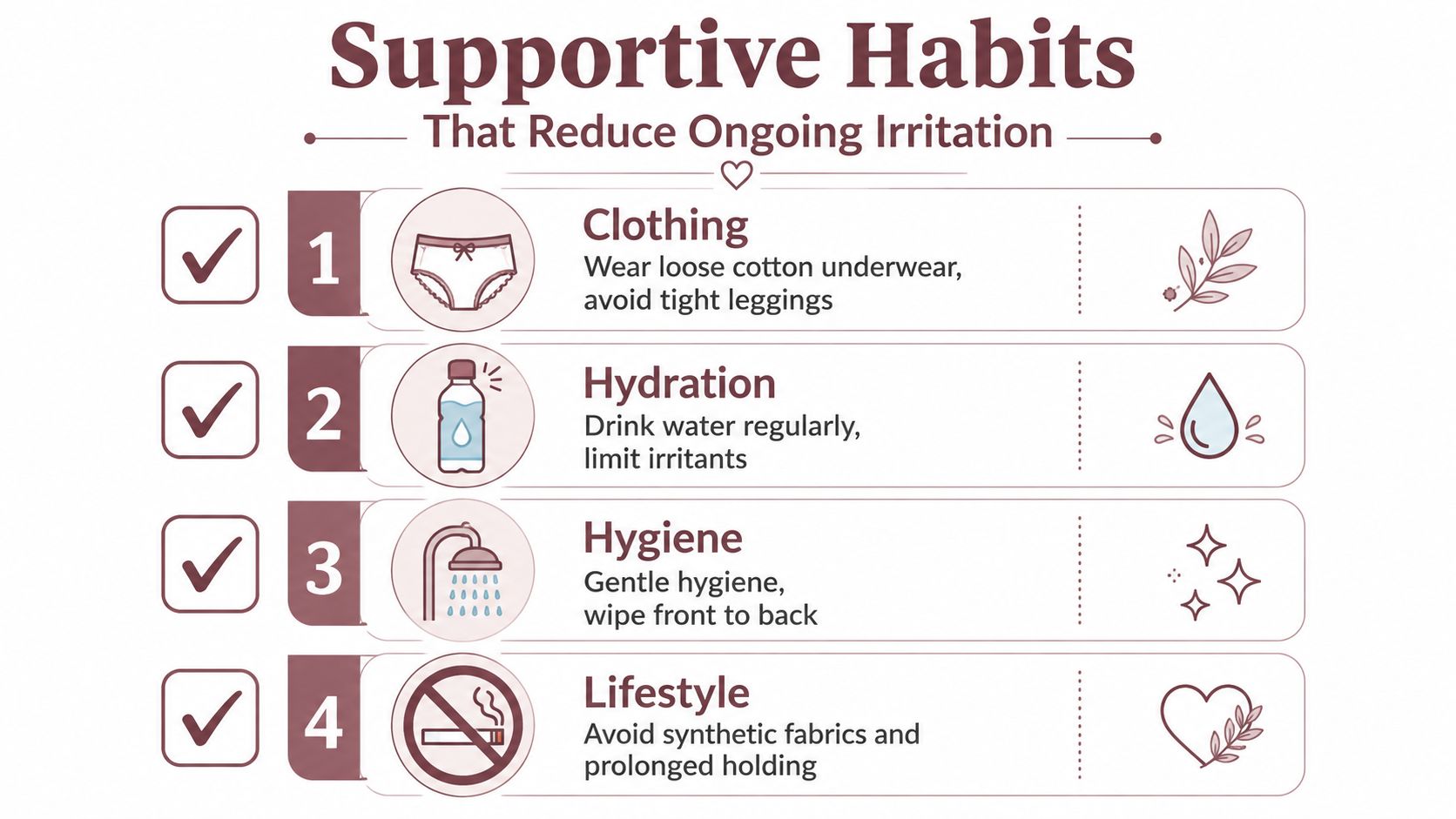
Tight leggings, shapewear, thong underwear, and synthetic fabrics are bad bets when you're already inflamed. Switch to loose clothing and cotton underwear until things feel normal again. Moisture and friction make urinary discomfort feel louder.
Clean gently, not aggressively
You do not need to scrub your way out of this. Use gentle, unfragranced cleansing if needed. Skip douches, feminine sprays, scented wipes, and harsh soaps. Those products often create a second irritation problem on top of the first one.
A few basics matter:
- Wipe front to back to reduce bacterial spread toward the urethra.
- Choose fragrance-free products around the vulva and underwear.
- Avoid prolonged dampness by changing out of sweaty workout clothes quickly.
If recurrent symptoms are part of your pattern, this guide on how to prevent UTI naturally gives a practical prevention framework.
Sex, pelvic tension, and bladder triggers
Sex can be a trigger for some people, especially if tissues are already irritated. If symptoms are active, give the area a break. Pee shortly after intercourse when you return to sexual activity, and be cautious with spermicides or diaphragms if they seem tied to flare-ups.
Stress matters more than people think. When you're in pain, you clench. Pelvic floor tension can mimic or worsen urgency and make every sensation feel more alarming. Slow your breathing, unclench your jaw, drop your shoulders, and stop bracing your lower belly.
A few people also want a supportive non-prescription routine during recovery. One option in that category is the Momotaro Apotheca Bladder & Belly Kit, which is designed around urinary tract and gut support. It's not a replacement for medical care, but it fits into the broader “reduce ongoing irritation” approach.
Use a steady hydration rhythm
Don't chug huge amounts all at once. That can make you feel even more frantic. Take small, regular sips through the day. While symptoms are active, many people also do better avoiding coffee, citrus, spicy foods, and fizzy drinks if those clearly increase burning or urgency.
When Urinary Tract Pain Means You Need a Clinician
A lot of people lose time here because they assume every case of urinary pain is simple and self-limited. That assumption gets people into trouble.
Red flags that change the plan
Same-day care makes sense if you have any of these:
- Fever or chills
- Back or flank pain
- Nausea or vomiting
- Visible blood in the urine
- Pain that lasts more than 24 to 48 hours without improvement
- Symptoms that return again within weeks
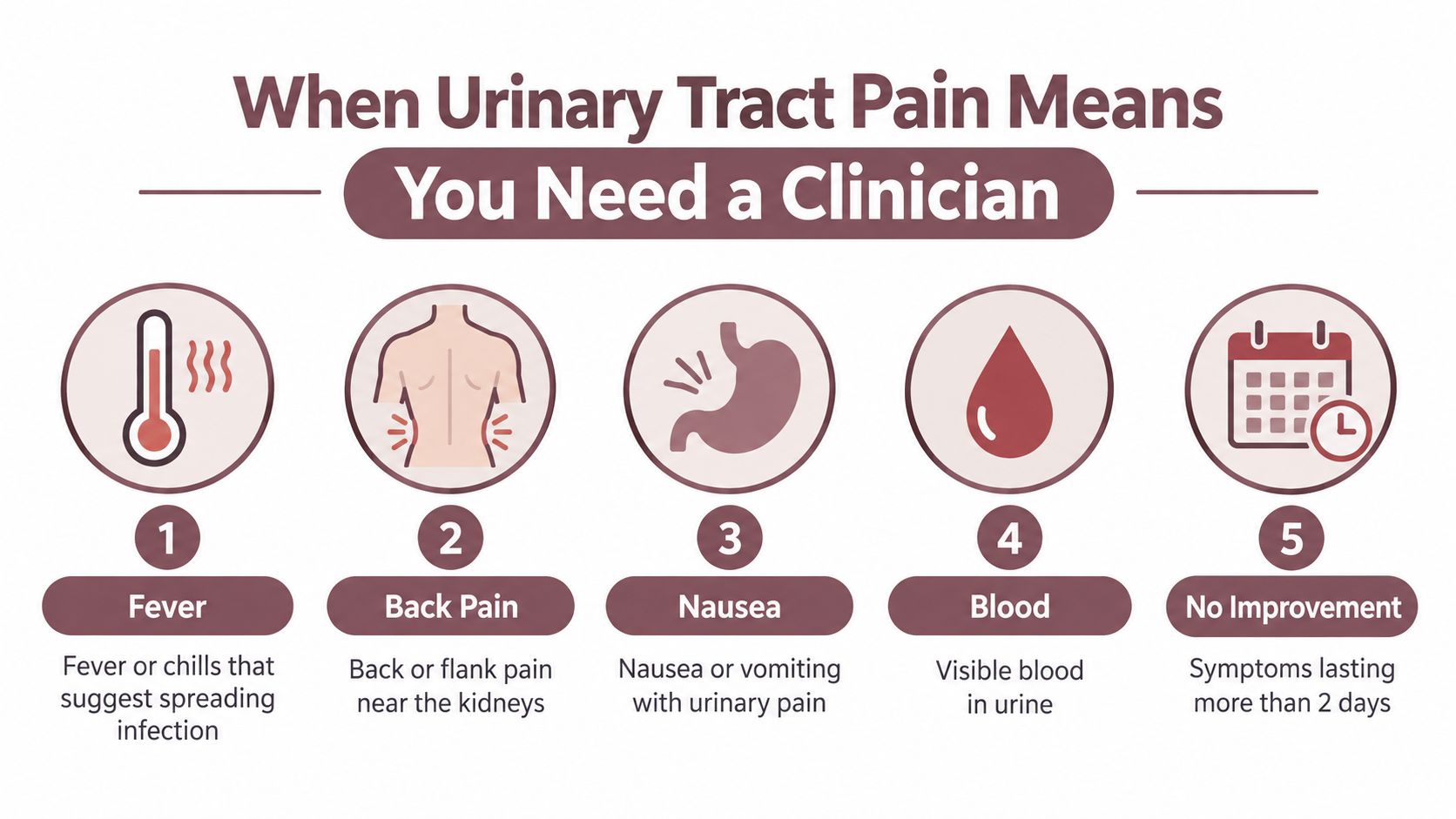
Those signs raise the odds that this isn't just mild bladder irritation. They can point toward a spreading infection, a kidney issue, a stone, or another problem that needs actual diagnosis.
Some people should skip self-management
If you're pregnant, have diabetes, are immunocompromised, or you're male and having UTI-type symptoms, don't run a long home experiment first. Get checked.
That's not alarmist. It's common-sense triage. Some groups have a higher chance of complications or atypical causes, and “wait and see” is a weaker strategy there.
The traps that waste time
People routinely make the same mistakes:
- Using leftover antibiotics instead of getting a proper evaluation
- Assuming cranberry juice will cure an active infection
- Confusing UTI pain with yeast, BV, STI symptoms, or pelvic floor dysfunction
- Pushing through pain for days because work is busy
This condition is common, but “common” doesn't mean trivial. According to NIDDK's Urologic Diseases in America report, medical care for nearly 12.8 million urinary tract infections in women cost almost $2.5 billion annually, rising to $3.5 billion when men are included, with $96.4 million spent on 3.3 million prescriptions. The same report notes that roughly 25% to 50% of UTI patients have at least one additional infection within a year, while 3% to 5% experience multiple recurrences, and that about 11% of women report at least one physician-diagnosed UTI each year while about 60% will experience one in their lifetime. Recurrence is exactly why getting the diagnosis right matters.
Book the appointment if you're debating it. Most people regret waiting longer than they regret getting checked.
A clinician can run a urinalysis, send a culture when needed, and prescribe treatment that matches the cause.
Your Recovery Plan and What Comes Next
If you need a clean plan, use this one.
In the next 30 minutes
Start with heat on the lower abdomen. Drink a full glass of water, then sip steadily rather than guzzling. Pee when you need to, and try double-voiding by leaning forward and emptying again after a brief pause.
If the pain is intrusive, consider an over-the-counter option that fits your health situation and the package directions. Then rest. Not “power through.” Rest.
Over the next couple of days
Your short-term job is symptom reduction without adding new irritation.
- Keep fluids steady so urine stays less concentrated.
- Repeat heat when bladder pressure or cramping ramps up.
- Skip bladder irritants that obviously worsen symptoms for you.
- Use OTC relief briefly if needed, not as a way to delay evaluation forever.
- Drop overhyped remedies that add acid, sugar, or false confidence.
Watch the trend, not just the moment. If the burn is clearly fading and the urgency is loosening up within a day, home care may be doing enough. If symptoms stall, rebound, or get more intense, switch from self-care mode to medical care mode.
Keep only the habits that earn their place
You do not need a giant supplement pile. Keep what has a sensible role.
| Keep | Drop or deprioritize | Why |
|---|---|---|
| Heat | Vinegar shots | Heat can directly soothe cramping. Vinegar can irritate. |
| Water | Cranberry as a rescue treatment | Water often eases burning. Cranberry isn't a fast fix for active pain. |
| Gentle hygiene | Scented washes and sprays | Fragrance and harsh cleansers can worsen irritation. |
| Breathable clothing | Tight synthetic layers | Less friction and trapped moisture usually feels better. |
Decide your next move based on the symptom path
If pain fades within about a day, keep things simple. Continue hydration, avoid obvious triggers, and don't rush back into anything that irritates the area.
If it lingers, especially beyond the timeframe covered earlier, get tested. If a clinician prescribes treatment, take it exactly as directed and don't stop early just because the burning improves first.
If red flags show up at any point, stop troubleshooting at home. Fever, flank pain, vomiting, blood in urine, or clear worsening deserve same-day care.
Once this passes, reduce the odds of a repeat
The basics work better than people want them to. Pee after intercourse if that's a trigger pattern for you. Wear breathable cotton underwear. Don't hold urine for long stretches. Ditch products that sting, perfume, or dry out sensitive tissue. Go easy on bladder irritants if you know they set you off.
That's the answer to how to relieve urinary tract pain safely. Handle the immediate burn with practical comfort measures, stay honest about what home remedies can and can't do, and get a clinician involved early when the pattern looks wrong.
Momotaro Apotheca offers plant-based vulvovaginal and urinary wellness support for people dealing with recurring irritation, after-sex discomfort, and sensitive tissue that doesn't tolerate harsh products well. If you want gentle, non-prescription options and education that respects how uncomfortable this can be, visit Momotaro Apotheca.


