


Is It Bad to Wear Panty Liners Everyday? a Health Guide
You reach for a panty liner because you want to feel clean, dry, and put together. Maybe there's light discharge, a little spotting, or just the sense that a thin layer of backup will make the day easier. That routine is common, and it's understandable.
The question of is it bad to wear panty liners everyday doesn't have a one-size-fits-all answer. Some people tolerate them well, while others notice irritation, more discharge, or more frequent infections when they keep a liner on for long stretches. The answer depends on your body, your habits, and the liner itself.
Table of Contents
- The Daily Panty Liner Habit
- How Daily Liners Can Affect Vulvovaginal Health
- Who Is Most at Risk from Daily Liner Use
- Safer Panty Liner Practices for Everyday Use
- Healthy Alternatives to Daily Panty Liners
- Building a Supportive Vulvovaginal Care Routine
The Daily Panty Liner Habit
For a lot of people, the morning routine is simple. Underwear on, liner in place, out the door with one less thing to think about. That tiny strip can feel like insurance against discharge, spotting, sweat, or the awkward moment when you're not sure whether you feel “fresh” enough.
That's why this habit sticks. It's practical, private, and easy to build into daily life. It can also become automatic, which is where the important question starts to matter, because automatic isn't always the same thing as healthy.
The most helpful way to think about panty liners is not “good” or “bad.” It's when they help, when they don't, and what your body is telling you. A liner might be a useful tool on some days and an annoying extra layer on others.
Practical rule: if you keep wearing liners because you're trying to manage a symptom that never fully settles, the liner may be hiding a problem instead of solving it.
That's why this topic deserves a closer look. The goal isn't to shame anyone for wanting comfort. The goal is to help you tell the difference between a convenience that works for you and a habit that might be making your vulvovaginal area less comfortable over time.
How Daily Liners Can Affect Vulvovaginal Health
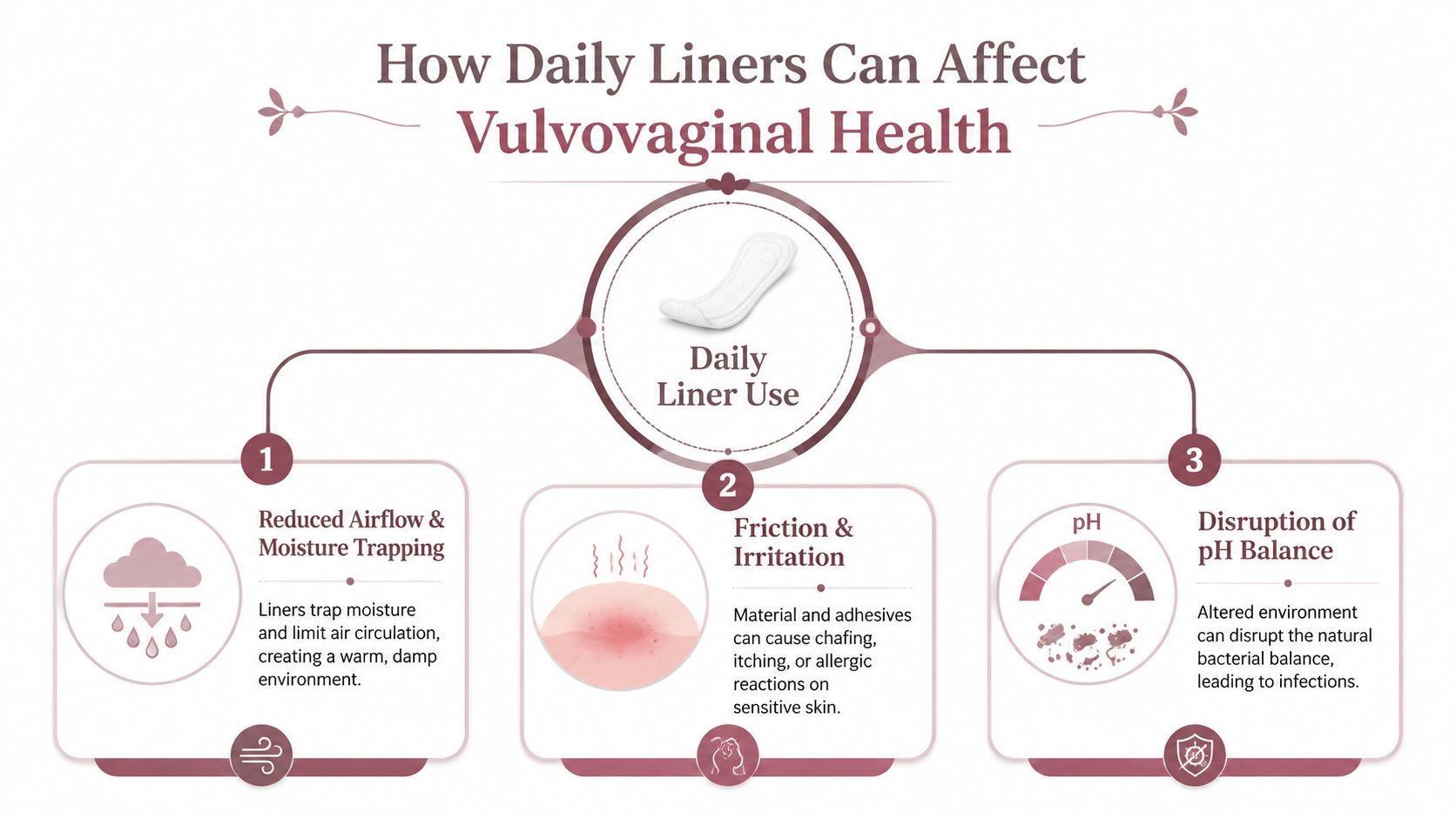
Daily liners can affect the vulva in three main ways, and all three come down to the same basic idea, they change the environment your skin is living in. Think of how a wet bandage feels on normal skin. It's not the bandage alone that causes trouble, it's the mix of trapped moisture, reduced airflow, and rubbing against already sensitive tissue.
Moisture trapping and occlusion
A liner sits close to the vulva, and that closeness can create an occlusive layer. Clinical concern around daily use comes from the way liners can trap heat, moisture, and discharge against the skin, which can encourage irritation and create a friendlier environment for Candida in people who are already vulnerable to yeast problems HealthShots.
pH and microbiome disruption
The vulvovaginal environment works best when it's left as balanced and undisturbed as possible. When moisture stays in place and airflow drops, the local environment can shift in ways that make some people more prone to discomfort or infection. If you want a deeper guide to that balance, the article on vaginal pH and a healthy environment is a useful companion.
Friction, adhesives, and sensitivity
Even when a liner is absorbent, it still moves with your body. That movement can create chafing, especially if the liner is stiff, scented, or held in place with materials that don't breathe well. In a 2026 medical media report, one expert warned that everyday liner use may create irritation and infections because the adhesive side contains plastic that can hinder airflow, and another advised changing a liner every four hours or less if it's used daily HealthShots.
For people dealing with ongoing dryness or friction, a soothing external product can matter more than a liner routine. One option is Soothe & Restore Salve, an organic balm formulated for vulvovaginal dryness, itching, and irritation, including discomfort that can come with friction and everyday stressors.
Who Is Most at Risk from Daily Liner Use
The same liner can feel fine for one person and irritating for another. That's why the best answer to is it bad to wear panty liners everyday depends so much on your baseline vulvovaginal health and your history with irritation or infection.
A 2014 systematic review of five studies found that four studies in healthy women showed no significant clinical harms, while one study in women with recurrent candidiasis found an association with new candidiasis episodes PubMed. That matters because it shows daily liners aren't automatically a problem for everyone, but they may be a much bigger issue for people who already struggle with yeast infections.
The people who should pay closer attention
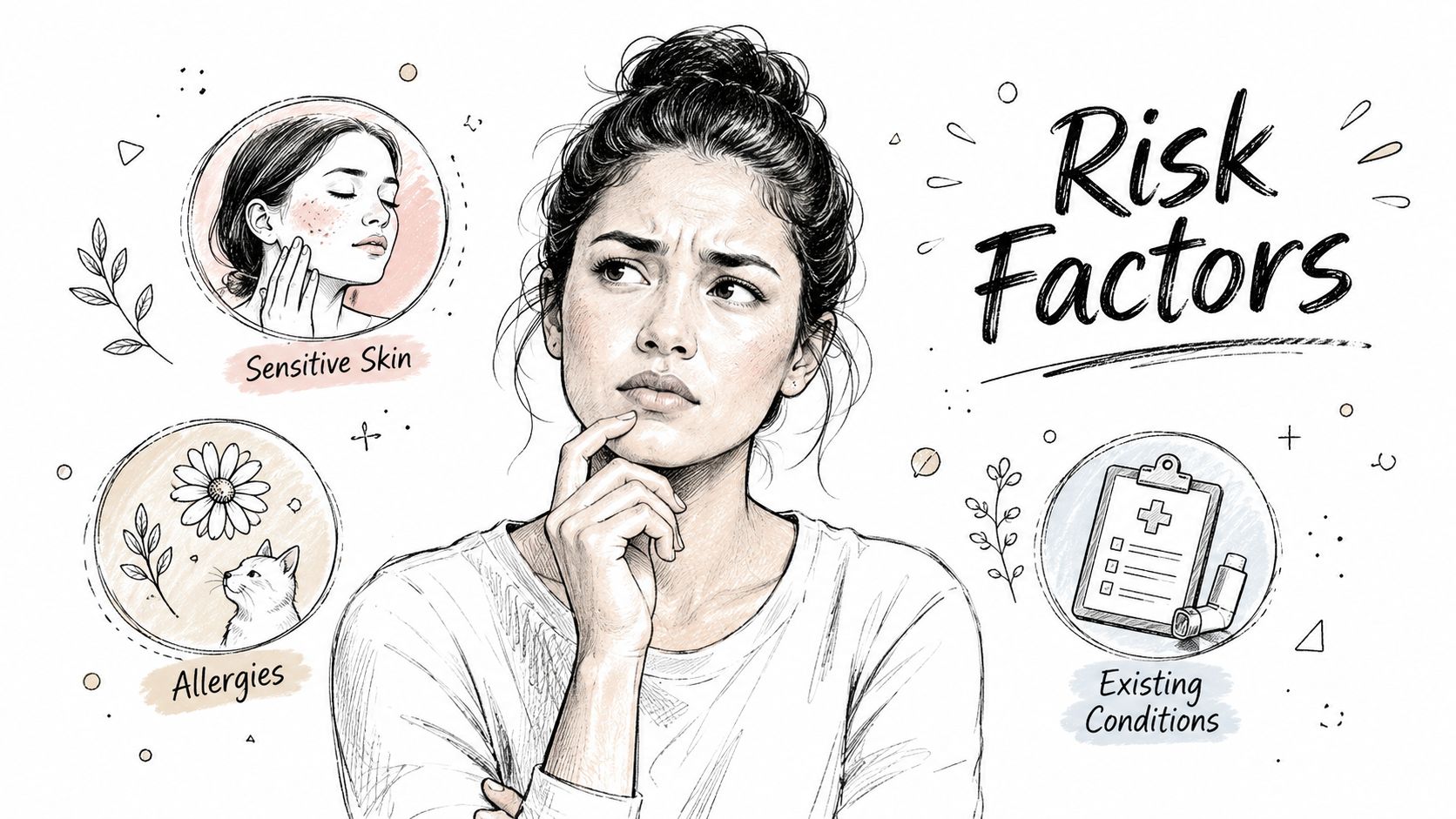
If you've had recurrent yeast infections or repeated episodes of bacterial vaginosis, daily liner use deserves a second look. The review above suggests that a history of candidiasis can change the equation PubMed.
If your skin reacts easily to perfume, adhesive, or synthetic fabrics, the vulva may be sensitive to the same triggers. That doesn't mean you can never use a liner. It does mean that the smallest product choice can make a noticeable difference.
People with chronic vulvar skin conditions also tend to do better with less friction and less occlusion. A gentle, breathable approach usually fits better than one that keeps the area covered all day.
For a light, external mist that some people use as part of a soothing routine, Organic Hydrosol Toner is a plant-based micromist designed for the face, body, and external pelvic area.
If your body keeps sending the same signal, itching, burning, recurring discharge, or a sense that something feels off, don't treat that as normal just because a liner is involved.
The most useful takeaway is simple. Daily liner use is more likely to be a problem when your skin is already reactive or your vaginal environment has a history of imbalance. In that case, the liner may be adding one more layer of stress to tissue that doesn't need it.
Safer Panty Liner Practices for Everyday Use
If you like using liners, safer use is about reducing the conditions that make them irritating. The strongest evidence in the brief points to material choice, because a randomized controlled trial of breathable panty liners worn for 10 to 12 hours a day for 75 consecutive days found no significant increase in vulvovaginal candidiasis, bacterial vaginosis, irritation, or inflammation, and at the end of the study 90.9% reported no discharge complaints while 95.5% reported no itching or burning complaints PubMed.
That doesn't mean every liner is equal. It means the liner's construction matters, and breathable materials seem to matter a lot.
A simple shopping and wear checklist
| Do ✅ | Don't ❌ |
|---|---|
| Choose breathable materials when you know you'll wear a liner for part of the day. | Assume all liners are the same, because non-breathable backings can hold in heat and moisture. |
| Change the liner often if you need daily use, especially after several hours. | Keep the same liner on all day, since prolonged wear is part of what increases irritation risk. |
| Watch for scent or residue, and switch if your skin seems reactive. | Ignore itching, burning, or tenderness, because those are useful warning signs. |
| Use the liner for a purpose, like spotting or a brief extra-protection need. | Use a liner as a default from morning to night if your body doesn't actually need it. |
The core habit to build is awareness. If you're using a liner because of discharge that feels normal for your body, a breathable option and regular changes may be enough. If you're using a liner because you don't like the feeling of moisture but your skin gets irritated anyway, that's a sign to reevaluate the routine.
A careful approach usually looks less dramatic than people expect. It's often just cleaner materials, shorter wear time, and more attention to what happens after you remove the liner.
Healthy Alternatives to Daily Panty Liners
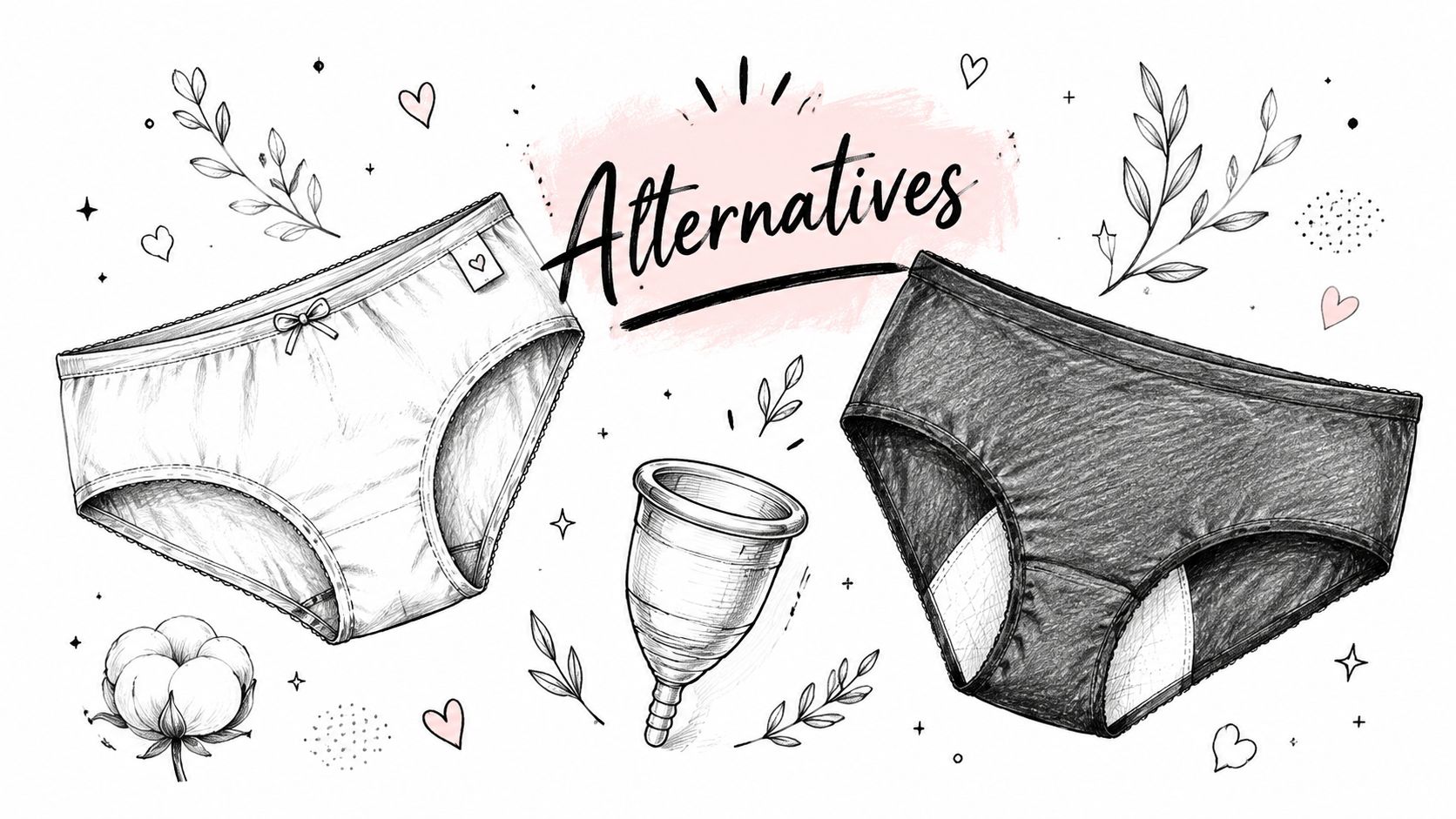
Sometimes the easiest fix is to stop adding a layer at all. If your discharge is light, a quick underwear change can be enough, and cotton underwear gives the vulva a chance to breathe without relying on disposables.
Reusable options can also fit well here. Period underwear and cloth pads offer a different balance of comfort and convenience, especially for people who want less waste and fewer adhesive materials against the skin. The key is to choose something that feels dry, breathable, and easy to wash consistently.
How the options compare
- Fresh underwear change, best when discharge is light and you mainly want a dry feeling.
- Period underwear, useful when you want a reusable layer that stays close to the body without the same disposable liner routine.
- Cloth pads, helpful if you prefer a removable absorbent layer but want to skip plastic-backed disposables.
If you want a practical overview of reusable underwear as an alternative, the guide on period panties as a safe alternative is worth a look.
The best alternative is the one you'll use without discomfort. Some people want the simplicity of a liner and just need a better material. Others realize that a midday underwear change gives them the same sense of freshness with less irritation risk.
Building a Supportive Vulvovaginal Care Routine
Panty liners make more sense when they're part of a bigger routine that protects the vulva instead of constantly covering it. That means gentle washing, no harsh scrubbing, and avoiding products that strip away the skin's natural comfort. It also means listening when your body seems to ask for less friction, less moisture, or fewer layers.

The bigger principle is breathability. Your vulva usually does better when it's dry enough to stay comfortable, but not so stripped or over-managed that the skin gets irritated. If you're prone to dryness or friction, a soothing external balm may help calm the area, and if you want a structured routine, the guide on how to create a simple vulva and vaginal wellness routine gives a useful framework.
Daily choices matter most when they're repeated. A liner that works on a busy day might still be the wrong choice as an all-day default if it leaves you itchy or damp. A gentler routine usually starts with fewer irritants and a little more attention to how your body responds.
If you want vulvovaginal care that supports comfort without overcomplicating your routine, visit Momotaro Apotheca to explore plant-based options designed for dryness, irritation, and everyday balance. Their educational resources and gentle external care products can help you build a routine that feels more breathable, more personal, and easier on sensitive skin.


