


Lichen Sclerosus Symptoms Women Should Never Ignore
You've treated it like yeast again. The cream helped for a few days, maybe, then the itching came back at night. Or you blamed dryness, a new laundry detergent, sex, sweat, tight leggings. That cycle is common, and it doesn't mean you're missing something obvious. Vulvar symptoms overlap a lot, and lichen sclerosus symptoms women notice often start without fanfare, then keep returning in a pattern that doesn't quite fit infection or irritation.
Table of Contents
- Why Lichen Sclerosus Symptoms Are So Easy to Misread
- What Lichen Sclerosus Actually Is
- The Symptoms Most Women Notice First
- The Symptoms Nobody Talks About
- How Lichen Sclerosus Differs From Yeast BV and Contact Irritation
- What Happens When Symptoms Go Untreated
- When Symptoms Mean It Is Time to See a Clinician
- Building a Supportive Self-Care Routine Around Treatment
Why Lichen Sclerosus Symptoms Are So Easy to Misread
Most of us learned a short script for vulvar discomfort. Itch means yeast. Odor means BV. Burning after sex means dryness or friction. That script works sometimes, but it can also delay a different conversation when symptoms don't clear or keep coming back.
Lichen sclerosus, often shortened to LS, can look and feel like those familiar problems at first. Early signs may be nonspecific, symptoms can wax and wane, and many people try to manage privately because describing vulvar changes still feels awkward. It's also possible to focus only on itch and miss soreness, tearing, bruising, urinary discomfort, or visible whitening happening alongside it.
Three reasons the pattern gets missed
- Overlap with self-treated conditions: Itching and burning also happen with yeast, contact irritation, and menopause related dryness, so LS can be mistaken for something you've had before.
- Symptoms don't always match severity: You can have visible skin changes with mild symptoms, or intense itching before you notice any change in the mirror.
- Shame shapes the timeline: If you're embarrassed to mention tearing during sex or pain when wiping, a clinician only hears part of the story.
If you've been reading about common causes of vulvar irritation and redness, you already know irritation has many triggers. LS belongs in that wider picture, but it isn't irritation that needs a gentler wash. It's a chronic skin condition, and naming that difference changes what kind of care you seek.
Persistent, returning, or changing vulvar symptoms deserve a fresh look, even if you've explained them away for years.
Think of your symptoms as a map, not a single complaint. When did the itch start. Where exactly does skin tear. Has color changed. Has sex, urination, or wiping become uncomfortable. Those details help you describe what's happening clearly, without trying to diagnose yourself.
What Lichen Sclerosus Actually Is
Lichen sclerosus is a chronic inflammatory skin condition, also called a dermatosis, that most commonly affects vulvar and anogenital skin. It isn't an infection, it isn't an STI, and it isn't caused by poor hygiene. You can't catch it from a partner or pass it on during sex.
A useful analogy is fabric. Healthy vulvar skin is soft, elastic, and resilient. With ongoing inflammation, that fabric can become thinner, stiffer, and more likely to split under ordinary friction. That change explains why symptoms involve both sensation and structure, from itching and burning to fissures and gradual reshaping.
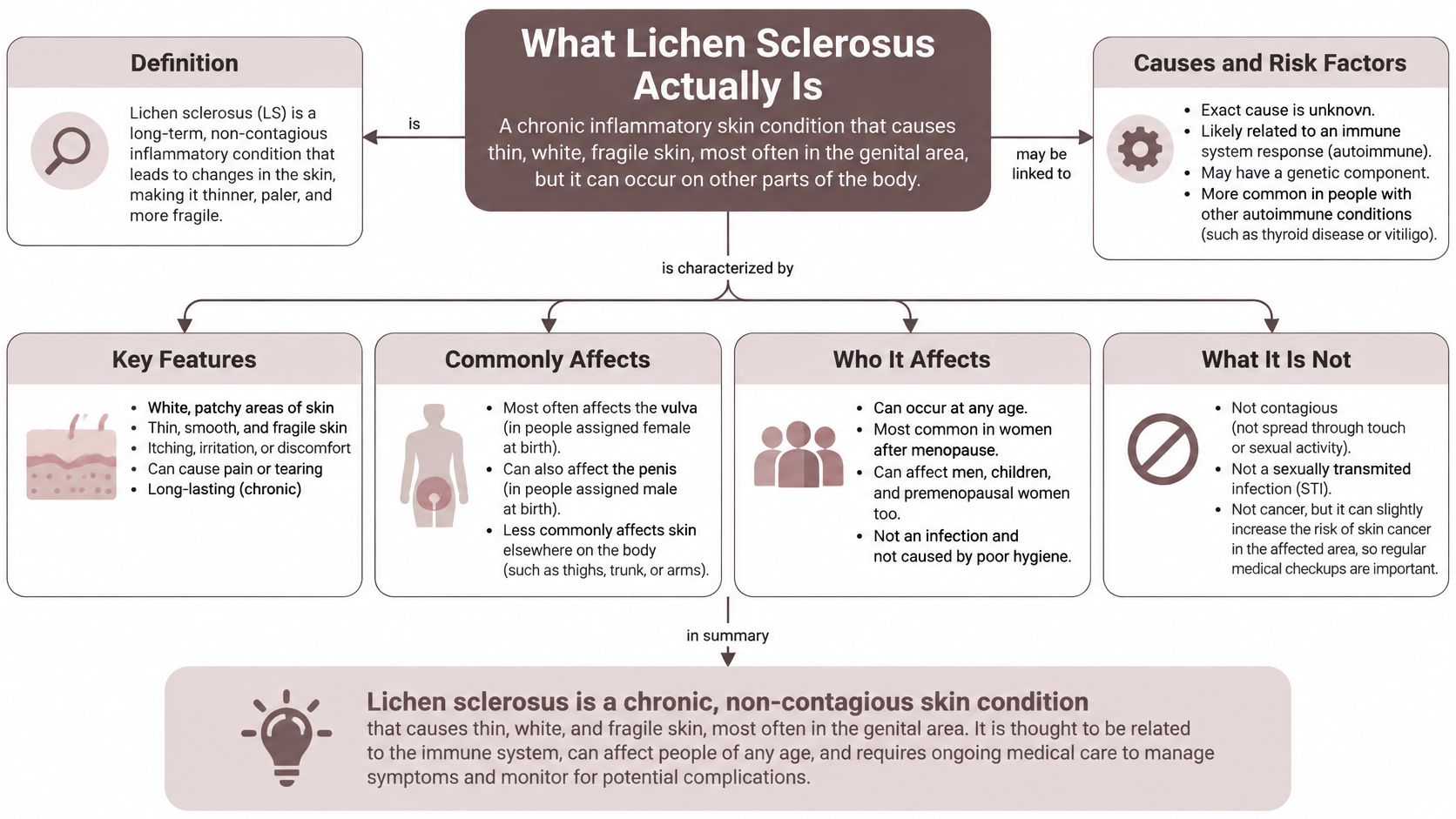
LS disproportionately affects women around menopause, although it can occur at any age. In a clinical study of 287 women with vulvar LS, 250 patients (87%) were older than 50 years, while the remaining group was younger. Age matters, but it doesn't rule LS in or out.
What LS is not
- Not just dryness: Dryness can coexist with LS, especially around menopause, but LS involves inflammation and skin change, not moisture alone.
- Not ordinary aging: Getting older doesn't make porcelain white patches, bruising, fissures, or fusion of vulvar structures inevitable.
- Not a hygiene failure: Harsh cleansing can add irritation, but it doesn't explain the underlying condition.
On examination, clinicians may see porcelain white papules or plaques, crinkled or atrophic skin, purple bruise like areas, and sometimes a figure of eight distribution around the vulva and anus. You might not see all of that at home, and lighting and skin tone can make color change hard to judge. That's one reason symptoms alone don't establish a diagnosis.
The practical definition to carry with you is simple. LS is long term inflammation that can thin and scar vulvar skin over time, and it needs clinician led assessment and follow up, with supportive care playing a separate, smaller role.
The Symptoms Most Women Notice First
For many women, the first signal isn't a dramatic lesion. It's a persistent feeling that something is different and isn't settling. The symptoms below often appear together, and describing them in plain language can make an appointment far more productive.
Sensations you feel
- Intense itching: Often the dominant symptom, and frequently worse at night or after scratching starts a cycle of irritation. In the 287 woman study cited earlier as a textual reference, pruritus affected approximately 95% of women, but that number belongs to that clinic sample, not every person with LS.
- Burning or soreness: This can feel raw rather than itchy, especially after urination, sex, exercise, or contact with urine on broken skin.
- Pain with intercourse: Called dyspareunia, this may happen at the opening when skin stretches, tears, or has lost elasticity.
- Tearing or splitting: Small fissures can sting sharply during wiping, penetration, or even sitting and walking if skin is fragile.
Age can shape which symptom stands out. Younger women in that same clinic sample reported dyspareunia more often than women over 50, while atrophy was documented more often in the older group. Your pattern may differ, and that's still worth discussing.
Changes you may see or feel with your fingers
Visible signs can include whitening or pigment change, thinning, a crinkled texture, bruising, erosions, and gradual architectural change. Some people notice labia looking smaller or smoother, the clitoral hood feeling tighter, or the opening feeling narrower. Symptoms can also be absent despite visible disease, as described in British Journal of Dermatology guidance on vulvar lichen sclerosus features, so don't use comfort alone as your only measure.
This short video offers another plain language overview to watch before you inventory your own symptoms.
Try writing one sentence for sensation, one for visible change, and one for function. For example, itching wakes me at night, skin looks paler, and penetration causes tearing. That's body literacy in action.
The Symptoms Nobody Talks About
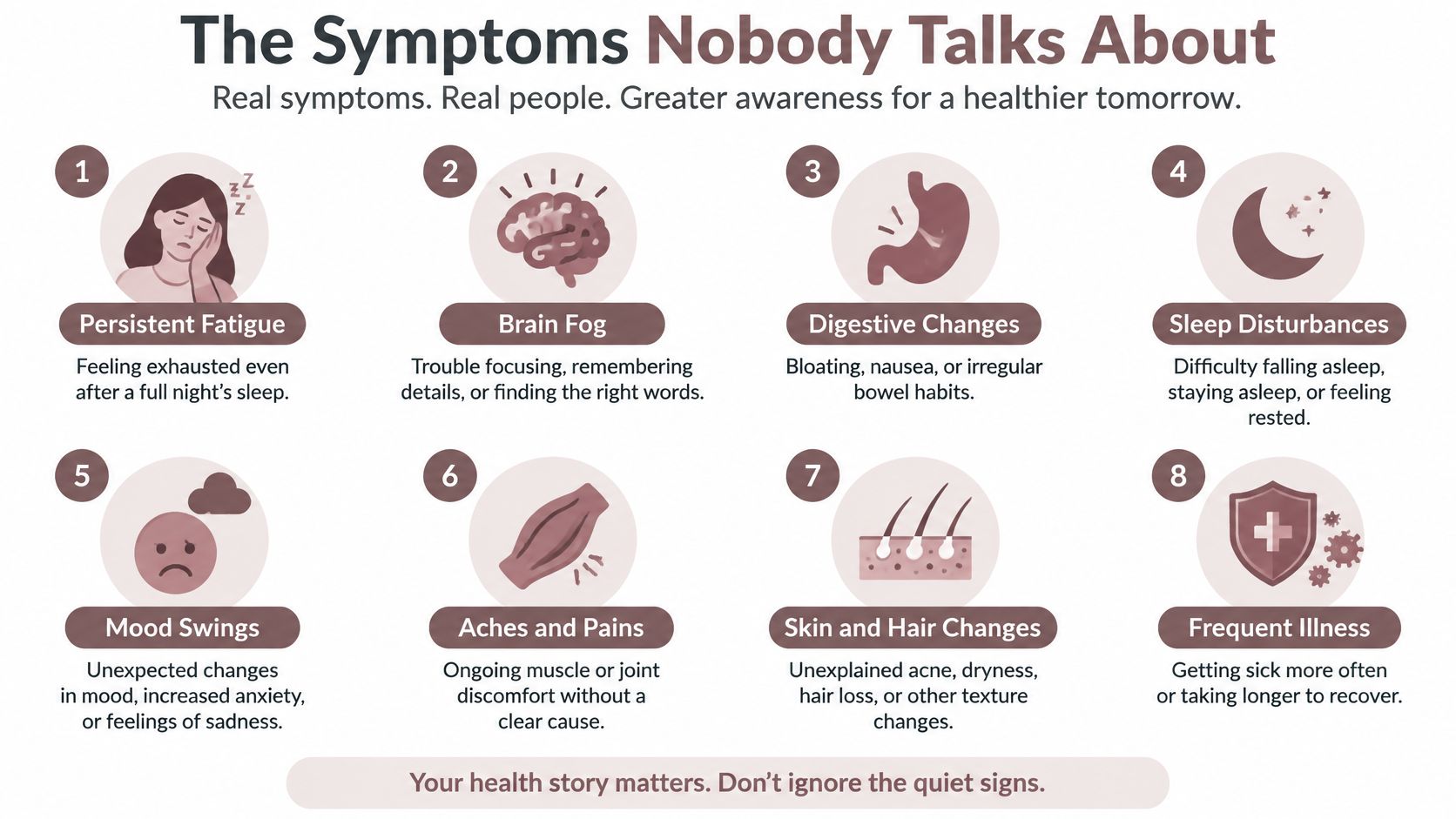
White patches and itching get most of the attention. They're not the whole story. When vulvar skin is inflamed, thin, or scarred, everyday functions that involve stretch, moisture, pressure, or friction can change too.
Urinary and bowel related changes
Burning during urination doesn't always mean a urinary tract infection. Urine passing over fissured vulvar skin can sting, and scarring near the urethra can affect flow. Some women notice altered stream, leakage, urgency, or discomfort that gets grouped under a bladder problem without anyone examining the vulva.
That gap matters. A 2025 British Association of Dermatologists conference report found median ICIQ urinary incontinence scores of 4 versus 0 in women with vulvar LS compared with controls, alongside greater quality of life impact from leakage. If wiping causes splits, constipation aggravates perianal skin, or urination has changed, say so directly. Those details aren't side notes.
Intimacy, mood, and daily life
Pain with penetration is often listed as a single bullet, but lived experience is wider. Fear of tearing can lead to avoiding sex, stopping self touch, dreading pelvic exams, or feeling disconnected from a partner. Sleep loss from itching affects concentration and mood the next day.
A fuller checklist: Ask yourself about leakage, urine flow, fissures after wiping, constipation discomfort, and fear around penetration, not only itch.
These effects aren't a personal failure or low libido by default. They're understandable responses to chronic pain and fragile tissue. Naming them helps a clinician consider referrals, pelvic floor support, or other care alongside skin treatment, instead of treating the vulva as separate from the rest of your life.
How Lichen Sclerosus Differs From Yeast BV and Contact Irritation
You can't reliably sort these conditions by itch alone. Discharge, odor, timing, visible skin change, and response to treatment give better clues, but overlap remains. Use this table to organize what you've noticed, not to rule anything out.
| Feature | Lichen Sclerosus | Recurrent Yeast | Bacterial Vaginosis | Contact Irritation |
|---|---|---|---|---|
| Main sensation | Persistent itch, burning, soreness, tearing | Itch and irritation, often episodic | Often mild irritation, itch less central | Burning or itch after exposure |
| Discharge or odor | Not a defining feature | Discharge change may occur | Odor and discharge change are common clues | Usually no characteristic discharge |
| Visible skin | Whitening, thinning, bruising, fissures, architectural change | Redness and swelling may occur | Vulvar skin often looks less changed | Redness where product or friction contacted skin |
| Pattern | Chronic, returning, may progress without treatment | Episodes that respond, then recur | Episodes linked to vaginal microbiome shifts | Improves when trigger is removed |
| Sex and urination | Pain, tearing, urinary discomfort or flow change possible | Discomfort during flare possible | Discomfort possible but structural change isn't expected | Temporary discomfort possible |
If you're comparing patterns you have lived with before, this guide to how BV, UTIs, and yeast infections differ can help you separate vaginal symptoms from vulvar skin symptoms. That distinction matters because LS primarily affects skin, while BV and yeast involve the vaginal environment.
Some people also explore precision health vaginal microbiome analysis when discharge, odor, or recurrent vaginal episodes are part of the picture. Microbiome information may be useful context for vaginal concerns, but it doesn't diagnose LS or replace a vulvar skin examination.
When the checklist stops helping
If antifungal treatment repeatedly fails, skin looks pale or scarred, fissures keep reopening, or anatomy seems changed, a clinician should examine the area. Coexisting conditions are possible too. You can have menopause related dryness and LS, or irritation on top of LS, which is exactly why a visual assessment matters.
What Happens When Symptoms Go Untreated
Untreated LS doesn't follow the same timeline for everyone, and progression isn't a reason to panic. It is a reason not to watch and wait indefinitely while inflammation continues. Over time, repeated injury and scarring can change both comfort and anatomy.
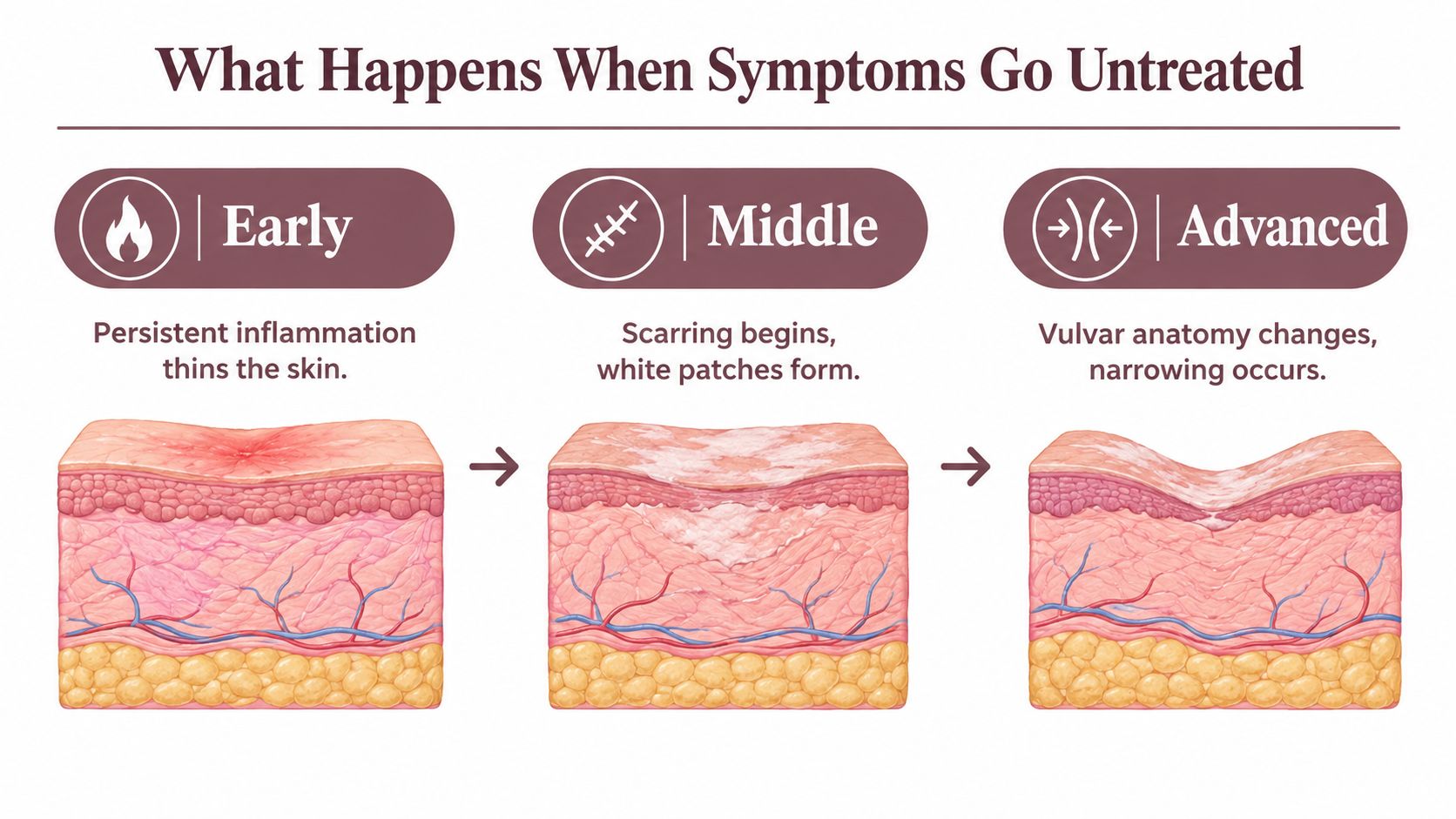
Early on, inflammation thins skin and makes it easier to tear. Scratching can reopen fissures, which then sting, itch as they heal, and invite more scratching. As scarring develops, labia may fuse or appear reduced, the clitoral hood can change, and the vaginal opening can narrow. Those structural changes help explain painful intercourse, distress during exams, and possible urinary dysfunction.
The cancer association, stated calmly
LS is associated with vulvar squamous cell carcinoma, a type of skin cancer that can develop in affected areas. Primary care guidance cited in population research describes an estimated 4% to 5% risk in LS lesions, which means only a small portion of those with LS will develop this cancer, but follow up still matters. A biopsy verified population study reported a standardized incidence ratio of 16.2 (95% CI, 14.2 to 18.4) compared with the general female population, with cumulative absolute risk rising over longer follow up.
Those two ways of expressing risk answer different questions. Relative risk sounds large because vulvar cancer is uncommon in the general population. Absolute risk keeps the personal picture in proportion. Neither number should be used to frighten you into self treatment or to dismiss surveillance.
Scarring and cancer risk are why follow up continues even when itching improves. Comfort is important, but it isn't the only goal of care.
Quality of life is also at stake. Longer diagnostic delay, stronger sensory symptoms, sexual dysfunction, anxiety, and depression have been linked with worse quality of life outcomes in specialist clinic research discussed in the next section as a textual reference. Earlier recognition protects tissue, function, and peace of mind.
When Symptoms Mean It Is Time to See a Clinician
If LS is on your mind because symptoms are persistent, it's already reasonable to book an appointment. You don't need to wait for severe pain or obvious white patches. Diagnostic delay is common, with a Danish cohort reporting a mean interval of 4.8 years between symptom onset and diagnosis in data summarized alongside the population study cited earlier, so bringing a clear timeline helps.
Book a first or follow up appointment for
- Persistent itch or burning: Especially if it returns after yeast or irritation treatment.
- Visible change: New whitening, pigment change, thinning, bruising, fissures, or loss of normal architecture.
- Function change: Pain with sex, tearing, urinary discomfort, altered flow, leakage, or pain with wiping.
Preparing notes can reduce the chance that embarrassment edits your story. This checklist of things to do before an OB GYN appointment is a practical place to organize symptoms, products you've tried, and questions about examination or biopsy.
Seek prompt reassessment for
- Nonhealing areas: Persistent ulcers, erosions, open sores, bleeding, or a sore that doesn't settle.
- New growths or texture change: Lumps, warty or papular lesions, thickened areas, or red zones that look different from your usual LS pattern.
- Treatment failure: Symptoms or lesions that stop responding as expected.
The British Association of Dermatologists patient guide on lichen sclerosus in females describes cancer risk in affected areas as less than 5 in 100 and emphasizes urgent reassessment for those changes. A clinician may diagnose LS by examination and consider biopsy when the presentation is atypical, uncertain, unresponsive, or suspicious for cancer. A biopsy isn't a sign that cancer is certain. It's how uncertain tissue gets a definite answer.
Building a Supportive Self-Care Routine Around Treatment
Supportive care has a real role, and clear limits. It can reduce extra irritation, protect fragile skin from friction, and make daily life more comfortable. It can't diagnose LS, quiet the underlying inflammation instead of prescribed treatment, reverse scarring, or rule out cancer. Keeping that boundary clear protects you.
A low irritant daily baseline
- Cleanse gently: Use lukewarm water or a fragrance free, pH conscious approach if your clinician agrees, and avoid harsh soaps, scrubs, scented wipes, and antiseptic washes on vulvar skin.
- Pat, don't rub: Dry gently after bathing or toileting, since rubbing can reopen fissures.
- Reduce friction: Choose breathable underwear when possible, change out of sweaty clothing, and notice seams, pads, or exercise gear that repeatedly aggravate one spot.
- Don't scratch through the night: If itching spikes, tell your clinician rather than escalating home remedies, because scratching can mechanically reopen erosions.
For intact skin that feels dry or friction sensitive between medical treatments, some people use a simple barrier style balm as comfort support. Soothe & Restore Salve is an organic balm with coconut and jojoba oil described for vulvovaginal dryness, itching, and irritation from everyday stressors such as tight clothing, sex, sweat, and friction. With LS, that kind of product should be framed only as adjunctive comfort care, used on intact skin and stopped if it stings, and it shouldn't be applied as a substitute for prescribed anti inflammatory treatment or placed on open, bleeding, or suspicious areas unless your clinician advises it.
Build your personal monitor list
Set a regular, calm check in with good light and a mirror if you're comfortable. Note color, texture, fissures, bruising, lumps, bleeding, pain location, urinary changes, and whether sex causes tearing. Stable symptoms still need ongoing medical follow up, and psychosocial burden counts too. In a real world study of 217 adults at a specialist LS unit, 36.4% had impaired symptom related quality of life and 20.9% had impaired psychosocial quality of life, showing that mood, intimacy, and daily functioning deserve space in appointments.
A safer rule: Use soothing care for comfort, and use clinical care for diagnosis, inflammation control, surveillance, and any changing lesion.
You deserve care that addresses skin, sex, bladder function, sleep, and confidence together. If a product promises to treat LS itself without clinician involvement, treat that claim with skepticism.
Momotaro Apotheca offers certified organic, fragrance free vulvovaginal care designed for comfort with dryness, itching, and everyday irritation, alongside education to help you tell supportive care apart from medical treatment. If you're building a gentler routine while staying in partnership with a clinician for persistent vulvar symptoms, explore your options at Momotaro Apotheca.


