


Menopausal Dryness Treatment Guide
You notice the sting when you sit for a long time, the irritation after a shower, or the tight, dry feeling that makes intimacy feel more like a task than a source of pleasure. Perhaps you've also started waking with urinary urgency or avoiding certain clothes because your vulvar skin feels unusually sensitive. These changes can be confusing, especially when nobody has explained how closely vaginal, vulvar, and urinary symptoms can be connected.
Menopausal dryness treatment isn't limited to adding lubricant before sex. The right approach depends on whether you need immediate friction relief, ongoing surface hydration, tissue-directed therapy, or support for broader genitourinary symptoms. Understanding the pattern helps you choose care without shame and know when a clinician should become part of the plan.
Table of Contents
- Recognizing the Full Scope of Menopausal Dryness
- The Biology Behind the Discomfort
- First-Line Relief with Non-Hormonal Moisturizers and Balms
- When to Consider Local and Systemic Hormone Therapies
- Treatments to Avoid and Common Care Mistakes
- Building Your Personalized Treatment Strategy
- Creating a Sustainable Vulvovaginal Care Routine
Recognizing the Full Scope of Menopausal Dryness
A woman may first notice dryness during intercourse, then gradually realize that the discomfort appears at other times too. Underwear may rub. Exercise may cause burning. Urinary urgency may become more frequent, and a previously comfortable cleanser may suddenly leave the vulva irritated. She might assume each symptom has a separate cause, when they can all belong to genitourinary syndrome of menopause, commonly called GSM.
GSM is the clinical framework for changes affecting the vulva, vagina, urethra, and nearby urinary tissues after estrogen declines. It includes dryness, irritation, itching, burning, painful sex, and urinary symptoms. The condition isn't a personal hygiene failure, a sign that you've done anything wrong, or something you have to accept as an inevitable part of aging.
Dryness is only one piece of the pattern
A 2023 narrative review reported that around 40% to 54% of postmenopausal women are affected by GSM, while an international survey found that about 45% reported symptoms and about 75% said those symptoms negatively affected their lives, as summarized in this clinical review of GSM. Those symptoms can affect sleep, movement, relationships, confidence, and everyday comfort, not only sexual activity.
The same review noted that roughly 60% of affected women had never received a GSM diagnosis. That gap helps explain why people often try to manage symptoms with random creams, repeated infection treatments, or increasingly strong cleansers before receiving a clear explanation.
A useful reframe: Pain during sex may be the symptom that gets attention, but GSM can also show up while you're walking, exercising, urinating, sleeping, or simply wearing clothes.
When symptoms deserve assessment
Dryness and irritation can have causes besides GSM, including infections, inflammatory skin conditions, medication effects, and other vulvovaginal concerns. Persistent burning, unusual discharge, bleeding, sores, or urinary symptoms shouldn't be self-diagnosed as menopause. A clinician can examine the tissue, consider other causes, and help you choose a treatment that matches your medical history.
You also deserve care even if sex isn't part of your life. Comfort while sitting, moving, sleeping, and using the bathroom is a valid treatment goal. Once the broader pattern is recognized, menopausal dryness treatment becomes a practical health decision rather than a narrow conversation about intercourse.
The Biology Behind the Discomfort
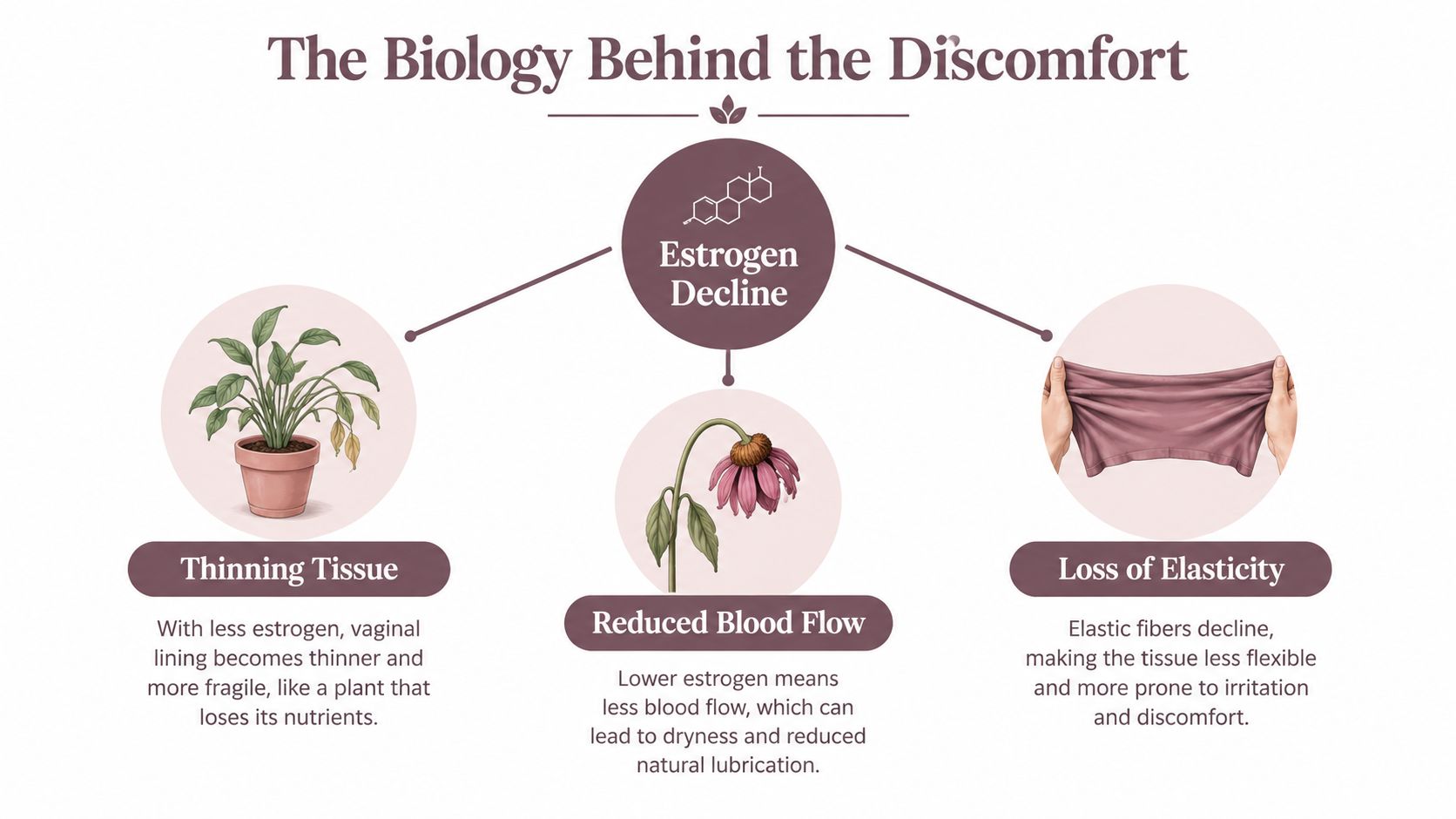
Estrogen helps maintain the structure and function of vulvovaginal tissue. As estrogen production falls during menopause, the vaginal lining can become thinner, natural lubrication can decrease, elasticity can decline, and the vaginal environment can become less acidic. These changes can make friction feel sharper and irritation easier to trigger.
One accessible analogy is a houseplant. A well-watered plant has supple leaves and resilient stems. A plant left without enough water becomes less flexible and more vulnerable to damage. Estrogen isn't just “moisture,” but its decline changes the tissue's ability to maintain thickness, lubrication, elasticity, and a supportive environment.
Why ordinary products can backfire
The vagina is a specialized tissue environment, not an area that benefits from aggressive scrubbing or perfumed “freshening.” Scented washes, douches, fragranced wipes, and generic lotions can add irritants to already sensitive skin. A product that feels cooling or clean on an arm may sting on vulvar tissue, particularly when the protective surface is more fragile.
The internal vagina is self-cleaning. External vulvar skin may need gentle cleansing, but more product isn't automatically better. Choose formulas designed for sensitive intimate tissue, and avoid placing a balm, oil, or moisturizer inside the vagina unless the label specifically says it's intended for internal use.
Why pH matters
Estrogen-supported tissue helps maintain a more acidic vaginal environment. When estrogen falls, the pH can rise and the tissue barrier can become less resilient. That doesn't mean every symptom is an infection, and it doesn't mean you should attempt to correct pH with home remedies. It means harsh products and unnecessary internal cleansing can make an already delicate environment harder to manage.
Menopause-related estrogen changes can be substantial. StatPearls reports about a 95% reduction in estrogen production during menopause, with roughly 75% of women experiencing vaginal dryness, 40% reporting pain during intercourse, and 30% to 40% experiencing urinary urgency and frequency, as documented in this clinical overview of GSM physiology and treatment. If you want a plain-language symptom overview, this guide to low-estrogen symptoms can help you organize what you're noticing before an appointment.
First-Line Relief with Non-Hormonal Moisturizers and Balms
Non-hormonal care can be a sensible starting point for mild to moderate dryness, especially if you prefer over-the-counter products or need immediate comfort while arranging an evaluation. The key is to distinguish between products that reduce friction for a short period and products intended to support ongoing surface hydration.
Lubricants are for the moment. A water-based lubricant can be applied before or during sexual activity to reduce friction. Silicone-based lubricants may last longer, but compatibility matters, particularly with condoms or sensitive skin. Lubricants don't change the underlying tissue changes associated with GSM, so you may still need a separate routine for day-to-day comfort.
Moisturizers are for baseline support. Vaginal moisturizers are used regularly rather than only during sex. The U.S. Office on Women's Health states that vaginal moisturizers can be used every few days and water-based lubricants can be used before or during sex, as described in its menopause treatment guidance.
Where balms fit
A botanical balm is usually most appropriate for the external vulva, where it can help reduce the sensation of surface tightness or friction. Look for a fragrance-free, alcohol-free, paraben-free formula made for intimate skin. Plant-based doesn't automatically mean irritation-free, so patch testing on a less sensitive area and stopping if burning develops are sensible precautions.
Use only a small amount on clean, dry external skin. Don't assume an oil or balm belongs inside the vagina, and don't use household oils as a substitute for a product formulated and labeled for vulvovaginal care. A practical evidence-based vaginal dryness guide offers useful context on why “natural” ingredients still require careful selection and use.
A simple non-hormonal routine
- For daily irritation: Clean the external vulva gently with lukewarm water or a mild, fragrance-free cleanser, then apply an appropriate external moisturizer if needed.
- For intimacy: Apply lubricant before friction begins, and add more rather than continuing through discomfort.
- For persistent surface dryness: Consider a regular vaginal moisturizer designed for internal use, following its instructions. Learn more about hyaluronic acid vaginal care if you're comparing hydrating options.
Evidence syntheses describe moisturizers and lubricants as providing short-term relief, while a randomized comparison found that hyaluronic acid vaginal gel and estriol cream both significantly improved dryness over 30 days, as reported in this review of non-hormonal options. If symptoms remain moderate, severe, or disruptive despite consistent use, surface comfort alone may not address the tissue changes driving the problem.
When to Consider Local and Systemic Hormone Therapies
If non-hormonal care isn't enough, prescription therapy can target the biology of GSM more directly. The choice depends on your symptoms, medical history, personal preferences, and whether you also need treatment for whole-body menopausal symptoms such as hot flashes.
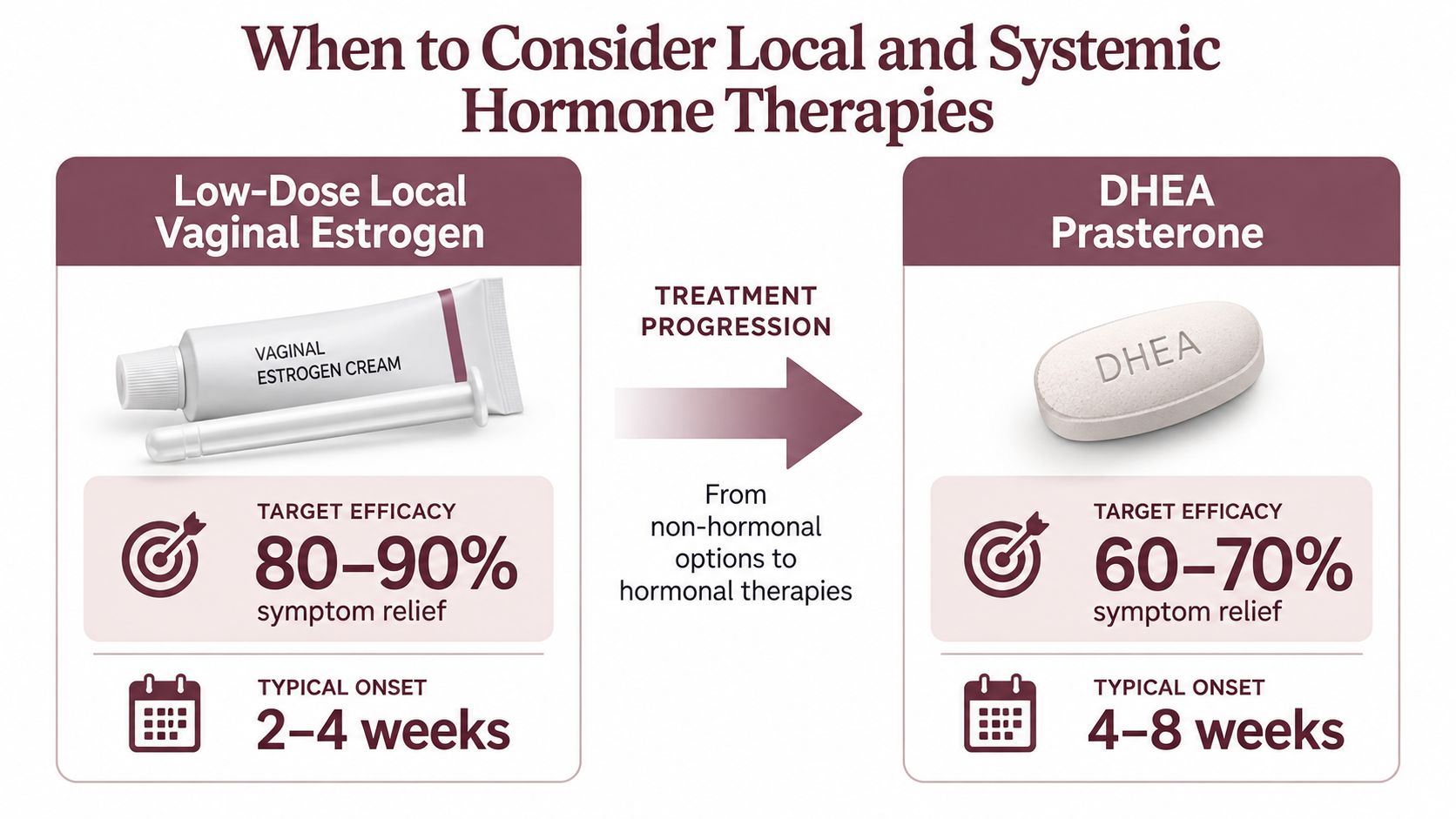
Low-dose local vaginal estrogen comes as a cream, tablet, or ring. It delivers estrogen to vaginal tissue rather than treating the entire body in the same way as systemic hormone therapy. For isolated dryness, irritation, or painful sex, this targeted route is often the most direct option. It may also be considered when urinary urgency, frequency, or recurrent urinary tract infections accompany vaginal symptoms.
Vaginal DHEA, also called prasterone, is another local prescription option. The U.S. Office on Women's Health notes that prasterone is FDA-approved for pain during sex caused by postmenopausal vaginal dryness. Ospemifene is an oral non-estrogen option approved for vaginal dryness and painful sex caused by menopause, according to the same guidance.
Local versus systemic treatment
An expert guideline review reports that local therapy is effective in about 80% to 90% of cases, while systemic hormone therapy relieves symptoms in roughly 75% of cases, as summarized in the GSM treatment reference. These figures describe evidence across treatment approaches, not a guarantee for an individual person.
Systemic hormone therapy may make sense when vaginal symptoms occur alongside bothersome hot flashes or other systemic menopausal symptoms. It isn't automatically the right choice for isolated dryness. A clinician can review your uterus, breast and cardiovascular history, medications, cancer history, bleeding pattern, and treatment goals before recommending a route.
The practical question isn't “Are hormones good or bad?” It's “Which tissue needs treatment, what symptoms are present, and which option fits my risk profile and preferences?”
Before an appointment, write down your main symptoms, what you've tried, whether urinary symptoms are present, and whether you have experienced bleeding. If sleep or broader hormone concerns are part of the picture, a sleep-first hormone guide may help you separate sleep-related concerns from the specific questions you'll bring to your clinician.
Here's a concise educational video to support that discussion:
Treatments to Avoid and Common Care Mistakes
Marketing can make intimate care seem more complicated than it is. Products may promise “rejuvenation,” tightening, detoxification, or a return to premenopausal tissue without explaining what problem they treat or what evidence supports them. Energy-based vaginal rejuvenation devices remain investigational and aren't supported as an established treatment for GSM.
That matters because the word “rejuvenation” can imply that normal menopausal tissue needs cosmetic correction. GSM is a medical condition with several treatment paths. A device marketed as a quick fix may not address urinary symptoms, ongoing irritation, or the tissue changes that make friction painful.
Remove common irritants first
A gentle routine often starts with subtraction. Avoid:
- Douching: It can disturb the vaginal environment and doesn't treat estrogen-related tissue changes.
- Fragranced products: Scented washes, wipes, sprays, bubble baths, and deodorizing products can irritate sensitive skin.
- Generic lotions: Body lotions may contain ingredients that sting or aren't intended for vulvar or vaginal tissue.
- Repeated self-treatment: Persistent itching or burning may reflect a skin condition, infection, or GSM, and repeated over-the-counter treatment can delay the correct diagnosis.
- Unprotected friction: Continuing through pain can worsen irritation. Add lubricant, change position, pause, or stop.
Synthetic clothing is not naturally harmful, but heat, sweat, and rubbing can aggravate already reactive skin. Breathable underwear, prompt changes after exercise, and avoiding tight clothing during a flare may make daily comfort easier.
Bleeding after sex, new sores, unusual discharge, severe pain, or urinary symptoms that persist deserve clinical assessment. Menopause can explain a symptom pattern, but it shouldn't be used to dismiss symptoms that need a closer look.
Building Your Personalized Treatment Strategy
A useful menopausal dryness treatment plan matches the intensity and pattern of symptoms rather than forcing everyone into “natural” or “hormonal” categories. Start by asking three questions: Where do I feel discomfort? How often does it occur? What have I already tried?
External irritation with occasional dryness may respond to gentle cleansing, a fragrance-free external balm, and a suitable lubricant during intimacy. Ongoing internal dryness, painful penetration, recurrent urinary symptoms, or discomfort that affects sleep and movement suggests a need for a clinician-led assessment. You can still use non-hormonal products for surface comfort while discussing prescription treatment.
Tiered Treatment Decision Matrix
| Symptom Severity | Primary Approach | Clinical Escalation |
|---|---|---|
| Mild, occasional external dryness or friction | Gentle external cleansing, fragrance-free vulvar moisturizer or balm, and lubricant before sexual activity | Seek advice if symptoms persist, spread, or change |
| Mild to moderate internal dryness | Regular vaginal moisturizer intended for internal use, plus lubricant for intimacy | Discuss persistent symptoms or inadequate relief with a clinician |
| Moderate dryness with painful sex, burning, or daily irritation | Continue appropriate non-hormonal comfort measures while arranging a GSM evaluation | Ask about low-dose local vaginal estrogen, vaginal DHEA, or ospemifene |
| Severe, persistent, or function-limiting symptoms | Don't rely on repeated product trials alone | Request examination and a personalized prescription discussion |
| Dryness with urinary urgency, frequency, or recurrent UTIs | Supportive surface care may help comfort, but track urinary symptoms separately | Ask about GSM-related urinary treatment and whether local therapy is appropriate |
| Dryness alongside hot flashes or other systemic symptoms | Use non-hormonal care for local comfort while documenting the full symptom pattern | Discuss whether systemic hormone therapy or another broader plan fits your history |
How to use the matrix
A tier isn't a permanent label. You may begin with a moisturizer and lubricant, then escalate if the tissue remains uncomfortable. You may also combine treatments, such as local prescription therapy for the underlying GSM pattern and an external balm for vulvar friction.
Bring product names and ingredient lists to your appointment. Tell your clinician whether you've had unexplained bleeding, breast cancer, blood clots, liver disease, urinary infections, or sensitivity to topical products. Shared decision-making works best when you describe what you want to improve, not only what treatment you're afraid to try.
Current guidance emphasizes that treatment options differ in evidence strength and should be selected through shared decision-making. The 2025 GSM guideline resource also supports a broader view of symptoms, including urinary and quality-of-life effects. Your plan should protect comfort without turning every sensation into a crisis or every product into a promise.
Creating a Sustainable Vulvovaginal Care Routine
Long-term comfort usually comes from a routine you can repeat, not from constantly switching products. Keep cleansing gentle, apply only what the product label recommends, and treat the vulva as sensitive skin rather than a surface that needs scrubbing. If internal dryness is part of the pattern, use an internal moisturizer specifically made for that purpose and follow the directions.
A routine that supports comfort
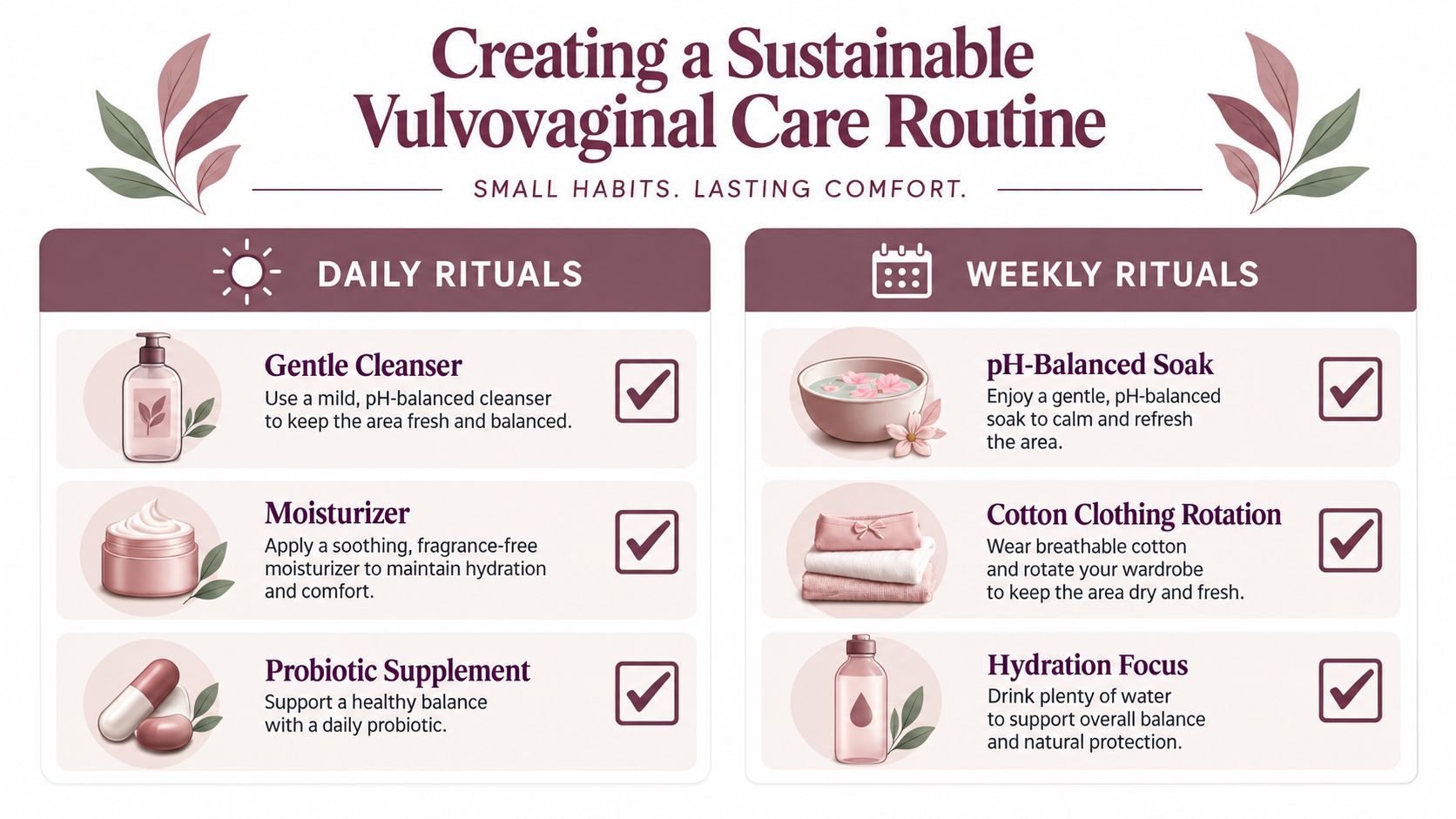
Daily care can be simple:
- Wash the external vulva gently with lukewarm water or a mild fragrance-free cleanser.
- Pat dry instead of rubbing.
- Apply an external balm only where it's intended.
- Choose breathable clothing when heat and friction trigger symptoms.
- Drink fluids according to your general health needs, and don't use excessive water intake as a treatment for GSM.
Weekly care means checking the pattern rather than adding more products. Note whether dryness is improving, whether sex or exercise triggers irritation, and whether urinary urgency is changing. If you use probiotics or supplements, review them with a clinician, particularly if you take medications or have a health condition. They may complement a wellness routine, but they shouldn't replace evaluation for persistent symptoms.
You can find examples of product categories and routines in this vaginal dryness products guide. Choose fewer products with clear purposes rather than layering several fragranced or active formulas. A moisturizer, a lubricant, and a gentle external option may be more useful than a crowded cabinet.
Body-positive care also means keeping pleasure optional and pressure-free. Sexual activity can be part of comfort and connection, but you don't need to have sex to justify treatment. Your goal may be walking without burning, sleeping comfortably, wearing your preferred clothes, or using the bathroom without irritation.
If symptoms persist, arrange an evaluation instead of increasing the strength or frequency of home products. GSM is treatable, and asking for care early can help you choose a plan that supports both daily comfort and long-term genitourinary health.
Momotaro Apotheca offers plant-based, fragrance-free, pH-conscious vulvovaginal balms and care routines for concerns such as dryness, irritation, and perimenopausal discomfort. Visit Momotaro Apotheca to review the available options and choose non-prescription support that fits alongside, rather than replaces, clinician-guided menopausal dryness treatment.


