


Organic Feminine Care: What Really Works
“Organic” doesn't automatically mean safe for the vulva. A plant extract can irritate sensitive tissue just as readily as a synthetic ingredient, especially when a product contains fragrance, essential oils, harsh surfactants, or an unsuitable pH. The more useful question is whether a formulation protects the vulvar barrier, respects the vaginal microbiome, and gives you a clear reason to use it.
That distinction matters as organic feminine care moves into the mainstream. One 2026 industry report estimates the global category at US$2.75 billion in 2025, with a projection of US$3.96 billion by 2030, equivalent to a 7.7% CAGR over that period. The same report identifies Europe as the largest region in 2025 and North America as the fastest-growing region, showing broad but uneven adoption across markets. The Business Research Company's organic feminine care market report provides that market context.
Growth creates more choice, but it also creates more confusing labels. Good intimate care starts with body literacy, not fear of “chemicals” or faith in a green package.
Table of Contents
- The Clean Beauty Trap in Intimate Wellness
- Decoding Organic Certifications and Label Claims
- The Vulvovaginal Microbiome and pH Balance
- Evaluating Product Categories for Sensitive Areas
- Matching Plant-Based Routines to Life Stages
- The Safety Checklist for Intimate Formulations
- Embracing Body Literacy and Proactive Care
The Clean Beauty Trap in Intimate Wellness
“Organic” can describe a farming method, not a safety profile. For vulvar care, natural origin describes where an ingredient comes from, not how human tissue will tolerate it. Formulation science matters more than a green label: the product should suit external vulvar skin, support its barrier, and avoid unnecessary disruption to the local environment.
Essential oils, botanical extracts, and concentrated plant saps contain compounds that may sting or trigger contact dermatitis. A product can smell fresh and feel luxurious while irritating delicate tissue. The vulvar barrier is particularly sensitive to fragrances, wipes, adhesives, surfactants, and other common hygiene inputs. Harvard Health's guidance on common vulvar skin conditions recommends minimizing irritants and choosing unscented, pH-appropriate cleansing or plain water.
Natural isn't the same as gentle
“Chemical” is too broad to guide a purchase. Water, fatty acids, lactic acid, and plant compounds are all chemicals. The useful question is whether the complete formula fits the tissue and the intended use.
Plant-derived surfactants can remove too much protective oil from the vulva. An organic wash can combine several fragrant botanicals, increasing the chance of irritation for someone with sensitive skin. A “detox” product can also promote internal cleansing, although the vagina has its own cleaning process and does not need douching.
The useful question: Does this product reduce unnecessary irritant exposure while preserving moisture and the local environment?
A fragrance-free, soap-free formula with a transparent ingredient list may suit sensitive skin better than a heavily scented product marketed as botanical. For some people, plain lukewarm water on the external vulva is enough. Others may choose a mild cleanser used sparingly. Internal vaginal washing is unnecessary.
Resources such as this discussion of plant-based and non-toxic intimate care broaden the discussion beyond the false choice between “natural” and “toxic.” The goal is not suspicion of every plant ingredient. It is a clear look at the full formulation, including its fragrance profile, cleansing strength, intended location, and compatibility with sensitive tissue.
Decoding Organic Certifications and Label Claims
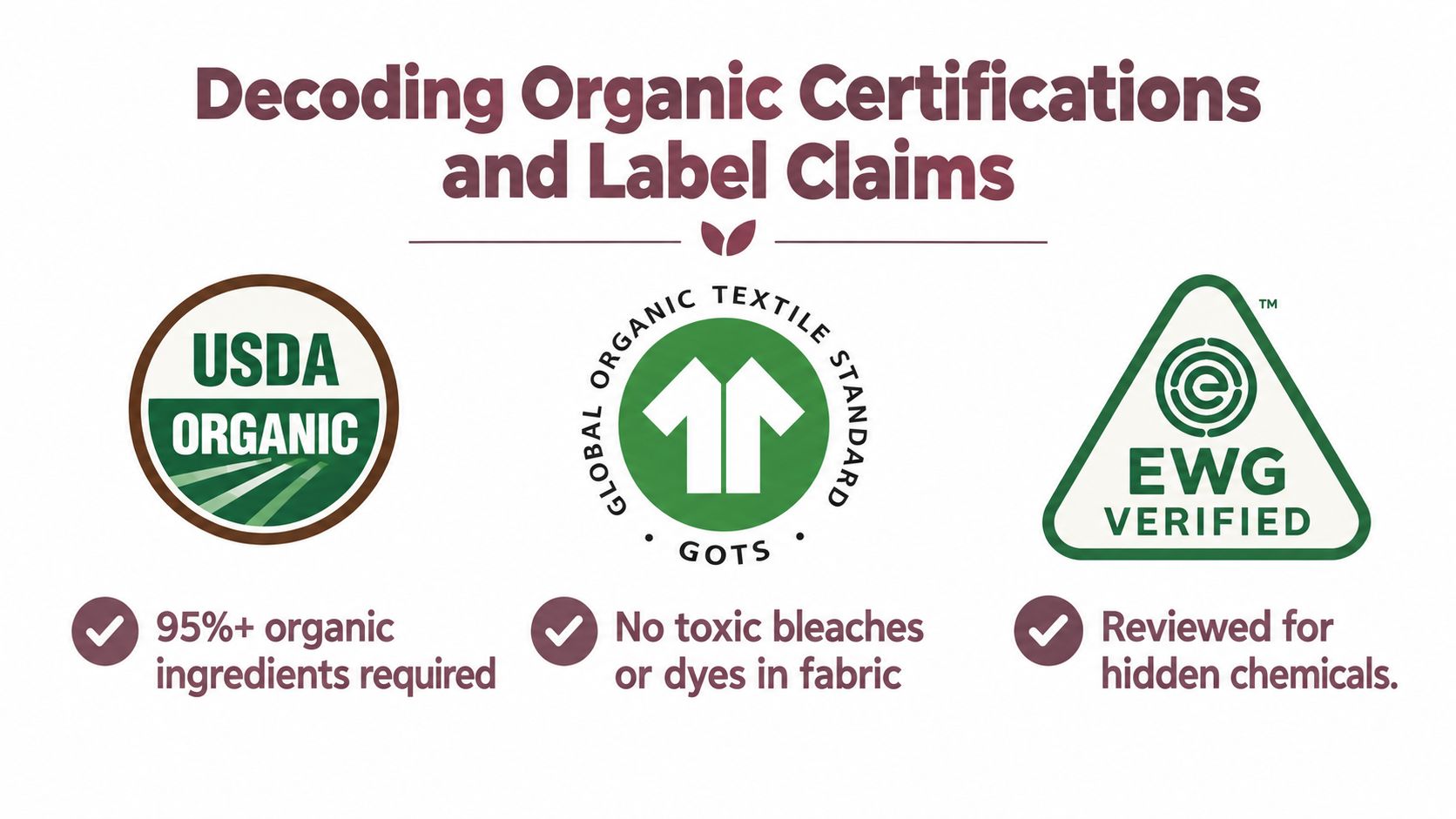
A certification can tell you something useful, but it doesn't answer every intimate-care question. Organic certification generally concerns agricultural production and ingredient sourcing. It doesn't guarantee that a product is fragrance-free, pH-compatible, or suitable for irritated vulvar tissue.
The label “organic” may refer to the whole product, a specific ingredient, or a marketing theme. “Plant-derived,” “botanical,” and “clean” are often less specific. They can describe a formula without telling you how much of the product comes from plants, which processing methods were used, or whether the finished product was assessed for sensitive-area tolerability.
Read the back before trusting the front
A critical label check looks at four details:
- Certification scope: Find out whether the certification covers the finished product or only selected ingredients.
- Full ingredient list: A transparent list lets you identify fragrance, essential oils, alcohol, sulfates, and potential allergens.
- Intended location: “Feminine hygiene” is vague. A product should state whether it's intended for external vulvar skin, menstrual use, sexual comfort, or another purpose.
- Use instructions: Internal use, external use, rinse-off use, and leave-on use create different tolerability questions.
Cruelty-free manufacturing is also separate from organic certification. It addresses animal testing or production practices, not the product's pH or effect on the vulvar barrier. A resource explaining how organic standards operate in another category, such as tea and kombucha organic rules Australia, can help illustrate why certification terms need to be read in context rather than treated as universal safety guarantees.
If a formula highlights one organic aloe extract but doesn't clearly disclose its cleansing base or fragrance system, keep evaluating. A single appealing ingredient can't compensate for a poorly suited finished formula.
Some products make their intended composition more explicit. For example, Oil-Based Lubricant - USDA Organic Formula for Long-Lasting Intimate Comfort & Moisturizing is described as a USDA Certified Organic, oil-based lubricant made with coconut oil, beeswax, shea butter, sea buckthorn oil, and sweet almond oil. The product information also describes it as fragrance-free, alcohol-free, glycerin-free, petroleum-free, paraben-free, and hypoallergenic, while noting that it can double as a massage oil. Those details still don't replace personal tolerance testing or the need to follow use instructions.
For a broader discussion of ethical personal-care purchasing, this guide to cruelty-free personal care products offers helpful context. The central lesson remains simple: certification is one data point, not a complete safety assessment.
The Vulvovaginal Microbiome and pH Balance
“Organic” describes how an ingredient was produced, not whether a finished intimate formula suits vulvar or vaginal tissue. Safe choices depend on formulation, intended use, pH compatibility, and microbiome preservation.
The vagina maintains its own changing ecosystem through microorganisms, epithelial tissue, moisture, and acidity. The vulva is the external tissue around the vaginal opening, so it faces different exposures, including friction, sweat, urine, menstrual fluid, clothing, and product residue. Care for one area should not automatically be applied to the other.
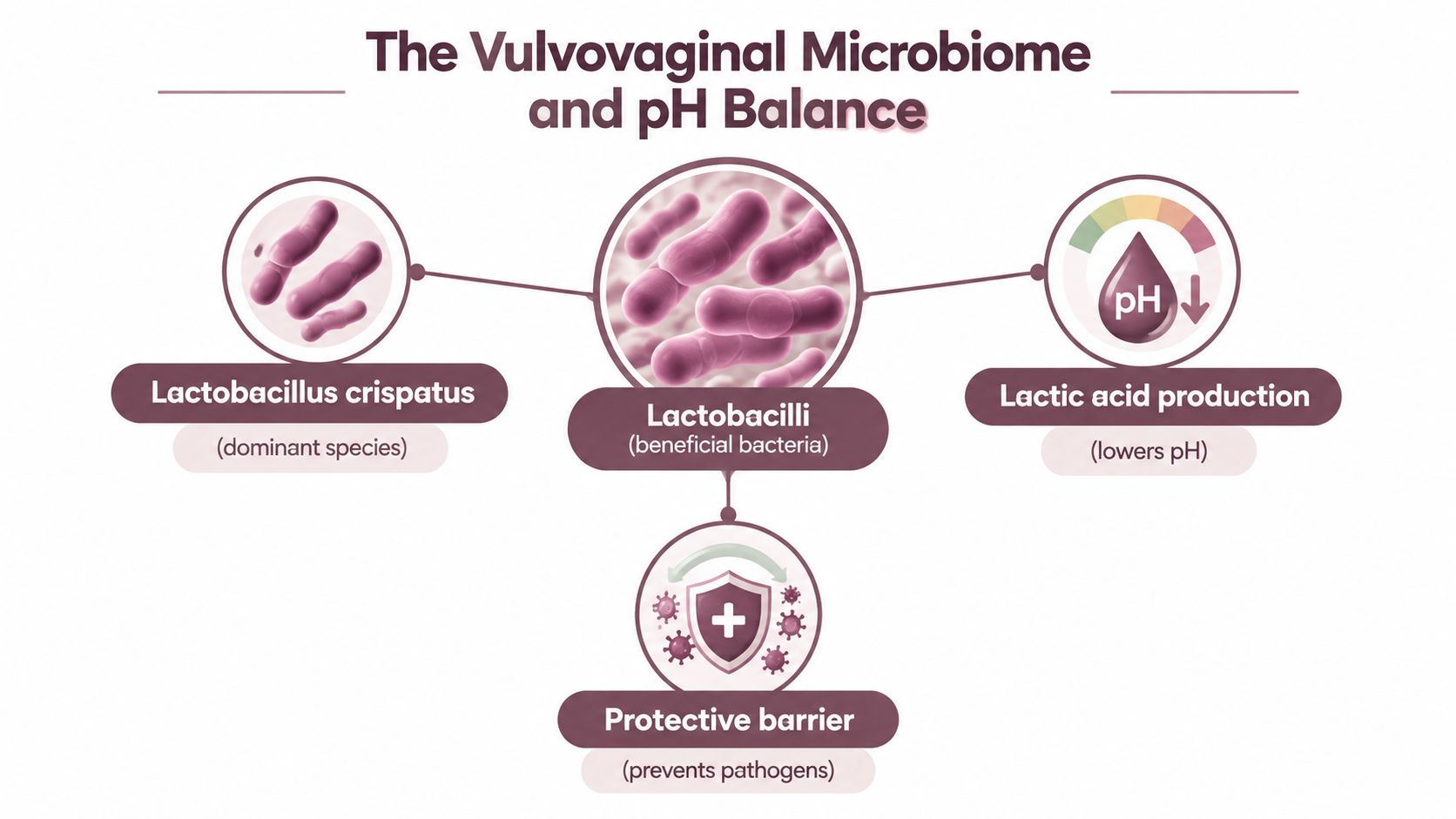
Lactobacilli help support vaginal balance by producing lactic acid and hydrogen peroxide. These substances help maintain an acidic vaginal environment around pH 3.8–4.2. Reduced acidity is associated with dysbiosis and the overgrowth of organisms linked to bacterial vaginosis and yeast symptoms, as explained in Cleveland Clinic's overview of vaginal flora.
Why internal cleansing can backfire
Douching, fragranced washes, and alkaline soaps can disturb the conditions that support a stable microbiome. Even a plant-based or organic formula may cause irritation if repeated washing, residue, or an unsuitable cleansing system weakens the skin barrier.
For external intimate washes, one review identifies pH 4.2–5.6 as an appropriate target range and favors syndet-based systems. These cleansers can provide mild detergency while helping protect vulvar microbiota. This range applies to vulvar-compatible product formulation, not the vagina's biological acidity. “pH-balanced” therefore needs context: the brand should explain the target and specify whether the product is intended for external skin only.
The goal of intimate care is to remove what needs removing while preserving the conditions that support comfort.
A simple routine may include plain or unscented cleansing, gentle drying, and clothing that does not trap unnecessary moisture. Cotton underwear can support airflow. Scented wipes and douching create avoidable exposure. Persistent odor, unusual discharge, sores, pain, burning, or recurrent symptoms call for clinical assessment rather than repeated product trials.
For practical guidance on supportive habits and unnecessary intervention, read this guide to maintaining a healthy vaginal microbiome.
Here is a short visual explanation of the biology:
Evaluating Product Categories for Sensitive Areas
Not every organic feminine care format creates the same exposure. A disposable menstrual product touches tissue for a defined purpose, while a wash may be used repeatedly without a clear need. An external balm, lubricant, wipe, or douche also has a different risk profile depending on whether it stays on the skin, enters the vagina, contains fragrance, or creates friction during use.
The table below offers a practical comparison. It isn't a substitute for a diagnosis, and “organic” doesn't change the basic biology of each format.
Organic intimate product formats evaluated
| Product Format | Intended Use | Microbiome Impact | Verdict for Sensitive Skin |
|---|---|---|---|
| Organic cotton pads or tampons | Menstrual fluid management | Usually limited to the product's contact and wear period, but internal products still require careful material and fragrance review | A reasonable option when unscented, clearly labeled, and comfortable |
| External balm | Moisture and friction support on vulvar skin | Doesn't need to alter vaginal pH when used externally, but the ingredient list still matters | Potentially useful for dryness or chafing when fragrance-free and tolerated |
| Oil-based lubricant | Reduce friction during sexual activity | May be suitable for external comfort, but oil-based products can affect condom compatibility | Consider only after checking the product's instructions and barrier method compatibility |
| External gentle cleanser | Remove sweat, residue, or menstrual fluid | A mild, pH-appropriate system may limit disruption; overuse can still irritate | Use sparingly, externally, and stop if stinging or dryness develops |
| Scented wipes | Quick cleaning after travel, sex, or menstruation | Fragrance, preservatives, and repeated wiping may increase irritation | Usually a poor choice for reactive vulvar skin |
| Internal wash or douche | Claimed cleansing or odor control | Can disturb acidity, lactobacilli, and epithelial protection | Avoid routine internal use |
| Botanical hydrosol or mist | Cooling or sensory comfort | Depends on ingredients, preservatives, and whether fragrance compounds are present | Not automatically gentle, patch test externally and use cautiously |
Organic cotton pads and tampons may appeal to people who want greater clarity about material sourcing. That choice can reduce concern about added fragrance or certain processing inputs, but it doesn't make prolonged wear, pain, or unexpected bleeding something to ignore. Comfort and clear labeling matter more than a green symbol alone.
Wipes deserve particular caution after birth, when tissue may be tender and healing. A practical discussion of whether flushable wipes are safe after birth reinforces an important distinction: flushability is a plumbing or disposal claim, not proof of vulvar tolerability. Plain water, a peri bottle, or clinician-recommended care may be more appropriate during recovery.
Match the format to the problem
A balm may make sense for external friction or dryness. It won't diagnose an infection. A lubricant can reduce friction during sex, but it isn't a treatment for burning, unusual discharge, or persistent pain. A menstrual product manages bleeding, but it doesn't address a new odor or vulvar rash.
That separation prevents a common mistake, using a product format as if it were a medical solution. Choose the least complex option that serves the specific purpose, then stop if your symptoms worsen.
Matching Plant-Based Routines to Life Stages
A routine that feels comfortable during one stage of life may become irritating or inadequate during another. Hormonal changes, childbirth, menstruation, sexual activity, medications, and skin conditions all affect moisture, friction, and sensitivity. Personalization should begin with the symptom and the tissue involved, not with the word organic.
Postpartum care needs restraint
After birth, the vulva and perineum may be swollen, tender, healing, or affected by tears and stitches. The safest routine is usually simple and guided by the postpartum care instructions provided by a clinician. Avoid introducing new fragranced products, essential oils, internal washes, or suppositories while tissue is healing unless a healthcare professional recommends them.
A peri bottle with clean water, gentle patting rather than rubbing, breathable clothing, and adequate time for recovery may be more useful than a cabinet full of botanical products. Increasing pain, fever, heavy bleeding, wound changes, or foul-smelling discharge needs prompt medical attention.
Perimenopause and menopause
Declining estrogen can contribute to vaginal dryness and thinner, more fragile tissue. In that setting, a fragrance-free external balm may help reduce friction on vulvar skin, while a lubricant can support sexual comfort. Persistent internal dryness, pain with penetration, bleeding after sex, or urinary symptoms deserve a conversation with a healthcare professional because moisturizers and lubricants don't address every cause.
A plant-based routine can complement medical care, but it shouldn't replace an evaluation. Avoid assuming that repeated itching is “just dryness” or that every burning sensation reflects an infection.
After-sex and recurrent symptoms
After sex, some people notice friction, external irritation, or urinary discomfort. A gentle rinse of the external area, urinating when needed, adequate hydration, and avoiding fragranced wipes can reduce unnecessary irritation. Recurrent urinary symptoms, however, require medical guidance, especially when there is pain with urination, fever, flank pain, or blood in the urine.
The same principle applies to recurrent yeast-like symptoms or suspected bacterial vaginosis. Plant-based balms may soothe external discomfort, but they can't confirm whether the cause is yeast, bacterial vaginosis, dermatitis, an STI, or another condition. Don't use a soothing product to delay testing when symptoms persist or return.
For a broader self-care perspective, this gentle reset routine after a period can inspire a relaxing bath ritual, provided bath additives don't contact irritated vulvar tissue. A warm bath can feel restorative, but “detox” language shouldn't imply that the vagina needs cleansing or that a bath treats infection.
The Safety Checklist for Intimate Formulations
“Organic” describes sourcing, not automatically safety for vulvar tissue. Formulation science matters more than a front-label promise. Start by identifying where the product will be used, then examine its ingredients, cleansing system, pH information, and directions. A brand that does not explain its formula or intended use leaves you without enough information for a confident choice.
Check the formulation, not just the claim
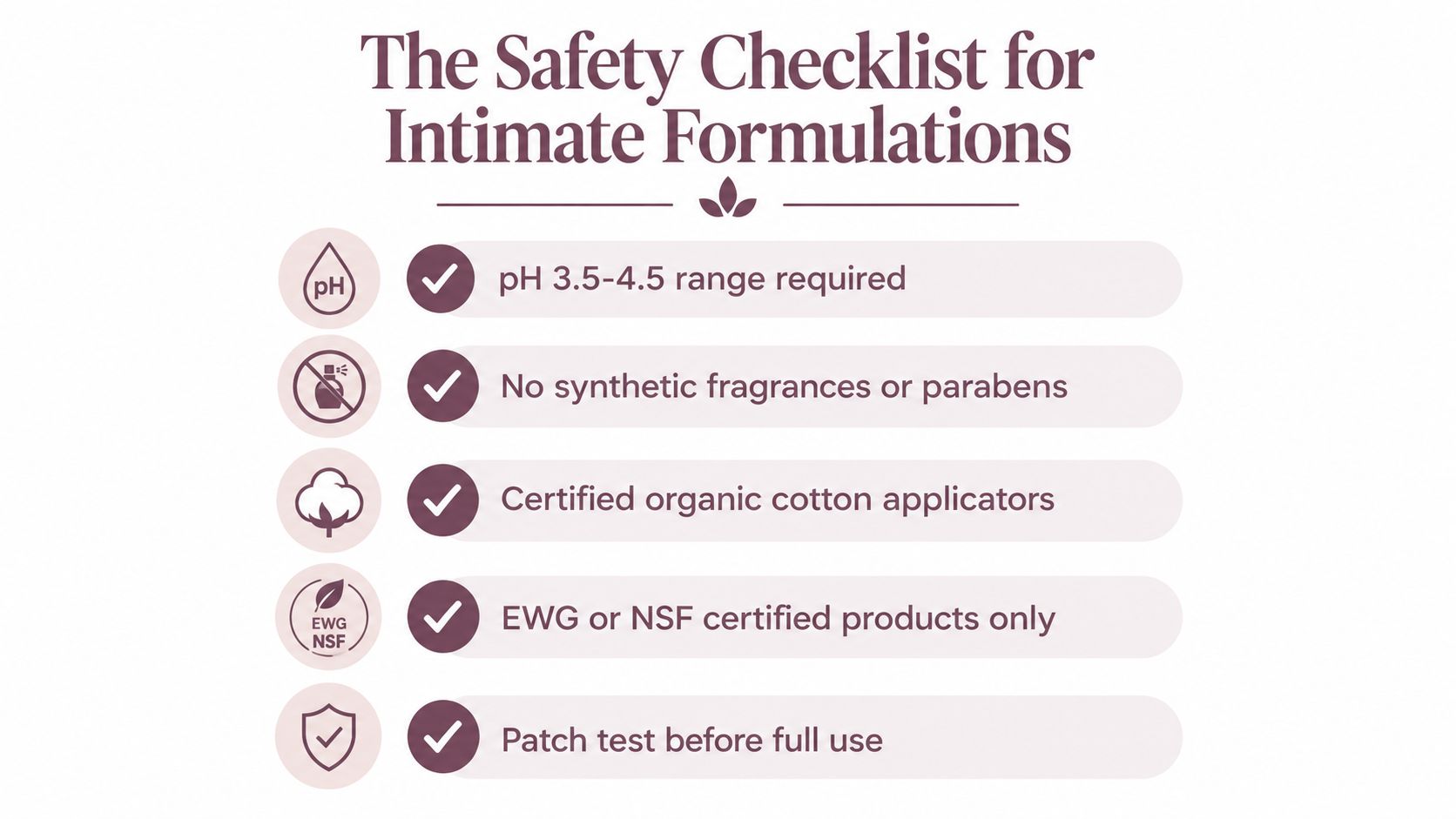
Use this checklist before applying an organic feminine care product:
- Confirm the use site: Choose products labeled for external vulvar skin, menstrual use, or sexual comfort as appropriate. An external product should not be assumed suitable for internal use.
- Look for fragrance-free wording: “Unscented” can mean that fragrance has been masked rather than excluded. Check for fragrance, parfum, essential oils, and strongly aromatic botanical extracts.
- Review the cleansing system: Soap, harsh surfactants, and alkaline formulas may increase dryness or irritation. A mild syndet system may suit an external wash better.
- Ask about pH: Look for a stated target range and the intended use site. A wash formulated for external skin is not the same as a product intended for internal use.
- Prefer a short, transparent ingredient list: Fewer ingredients make it easier to identify a possible trigger, particularly when skin is already irritated.
- Check barrier compatibility: If a product contains oil, verify whether it is compatible with condoms or other barrier methods before sexual activity.
- Patch test external products: Apply a small amount to an external area first, never to broken skin or inside the vagina. Stop if burning, swelling, or worsening redness appears.
- Separate comfort from treatment: A balm may soothe the surface, but persistent odor, unusual discharge, sores, bleeding, fever, or significant pain call for clinical evaluation.
Read the directions as carefully as the ingredients. “External use only,” contact time, rinsing instructions, and storage guidance can change how much exposure the vulvar barrier receives.
Repeated exposure can matter even when each use seems minor. Fragrance, wipes, adhesives, surfactants, and complex formulas may create a pattern of irritation. Simple is not a marketing aesthetic here. It is a practical way to reduce variables.
Avoid products that promise to restore pH, remove toxins, or eliminate normal odor. A healthy vulva has its own natural scent, and the vagina does not need to smell like flowers, fruit, or herbs.
Embracing Body Literacy and Proactive Care
Body literacy means recognizing your baseline and noticing meaningful changes without treating normal anatomy as a problem. A healthy vulva may have variation in color, texture, moisture, and scent. Menstrual fluid, sweat, sexual activity, hormonal changes, and clothing can all affect how the area feels from day to day.
Suppose a person develops mild external chafing after exercise. They might reduce friction, switch to breathable clothing, rinse with water, and use a simple fragrance-free external barrier product if tolerated. If the same person develops persistent itching, new discharge, sores, pain with urination, or symptoms that keep returning, the next step isn't adding more botanical products. It's arranging an assessment.
Confidence grows when you can tell the difference between comfort care, prevention, and treatment.
Organic feminine care can support intentional choices when it focuses on transparent ingredients, minimal irritants, external barrier protection, and realistic use cases. It can't make every product safe, and it can't replace diagnosis. The most respectful routine is the one that leaves your body's natural processes alone when no intervention is needed and offers targeted support when comfort or friction is the actual concern.
Use product quizzes and educational resources as starting points, not as diagnoses. Bring your ingredient list and symptom history to a qualified healthcare professional when symptoms persist, recur, or interfere with daily life. Your vulva isn't a source of shame, and asking direct questions about pain, odor, dryness, discharge, sex, or urinary symptoms is a practical part of healthcare.
Momotaro Apotheca offers certified organic, cruelty-free vulvovaginal care products, including fragrance-free balms, oils, ingestibles, and condition-focused routines for concerns such as dryness, irritation, urinary discomfort, and recurrent vaginal symptoms. Visit Momotaro Apotheca to review transparent ingredient information, explore life-stage collections, and use the self-guided quiz to find a routine that fits your needs.


