


How to Choose an Organic Intimate Wash
An organic intimate wash isn't automatically safer, gentler, or more useful than another cleanser. And “natural” doesn't mean it belongs inside the vagina. The vagina is self-cleaning; washing, if you choose to use a cleanser, is an external-care decision about the vulva.
| Option | Where it belongs | What it can reasonably do |
|---|---|---|
| Water alone | External vulva | Rinse away sweat or residue |
| Mild, fragrance-free wash | External vulva only | Cleanse when water doesn't feel sufficient |
| Internal wash or douche | Nowhere in a routine | It isn't needed to clean the vagina |
The useful questions aren't whether a label sounds clean or whether a product promises freshness. Ask what the formula is for, what its directions say, and whether your concern is something a wash can address at all.
Table of Contents
- Why Organic Does Not Mean Internal
- What the Organic Label Actually Covers
- Ingredient Flags Worth Checking First
- pH Cues That Do Not Diagnose Infection
- Comparing Washes with Non-Wash Care
- Situations Where Washing Helps or Hurts
- A Gentle Routine and Next Step
Why Organic Does Not Mean Internal
A popular assumption deserves a direct correction: organic doesn't mean a wash is safe to put inside the vagina, or that it can treat an infection. The vagina maintains its own environment. The vulva is the external skin and tissue that may need ordinary, gentle care. Knowing the difference between the vulva and vagina makes product directions easier to interpret.
People have used internal cleansing for reasons such as hygiene, wellness, and relief from genital symptoms. That history helps explain why douching and intimate cleansing have been marketed as routine care. But a familiar practice isn't necessarily a helpful one. A WHO review of vaginal practices reported internal cleansing among women in different communities and documented unwanted outcomes, including lesions, infections, and swelling. It also noted that some products may alter vaginal flora in ways that could increase vulnerability to sexually transmitted infections (WHO review of vaginal practices).
Natural or organic labeling does not establish that a product is appropriate for internal use.
That's the distinction marketing can blur. An external cleanser is not a deodorant for the vaginal canal, a treatment for bacterial vaginosis (BV) or yeast, or a way to sterilize the area. Even a plant-based formula can irritate sensitive skin, and a pleasant scent doesn't tell you whether a product suits your body.
You don't have to use an intimate wash at all. Water may be enough. If you're shopping, the label should make external use clear and avoid suggesting that the product treats infection or eliminates normal body odor.
By the end of this guide, you should be able to decide whether you need a cleanser, understand what organic claims can and can't tell you, and recognize when symptoms need medical attention. Persistent odor, itching, unusual discharge, pelvic pain, fever, sores, bleeding, pregnancy-related symptoms, or repeated yeast-like or BV-like episodes call for clinical advice, not another bottle.
What the Organic Label Actually Covers
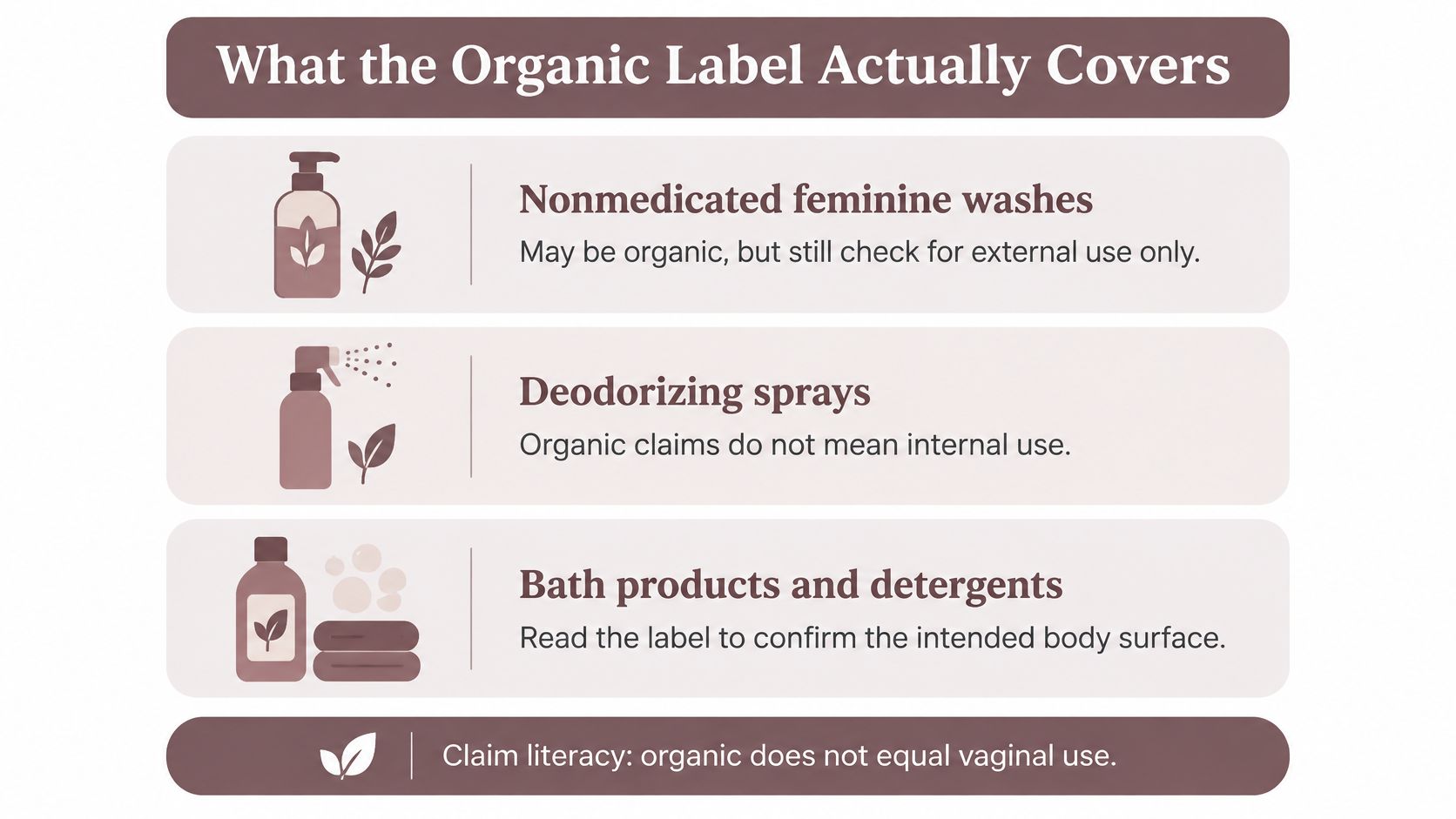
Organic, plant-based, and natural can describe ingredients or sourcing. Those words don't demonstrate that a wash prevents BV, yeast infections, or urinary tract infections (UTIs), and they don't tell you whether it's meant for external skin or internal use.
In the United States, the product category matters. A peer-reviewed review explains that nonmedicated feminine washes, deodorizing sprays, powders, and most wipes are generally regulated as cosmetics. Medicated douches, anti-itch creams, and certain yeast-infection treatments fall under over-the-counter drug rules; tampons, pads, and most personal lubricants are generally treated as medical devices (review of feminine hygiene products and regulation).
Read the claim and the directions separately
Cosmetics don't undergo the same stringent premarket safety review required for drugs. They still may not contain poisonous or deleterious substances that could injure someone under labeled conditions of use. The practical point is that a cosmetic's presence on a shelf isn't proof that its benefits have been clinically established.
The same review discusses concerns about some ingredients in feminine hygiene products, including suspected allergens and endocrine-disrupting chemicals. It also cites research on irritation to vaginal or rectal epithelial cells from glycerin in certain personal-lubricant contexts. That doesn't mean every product containing glycerin causes irritation. It does mean that a single “natural” or “organic” descriptor can't replace attention to the full formula and your own response.
Treat certification as one piece of information
Certification may give you information about sourcing or formulation standards. It doesn't turn a cleanser into a medicine or establish that internal use is safe. For more context on what certification can mean, see this explanation of certified organic personal-care claims.
Before buying, check the intended body surface, directions, warnings, and any claim that sounds like treatment. If a product says it cures an infection or tells you to wash internally, don't infer that organic labeling makes those directions appropriate.
Ingredient Flags Worth Checking First
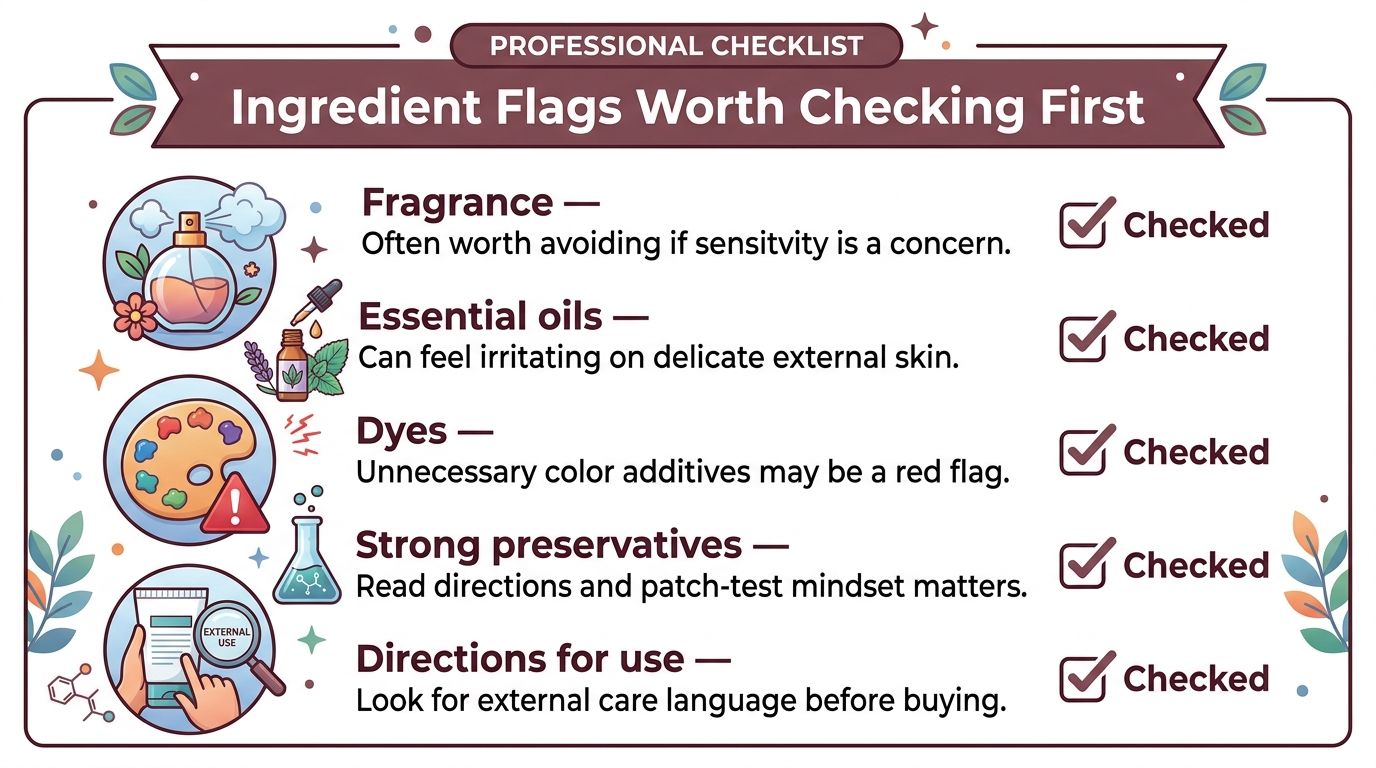
Start with the directions, then read the ingredient panel. A product meant for sensitive external skin should have a clear external-use purpose, simple instructions, and a formula designed to cleanse without leaving skin feeling stripped. Water alone is adequate for vulvar washing; if you choose a cleanser, clinical guidance recommends a plain, fragrance-free, mild product rinsed with lukewarm water (ACOG guidance on vulvovaginal health).
Use a practical screen, not a botanical-count contest
A review of vulvar cleansing products describes syndet systems, which use mild synthetic detergents and may combine surfactants with emollients, antioxidants, or buffering agents, as a gentler alternative to traditional bar soap. In the cited findings, bar soap produced the most alkaline post-use vulvar pH and stronger lipid-depleting effects; products without anionic surfactants showed weaker delipidation and better hydration. That makes foam, scent, and a long list of plants weak reasons to choose a wash. Mild cleansing, low lipid stripping, and tolerability matter more.
When your skin is sensitive, look closely at:
- Added fragrance and essential oils: Consider avoiding them if scent tends to trigger irritation.
- Dyes: Color isn't needed for cleansing and can be a reason to choose a plainer formula.
- Harsh or strongly alkaline cleansers: They may leave delicate skin feeling dry or tight.
- Soap and surfactant strength: A cleanser should rinse away cleanly without a stripped feeling.
- Use directions: Choose clear language that limits use to the external vulva.
Lists that flag alcohol, parabens, sulfates, or phthalates can be a starting point for reviewing personal-care products, but the ingredient name alone doesn't establish that a formula will or won't irritate you. Pay attention to the full formulation, directions, and how your skin responds. For a broader overview of skincare essentials and product selection, ProMD Health Bel Air's skincare product essentials offers related context.
If a new cleanser stings, burns, or leaves lasting discomfort, rinse it off and stop using it. Don't keep applying it because the label calls it gentle or organic.
pH Cues That Do Not Diagnose Infection
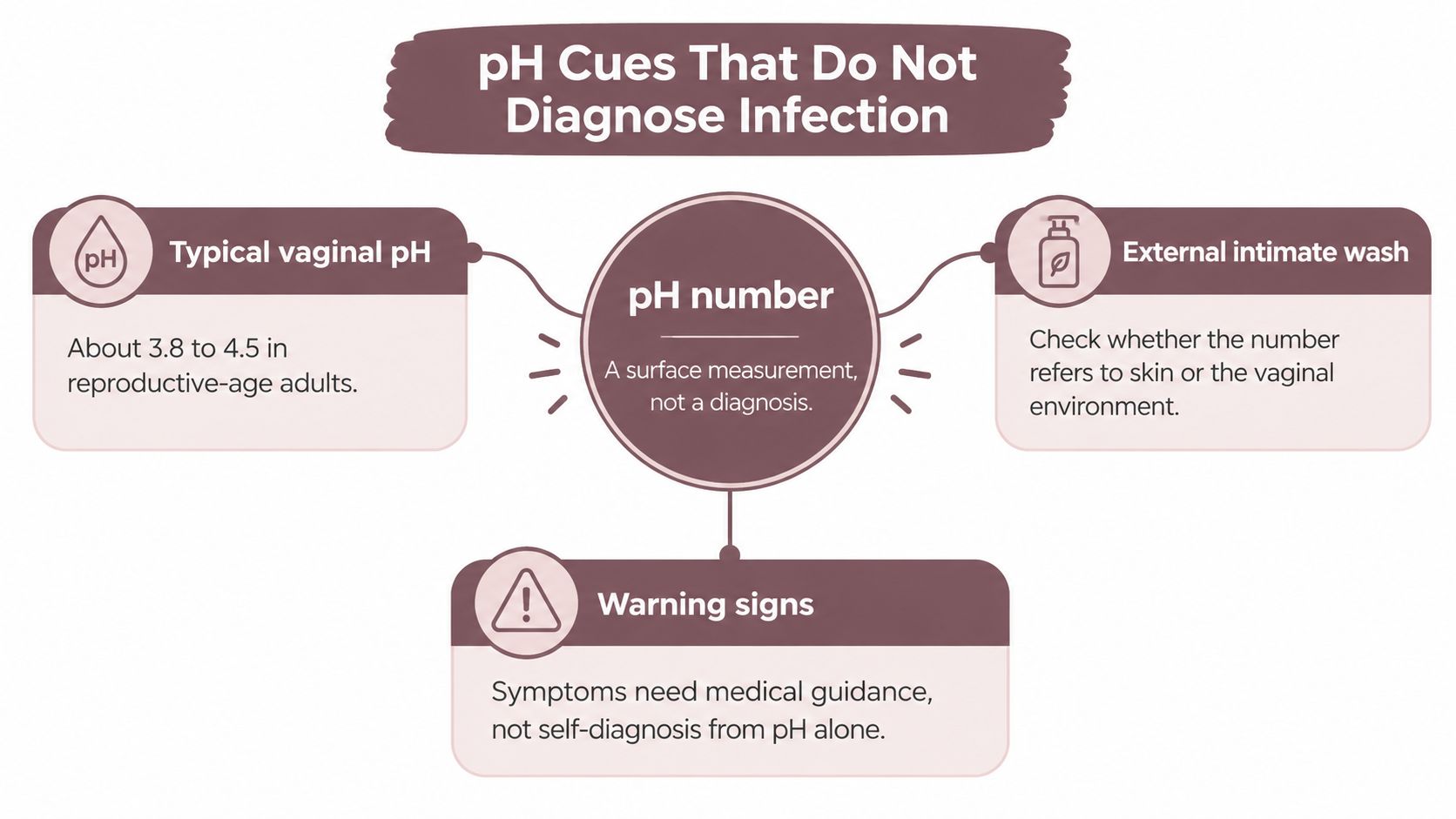
A pH number only means something when you know which surface it describes. A product's pH, the skin's response after washing, and vaginal pH aren't interchangeable. An acidic number on a bottle doesn't mean the wash can restore a vaginal environment or treat an infection.
Typical vaginal pH in reproductive-age adults is approximately 3.8–4.5. A pH above 4.5 is one clinical component of bacterial-vaginosis assessment, not a home diagnosis; clinicians consider symptoms and other findings too. Vaginal pH can also rise after menopause as reduced estrogen changes the vaginal epithelium and microbial environment (Cleveland Clinic overview of vaginal pH).
Ask what the number refers to
When comparing washes, look for information about the finished product and, if available, how its pH changes when diluted as directed. Product pH alone doesn't establish how your skin will respond after washing. Formulators can assess the product, its use dilution, and short-term post-wash skin response; consumers shouldn't read an acidic label as a medical result.
For perimenopausal, postpartum, or highly sensitive users, a promise to “rebalance” pH may be less useful than a low-irritancy formula that doesn't disrupt the skin barrier. Hormonal changes can affect vaginal pH without meaning that an infection is present. A wash shouldn't claim to diagnose, treat, or rebalance infection on the basis of pH, and it shouldn't be marketed for internal application.
Scented products and harsh soaps can aggravate irritation or affect the local environment. If you want a plain-language overview of what pH-conscious soap means in general, Fillaree's guide to pH-balanced soap provides broader soap context, not a diagnosis or a substitute for vulvar-care guidance. For the vaginal environment specifically, this guide to vaginal pH can help keep the distinction clear.
Comparing Washes with Non-Wash Care
The most useful way to compare options is by where you apply them and what they can reasonably do. External rinsing or cleansing can remove residue from the vulva. Neither a wash nor an external balm treats an infection, and neither belongs inside the vaginal canal.
| Option | Appropriate location | Reasonable job | Not a substitute for |
|---|---|---|---|
| Water alone | External vulva | Rinse away sweat, fluid, or residue | Evaluation of persistent symptoms |
| Mild, fragrance-free organic intimate wash | External vulva only | Cleanse when water doesn't feel sufficient | Treatment for BV, yeast, or UTIs |
| External balm or oil | External skin, according to directions | Support comfort when skin feels dry or irritated | Diagnosis or infection treatment |
| Everyday soap or body wash | Not a preferred intimate cleanser | Clean other parts of the body | Gentle vulvar care |
The risks of internal washing aren't just theoretical. WHO's review describes internal cleansing motivated by hygiene or symptom relief, alongside reports of lesions, infections, swelling, and possible changes to vaginal flora. That's why location matters more than whether a product is described as organic or marketed for feminine hygiene.
Momotaro Apotheca is a certified organic, cruelty-free vulvovaginal-care brand. Its stated formulation standards include antibiotic-free, alcohol-free, paraben-free, sulfate-free, phthalate-free, and fragrance-free formulas. Those are brand details, not evidence that its products diagnose or treat infection.
For non-wash external care, the Soothe & Restore Salve is described as an organic balm for vulvovaginal dryness, itching, and irritation, with coconut and jojoba oils. Use any topical product only as directed, and stop if it worsens discomfort.
The brand also organizes kits, collections, and routines around concerns and life stages, including yeast, BV, urinary discomfort, lichen sclerosus, postpartum care, menopause, after-sex care, and daily care. Those categories can help you find information and products related to a concern, but a collection name isn't a diagnosis or a promise of treatment. Recurrent or persistent symptoms deserve clinical assessment.
Situations Where Washing Helps or Hurts
Washing isn't one single behavior. A brief external rinse after exercise or sex is different from repeatedly scrubbing the vulva, applying scented products, or washing inside the vagina.
A 2025 study reported that regular perineal washing was associated with fewer reported infections, while internal washing correlated with recurrent thrush. That finding points to the importance of location and technique, not a general instruction to wash more. Canadian public-health guidance recommends cleaning the vulva no more than once daily with lukewarm water and avoiding direct soap, scrubbing, wipes, deodorant sprays, and internal washing (2025 study on perineal washing and reported infections).
Match the routine to the situation
After sex, gentle external rinsing can remove semen, lubricant, or sweat if that feels comfortable. You don't need to douche or scrub, and you don't need to wash the inside of the vagina. After exercise or during a period, an external rinse may likewise remove sweat or menstrual fluid; washing again and again can leave sensitive skin more irritated.
If your concern is dryness, especially with postpartum sensitivity or perimenopause, adding cleanser may not solve it. A soothing external moisturizer or barrier-support product may be more relevant than extra washing. Momotaro's Coconu Oil Based Lubricant is described as USDA Certified Organic and made with coconut oil, shea butter, and beeswax. It's a comfort product, not a cleanser or an infection treatment.
A pattern of recurrent symptoms is different from ordinary residue after a workout or sex. Repeated washing, friction, fragranced products, and douching can aggravate the skin barrier or disturb the vaginal environment, while another wash can't identify the cause of itching, odor, or discharge.
Know when self-care isn't enough
Arrange medical evaluation for persistent odor, pelvic pain, fever, sores, bleeding, or pregnancy-related symptoms. Repeated yeast-like or BV-like episodes also deserve assessment, rather than repeated self-treatment with washes. Symptoms can have different causes, and a product label can't tell you which one is affecting you.
A Gentle Routine and Next Step
Keep the routine uncomplicated. Clean the vulva no more than once daily; start with lukewarm water and your hands, not a rough cloth. If water doesn't feel sufficient, you can try a mild, fragrance-free cleanser on external vulvar skin, then rinse it fully and pat dry.
Don't apply wash inside the vagina. Skip cleansing products when the area is actively irritated, and consider whether bland external moisture or advice from a clinician is more appropriate. Take a product out of your routine if it stings, leaves a strong scent, or instructs you to use it internally. If you're thinking about dryness or irritation as a skin-barrier concern, this guide to skin barrier repair offers general skincare context.
For a practical next step, Momotaro Apotheca offers a site quiz and routines organized around daily care, after-sex care, perimenopause or menopause, and pre- and postpartum needs. Its product and education pages include Soothe & Restore Salve for dryness, itching, and irritation, collections for yeast, BV, urinary tract and bladder discomfort, and lichen sclerosus, plus blog and sex-education resources. The brand describes its formulations as doctor-approved; that wording isn't a substitute for a clinician's assessment of your symptoms.
The Urinary Tract & Pelvic Health Super Supplement is described by the brand as a plant-derived supplement intended to support urinary and pelvic health. A supplement isn't a wash or a diagnostic tool. For persistent symptoms, ask a healthcare professional rather than relying on a product to identify or treat the cause.
If symptoms persist, get medical guidance. A cleaner label won't diagnose what's happening or replace appropriate care.
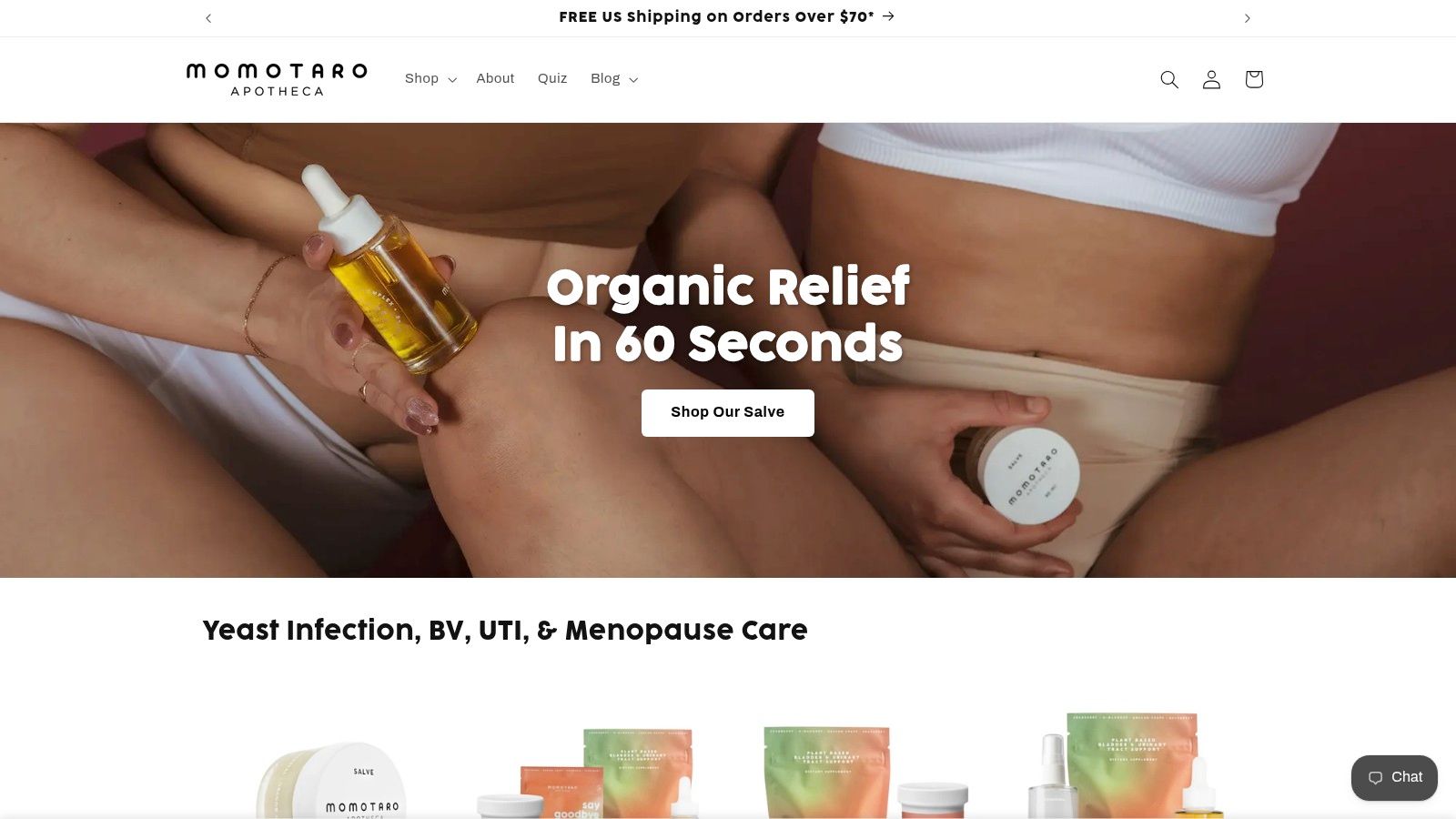
Explore Momotaro Apotheca for vulvovaginal-care routines, symptom-focused collections, and educational resources that distinguish external comfort from internal treatment. Choose a routine that fits your needs, and contact a clinician when symptoms persist or keep returning.


