


Organic Water Based Lubricant Guide for Sensitive Care
You've probably had this moment. The bottle says gentle, natural, or organic, but your vulva says something else, burning, stinging, or just plain wrong. After a few swaps, it gets hard to trust any label that promises comfort.
That skepticism makes sense. For intimate tissue, the front of the bottle matters less than the formula underneath it, especially when dryness, recurrent irritation, postpartum recovery, perimenopause, or sensitivity are already in the mix. An organic water based lubricant can be a good fit, but only when the formulation supports vulvovaginal tissue instead of just sounding clean.
Table of Contents
- Why Sensitive Skin Has Trust Issues with Lubricants
- What Counts as an Organic Water Based Lubricant
- Inside the Bottle, Ingredients That Matter
- Water Based vs Silicone and Oil Based Lubricants
- Choosing for Specific Moments and Conditions
- How to Choose and Use an Organic Water Based Lubricant
- Common Myths and Misconceptions About Organic Lubes
Why Sensitive Skin Has Trust Issues with Lubricants
The usual story starts with a body that's already irritated. Maybe you tried one lube after sex felt scratchy, then another after a yeast flare, then a “natural” one because the ingredient list looked cleaner. The result was still burning or dryness, and now every new bottle feels like a gamble.
That reaction is rational. Sensitive vulvovaginal tissue doesn't care whether a product sounds botanical, eco-friendly, or organic, it reacts to how concentrated the formula is, what the pH is, and which ingredients sit in the base. The same is true in skin repair more broadly, where a barrier reset skincare routine focuses on restoring function instead of chasing a trend label.
Practical rule: if a product keeps making tissue feel drier or hotter, the issue is usually formulation fit, not a personal failure to “tolerate” it.
That's why “organic” can be reassuring without being sufficient. The word may suggest plant-based sourcing or fewer synthetic additives, but comfort depends on whether the product matches the environment it touches. For intimate tissue, the central question is whether the formula supports slip without pulling water out of the tissue or disrupting the local environment.
A good organic water based option earns trust in the same way a good moisturizer does. It doesn't just sound gentle, it behaves gently on contact, during use, and after cleanup. Readers who've been disappointed by clean-looking products usually aren't looking for permission to try again, they're looking for a framework that explains why the last one failed.
What Counts as an Organic Water Based Lubricant
An organic water based lubricant is a water-primary formula with supporting ingredients drawn from organic or plant-derived sources. The label is only part of the story. Water sets the base, then humectants, thickeners, preservatives, and pH balance determine whether the product feels slippery, tacky, drying, or irritating.
Organic Water-Based Lubricant
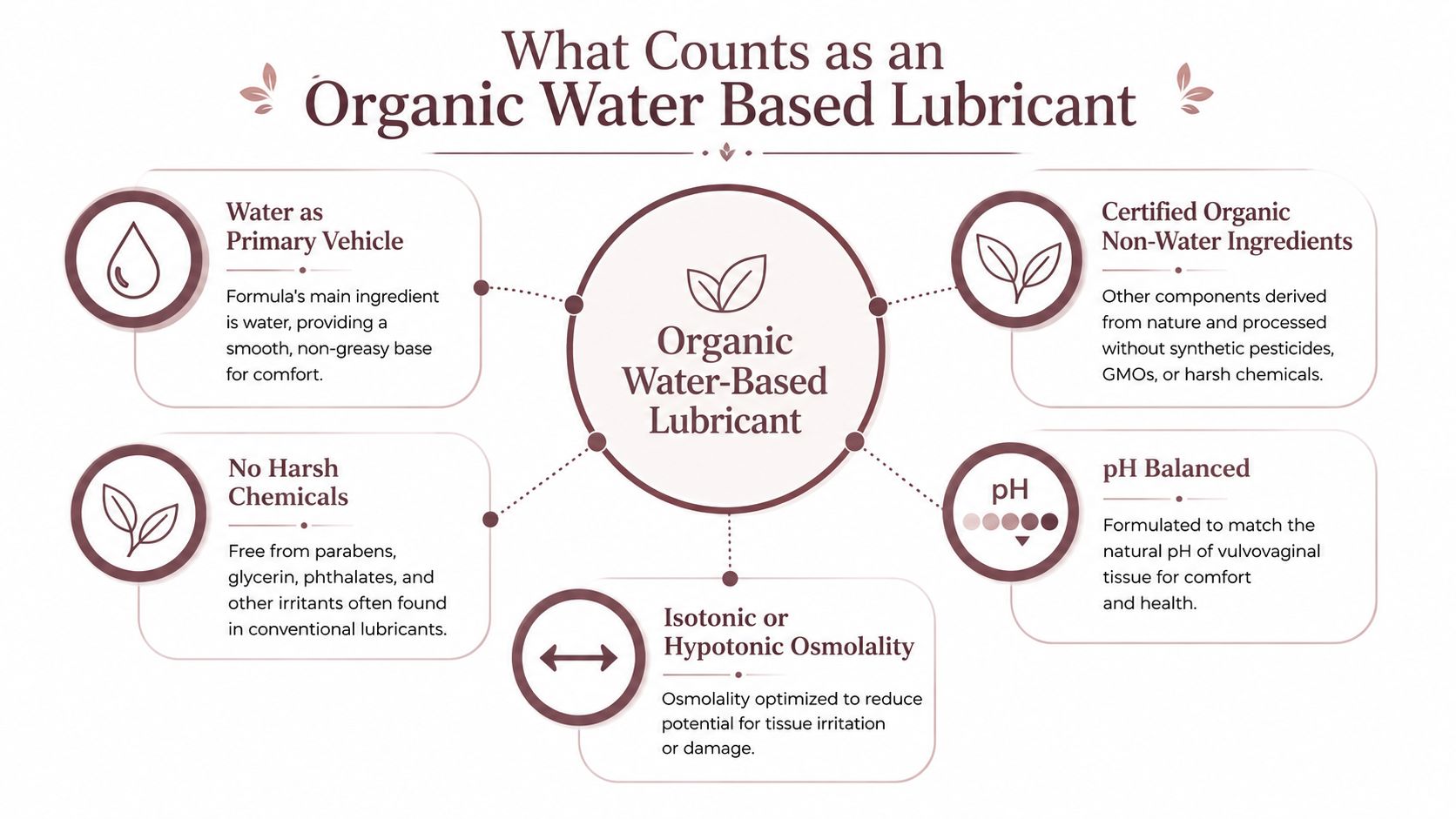
The most useful technical filter is osmolality, which describes how concentrated the dissolved ingredients are, and pH, which describes how acidic or alkaline the product is. The World Health Organization guidance for water-based lubricants intended for vaginal use points to osmolality under 1200 mOsm/kg and pH 5.0 to 7.0 as the benchmark, with the osmolality target generally achievable by keeping total glycol content below about 8.3% w/w. That matters because overly concentrated products can draw water out of epithelial cells, while a pH outside the vaginal range can make the local environment less stable. The WHO also says these lubricants should be clear or translucent or white, water-washable, non-staining, and free of lumps or foreign matter. WHO guidance on lubricant performance specifications sets the baseline clearly.
A product can be organic and still miss those targets. A product can also be non-organic and still be well formulated, which is why the label alone doesn't tell the whole story. The useful habit is to look for explicit pH and osmolality information, then scan the ingredient list for what the formula uses to create glide and hold.
If a brand gives those details, you're already looking at more than marketing language. If it doesn't, you're left guessing about the part that affects tissue tolerance. A simple way to read it is this, “organic” tells you where some ingredients came from, while osmolality and pH tell you how the product is likely to behave.
A product like Coconu Water Based Lubricant shows how that can look in practice, since its snapshot describes organic coconut water, a pH-balanced formula, and compatibility with latex condoms and toys. That does not replace the need to check the full label, but it does point to the kind of formulation detail that matters.
Inside the Bottle, Ingredients That Matter
Water is the carrier, but it cannot do the whole job by itself. Pure water spreads for a moment, then slips away quickly because it has very low viscosity and weak pressure-viscosity response. That is why water-based formulas usually need added structure to create the feel people expect from lube.
How Formula Choices Change Feel and Tolerance
Humectants are the first decision point. Glycerin is common because it helps retain moisture and improve glide, but higher glycerin content can also raise osmolality. That is one reason some people with sensitive tissue or yeast-prone patterns prefer formulas that use aloe, coconut water, or other humectant systems instead. The trade-off is real. A formula can feel plush and last longer, yet still be a poor fit if it becomes too concentrated for the tissue.
Thickeners matter too. Plant-derived gums and cellulose-based thickeners help a formula hold a film on the tissue instead of collapsing into thin slip right away. That film strength is what keeps water-based products from feeling too runny. It also explains why the same category can include products that feel very different from one another.
Preservatives are required in a water-rich formula. If a product contains mostly water and plant material, it still needs a preservation system to stay stable and safe in the bottle. “Preservative-free” sounds appealing, but with water-based products it can mean a much shorter usable life or a formulation that is not designed for storage.
A concise way to read the ingredient list is to ask three questions. What gives it slip, what gives it thickness, and what keeps it from breaking down? If a product uses aloe, plant extracts, or organic coconut water, that tells you something about the moisture system, but not whether the finished product will be well balanced for your body.
For a closer look at how vaginal acidity interacts with product choices, this guide on vaginal pH is useful because it puts formula choices in context instead of treating pH as a buzzword.
Good formulation is a balance, not a purity contest. A shorter ingredient list can help, but a simple list that ignores osmolality or preservation is not automatically kinder to tissue.
Water Based vs Silicone and Oil Based Lubricants
Water-based, silicone, and oil-based lubes solve different problems. The right one depends on how long you need glide, whether you're using condoms or toys, and how much cleanup you're willing to do afterward. For people with sensitive vulvovaginal tissue, water-based is often the most flexible default, not because it's perfect at everything, but because it plays well with a lot of situations.
Choosing by use case, not branding
Water-based formulas are usually the easiest to wash off and the least complicated for toy compatibility. Silicone formulas tend to last longer and stay slick in water, while oil-based products can feel richer and more protective on dry skin. Those strengths matter, but so do the constraints. Oil-based products can degrade latex condoms, and some silicone lubricants can interact poorly with silicone toys.
The product on the shelf also determines how much attention you'll need to pay after application. Water-based formulas often need reapplication because they dry faster, which is one reason people think they “don't work,” when the underlying issue is that the situation asked for more staying power than the formula could provide. Silicone can reduce that interruption, while oil can be useful when the goal is a more emollient, lingering feel.
organic vaginal moisturizer becomes a useful adjacent concept, because a moisturizer and a lubricant solve overlapping but not identical problems. Moisturizers are about tissue comfort over time, while lubricant is about reducing friction during a specific moment.
| Base | Texture and longevity | Latex condom safe | Silicone toy safe | Cleanup | Best for sensitive care |
|---|---|---|---|---|---|
| Water Based | Light, natural-feeling, may need topping up | Usually yes, check the individual label | Usually yes, check the individual label | Rinses off with water | Good default when you want versatility and easy cleanup |
| Silicone | Ultra slick, longer lasting | Usually yes, check the individual label | Often no, check the individual label | Can need soap | Useful when longevity matters more than easy wash-off |
| Oil Based | Rich, moisturizing, very long lasting | No with latex | Often yes, check the individual label | Can leave residue | Helpful when you want an emollient feel and aren't using latex |
The table doesn't choose for you, it narrows the choice. If you want the fewest compatibility headaches, water-based is usually the simplest place to start. If you need more staying power, the other two categories have clear advantages, just with more trade-offs.
Choosing for Specific Moments and Conditions
A lubricant works best when it fits the situation in front of you. Someone dealing with recurrent yeast symptoms needs different support from someone noticing perimenopausal dryness or postpartum sensitivity. The choice gets easier once you match the formula to the tissue condition instead of asking one product to do every job.
Matching the formula to the tissue condition
For recurrent yeast, humectant load and overall concentration deserve close attention. High-glycerin formulas can feel uncomfortable for some people in this group, so a lower-osmolality water-based lubricant with fewer heavy humectants is usually the cleaner starting point. The goal is simple, reduce friction without adding a formula that feels too concentrated on already reactive tissue.
For bacterial vaginosis, pH matters more than branding language. A product that sits outside the vaginal pH range can be a poor fit for tissue that is already unstable, so look for products that clearly state pH balance rather than assuming the organic label covers it. The same logic applies to anything sold as “feminine care” without numbers or formulation details.
For perimenopause and menopause, dryness often reflects tissue thinning and reduced natural lubrication, not only lower arousal. A water-based product can still help, but many people in this stage do better with a formula that feels a little more substantial and does not disappear right away. If the dryness continues, a lube and a moisturizer may be solving different parts of the problem, which is why organic vaginal moisturizer becomes a useful adjacent concept, because a moisturizer and a lubricant solve overlapping but not identical problems. Moisturizers are about tissue comfort over time, while lubricant is about reducing friction during a specific moment.
For postpartum recovery, sensitivity can be temporary but intense. A gentle, water-based formula with clear compatibility information is usually easier to live with because cleanup is simple and the texture is less likely to feel occlusive. If the tissue is tender, fewer unknowns on the ingredient list often makes sense.
For general sensitivity or lichen sclerosus, the safer question is not “organic or not,” but “what does this formula do on contact?” Look for clear information about pH, osmolality, fragrance-free composition, and a texture that does not sting when it first goes on. If a product irritates on contact, do not try to push through it.
Practical rule: when tissue is already irritated, choose the formula with the clearest safety data and the fewest moving parts, then test it gently before making it your default.
How to Choose and Use an Organic Water Based Lubricant
Start with the numbers or the absence of them. A brand that names pH and osmolality is doing more than trading on a clean aesthetic. If you can't find those details, ask for them before you assume the formula will suit sensitive tissue.
Then read the ingredient list for the functional pieces. You're looking for the water carrier, the humectant system, the thickener, and the preservative approach. If you know your body reacts to glycerin, scents, or botanical extracts, that's the part of the label that matters most.
A simple shelf test
- Check pH and osmolality. If the product doesn't publish them, decide whether you're comfortable buying blind.
- Scan for humectants. Glycerin may feel good to some users, but it isn't the only way to build slip.
- Confirm compatibility. Condoms and toys aren't interchangeable, so the label should say what's safe.
- Apply a small amount first. Water-based formulas often need less than people expect at the start.
- Reapply instead of overloading. A second small amount usually works better than flooding the area once the formula starts to dry.
- Store it cool and sealed. Water-rich formulas need clean handling and sensible storage.
- Stop if it stings. Product fit should improve comfort, not create a new problem.
A short visual guide can help if you're choosing at home or on your phone.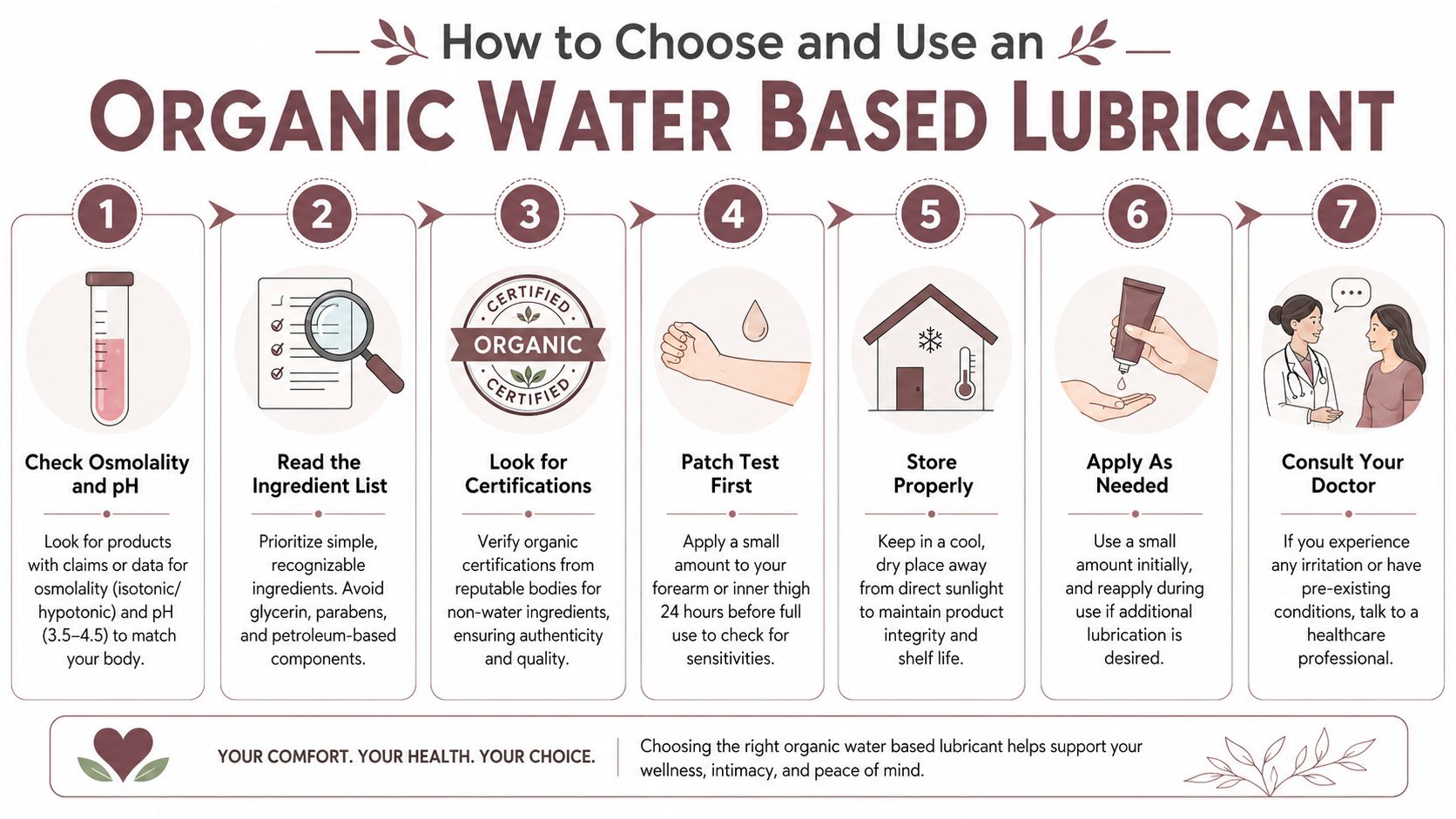
Best lubricant for sensitive skin is a useful companion read if you want more help sorting through texture, compatibility, and sensitivity. The point isn't to memorize a perfect rule set, it's to get fast enough at reading a product that you don't have to keep guessing.
Common Myths and Misconceptions About Organic Lubes
The biggest myth is that organic automatically means safer. Organic sourcing can be a good sign, but tissue tolerance still comes down to pH, osmolality, and ingredient behavior on mucosa. A product can be plant-based and still feel irritating if the formula is too concentrated or poorly balanced.
The second myth is that glycerin is always bad. That's too blunt to be useful. Glycerin can help some formulas feel smoother and more enduring, but for people prone to irritation or yeast flares, high-glycerin, high-osmolality water-based lubricants can be a poor fit. That's why some brands choose organic coconut water, aloe, or other humectant systems instead.
The third myth is that water-based lubes always dry out too fast to be worth it. They do dry faster than silicone or oil in many situations, but that doesn't make them a bad category. It means they ask for a different use pattern, a smaller initial amount, and a willingness to reapply when the activity goes longer than expected.
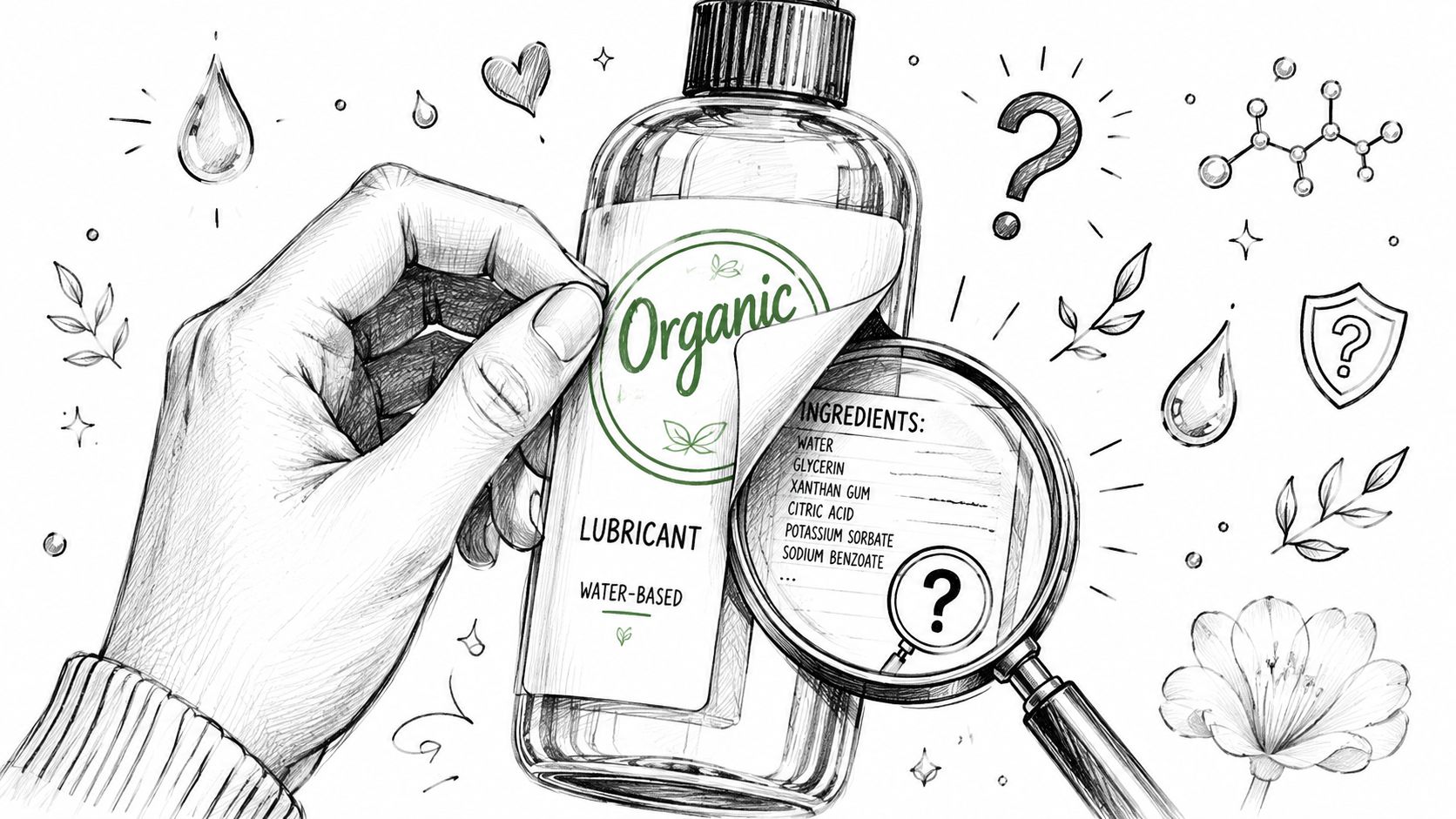
The most useful habit is to trust the formulation more than the front label. If a bottle says organic but hides pH, osmolality, and ingredient behavior, you still don't know how it will feel on tissue. If it clearly shows how it's built, you can make a choice based on function instead of hope.
Momotaro Apotheca offers certified organic vulvovaginal care products and routines that are built around pH-conscious, sensitive-area use, including support for dryness, irritation, and condition-specific care. If you're comparing formulas for comfort, visit Momotaro Apotheca and look for product details that help you choose by tissue needs, not by label promises.


