


Recurring Yeast Infections While Pregnant: Safe Care Guide
Approximately 75% of women experience at least one vulvovaginal candidiasis episode during their lifetime, while recurrent vulvovaginal candidiasis affects probably fewer than 5% and is generally defined by three or more symptomatic episodes within one year. Pregnancy can make Candida colonization more common because hormonal and physiologic changes alter the vaginal environment, but recurring itching or discharge still needs accurate diagnosis because several conditions feel similar.
You may be pregnant, exhausted, and suddenly dealing with the same itching, burning, soreness, or unusual discharge that appeared weeks ago. You treated what seemed like a yeast infection, felt better for a while, and now the symptoms are back. That cycle can make you wonder whether your body is failing you or whether you did something wrong.
You didn't. Recurring symptoms during pregnancy are a recognized clinical problem, and pregnancy can create conditions that support Candida growth. But the most important question isn't how to treat another presumed yeast infection. It's whether the symptoms are caused by Candida this time.
Table of Contents
- Understanding Why Yeast Infections Return During Pregnancy
- The Pregnancy-Yeast Connection Explained
- The Diagnostic Blind Spot Many Pregnant People Miss
- Pregnancy-Safe Treatment Options and Timing
- Prevention Strategies That Actually Work During Pregnancy
- Decision Framework for Managing Recurrent Symptoms
- Red Flags Requiring Immediate Medical Attention
- Taking Control of Your Vaginal Health Journey
Understanding Why Yeast Infections Return During Pregnancy
A flare-up can feel especially discouraging when you're already managing appointments, physical changes, and the ordinary discomforts of pregnancy. You might recognize the pattern immediately: irritation at the vulva, tenderness when you urinate, and discharge that seems different from usual. Reaching for the same treatment again can feel like the only practical option.
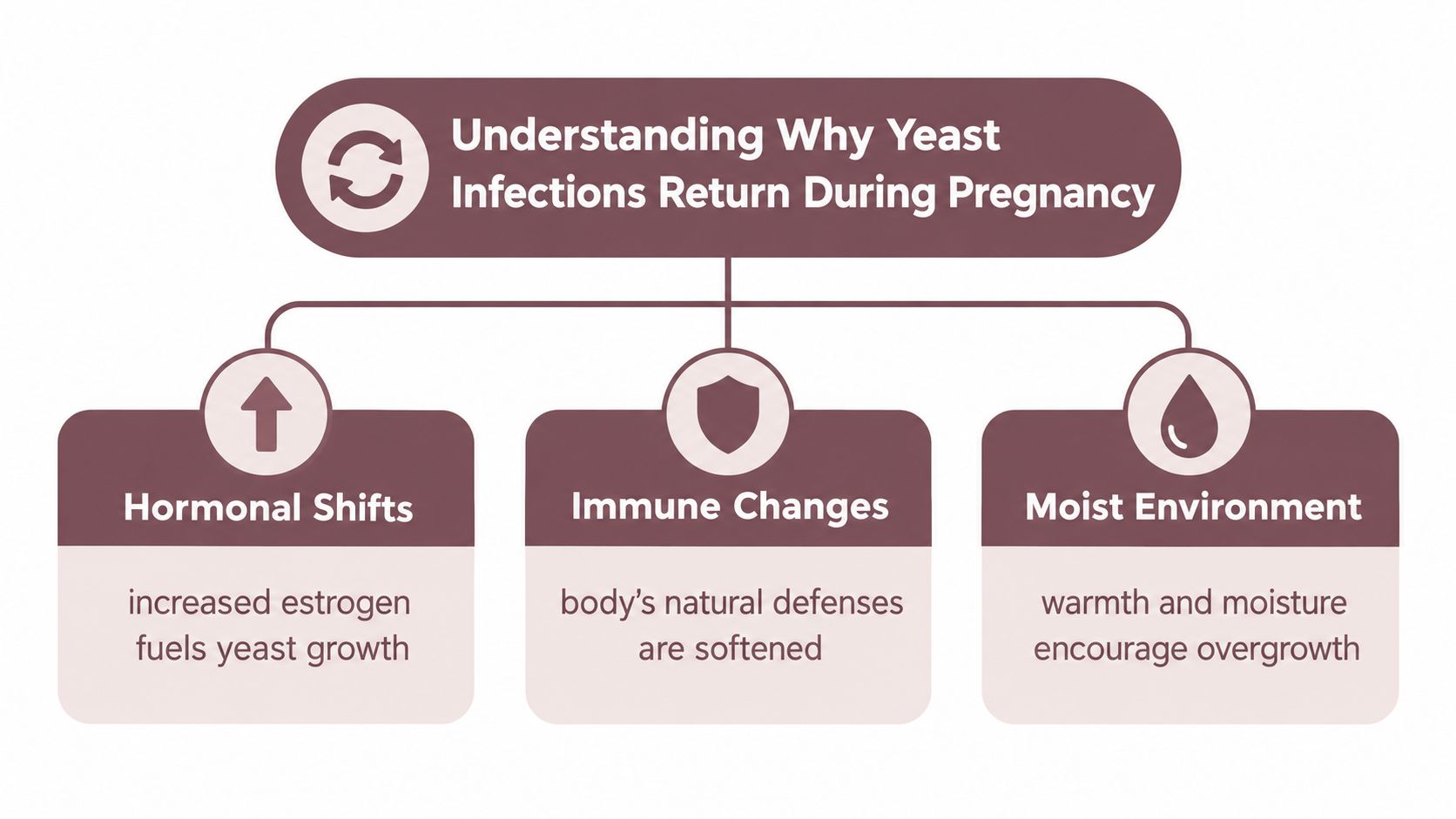
Pregnancy changes the vaginal environment in several ways. Hormonal shifts can encourage Candida colonization, while warmth and moisture around the vulva may make irritation more noticeable. Pregnancy-related immune changes also affect how the body responds to organisms that may already be present without causing symptoms.
A familiar cycle, with an important question
Consider someone who develops symptoms, uses an over-the-counter product, improves briefly, and then experiences another flare. That pattern could reflect Candida that wasn't fully addressed, a non-albicans Candida species, or a completely different condition. It could also mean Candida is present but isn't causing the discomfort.
The Centers for Disease Control and Prevention estimates that approximately 75% of women experience vulvovaginal candidiasis during their lifetime, and 40% to 45% experience two or more episodes. Recurrent vulvovaginal candidiasis is less common, probably affecting fewer than 5% of women, but it remains a substantial clinical problem during the reproductive years.
The practical shift: Treat recurring symptoms as a reason to improve the diagnosis, not as proof that you need to repeat the same treatment.
Colonization and infection aren't identical. Candida can live in the vagina without causing itching, inflammation, or abnormal discharge. That distinction becomes particularly important during pregnancy, when normal physiologic discharge and several vaginal conditions can overlap with typical yeast symptoms.
The Pregnancy-Yeast Connection Explained
Pregnancy alters the vaginal environment in measurable ways. Hormonal shifts can increase glycogen in vaginal tissues, while increased moisture and changing local immune defenses may make Candida overgrowth more likely. These changes do not guarantee an infection, and they are not signs of poor hygiene or personal failure.
Estrogen helps drive part of this process. More glycogen provides additional fuel for Candida, while pregnancy-related immune adaptations can change how local tissues respond. The result is a setting in which Candida may be present without causing disease, which matters when symptoms keep returning.
Culture-based studies have reported vaginal Candida colonization rates approaching 30% during pregnancy, particularly in the third trimester. Colonization means Candida is present. It does not, by itself, explain itching, burning, inflammation, or unusual discharge. Treating a laboratory finding without matching symptoms can therefore miss the true cause.

Why the trimester isn't the whole answer
Symptoms may become more noticeable later in pregnancy as hormonal and physiologic changes progress. Timing gives your clinician useful context, but it cannot identify the cause alone. Pregnancy discharge may be normal, whereas itching and inflammation can reflect yeast, irritation, or another condition.
A plain-language overview of how candidiasis can affect pregnancy can help you prepare questions for a prenatal appointment. Pregnancy also involves separate infection concerns, including CMV and Zika in pregnancy. Those illnesses are not interchangeable with vulvovaginal candidiasis, so an article about general infections cannot diagnose recurring vaginal symptoms.
The Diagnostic Blind Spot Many Pregnant People Miss
The most common mistake is assuming that every recurrence is candidiasis. Itching, burning, soreness, and discharge aren't unique to yeast. Bacterial vaginosis, trichomoniasis, sexually transmitted infections, contact dermatitis, vulvar inflammatory disorders, urinary problems, and pregnancy-related changes can produce overlapping sensations.
Testing also has limits. Wet-mount microscopy detects yeast only about 40% to 60% of the time, so a negative result doesn't reliably exclude infection. A positive finding can also be misleading if Candida is present without compatible symptoms.
What repeated self-treatment can hide
Suppose an antifungal cream reduces irritation for a few days. That improvement may reflect treatment of Candida, soothing of inflamed tissue, or temporary reduction in symptoms while the underlying condition remains. Temporary relief doesn't prove that the diagnosis was correct or that the problem has been cured.
A practical guide to testing for yeast infection at home can help you understand the difference between screening information and a clinical diagnosis. During pregnancy, home testing shouldn't replace an examination when symptoms are recurrent, persistent, severe, unusual, or resistant to treatment.
Ask for a more complete evaluation
For repeated or treatment-resistant symptoms, ask your clinician whether a vaginal sample should be tested with culture or species-level methods. Testing can help identify Candida albicans or a non-albicans Candida species and can redirect care when antifungal treatment isn't working.
Your provider may also consider contributing factors such as diabetes, immune suppression, corticosteroid exposure, or frequent antibiotic use. The goal isn't to prove that your symptoms are "just in your head." It's to stop treating the wrong condition and identify what your tissues need.
Pregnancy-Safe Treatment Options and Timing
Treatment during pregnancy should begin with confirmation whenever possible, especially if symptoms have returned repeatedly. Your prenatal clinician can assess the vulva and vagina, review your symptoms, and decide whether microscopy, culture, or species-level testing is appropriate.
A safer treatment pathway
- Contact your prenatal provider. Tell them you're pregnant, describe the symptoms, and explain whether you've already used a product. Include when the symptoms began and whether they improved or returned.
- Confirm the likely cause. A clinician may examine the area and test a discharge sample. Antifungal treatment won't correct bacterial vaginosis, dermatitis, trichomoniasis, or another condition.
- Use the recommended local treatment exactly as directed. Pregnancy changes the risk-benefit discussion for medicines. Vaginal antifungal options may be considered in pregnancy, but your provider should choose the product, formulation, and duration for your situation.
- Don't substitute oral medication on your own. Oral fluconazole isn't used in pregnant women according to the pregnancy treatment guidance summarized by Harvard Health. Ask before taking any prescription, over-the-counter medicine, supplement, suppository, oil, or botanical product.

Separate symptom support from infection treatment
External comfort measures may help irritated skin, but they don't establish the cause or eradicate an infection. Avoid inserting unapproved products into the vagina, and ask your clinician before using essential oils, homeopathic suppositories, or supplements during pregnancy.
If you're considering probiotics, discuss the evidence and product safety with your care team. This overview of probiotic use during yeast infections can provide background, but probiotics shouldn't replace diagnostic testing or prescribed treatment.
Momotaro Apotheca's Complete Infection Defense Kit combines internal and external support products for concerns including BV, yeast infections, and pH imbalance. Its listed components include a salve, bath and body tonic, daily probiotic, urinary tract and bladder support, and suppositories. The catalog also states that these products aren't intended to diagnose, treat, cure, or prevent disease, so pregnancy requires a clinician's review before use.
Prevention Strategies That Actually Work During Pregnancy
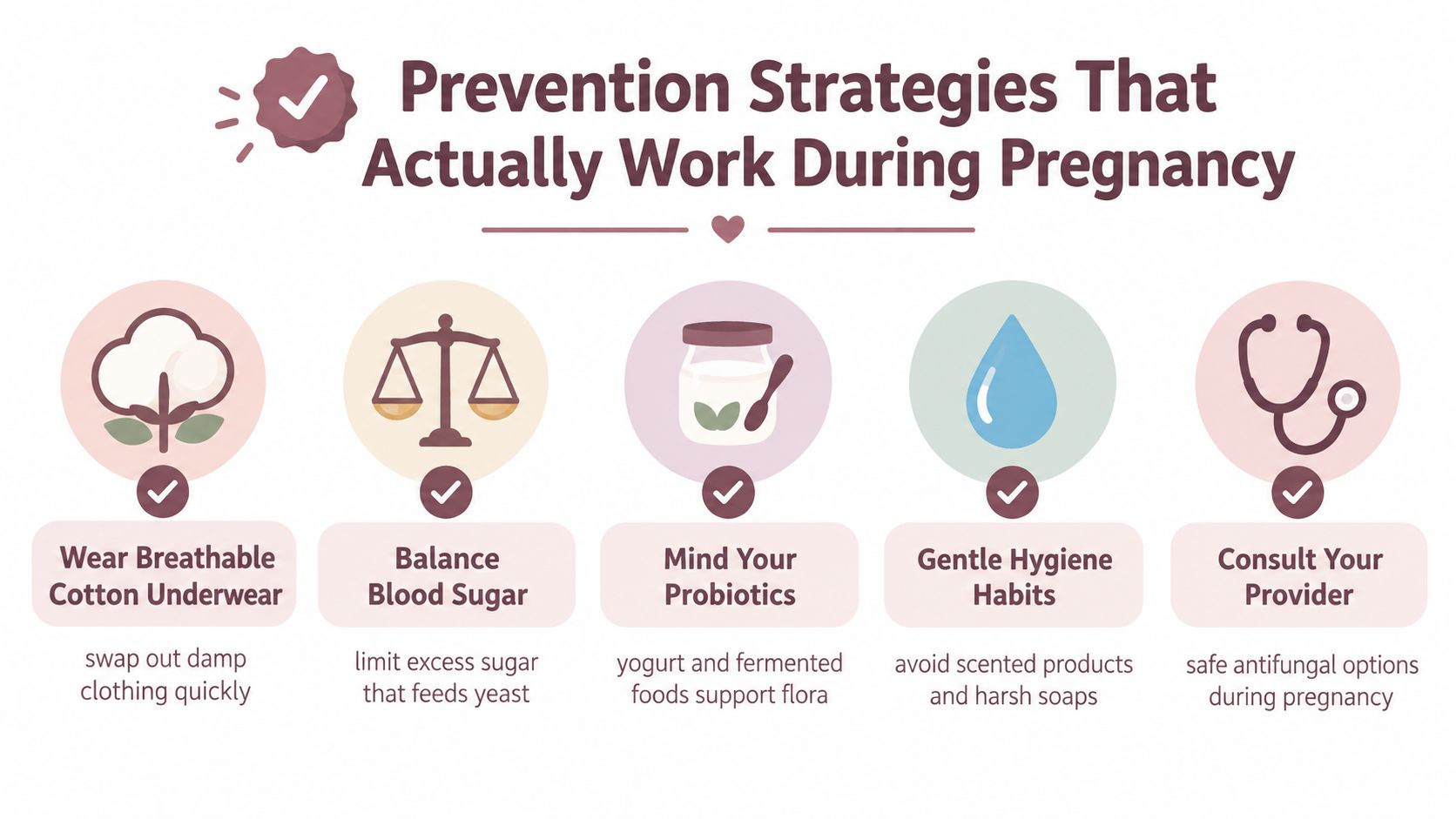
Prevention starts with reducing avoidable irritation, not trying to sterilize the vagina. Overwashing, scented products, douching, and harsh soaps can disturb sensitive vulvar skin and make symptoms harder to interpret.
Build a low-effort daily routine
- Keep the outside gentle: Wash the vulva with water or a mild, fragrance-free cleanser if needed. Don't douche or place cleansing products inside the vagina.
- Change damp clothing: Pregnancy can make sweating and discharge more noticeable. Change out of wet swimwear or workout clothes rather than staying in them.
- Choose breathable layers: Cotton underwear and looser clothing may reduce trapped moisture and friction. Comfort matters more than creating a complicated wardrobe.
- Review antibiotics with your clinician: Antibiotics can alter protective vaginal bacteria. Take them only when prescribed, and ask your provider whether follow-up is needed if symptoms develop.
- Manage health conditions: Diabetes and immune suppression can affect susceptibility and treatment response. If either applies to you, include it in the conversation about recurrence.
A balanced diet supports general health, but no food can reliably prevent or cure candidiasis. Yogurt and fermented foods may fit comfortably into your diet, yet they shouldn't be treated as a substitute for testing. Probiotic supplements also need pregnancy-specific review because formulations and individual circumstances differ.
The most useful prevention habit is tracking patterns without blaming yourself. Note products used, antibiotics, sexual activity, new detergents, symptom timing, and test results. That record can reveal irritation triggers and help your clinician distinguish recurrence from an untreated or misidentified condition.
For additional practical habits, see how to prevent recurring yeast infections.
Decision Framework for Managing Recurrent Symptoms
When symptoms return, avoid making the decision based only on how familiar they feel. Use the pattern, severity, pregnancy context, and response to prior treatment to decide whether monitoring is reasonable or testing is the better next step.
| Symptom Pattern | Recommended Action | Urgency Level |
|---|---|---|
| Mild symptoms that are new, persistent, or uncertain | Contact your prenatal provider rather than choosing a treatment based only on memory | Prompt appointment |
| Symptoms that return after treatment | Request an examination and ask whether culture or species-level testing is appropriate | Prompt appointment |
| Severe swelling, intense pain, sores, fever, or unusual discharge | Call your provider for same-day advice and assessment | Same day |
| Symptoms accompanied by bleeding, fluid leakage, regular contractions, or reduced fetal movement | Contact your maternity unit or urgent pregnancy care service immediately | Immediate |
| Symptoms that improve briefly but never fully resolve | Stop cycling through products and ask for diagnostic review | Prompt appointment |
Make the appointment more useful
Bring the names of products you've used, how long you used them, and what changed afterward. Tell the clinician whether the discharge has an odor, whether urination hurts, whether the skin is cracked or swollen, and whether symptoms follow intercourse, antibiotics, or a new hygiene product.
Ask direct questions:
- Could this be bacterial vaginosis, dermatitis, an STI, or a non-albicans Candida species?
- Would culture or species-level testing clarify the diagnosis?
- Which treatments and symptom-relief products are appropriate during my pregnancy?
- How will we know whether the infection is resolved?
A negative quick test isn't the end of the conversation when symptoms continue. It may mean the test missed yeast, or it may point toward another cause.
A clinician should guide long-term management when episodes keep returning. Prevention may involve addressing a contributing condition, changing irritants, or creating a monitored treatment plan. It shouldn't mean taking repeated medication without knowing what you're treating.
Red Flags Requiring Immediate Medical Attention
Most vaginal irritation isn't an emergency, but pregnancy lowers the threshold for calling your care team. Contact your prenatal provider promptly for severe or rapidly worsening pain, marked swelling, open sores, fever, or feeling acutely unwell. These symptoms can signal a condition that needs assessment beyond routine yeast treatment.
Call the maternity unit or urgent pregnancy service immediately if vaginal symptoms occur with bleeding, suspected fluid leakage, regular painful contractions, or a noticeable reduction in fetal movement. Those signs aren't typical features to manage with an over-the-counter antifungal, and waiting for the product to work could delay pregnancy care.
Don't wait for a routine visit when symptoms are unusual
A strong or unfamiliar odor, green or yellow discharge, pelvic pain, pain with urination, or symptoms after possible STI exposure deserve professional evaluation. These findings can overlap with infections that require different testing and treatment.
Seek same-day advice when symptoms are severe, atypical, or resistant to a treatment your clinician recommended. Also call if you develop an allergic reaction after using a product, such as rapidly spreading rash, facial swelling, or breathing difficulty. Breathing problems or swelling of the face and throat require emergency services.
You don't need to diagnose the red flag yourself. Tell the clinician that you're pregnant, describe the symptom and its timing, and mention every medication or product you've used. A short call can clarify whether you need urgent assessment, a same-day appointment, or routine follow-up.
Taking Control of Your Vaginal Health Journey
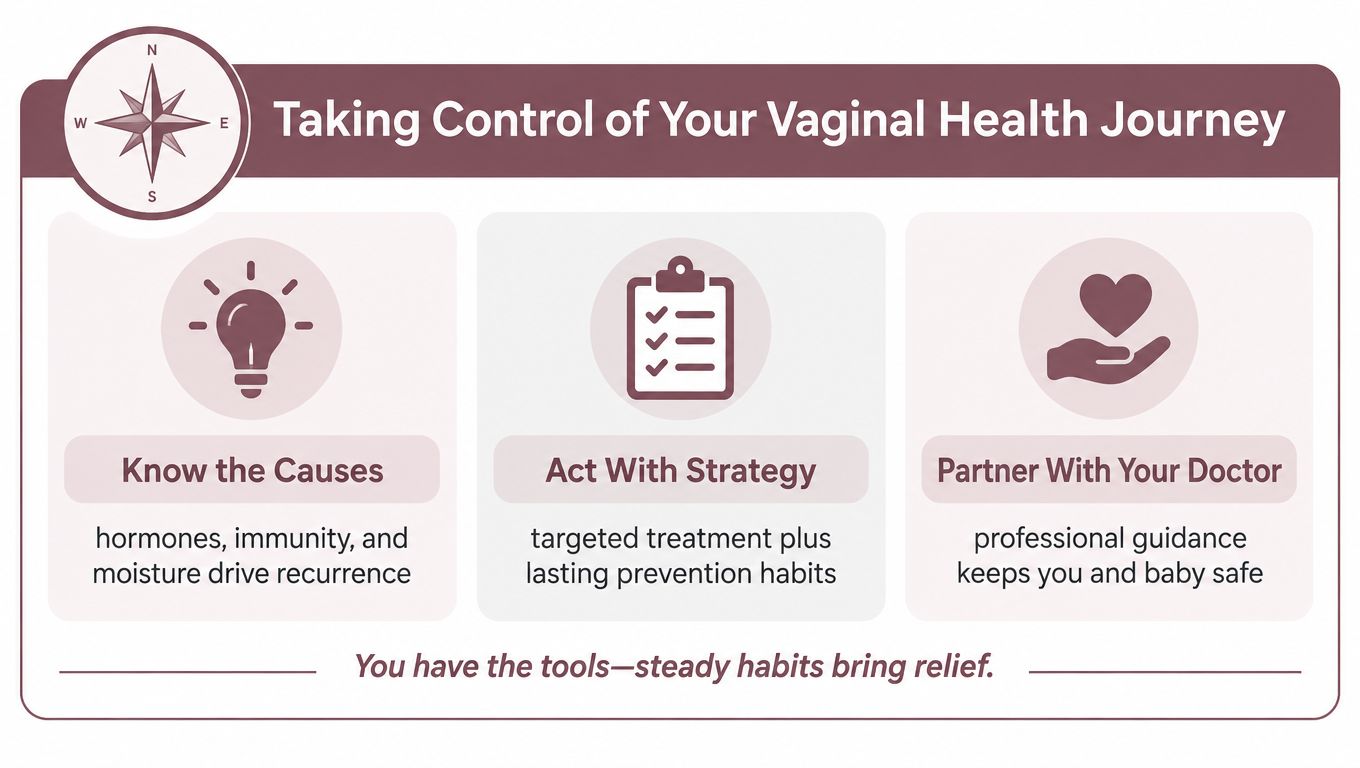
Recurring yeast infections while pregnant can make your body feel unpredictable, but recurrence doesn't mean you've caused the problem or that you must accept endless discomfort. Pregnancy can make Candida colonization more likely, yet symptoms still require interpretation because colonization, infection, irritation, and other vaginal conditions aren't interchangeable.
Your next practical steps
- Write down the pattern: Record the start date, symptoms, discharge changes, products used, and response.
- Pause repeated guessing: If symptoms return, persist, or resist treatment, ask for an examination and discuss culture or species-level testing.
- Review every product: Share medicines, supplements, probiotics, suppositories, oils, and topical products with your prenatal provider before using them.
- Protect the vulvar skin: Choose gentle hygiene, avoid fragrance and douching, and change damp clothing promptly.
- Know when to escalate: Call immediately for bleeding, fluid leakage, contractions, reduced fetal movement, fever, severe pain, or rapidly worsening symptoms.
The most useful shift is diagnostic. Instead of asking only, "What can I take for another yeast infection?" ask, "What evidence shows what's causing these symptoms, and what treatment is safe for my pregnancy?" That question can prevent unnecessary cycles of self-treatment and help your clinician choose care that matches the actual condition.
You deserve comfort, clear explanations, and care that respects both your symptoms and your pregnancy. Start by contacting your prenatal provider, bringing a complete product and symptom history, and treating testing as a practical tool rather than a sign that you've done anything wrong.
Momotaro Apotheca offers plant-based vulvovaginal care products, including topical balms, oils, ingestibles, and curated routines for concerns such as irritation, yeast symptoms, BV, urinary discomfort, and pre- and postpartum care. Visit Momotaro Apotheca to review the available options, and ask your prenatal clinician before using any product during pregnancy.


