


Vulvar Irritation and Redness Relief
A new laundry detergent, a long day in tight leggings, or sex after a period of dryness can leave the vulva stinging by evening. You may notice redness when you check with a mirror, feel itchy when you walk, or wonder whether the change in discharge means you have an infection. The uncertainty can be as upsetting as the discomfort itself.
Vulvar irritation and redness don't point to one diagnosis. They describe a symptom pattern that can involve the outer vulvar skin, the vaginal canal, or both. Contact dermatitis, yeast, bacterial vaginosis, inflammatory skin conditions, hormonal dryness, and vulvar pain syndromes can overlap, but they don't all need the same treatment.
The most useful first step isn't panic or automatically reaching for an antifungal. It's learning to notice where the symptoms are, what changed before they began, and whether discharge, odor, lesions, or persistent pain are present. That kind of body literacy can help you remove a trigger safely while recognizing when an examination is the better next step.
Table of Contents
- Making Sense of Vulvar Discomfort
- Why the Vulvar Skin Barrier is Uniquely Vulnerable
- Differentiating Infections from Dermatoses and Pain Syndromes
- Safe At-Home Care and Trigger Removal
- Life Stages and Chronic Vulvovaginal Discomfort
- Red Flags and When to Seek Medical Attention
- Building a Sustainable Vulvar Wellness Routine
Making Sense of Vulvar Discomfort
Suppose you wake up with a raw, itchy feeling around the vulva. The night before, you used a scented wipe after exercising, wore close-fitting underwear, and stayed in damp clothes during your commute. By morning, the skin feels tender. You might assume you've developed a yeast infection, especially if the redness looks dramatic.
Another person may have a similar-looking flare after sex, but her main symptom is burning at the vaginal opening. Someone else may notice irritation with a new pad, while discharge and odor remain unchanged. These experiences can look alike from the outside even when the underlying causes differ.
Vulvar irritation and redness are usually part of a broader symptom cluster, often alongside itching, burning, soreness, discomfort during sex, discharge, or odor. A review of vulvar pruritus notes that epidemiological information remains limited, but it cites a Boston general-population study in which 6.6% of women reported vulvar itch or burning and estimates that about 75% of women experience vulvovaginal candidiasis at some point in life (review of vulvar pruritus). Another clinical summary places yearly symptoms such as discharge, odor, pruritus, and discomfort in the range of 8% to 18% of women, using the same source.
What vaginitis does and doesn't tell you
The word vaginitis is often used as an umbrella term for inflammation or disruption involving the vagina. It doesn't automatically mean a yeast infection, and it doesn't explain every problem affecting the external vulvar skin. Contact dermatitis, for example, may be concentrated on the labia and surrounding skin without causing a major change in vaginal discharge.
That distinction matters because the vagina and vulva aren't interchangeable. A symptom that feels “internal” may need testing of discharge or vaginal fluid, while a visibly irritated external rash may call for a careful review of products, friction, shaving, and skin history.
A useful starting question: Do I mainly feel itching or burning on the skin, inside the vagina, at the opening, or in more than one place?
You don't need to diagnose yourself from a checklist. Instead, record the timing, exposures, location, and accompanying symptoms. Those details give a clinician a clearer route to the right evaluation and help you avoid treating the wrong condition.
Why the Vulvar Skin Barrier is Uniquely Vulnerable
The vulva has a weaker protective barrier than skin elsewhere, while also encountering moisture, sweat, urine, and friction on a regular basis. Expert guidance identifies irritant contact dermatitis as the commonest vulvar eczema pattern and recommends removing triggers while supporting the barrier with bland, non-irritating care (clinical guidance on vulvar eczema).
A skin barrier is not a wall that keeps everything out. It is a layered system that limits water loss and helps protect nerve-rich tissue from chemical and mechanical stress. When repeated washing, rubbing, dampness, or product exposure disrupts that system, ordinary sensations can become uncomfortable. The skin may look red, feel hot, itch, sting, or become sore after contact.
Why familiar hygiene habits can backfire
Many people respond to irritation by washing more often, adding a cleansing product, or using a deodorizing wipe. That response feels logical, but more cleansing can mean more exposure to ingredients and more friction. Fragrances, preservatives, detergents, essential oils, sanitizing products, topical medications, lubricants, pads, and wipes may all become relevant when symptoms flare.
Tight clothing and synthetic underwear can add heat, moisture, and rubbing. Shaving, waxing, and repeated hair removal can also leave the outer skin more reactive. A product you've tolerated for years can still become a trigger after the barrier has been irritated by another exposure.
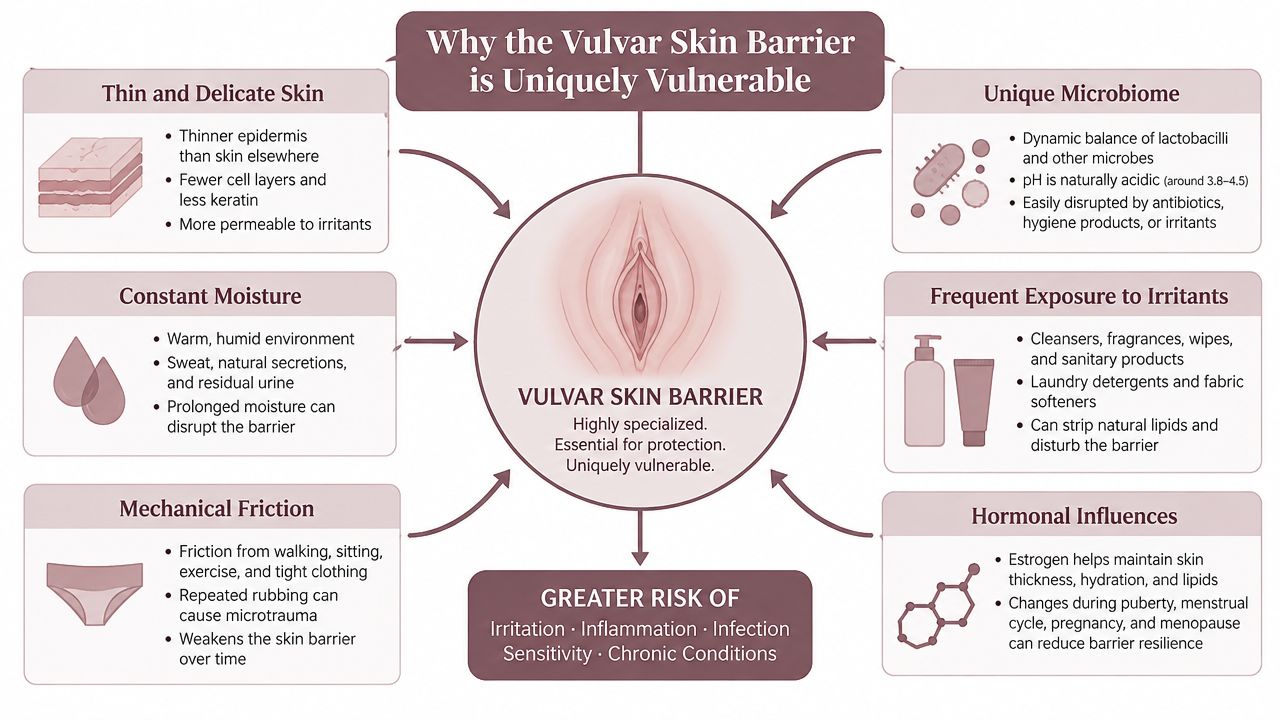
Vulvar erythema, the clinical term for redness, is an inflammatory sign rather than a diagnosis. Reviews of vulvar disorders list psoriasis, atopic dermatitis, allergic or irritant contact dermatitis, lichen simplex chronicus, candidiasis, and lichen sclerosus among conditions that may cause red, itchy, or painful vulvar skin (review of vulvar inflammatory disorders). Exposure history is therefore not a minor detail. It can be one of the most informative parts of the assessment.
For a broader discussion of skin and vaginal dryness, you can also read this resource on San Antonio medical spa on dryness. If you're reviewing cleansing habits, this guide to pH balance wash can help you think critically about what touches the vulva and what should stay away from the vaginal canal.
An external balm such as Soothe & Restore Salve is one product option described for vulvovaginal dryness, itching, and irritation, with coconut and jojoba oils intended to support the moisture barrier. It shouldn't replace testing or prescription care when the cause is unclear.
Differentiating Infections from Dermatoses and Pain Syndromes
The same word, “burning,” can describe several experiences. Burning on freshly shaved skin after a fragranced product suggests a different starting point from burning during urination with a new discharge, or burning caused by light touch at the vaginal opening. These patterns aren't perfect diagnostic rules, but they can make your next decision more informed.
| Condition type | Primary symptoms | Common triggers | Discharge changes |
|---|---|---|---|
| Irritant or allergic contact dermatitis | External redness, itching, stinging, dryness, or tenderness | Soap, wipes, pads, detergent, shaving, sweat, friction, topical products | Usually no major change, though moisture can worsen skin irritation |
| Yeast-related symptoms | Itching, burning, redness, and vulvar soreness | Changes in the vaginal environment, antibiotics, hormonal shifts, or moisture and friction | Discharge may change, but symptoms overlap with other conditions |
| Bacterial or other vaginal infection | Discharge, odor, irritation, burning, or discomfort | Shifts in vaginal bacteria or sexual exposure, depending on the infection | Odor, amount, color, or texture may change |
| Vulvar dermatosis | Persistent itch, redness, soreness, thickening, scaling, pale areas, cracks, or other skin changes | Inflammatory skin disease, scratching, irritants, or dryness | Often little or no primary discharge change |
| Vulvar pain syndrome | Burning, rawness, or pain with touch, sitting, penetration, or clothing | Pressure, contact, sexual activity, or no obvious external trigger | Usually no defining discharge pattern |
Look for the pattern, not one isolated symptom
Discharge and odor changes make an internal vaginal process more relevant, but they don't identify the cause by themselves. If discharge is the main change, especially with pelvic pain, urinary burning, symptoms after a new sexual partner, or pregnancy, testing is safer than guessing. For readers who are pregnant and concerned about odor, a plain-language resource on pregnancy discharge smell causes and risks may help frame questions for a clinician.
Skin conditions often announce themselves through the skin. Psoriasis, eczema, lichen simplex chronicus, and lichen sclerosus can cause ongoing itch, soreness, redness, altered texture, or areas that crack or become pale. Information about what lichen sclerosus is can help you recognize why persistent skin changes deserve assessment rather than repeated infection treatment.
Pain syndromes deserve equal attention. A 2002 NICHD report described survey findings in which 16% of more than 3,000 women reported chronic burning or pain on contact lasting at least three months, and nearly 7% were experiencing it at the time of the survey (NICHD overview of vulvodynia research). Later population-based work cited in that report found a weighted vulvodynia prevalence of 8.3%, or about 101,000 women in the targeted study population, while a follow-up survey estimated a 4.7% one-year incidence of new vulvar pain symptoms consistent with vulvodynia.
If you're considering a product routine while seeking clarity, the Complete Infection Defense Kit is described by its maker as combining topical, bath, probiotic, urinary, and suppository products. Product claims aren't a substitute for confirming whether your symptoms involve infection, dermatitis, or pain.
Safe At-Home Care and Trigger Removal
When symptoms are mild and you have no warning signs, start with subtraction. Stop newly introduced products and pause anything that creates rubbing, heat, or stinging. The aim is to remove the suspected trigger and give the barrier less work to do, not to sterilize the vulva.
A simple environmental audit
Check the products and habits that touch the area directly or indirectly:
- Bathroom products: Set aside scented soap, bubble bath, wipes, sprays, deodorizing products, scrubs, and fragranced pads or liners.
- Laundry products: Review detergent, fabric softener, dryer sheets, and strongly scented additives. Wash underwear thoroughly and avoid leaving residue against sensitive skin.
- Clothing: Choose breathable underwear and change out of damp exercise clothing promptly. Take a break from tight synthetic activewear during a flare.
- Hair removal: Pause shaving, waxing, or depilatory creams until the skin feels settled. Repeated passes over already irritated skin can prolong tenderness.
- Sexual activity: If penetration or a lubricant causes burning, pause and note the timing. Friction can be harder on dry or inflamed tissue.
Wash the external vulva gently with lukewarm water, or use a fragrance-free cleanser if you need one. Don't douche or put cleansing products inside the vagina. Pat dry instead of rubbing, and try not to scratch, since scratching can create more irritation and reinforce the itch cycle.
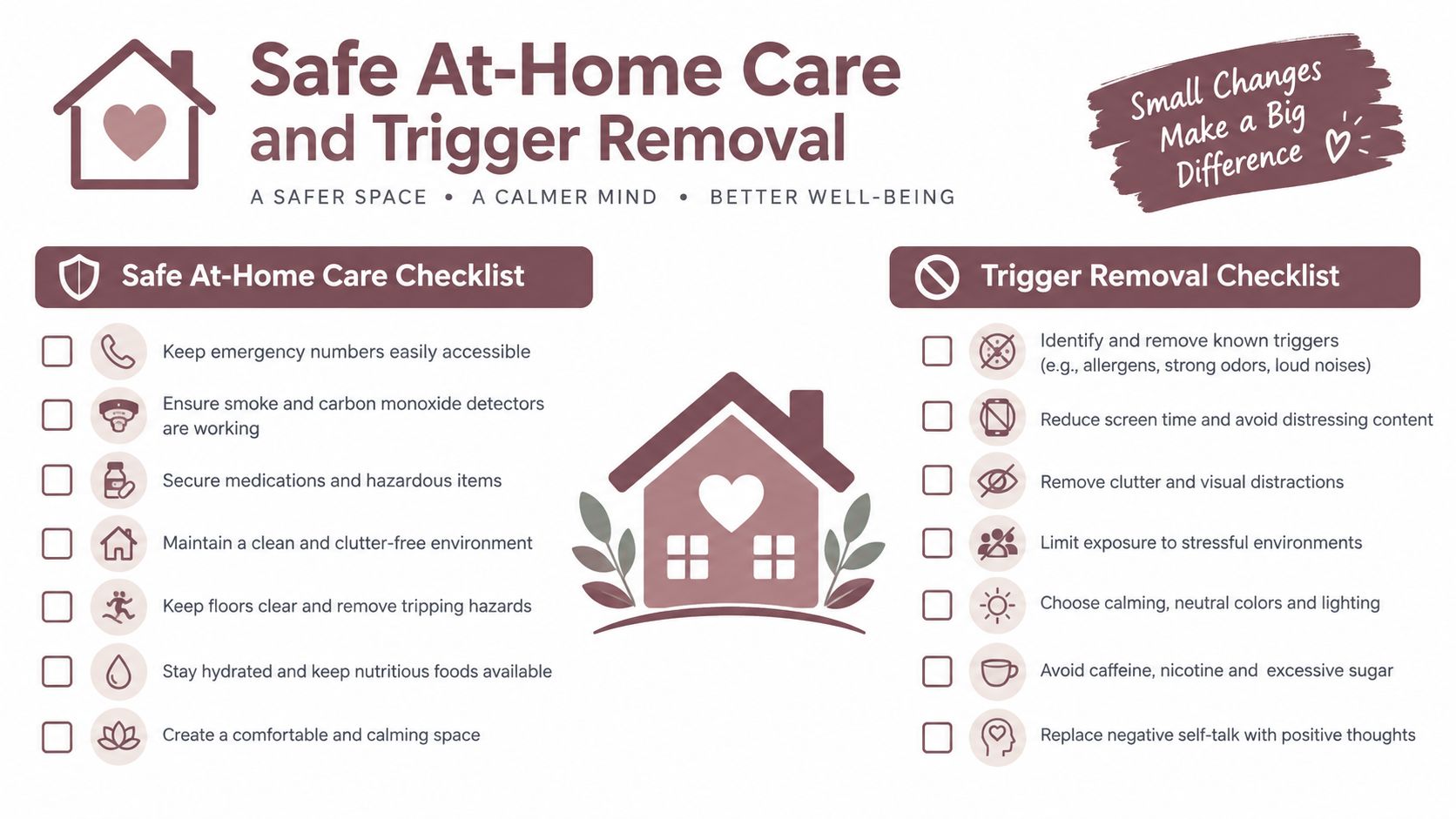
A bland, external moisturizer or balm may help reduce friction and dryness for some people, but introduce only one new product at a time. Avoid applying anything internally unless it is specifically intended for that use and a healthcare professional has advised it. This explanation of vulvar irritation from soap offers another way to review cleansing-related triggers.
Barrier-first care: If a product burns when it touches already irritated skin, stop using it. “Natural” doesn't automatically mean non-irritating.
Life Stages and Chronic Vulvovaginal Discomfort
Redness isn't always a short-lived reaction to a single product. Hormonal changes can alter moisture, tissue sensitivity, and the way friction feels, especially around perimenopause, menopause, and the postpartum period. A person may notice discomfort after sex, exercise, urination, or prolonged sitting even when her hygiene routine hasn't changed.
Recent evidence in postmenopausal women shows how widespread these symptoms can be. A 2025 systematic review and meta-analysis reported irritation in 31.76%, itching in 33.30%, dryness in 46.75%, and burning in 26.08% of the population studied (postmenopausal symptom review). These figures describe symptom prevalence, not a diagnosis for every individual, but they challenge the idea that persistent vulvovaginal discomfort is unusual or something people should accept without treatment.
Why repeated antimicrobial treatment may miss the problem
If dryness and friction are driving the flare, repeated antifungal or antimicrobial use may not address the underlying sensitivity. It may also add another topical exposure to already reactive skin. That doesn't mean infection should be dismissed. It means a recurring pattern deserves a differential diagnosis rather than an automatic repeat of the last treatment.
Life-stage care can be more maintenance-oriented. Some people need a gentler cleansing routine, external moisture support, changes to sexual activity or lubrication, and assessment for a vulvar dermatosis. Others may need clinician-guided hormonal or prescription treatment. The right plan depends on symptoms, medical history, examination findings, and whether the vaginal canal is involved.
Vulvar dermatoses can affect quality of life well beyond physical discomfort. A 2026 review identified 164 publications from 1978 through 2025, with nearly half published from 2020 through 2025, and found that 70% of studies reported severe quality-of-life impairment (review of vulvar dermatoses and quality of life). Persistent symptoms can affect sleep, movement, intimacy, concentration, and confidence. Seeking care is a practical response to a health problem, not an overreaction.
Red Flags and When to Seek Medical Attention
Barrier care makes sense for a mild flare with a clear trigger, but it shouldn't become a reason to postpone evaluation indefinitely. Persistent redness is not proof of infection, and it isn't proof that nothing important is happening. The question is whether the pattern is settling after trigger removal or continuing without a clear explanation.

Arrange a medical assessment for symptoms that keep returning, don't improve after removing likely irritants, or interfere with sleep, movement, sex, work, or urination. Seek prompt care for new white or pale patches, thickened skin, cracks, sores, ulcers, blisters, bleeding, severe swelling, spreading redness, fever, pelvic pain, or significant pain after a new sexual exposure. These findings don't automatically signal a serious disease, but they do require someone to examine the tissue and choose appropriate tests.
Make the appointment more useful
Before the visit, write down when the symptoms began and whether they followed sex, shaving, a period, exercise, antibiotics, a new product, or a change in underwear or detergent. Note the location of pain, discharge or odor changes, urinary symptoms, skin texture changes, and treatments you've already tried.
Ask what the evaluation is checking for. Depending on the pattern, a clinician may examine the vulvar skin, assess discharge, perform targeted infection testing, or consider a dermatology referral. A routine STI panel may not answer every question about vulvar skin disease or chronic pain, so describe the symptoms rather than assuming a negative panel explains them.
If shaving seems connected to bumps or irritation, guidance on how to prevent bumps after shaving may help you reduce mechanical triggers. Stop hair removal while the skin is inflamed, however, and seek care for painful lesions or worsening swelling.
A pelvic health physical therapist may be useful when pain with touch, penetration, sitting, or muscle guarding remains after infection and skin conditions have been evaluated. The right professional depends on the symptom pattern. You deserve an explanation that fits the evidence, not a dismissal based on how the skin looks on one day.
Here is a short educational video to support conversations about vulvar symptoms:
Building a Sustainable Vulvar Wellness Routine
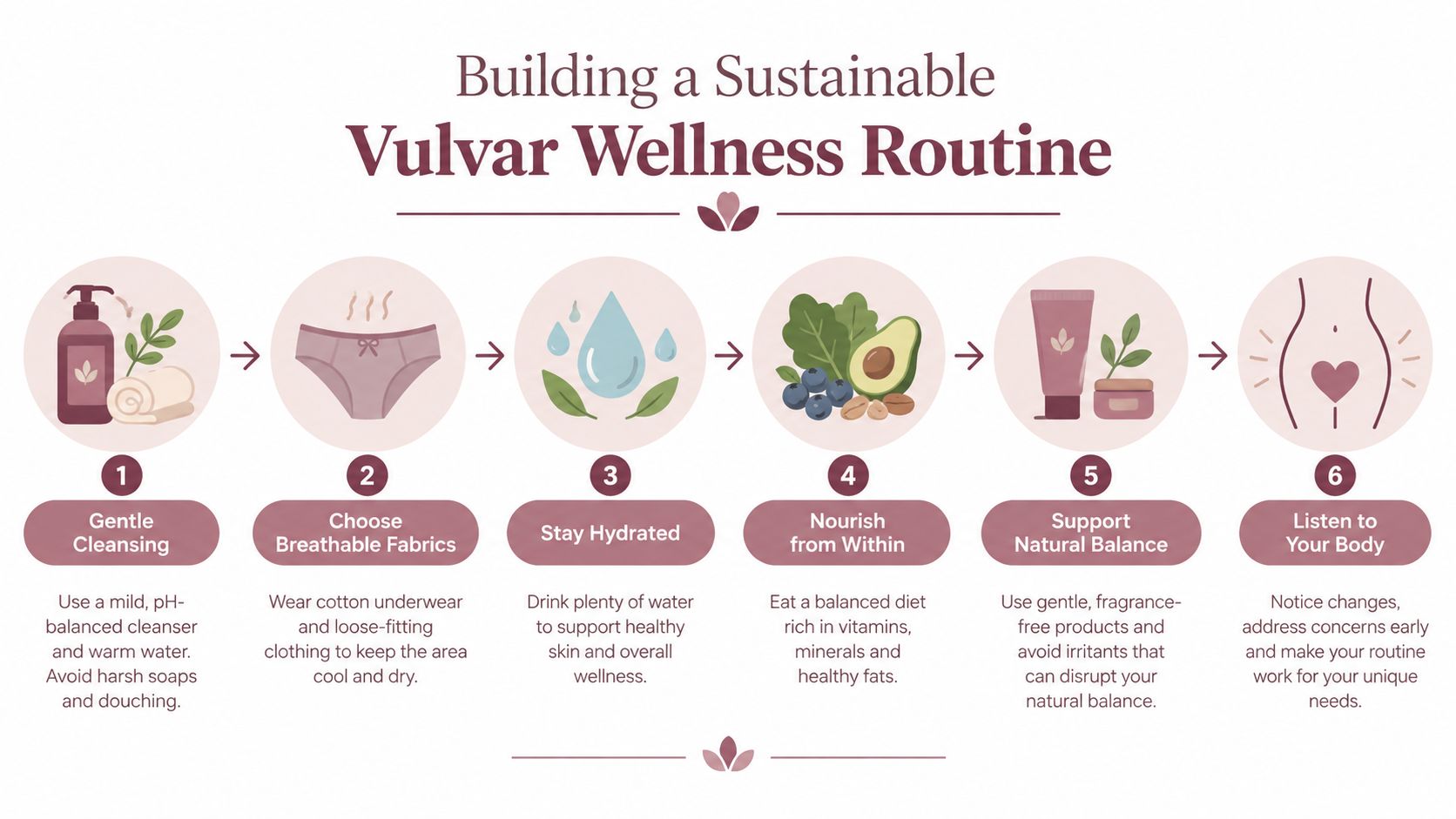
A sustainable routine should be simple enough to follow on ordinary days and flexible enough for sensitive periods. Treat the vulva more like delicate facial skin than like a surface that needs scrubbing, deodorizing, or constant correction.
Begin with a low-exposure baseline
Use lukewarm water or a gentle, fragrance-free cleanser on the external vulva. Rinse thoroughly, pat dry, and avoid putting soap, wipes, sprays, or douches inside the vagina. If you're unsure whether a product is contributing to redness, remove it for a period of observation rather than layering another product over it.
Keep clothing breathable and change after sweating or swimming. During a flare, reduce tight seams and activities that create repetitive rubbing. After sex, urinate if that is part of your usual urinary-care plan, rinse external skin gently if needed, and pay attention to whether dryness, lubricant, condoms, or friction predictably precede symptoms.
Add support one change at a time
If dryness is part of the pattern, an external balm or moisturizer may reduce friction and support comfort. Test a small amount on external skin and stop if it stings, burns, or causes a new rash. Use a lubricant designed for intimate contact when friction during sex is an issue, and ask a clinician about persistent pain rather than trying to cover it with increasingly strong products.
For people interested in plant-based ingestibles or probiotics, treat them as optional wellness supports, not replacements for infection testing or prescribed treatment. Product quality, ingredients, medication interactions, pregnancy, and individual medical history matter. A routine should support your care, not make diagnosis harder.
Track patterns without policing your body
A short symptom diary can reveal whether redness follows a specific detergent, menstrual product, sexual activity, exercise, hormonal transition, or medication. Record what happened and how your skin felt, but don't treat every fluctuation as a personal failure. Vulvar tissue responds to many ordinary changes, and noticing those responses is a form of informed self-care.
If symptoms recur, bring the diary to an OB/GYN, gynecologist, dermatologist, or pelvic health clinician. The long-term goal isn't to eliminate every sensation. It's to identify your triggers, protect the barrier, recognize infection and dermatosis patterns, and get treatment when self-care isn't enough.
Momotaro Apotheca offers plant-based vulvovaginal care products, including balms, oils, ingestibles, and curated routines for concerns such as dryness and irritation. Explore the Momotaro Apotheca collection to review ingredient information and choose a gentle external-care option that fits alongside, not instead of, appropriate medical evaluation.


