


Yeast Infection Kit: What to Expect and How to Use It
You notice itching while getting dressed, then spend the next few minutes checking for discharge, odor, or redness. By evening, you're searching for a yeast infection kit and wondering whether one product can really address everything happening at once. That uncertainty is understandable, especially because irritation, burning, and changes in discharge can come from several different vulvovaginal conditions.
A thoughtful kit should help you separate comfort care, targeted treatment, and longer-term support. It may include an antifungal medicine, an external salve, a bath product, a suppository, or an oral probiotic, but these components don't all do the same job. The most useful approach is to know what each item can and can't accomplish before you use it.
Table of Contents
- Why a Yeast Infection Kit Might Be Your Next Step
- What Is Typically Included in a Yeast Infection Kit
- How and When to Use Each Kit Component
- How to Choose a High-Quality Yeast Infection Kit
- Red Flags That Require Medical Care
- Prevention and Follow-Up Care for Long-Term Wellness
- Common Questions About Yeast Infection Kits
Why a Yeast Infection Kit Might Be Your Next Step
Maya had experienced itching before, so she recognized the discomfort quickly. This time, though, the burning felt stronger, and she wasn't sure whether the discharge matched a yeast infection or something else. Instead of buying the first kit she saw, she looked for one that explained which product was intended for external skin, which was meant for internal use, and when professional testing would be more appropriate.
That distinction matters because vulvovaginal candidiasis is common, but common doesn't mean every episode has the same cause. About 70%–75% of women experience vulvovaginal candidiasis at least once during their lifetime, and roughly 8% develop recurrent candidal vulvovaginitis, according to an authoritative clinical summary. Candida albicans causes most cases, but symptoms alone can't tell you which Candida species, or even whether Candida is responsible.
A yeast infection kit can be useful when symptoms are mild, familiar, and limited to the vulvar or vaginal area. It can give you a clear routine instead of a cabinet full of unrelated products. External care may calm irritated skin, while a medically appropriate antifungal addresses the infection itself. A probiotic or microbiome-supporting product may fit into maintenance care, but it shouldn't be treated as a substitute for diagnosis or antifungal therapy when infection is confirmed.
Start with the symptom pattern
Classic yeast symptoms often include itching, soreness, redness, and thick discharge without a strong odor. A thin discharge with a noticeable fishy smell may point toward bacterial vaginosis, while urinary urgency or pain may suggest a urinary concern. A plain-language comparison of BV, UTIs, and yeast infections can help you organize those differences before choosing a product.
Practical rule: Use a kit to create a safer plan, not to avoid care when the diagnosis is uncertain.
What Is Typically Included in a Yeast Infection Kit
A complete kit usually combines products for different parts of the experience. The external vulva is skin, the vagina is a mucosal environment, and the body's broader microbiome support is a separate consideration. Treating those areas as interchangeable can lead to irritation or disappointment.
External comfort products
A topical salve is designed for the external skin around the vulva. It may soften dryness, reduce friction, and provide a protective layer while the area recovers. That comfort can make sitting, walking, or sleeping easier, but an external salve doesn't automatically eliminate Candida inside the vagina.
A bath tonic serves a different purpose. Used according to its label, it can become part of a gentle bathing routine or external spot-care ritual. Avoid turning any bath product into an internal cleanser. Douching and fragranced washing can disturb sensitive tissue rather than support it.
Internal and microbiome-focused products
A vaginal suppository delivers a concentrated product inside the vagina. Read the directions closely, check whether it's intended for symptom support or antifungal treatment, and don't assume that “natural” means appropriate for every body or every diagnosis.
An oral probiotic supports the digestive system and may be included as part of a broader microbiome routine. It isn't a guaranteed treatment for an active yeast infection. If you're considering a bundled option, the Complete Infection Defense Kit combines external and internal support, including a salve, bath tonic, daily probiotic, urinary tract and bladder support, and suppositories. The product information also states that its claims haven't been evaluated by the Food and Drug Administration and that it isn't intended to diagnose, treat, cure, or prevent disease.
Recurrent vulvovaginal candidiasis affects a substantial population. A landmark analysis estimated that about 138 million women worldwide experience it each year, with an estimated range of 103 million to 172 million. The scale helps explain why people look for coordinated routines, but it doesn't make every multi-product kit medically equivalent.
How and When to Use Each Kit Component
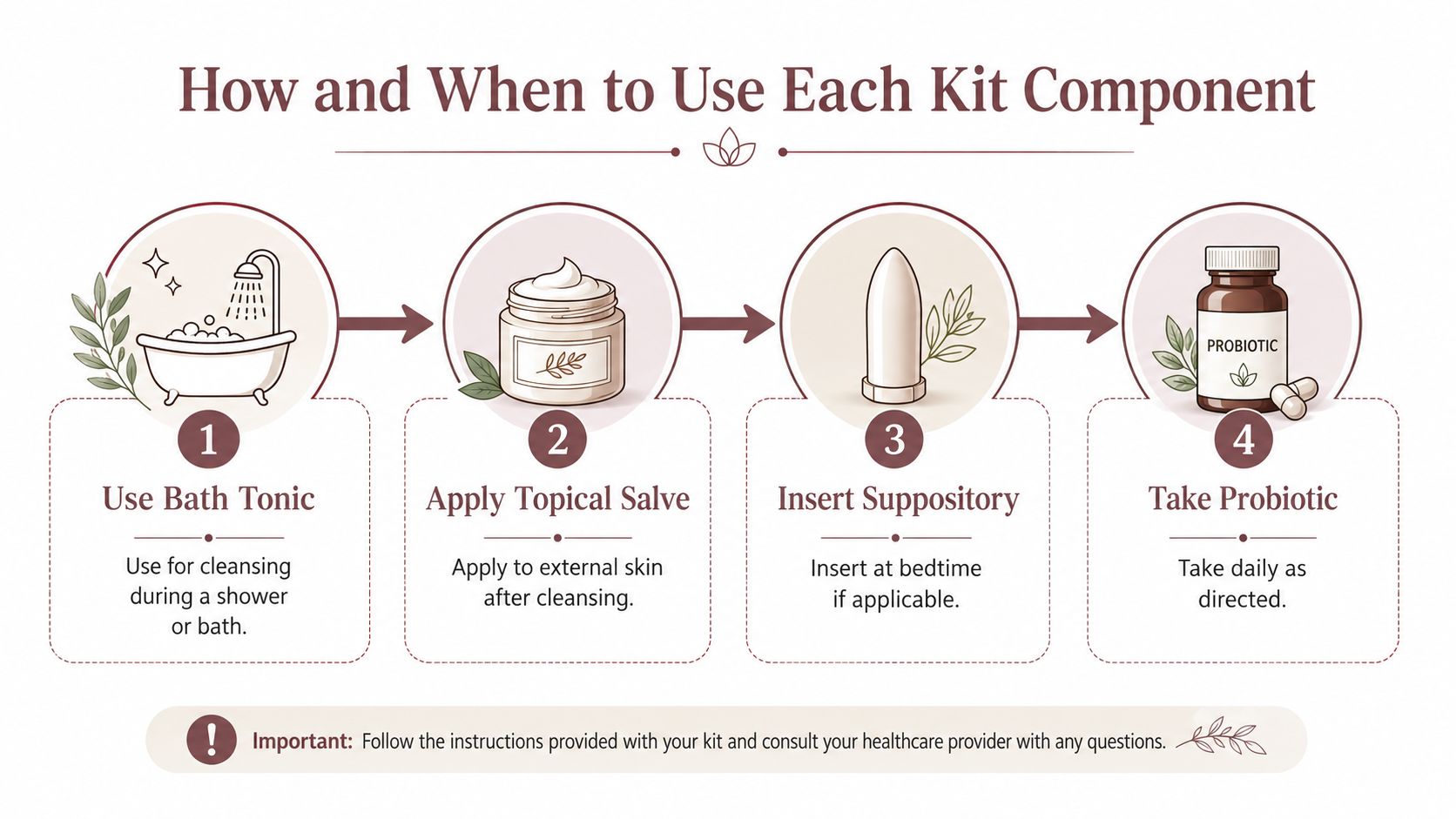
Read every label before starting, especially if the kit contains both non-prescription comfort products and a medicine. Keep external products external unless the instructions specifically say otherwise. Clean hands, a simple routine, and restraint are more useful than layering several products at once.
A simple order of use
- Clean gently. Rinse the vulva with lukewarm water or use the cleansing method recommended by your clinician. Don't scrub, douche, or apply fragranced products to irritated tissue.
- Use a bath tonic only as directed. If the label allows bath use, dilute it according to those directions in clean, warm water. If it's intended as an external spot treatment, apply only to intact external skin.
- Apply the salve externally. Use clean hands and a small amount around the vulva or affected external area. Keep it away from broken skin and mucous membranes if the product directions specify those precautions. Stop if you develop worsening burning, swelling, or a rash.
- Insert a suppository only when appropriate. Many vaginal products are easiest to use at bedtime because lying down can reduce leakage. Follow the exact product instructions, and don't combine multiple internal products unless a healthcare professional or the label says that combination is suitable.
- Take an oral probiotic consistently. Use it as directed, usually as part of a daily routine. It supports a longer-term wellness plan, not instant relief from an active infection.
For confirmed uncomplicated candidiasis, the CDC lists short-course intravaginal azole regimens including clotrimazole 1% cream, clotrimazole 2%, miconazole 2%, miconazole 4%, and single-dose tioconazole 6.5%, with the specific duration depending on the formulation. Review the CDC treatment guidance for vulvovaginal candidiasis rather than treating every suppository or botanical insert as an antifungal medicine.

The difference between symptom support and infection treatment is easy to miss. For a plain-language explanation of internal inserts and how they differ, read about vaginal suppositories.
How to Choose a High-Quality Yeast Infection Kit
Quality starts with honest labeling. A kit should tell you whether each item is a medicine, a cosmetic, a supplement, or a homeopathic product. It should also explain where the product goes, how often to use it, what symptoms it addresses, and when to stop.
Look for a clear division of roles
A strong kit doesn't present every component as a cure. It distinguishes the product intended to treat Candida from products that soothe external irritation or support daily care. That distinction protects you from using a salve or probiotic as though it were a tested antifungal.
Ingredient transparency matters, too. You should be able to identify botanical ingredients, preservatives, essential oils, allergens, and any warnings. Fragrance-free, alcohol-free, paraben-free, and sulfate-free formulas may be preferable for sensitive external skin, but “natural” ingredients can still irritate. Tea tree oil and other concentrated botanicals deserve careful label review, particularly if the skin is already inflamed.
Treat pH claims carefully
A pH-conscious formula may be designed to avoid unnecessary disruption, but pH alone doesn't confirm yeast. Diagnostic evidence shows why. A recent review describes yeast culture as the gold standard, reports high sensitivity and specificity for PCR or NAAT testing above 86%, and reports CAN-PCR sensitivity of 97.7% and specificity of 93.2%. In one cited study, only 11% of women correctly identified vulvovaginal candidiasis through self-diagnosis, as summarized in the diagnostic review.
Use this checklist when comparing products:
- Defined use: Each item has a specific external, internal, or oral purpose.
- Complete directions: The label includes application instructions and safety warnings.
- Low-irritant design: The formula avoids unnecessary fragrance and harsh cleansing ingredients.
- Medical honesty: The brand doesn't imply that a supplement or salve replaces diagnosis.
- Accessible support: The company explains when to stop self-care and contact a clinician.
Red Flags That Require Medical Care
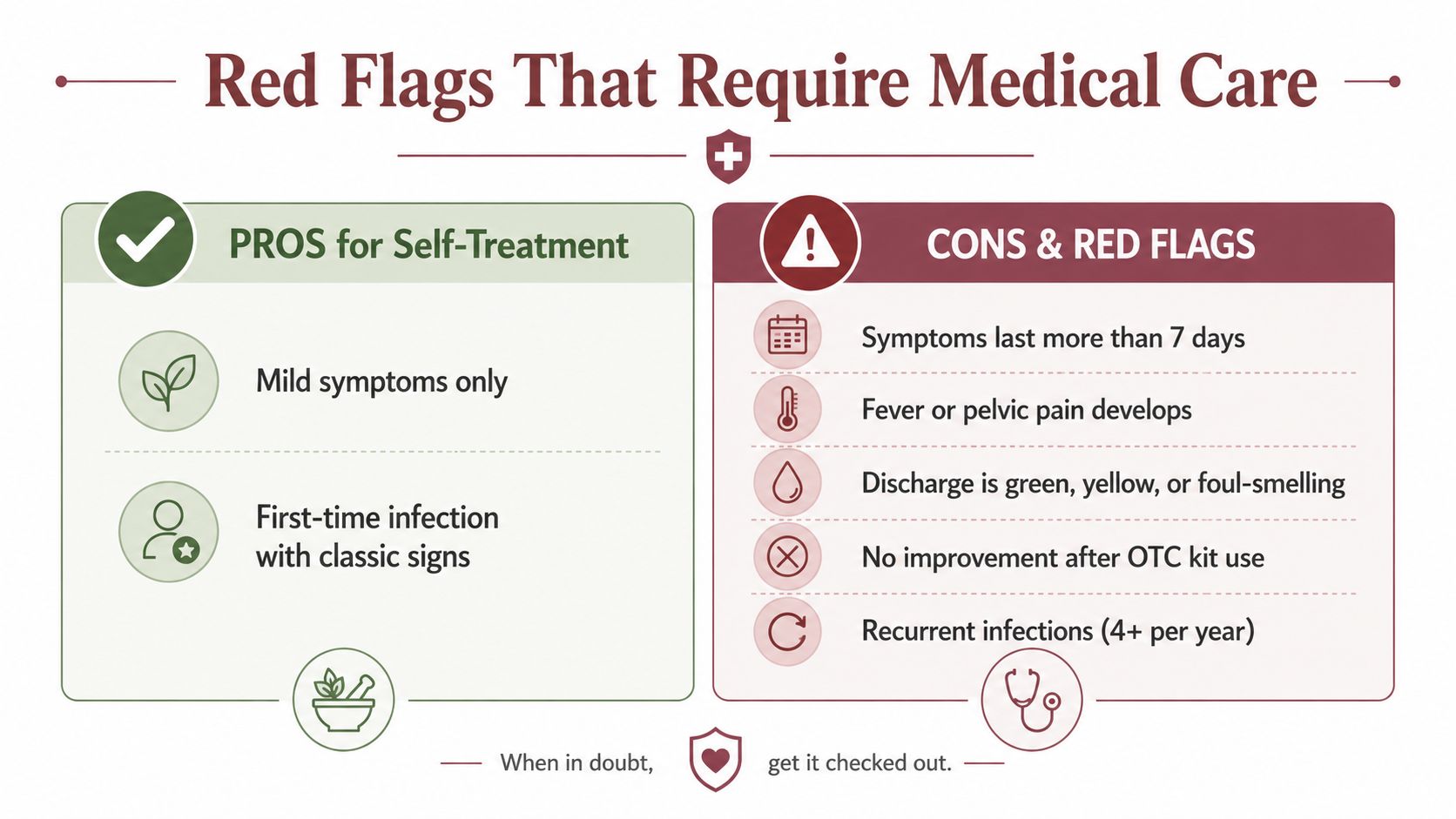
A yeast infection kit isn't a universal answer to itching or discharge. Symptoms overlap with bacterial vaginosis, urinary infections, sexually transmitted infections, allergic reactions, dermatitis, and hormonal dryness. Treating the wrong condition can delay the care you need.
Seek medical guidance if this is your first episode, if symptoms are severe, or if you're pregnant, breastfeeding, immunocompromised, or taking medication that could affect treatment choices. You should also stop a product and seek advice if it causes a new rash, significant swelling, worsening pain, or intense burning.
Use a decision point, not wishful thinking
Medical evaluation becomes more important when symptoms don't settle, return repeatedly, or look different from previous episodes. Fever, pelvic pain, green or yellow discharge, foul odor, sores, or substantial urinary pain aren't signs to manage indefinitely with comfort products. Recurrent episodes also deserve testing because the Candida species can influence management.
At-home testing can help organize the next step, but a pH strip doesn't identify Candida directly. Swab-based tests may provide more information, yet you still need help interpreting a result alongside symptoms, pregnancy status, medications, and recurrence history. Recent consumer resources describe continued interest in at-home pH and swab testing, as well as educational quizzes, while pointing out that many tools focus more on collection than on what to do after receiving a result. The at-home yeast infection testing overview offers useful context for that decision.
Don't use symptom relief as proof that you've treated the cause.
If burning happens mainly during urination, or you have urgency and bladder discomfort, the problem may involve the urinary tract rather than the vagina. A resource on how to test for UTI at home may help you understand available screening options, but positive or concerning results still call for appropriate healthcare advice.
Prevention and Follow-Up Care for Long-Term Wellness
Long-term care starts after the immediate discomfort improves. Keep the vulva clean with gentle methods, avoid douching and strongly fragranced products, and choose clothing that doesn't trap heat and moisture against already sensitive skin. Change out of damp clothing when practical, and pay attention to whether sex, antibiotics, menstrual products, or a new cleanser seems to precede symptoms.
A maintenance routine should stay simple. One person may benefit from daily probiotic use as a wellness habit, while another may find that internal products cause irritation. Don't add multiple new products immediately after an infection, because you'll have trouble identifying what helps and what causes a reaction.
Build a personal follow-up record
Write down when symptoms began, what they felt like, any recent medication, sexual activity, menstrual timing, and which products you used. If symptoms recur, that record gives a clinician more useful information than a vague memory of “another yeast infection.” It can also reveal that repeated episodes are different conditions.
The global burden of recurrent infection makes follow-up more than a comfort issue. The 2018 analysis estimated that recurrent vulvovaginal candidiasis affects about 138 million women annually worldwide, so recurring symptoms deserve a structured medical conversation rather than endless trial and error.
For urinary concerns after sex or in disability-related care settings, the NDIS UTI prevention advice from Nursing Assessment Australia offers additional prevention context. For recurring vaginal symptoms specifically, use this guide to prevent recurring yeast infections alongside clinician-directed care.
Common Questions About Yeast Infection Kits
Can I use a kit during pregnancy?
Ask your obstetric or primary healthcare provider before using any internal product, antifungal, probiotic, or botanical formula during pregnancy. Product labels may contain different warnings, and pregnancy can change which treatments are appropriate.
How quickly should I feel better?
External soothing may feel different from infection treatment. If symptoms worsen, remain substantial, or don't improve after the labeled course, contact a clinician instead of repeatedly restarting the same kit.
Can I use a kit to prevent infections?
Some kits include probiotics or products marketed for maintenance, but prevention support isn't the same as proven treatment. Recurrent symptoms require evaluation, especially when episodes keep returning or don't match your usual pattern.
Should I store every product in the bathroom?
Follow the package instructions. Keep products sealed, away from excessive heat and moisture, and out of reach of children and pets. Don't share applicators or internal products.
What if the kit helps the itching but discharge remains?
That's a reason to pause and reassess. Symptom relief doesn't confirm the diagnosis, and persistent discharge, odor, pelvic pain, or urinary symptoms should be evaluated rather than covered with another topical product.
Momotaro Apotheca offers plant-based salves, tonics, probiotics, suppositories, and coordinated vulvovaginal wellness kits for external comfort and broader routine support. Visit Momotaro Apotheca to review the ingredients, intended uses, and educational guidance before choosing the products that fit your needs.


