


Birth Control and Vaginal Dryness Relief
You start a new birth control method expecting your body to settle into a different rhythm. Instead, sex feels scratchy, arousal seems less effective, or your vulva feels uncomfortable even when you haven't been intimate. You may wonder whether stress is to blame, whether something is wrong, or whether you're supposed to choose between reliable contraception and feeling at home in your body.
Birth control and vaginal dryness can occur together, and the experience deserves more attention than it often receives. Dryness isn't a sign that you're failing to relax, lacking desire, or doing intimacy incorrectly. It can reflect a real change in hormone signaling, tissue response, or lubrication. The good news is that you have options: you can support comfort locally, learn your body's patterns, and speak with a clinician before making changes to contraception.
Table of Contents
- Navigating Intimate Discomfort on Contraceptives
- The Hormonal Mechanism Behind Contraceptive Dryness
- Comparing Birth Control Methods and Dryness Risk
- First-Line Symptom Management and Topical Relief
- Building a Daily Vulvovaginal Care Routine
- When to Talk to Your Clinician About Switching Methods
- Reclaiming Comfort and Intimate Wellness
Navigating Intimate Discomfort on Contraceptives
After switching pills, penetration may begin to feel uncomfortable. You might first blame stress or a busy month, then notice tenderness after exercise, irritation from wiping, or a lubricant that no longer feels sufficient. These changes can appear beyond sexual activity, which makes them easy to dismiss or misunderstand.
Side effects are often described as part of an adjustment period, so many people wait for discomfort to fade. Mild symptoms that are steadily improving may warrant observation. Ongoing pain deserves support rather than endurance as a condition of reliable contraception.
Dryness can affect movement, vulvar sensitivity, and intimate touch. Less moisture creates more friction, and discomfort can make arousal harder, much like trying to move skin across fabric without enough slip. That response does not indicate lost interest in a partner or a problem in the relationship. It may reflect how your body is responding to a changed hormonal environment.
Your comfort is clinically relevant. Tell your healthcare provider when dryness changes sex, exercise, sleep, hygiene, or your willingness to be touched.
A 2019 position statement from the European Society of Sexual Medicine discussed controlled research on hormonal contraception and lubrication. One prospective study reported vaginal dryness in up to approximately 30% of combined oral contraceptive users, compared with around 2% among vaginal ring users, with the rate decreasing by cycle 12 in the summarized study data. These findings do not predict one person's experience. They do support a physiological explanation for lubrication changes and suggest that both the contraceptive product and its delivery route can matter.
You can respond without abandoning birth control immediately. Track when symptoms appear, reduce friction with gentle plant-based vulvovaginal care, and seek assessment if discomfort persists, worsens, or affects daily life. Body awareness gives you useful information for the next conversation with your clinician.
The Hormonal Mechanism Behind Contraceptive Dryness
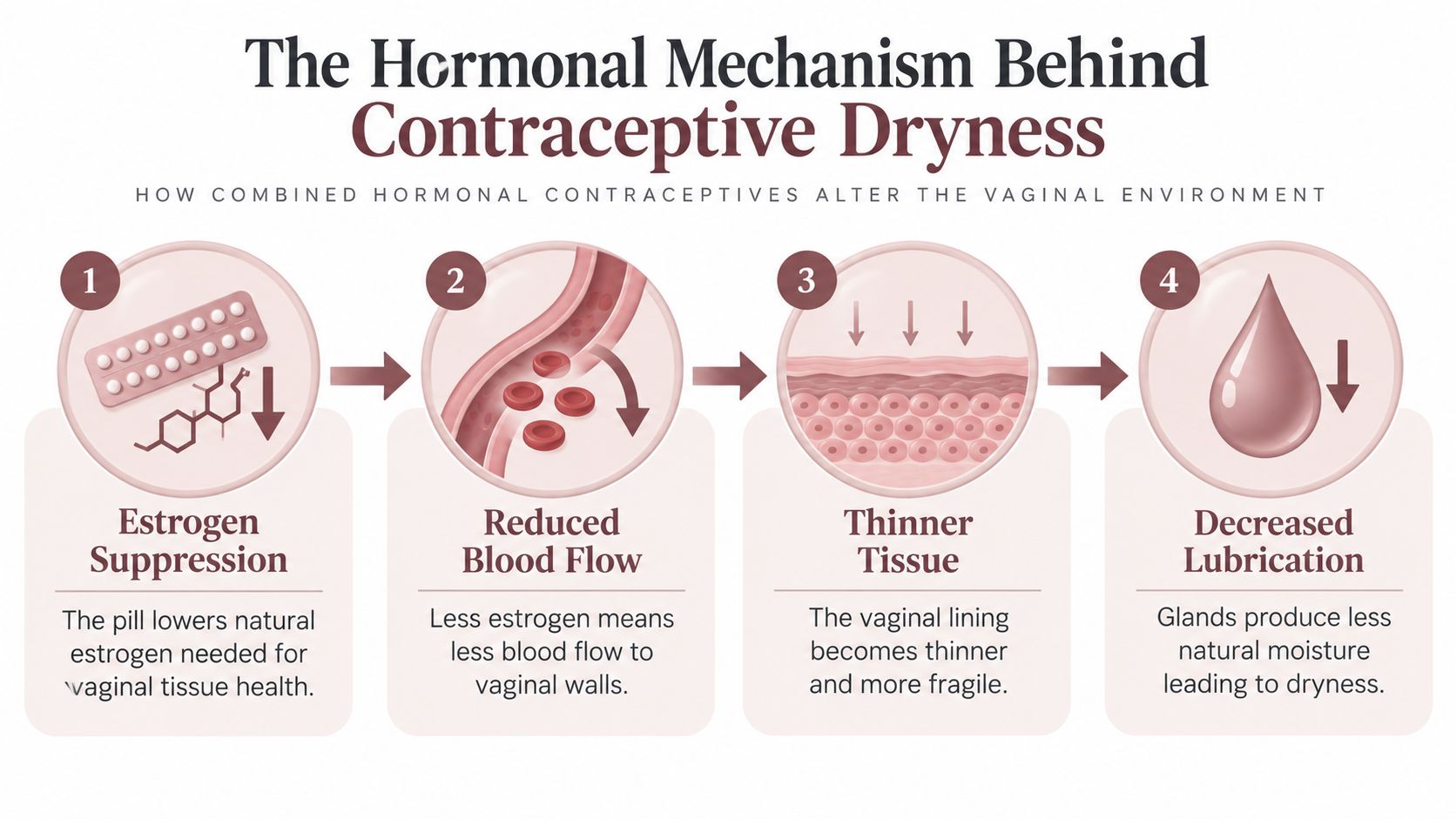
Vulvovaginal tissue responds to hormonal messages. Estrogen supports tissue quality, circulation, elasticity, and moisture, while androgen signaling, including free testosterone, also contributes to sexual response and lubrication. Combined hormonal contraceptives can alter these signals as they prevent ovulation and change the balance of circulating hormones.
The mechanism is easier to understand through a garden analogy. Healthy tissue is like a well-tended plant. It needs the right hormonal “instructions” to maintain structure, circulation, and resilience. If those instructions change, the tissue may not hold moisture as effectively, and friction can become more noticeable.
Combined hormonal contraceptives may reduce free testosterone and alter estrogen signaling. That shift can decrease vulvovaginal blood flow and tissue trophism, meaning the nourishment, thickness, and functional condition of the tissue. Clinically, the result may appear as dryness, hypolubrication, or dyspareunia, the medical term for painful sex. The mechanism is summarized in the clinical review of hormonal contraception and sexual function.
What tissue changes can feel like
When tissue receives less supportive hormonal signaling, several sensations may overlap:
- Less spontaneous moisture: You may feel dry outside sexual activity, not only during penetration.
- Slower lubrication with arousal: Your mind may feel interested while your body takes longer to produce glide.
- More friction: Touch, penetration, tight clothing, or exercise may feel sharper than before.
- Tenderness afterward: The tissue can feel irritated after sex because friction has exceeded what the moisture barrier can comfortably handle.
These symptoms can also result from other causes, including infection, dermatologic conditions, medication effects, postpartum changes, perimenopause, stress, or insufficient arousal time. Hormonal contraception may be one contributor rather than the only explanation. If you're also experiencing unusual discharge, odor, sores, bleeding, intense itching, or persistent pain, arrange an evaluation rather than assuming dryness is the diagnosis.
A 2024 review summarized an online health and sexuality survey of 1,101 women. In that survey, 72% used combined oral contraceptives and 13% used the combined vaginal ring. Compared with nonhormonal methods, hormonal contraception users reported more vaginal dryness, greater lubricant use, and lower sexual pleasure as summarized in the review discussion. These findings describe reported experiences, not a prediction for your individual body.
If you're curious about related signs of altered estrogen activity, you can also review low-estrogen symptoms and vulvovaginal changes. Understanding the mechanism helps you choose support without blaming yourself.
Comparing Birth Control Methods and Dryness Risk
Saying that “birth control causes dryness” is too general to guide a personal choice. Formulation, hormone profile, dose, and delivery route can all influence how lubrication changes. Two hormonal methods may affect vaginal comfort differently, while the same method can feel different from one body to another.
The most useful comparison in the available data comes from a prospective study discussed by the European Society of Sexual Medicine. People using two combined oral contraceptives reported dryness at up to approximately 30%, compared with around 2% among vaginal ring users. Reported dryness declined by cycle 12, which suggests that some users experienced adaptation over time, though improvement is not guaranteed in the position statement summary.
Contraceptive routes and reported dryness
| Contraceptive method | Reported dryness prevalence | Adaptation over time |
|---|---|---|
| Combined oral contraceptives in the prospective study | Up to approximately 30% | Dryness decreased by cycle 12 |
| Combined vaginal ring in the prospective study | Around 2% | Dryness decreased by cycle 12 in the broader study summary |
| Nonhormonal methods | The verified data doesn't provide a prevalence figure | Hormonal adaptation isn't expected from the method itself |
This table describes lubrication findings, not contraceptive safety or effectiveness. The ring result is not a promise that this method will resolve dryness. Individual responses, medical needs, and personal preferences still shape the decision.
A later clinical review found that antiandrogenic combined oral contraceptives may affect lubrication more negatively than nonhormonal methods. That finding supports asking about the specific progestin and estrogen profile, rather than treating every hormonal method as identical in the expert review.
Your symptoms may ease as your body adjusts, but you do not have to tolerate ongoing discomfort without support. Track when dryness began, whether it followed a prescription or dose change, and how it affects daily comfort or intimacy. This record can make a clinician conversation more specific. The birth control breakdown also offers a way to organize questions while you consider contraceptive choices alongside plant-based vulvovaginal care.
First-Line Symptom Management and Topical Relief
The first practical distinction is simple: a lubricant reduces friction during an activity, while a vaginal moisturizer supports ongoing comfort between activities. They aren't interchangeable. A lubricant is applied before and during sexual contact or another friction-producing activity. A moisturizer is used regularly according to its directions, even when you aren't having sex.
Choose products carefully when tissue already feels reactive. Look for fragrance-free, pH-conscious formulas and avoid products that sting, burn, or leave symptoms worse. “Natural” doesn't automatically mean suitable for vulvovaginal tissue. Essential oils, botanical extracts, and preservatives can still irritate sensitive skin, so patch testing on external skin and stopping at the first sign of worsening discomfort are sensible precautions.
Match the product to the moment
For intimacy, apply lubricant generously before friction starts and reapply when glide decreases. Water-based formulas are versatile, while silicone-based products can provide longer-lasting glide. If you use latex condoms, avoid oil-based products because they can weaken latex. Always check the product label for condom and toy compatibility.
For everyday dryness, a vaginal moisturizer may be more appropriate. Use it consistently according to the label rather than applying a large amount only after symptoms become severe. External vulvar balms and plant oils can help protect the skin barrier, but they shouldn't be inserted unless the product is specifically formulated and labeled for internal use.
Stop treating friction as a test of endurance. Add lubricant before discomfort begins, and pause if the tissue starts to burn or feel raw.
If you're comparing nonprescription moisturizers, a neutral resource on Replens MD benefits and side effects may help you think through intended use and possible reactions. It's still important to read the full ingredient list and ask a clinician or pharmacist if you have recurring symptoms, allergies, or a condition affecting the vulva.
A plant-based balm can be useful for external skin when it contains simple, well-tolerated ingredients and is used as directed. Keep application external unless the packaging clearly states otherwise. The aim is not to perfume, scrub, or “clean” the vagina. It's to reduce friction and support a comfortable moisture barrier.
Here's a short visual explanation of how topical support fits into a broader care approach:
If symptoms persist despite local care, become painful, or resemble an infection, move from self-care to clinical assessment. Symptom relief and diagnosis are separate needs.
Building a Daily Vulvovaginal Care Routine
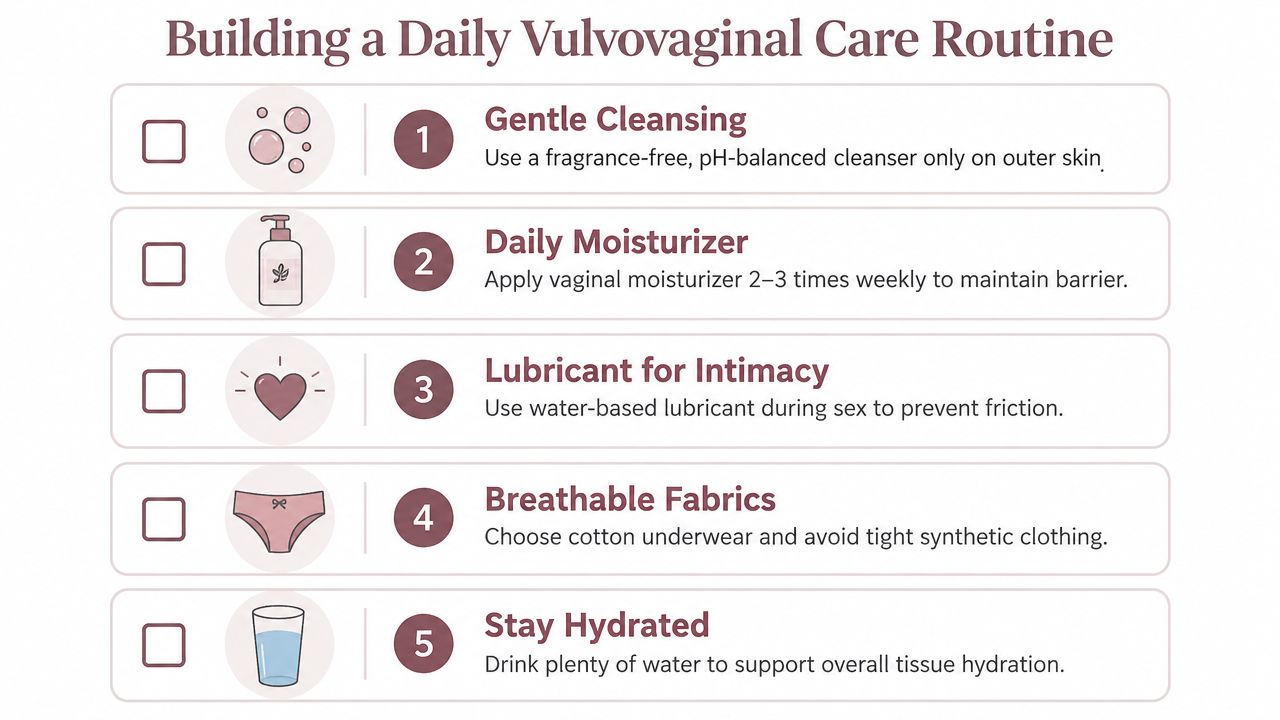
Dryness responds better to a gentle pattern than to repeated emergency fixes. The routine should protect the external moisture barrier, limit unnecessary irritation, and reduce friction during sex, exercise, and daily movement. You don't need a complicated schedule. You need products that match the location and purpose of each application.
A practical rhythm for the day
Begin with gentle cleansing. Wash the outer vulvar skin with water or a fragrance-free, pH-conscious cleanser if needed. Avoid douching and don't wash inside the vagina. Pat dry instead of rubbing, especially after bathing or sweating.
After a shower, apply a suitable external moisturizer or balm while the skin is clean and dry. A cold-pressed body oil can help seal moisture on external skin, but oils aren't automatically compatible with condoms. Keep a separate lubricant available for intimacy, and use it before friction begins.
After exercise, change out of damp clothing when possible. A cooling botanical mist designed for external skin may be convenient after sweating, menstruation, or sex, but it should never replace evaluation for persistent itching, odor, pain, or unusual discharge.
Build after-sex care around comfort
After sex, rinse the external area with lukewarm water if that feels soothing, then pat dry. Reapply a gentle external balm only if the skin feels irritated and the product is labeled for that use. If urination burns, pain continues, or symptoms recur, seek medical advice rather than assuming friction is the only cause.
For readers seeking several types of plant-based support in one routine, the Vulvovaginal Dryness Bundle includes a salve, suppository, hydrosol, and body oil. The catalog describes the salve for external vulvar dryness, itching, and irritation, the hydrosol as a botanical micromist for external areas prone to sweat and irritation, and the body oil for broader skin moisture. The suppository is an internal product, so follow its directions and consult a medical professional if symptoms are new, severe, or persistent.
A routine should feel supportive, not punitive. Breathable clothing, adequate fluids, sufficient arousal time, and communication with a partner can all reduce pressure on sensitive tissue. If any product causes burning or a rash, discontinue it and reassess the ingredients with a clinician.
When to Talk to Your Clinician About Switching Methods
You deserve a contraceptive method that fits your health priorities and your quality of life. Topical support can make symptoms more manageable, but persistent pain or significant dryness may justify a conversation about the formulation itself. The evidence summarized by the European Society of Sexual Medicine indicates that route and hormone profile can affect lubrication, so “I'm on birth control” isn't enough detail for a useful review.
Prepare for the appointment with observations rather than a vague report that something feels off. Write down:
- The timeline: Note when dryness began and whether it followed a new method, brand, dose, or missed-pill pattern.
- The setting: Record whether symptoms occur during sex, throughout the day, after exercise, or only around bleeding.
- The impact: Describe burning, friction, tenderness, reduced pleasure, or pain with penetration in plain language.
- What you've tried: List lubricants, moisturizers, cleansers, and any product that made symptoms better or worse.
Questions that create a productive discussion
Ask your clinician whether the current estrogen and progestin profile could contribute to your symptoms. You can also ask how another formulation, delivery route, or nonhormonal method might change the tradeoffs for your contraception and comfort.
Useful questions include:
- Could another formulation be less likely to affect lubrication for me?
- Is my pain consistent with dryness, or should we test for infection, dermatitis, or another condition?
- Which lubricant or moisturizer is appropriate with my condoms, medications, and health history?
- What symptoms mean I should stop a product or return for follow-up?
- How can we change methods safely if I decide the side effects are unacceptable?
Don't stop a contraceptive abruptly without understanding pregnancy risk and an appropriate transition plan. A method change should protect both reproductive goals and tissue comfort. The guide on preparing questions for an OB-GYN appointment can help you bring a focused list rather than trying to remember everything in the exam room.
Seek prompt medical care for severe pain, unexplained bleeding, sores, fever, strong odor, or symptoms that don't improve. A clinician can distinguish hormonal dryness from conditions that require different treatment.
Reclaiming Comfort and Intimate Wellness
The assumption that people should tolerate contraceptive side effects needs to change. Contraception is healthcare, and healthcare should include how your body feels during sex, exercise, sleep, and ordinary movement. You're allowed to value pregnancy prevention and vulvovaginal comfort at the same time.
The most useful approach is layered. First, notice the timing and pattern of your symptoms. Next, reduce friction with an appropriate lubricant, support external skin with gentle plant-based care when suitable, and avoid fragranced products that may trigger more irritation. Finally, involve a clinician when symptoms persist or when you want to compare formulations and routes.
That process builds body literacy, not fear. You're learning which sensations are normal for you, which changes deserve attention, and which questions help you make decisions without abandoning your reproductive goals. Dryness may lessen as the body adjusts, but you don't need to suffer while waiting, and you don't need to treat discomfort as proof that your contraceptive is the only possible cause.
For readers exploring the wider relationship between hormones, desire, and sexual wellbeing, information about hormone optimization for women can offer another starting point for clinician-guided questions. Keep the focus on individualized care rather than a one-size-fits-all hormone solution.
Your vulvovaginal comfort belongs in the conversation. Track what you notice, choose topical support thoughtfully, and ask for help when symptoms interfere with your life.
Momotaro Apotheca offers plant-based vulvovaginal care, including external salves, botanical hydrosol, body oil, and coordinated routines for dryness and irritation. Visit Momotaro Apotheca to explore products and educational guidance, then choose the support that fits your symptoms and discuss persistent concerns with a qualified clinician.


