


How to Prevent Chronic Yeast Infections: A Complete Guide
You finish an over-the-counter yeast treatment, feel better for a while, and then the itching or burning returns. Maybe it happens after antibiotics, a sweaty workout, sex, or for no obvious reason. The repeated cycle is exhausting, but the answer usually isn't another product chosen at random. Preventing chronic yeast infections starts with confirming the cause, then building a routine that protects the vulvar skin without adding irritation.
Table of Contents
- Understanding Recurrent Yeast Infections
- Daily Lifestyle and Hygiene Habits That Support Balance
- Dietary and Supplement Considerations for Long-Term Health
- Timing Your Prevention Strategies Effectively
- Building a Personalized Prevention Routine
- Monitoring Progress and Knowing When to Seek Care
Understanding Recurrent Yeast Infections
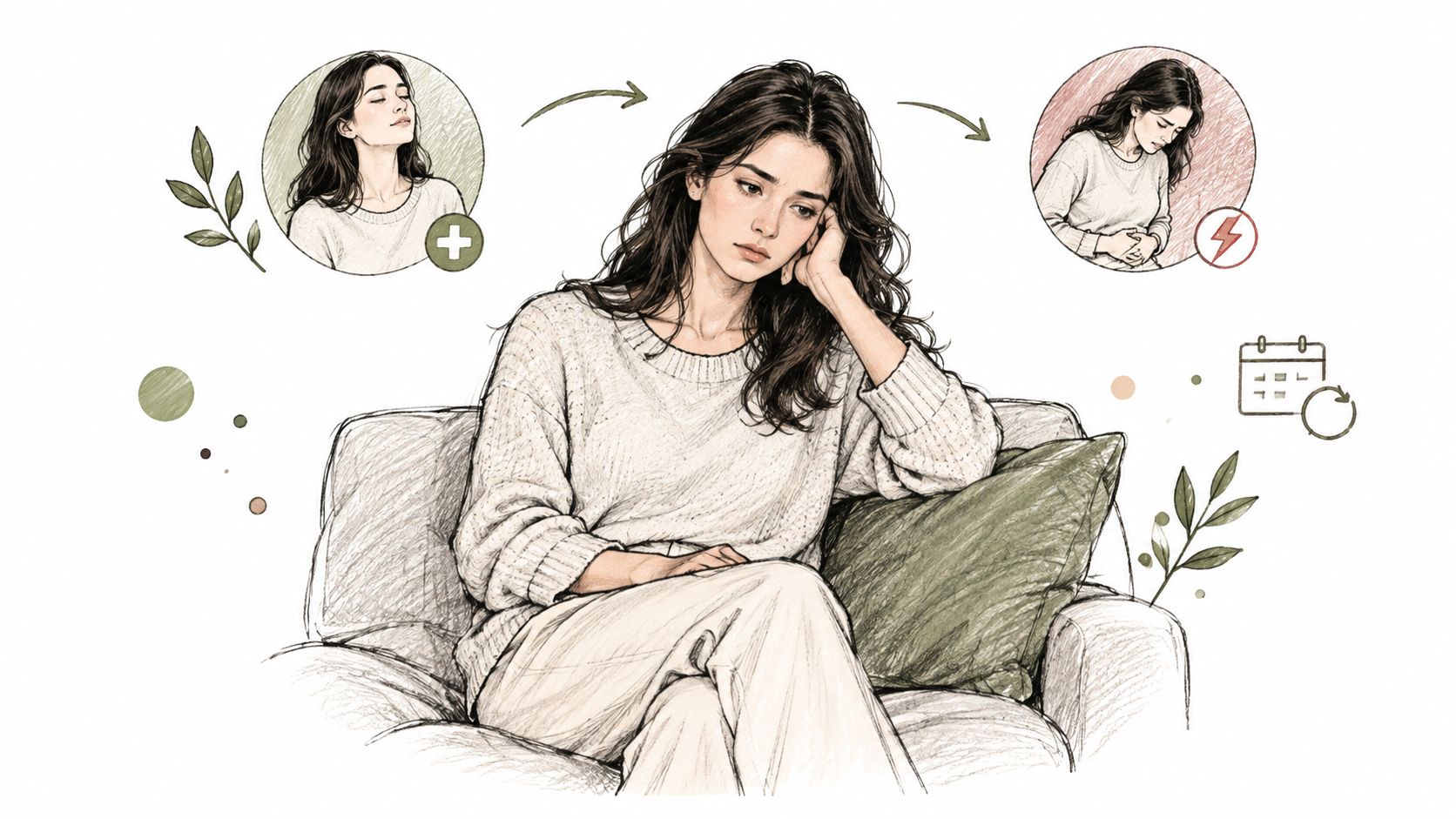
A flare that resembles the last one can make self-treatment feel straightforward. Itching, burning, irritation, and discharge may lead you back to the same cream or suppository. Relief may be temporary, especially when Candida was not the cause.
The CDC guidance on vulvovaginal candidiasis generally defines recurrent vulvovaginal candidiasis, or RVVC, as three or more symptomatic episodes within one year. Approximately 75% of women experience at least one episode during their lifetime, while 40%–45% experience two or more. RVVC affects fewer than 5% of women, but repeated symptoms can carry a substantial personal and economic burden.
Why diagnosis changes prevention
Yeast symptoms overlap with bacterial vaginosis, dermatitis, sexually transmitted infections, and other vulvovaginal conditions. Using antifungal treatment for irritation or another infection can delay appropriate care and leave sensitive skin more reactive.
For complicated or recurrent symptoms, the CDC recommends clinical evaluation and testing, including culture or another laboratory assessment. Testing can identify the Candida species involved. That distinction matters because non-albicans Candida may respond differently to standard azole medicines.
Practical rule: If symptoms recur, persist, or fail to respond to an over-the-counter treatment, pause the product cycle and arrange an evaluation.
Track what happened before each flare, including products used, antibiotics, sexual activity, exercise, menstruation, and symptom timing. Share that pattern with a clinician before building a daily or periodic prevention routine. You can also review why you may keep getting yeast infections, but educational information cannot replace testing. The aim is to confirm Candida first, then choose gentle, pH-conscious care that supports the vulvar skin without treating a look-alike condition as yeast.
Daily Lifestyle and Hygiene Habits That Support Balance
A practical routine starts after the trigger, not after symptoms appear. Wet swimwear, sweaty clothing, tight fabric, fragranced products, and repeated friction can leave the vulvar skin irritated, so daily care should stay simple and consistent.
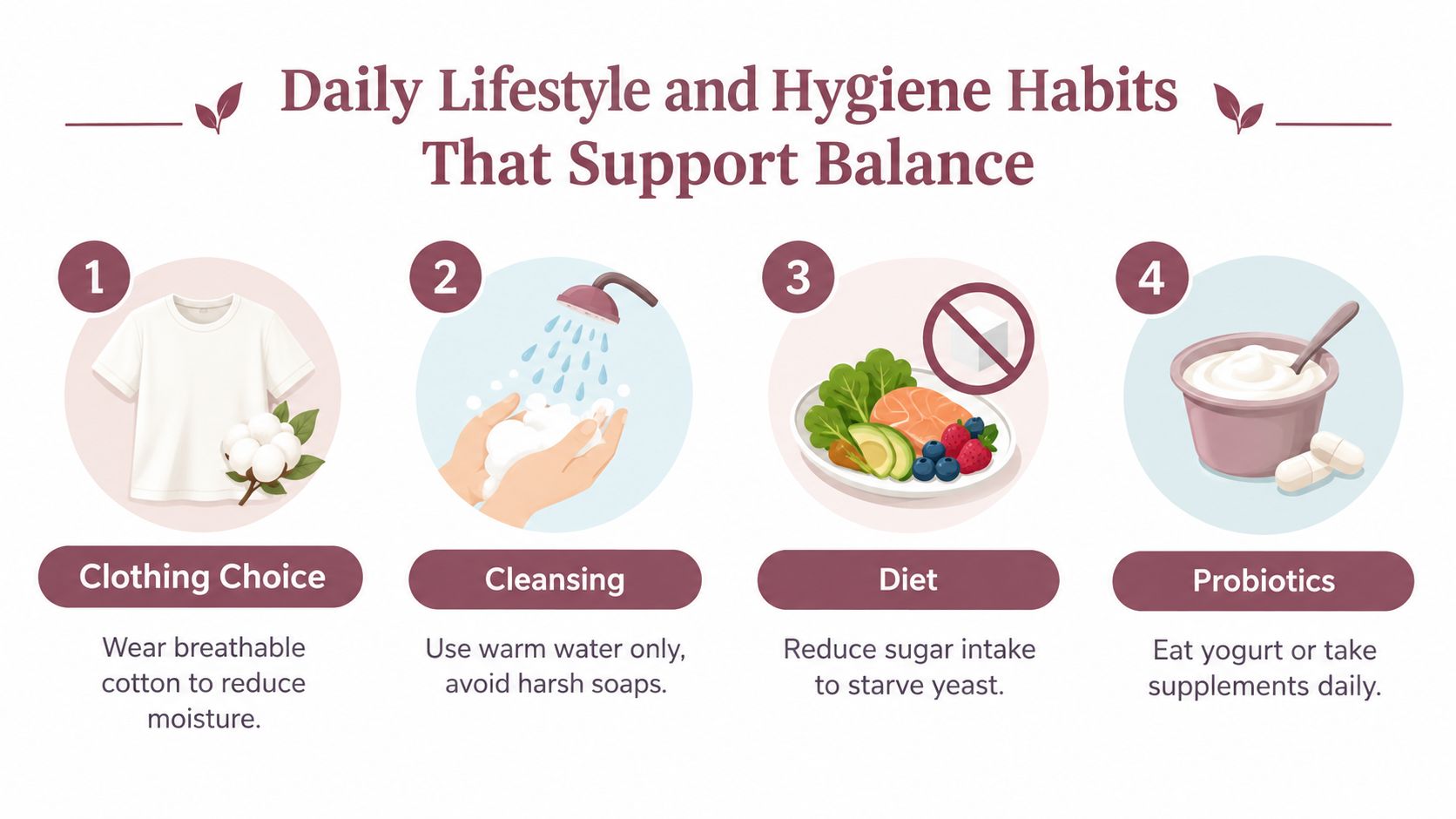
Clean the external area with warm water. If you use a cleanser, choose a mild, fragrance-free product made for sensitive skin. Do not douche or wash inside the vagina. Harsh or scented products may irritate the vulvar barrier and disturb the local environment, which is why clinical resources advise avoiding them.
A routine that protects the skin
Use these habits as a flexible baseline. Adjust them around work, exercise, menstruation, and intimacy rather than treating them as a strict purity test.
- After swimming: Change out of wet swimwear promptly instead of remaining in damp fabric.
- After exercise: Remove sweaty clothes, rinse if needed, and change into dry underwear and loose clothing.
- During the day: Choose breathable fabrics and limit tight garments that hold heat, moisture, and friction against the skin.
- During menstruation: Change menstrual products regularly. Choose unscented options if fragrance causes irritation.
- After washing: Pat dry instead of scrubbing. Wash towels and underwear regularly, while avoiding aggressive detergents or fabric products that leave fragrance behind.
- After intimacy: Urinate if it supports your urinary comfort, rinse the external area with water, and stop using any product that stings.
For a clearer explanation of why internal washing is unnecessary, read this guide to vaginal pH and a balanced environment. The vagina maintains its own environment. The external skin usually benefits from minimal, non-irritating care.
A pH-conscious balm may soothe dry or irritated external skin and reduce friction. It is not an antifungal, and it should not be inserted unless the label and a clinician specifically support that use. Comfort can improve while an infection remains untreated, so symptom relief alone does not confirm recovery.
Use the video below as a visual refresher for gentle routines. It supplements, rather than replaces, medical advice.
Dietary and Supplement Considerations for Long-Term Health
Nutrition can support general health, but it shouldn't carry the entire burden of preventing recurrent candidiasis. The strongest established prevention for confirmed RVVC is clinician-supervised antifungal maintenance, not a restrictive diet or a shelf full of supplements.
A practical diet is one you can sustain. Eat regular meals with vegetables, protein, fiber-rich carbohydrates, and unsweetened foods that suit your health needs. If you notice that a particular food consistently worsens bloating, skin irritation, or digestive symptoms, record the pattern rather than assuming that all sugar or carbohydrates cause vaginal yeast overgrowth.
The popular “Candida diet” often removes broad food groups and promises to starve yeast. That approach can become stressful and nutritionally narrow, and it doesn't replace diagnosis or antifungal treatment. A more measured discussion appears in this explanation of the Candida diet and recurrent infections.
Probiotics and everyday choices
Products containing Lactobacillus or Bifidobacterium are widely marketed for vaginal and gut health. They may fit into a broader wellness routine, particularly if you tolerate them well, but they shouldn't be presented as a guaranteed treatment or as a substitute for laboratory confirmation. Choose a product with clearly identified strains and follow its storage and use instructions.
Yogurt can be a convenient food if you enjoy it, but eating it doesn't prove that a vaginal infection will clear or stay away. The same applies to garlic, herbal blends, detox drinks, and suppositories made from kitchen ingredients. “Natural” doesn't automatically mean safe for vulvar tissue, and irritating the skin can make itching harder to interpret.
For a calming, caffeine-free beverage ritual, you can find chamomile tea bags online and use tea as a hydration habit rather than as an antifungal treatment. Chamomile tea may be pleasant, but drinking it won't diagnose Candida or replace prescribed therapy.
Supplements should support a care plan, not become a reason to postpone an examination.
If you have diabetes, are pregnant, take medicines that interact with antifungals, or have a condition that affects immunity, discuss dietary and supplement changes with a clinician. Prevention needs to fit your medical context, not just a product label.
Timing Your Prevention Strategies Effectively
The most useful timing decision is whether you're preventing irritation or managing confirmed recurrent infection. Those are related, but they aren't interchangeable.
For everyday support, use gentle external care consistently. Apply a fragrance-free, pH-conscious balm only to external skin when dryness or friction is a problem, and stop if burning or redness increases. A topical product may make walking, exercise, or intimacy more comfortable, but it doesn't eradicate vaginal Candida.
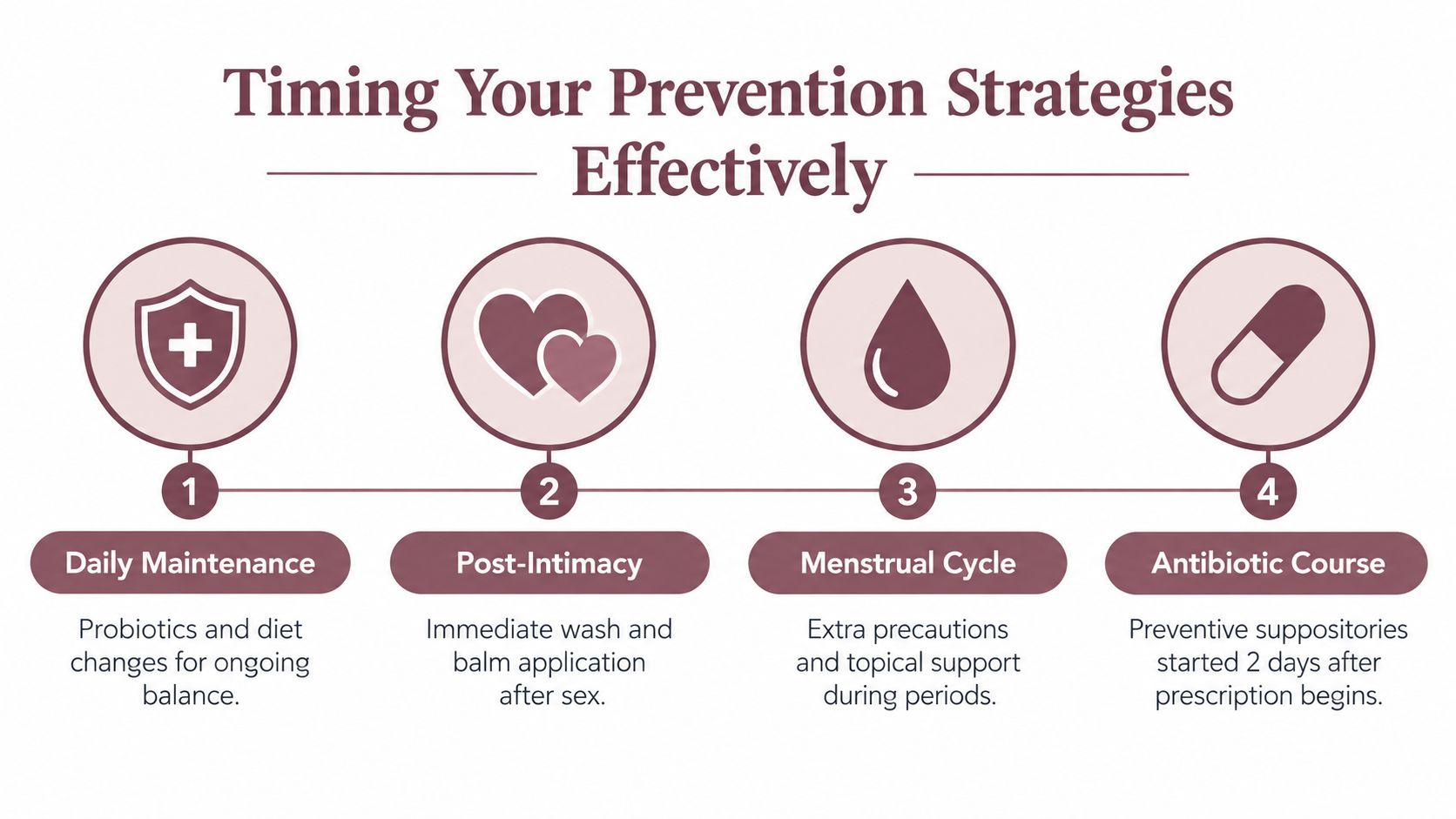
Probiotics and dietary changes also belong in the background routine. Take them according to the product directions, assess whether they agree with your body, and avoid starting several new products at once. If symptoms appear, don't interpret a supplement schedule as evidence that an active infection is under control.
When clinical maintenance fits
For confirmed recurrent yeast infections, the Infectious Diseases Society of America's candidiasis guideline recommends an initial 10–14-day course of topical therapy or oral fluconazole, followed by fluconazole 150 mg once weekly for at least six months. The guideline reports that this regimen controls symptoms in more than 90% of patients during maintenance therapy.
That result has an important limitation. Suppression isn't permanent prevention, and the guideline estimates a 40%–50% recurrence rate after maintenance stops. A clinician may therefore use follow-up appointments, testing, and an individualized plan rather than promising that one course will end the problem forever.
| Situation | Sensible timing choice |
|---|---|
| Daily dryness or external friction | Gentle cleansing, breathable clothing, and an external soothing product if tolerated |
| After swimming or exercise | Change promptly into dry clothing |
| After antibiotics are prescribed | Take antibiotics only as directed, then contact a clinician if symptoms develop |
| Recurrent, confirmed Candida | Discuss induction treatment and maintenance therapy with a clinician |
| Symptoms that don't respond | Arrange examination and laboratory assessment instead of adding products |
Don't independently begin prolonged oral antifungal treatment. Pregnancy status, liver health, drug interactions, Candida species, and local resistance patterns can all affect the appropriate medicine. Preventive suppositories or leftover prescriptions shouldn't be scheduled around an antibiotic course without clinical advice, because the symptoms may not be Candida and the product may be unsuitable.
Building a Personalized Prevention Routine
A workable routine has three layers: protect the external skin, reduce moisture and friction, and use medical prevention when testing confirms that you need it. It shouldn't require constant monitoring or a bathroom cabinet full of overlapping formulas.
In the morning, rinse the external area if you need to, pat dry, and choose breathable underwear with clothing that doesn't rub. If you use a balm for dryness, apply a small amount externally and check how your skin responds over the next several hours. Avoid placing a wellness product inside the vagina unless it has a clear indication and a clinician has advised you to use it there.
Match the routine to your triggers
Your afternoon routine may matter more than your morning routine if workouts, swimming, or long periods in damp clothing precede symptoms. Keep a spare pair of underwear in your bag, change after activity, and remove tight clothing when you get home.
For intimacy, use adequate lubrication if friction contributes to irritation, and avoid scented products. Rinse the external area afterward if that feels comfortable, but don't douche or scrub. If symptoms repeatedly follow sex, document the timing and discuss it with a clinician instead of assuming that your partner needs treatment. Most vaginal yeast infections aren't considered sexually transmitted, although a symptomatic partner may need assessment.
Keep the plan small enough to follow
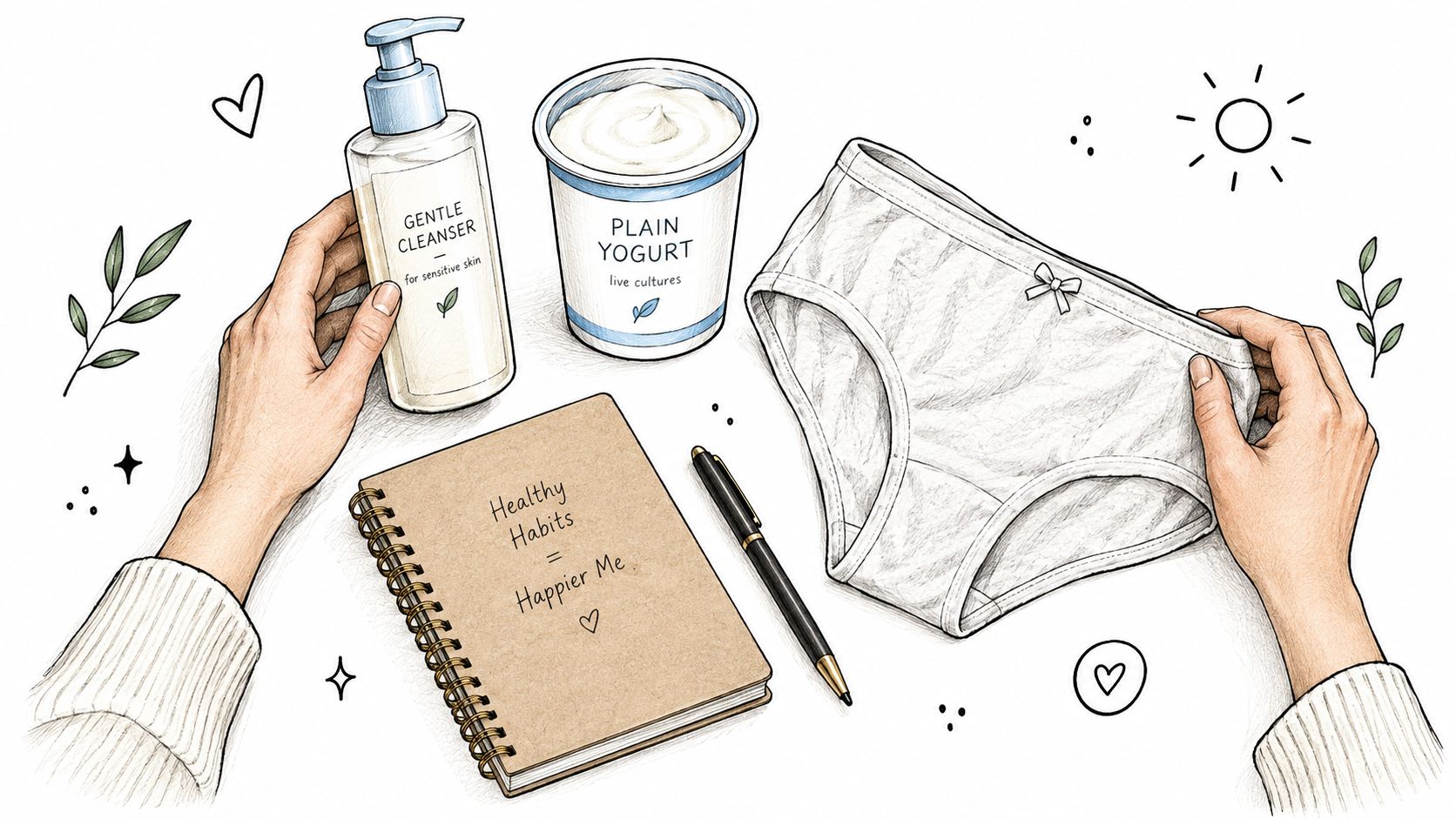
A simple weekly check-in can be more useful than adding another supplement. Note your symptoms, menstrual timing, recent antibiotics, sexual activity, exercise, new products, and whether a treatment helped. Patterns can guide a clinical conversation, but they can't confirm the diagnosis on their own.
If you want a non-prescription option for external comfort, Momotaro Apotheca's Soothe & Restore Salve is an example of a certified organic, fragrance-free balm designed for vulvar dryness, itching, and irritation. Use any such product as supportive skin care, not as a replacement for testing or antifungal treatment.
Monitoring Progress and Knowing When to Seek Care
Keep a brief symptom log rather than relying on memory. Record the date symptoms begin, the type of discomfort, discharge changes, possible triggers, products used, and your response to treatment. Bring the record to a clinician if episodes continue.
Seek medical assessment when symptoms recur, persist, or fail to improve with an over-the-counter treatment. Ask whether an examination and culture or other laboratory assessment are appropriate, particularly if a previous medicine no longer works or testing has never confirmed Candida.
Use this checklist:
- Recurrent episodes: Symptoms meet the CDC pattern for RVVC or keep returning.
- Unclear symptoms: Discharge, odor, sores, pelvic pain, or irritation doesn't resemble a confirmed prior infection.
- Treatment failure: Symptoms remain after treatment or return quickly.
- Higher-risk circumstances: You're pregnant, immunocompromised, managing liver disease, or taking medicines that may interact with antifungals.
- Increasing discomfort: Burning, swelling, or pain makes everyday activities or sex difficult.
The right goal isn't perfect control through increasingly strict hygiene. It's a confirmed diagnosis, a low-irritation daily routine, and timely professional care when self-care stops being enough.
Momotaro Apotheca offers fragrance-free, pH-conscious vulvovaginal care products, including the Soothe & Restore Salve and condition-specific routines for external comfort and daily support. Visit Momotaro Apotheca to review the available options and choose a routine that complements, rather than replaces, clinician-guided treatment.


