


Ointment for Chafing: How to Treat and Prevent It Safely
Your inner thighs sting after a sweaty walk, or the skin beside your vulva feels raw where your underwear rubbed all day. You're reaching for a balm, but you're not sure whether it's ordinary chafing, a reaction to a new product, or something that needs treatment.
An ointment for chafing can protect rubbed skin, but it can't fix every cause of genital irritation. The useful first step is identifying what's causing the discomfort, then choosing a barrier that works with your clothing, menstrual products, contraception, and any prescribed treatment.
Table of Contents
- Is It Chafing or a Different Vulvar Problem
- Choosing an Ointment for Sensitive Vulvar Skin
- How to Treat Chafed Skin Step by Step
- Daily and After-Activity Routines That Prevent Chafing
- Using Ointment With Pads, Condoms and Medication
- Tips That Stop Chafing From Coming Back
- When to Stop Self-Care and See a Clinician
Is It Chafing or a Different Vulvar Problem
Pink, raw skin in a rubbing zone after a run, ride, long walk, or sweaty day suggests friction plus moisture. That pattern makes a barrier ointment a reasonable first step, although appearance alone can't confirm the diagnosis.
Chafing often becomes a catch-all term for vulvar discomfort. Yeast infections, bacterial vaginosis, contact dermatitis, herpes, and chronic skin conditions can overlap in symptoms, but they need different care.
Match the symptoms before choosing a product
Use these patterns as clues, not a home diagnostic test.
| Symptom pattern | Most likely cause | Does ointment fit? |
|---|---|---|
| Pink, raw patches in rubbing zones after a long run, ride, or sweaty day | Friction plus moisture, or chafing | Yes, as a barrier |
| Rash that started after a new soap, wipe, lube, or detergent | Irritant or allergic contact dermatitis | Only after removing the trigger, using a bland product |
| Itch with thick white, clumpy discharge | Possible yeast infection | No, needs diagnosis |
| Itch, thin grey discharge, or fishy odor | Possible bacterial vaginosis | No, needs diagnosis |
| Painful blisters, small sores, or cracks that bleed | Possible herpes or a fissure | No, seek clinical evaluation |
| Thin, shiny, or scaly patches that keep returning | Chronic vulvar skin condition, such as lichen sclerosus | No, needs clinical diagnosis |
The Cleveland Clinic's chafing guidance supports reducing friction, controlling moisture, and using a thin layer of petroleum jelly for minor chafing, while more severe cases may need antifungal, antibiotic, anti-inflammatory, or other medical treatment. Soothing the surface isn't the same as treating an infection.
Before applying anything, ask yourself: When did this start? Is there persistent itch, unusual discharge, or odor? Did a new soap, wipe, lubricant, or detergent touch the area?
If a product seems responsible, remove that trigger rather than covering it with more skincare. For additional comfort measures, Momotaro's guide to soothing vulvar irritation offers a useful starting point.
Choosing an Ointment for Sensitive Vulvar Skin
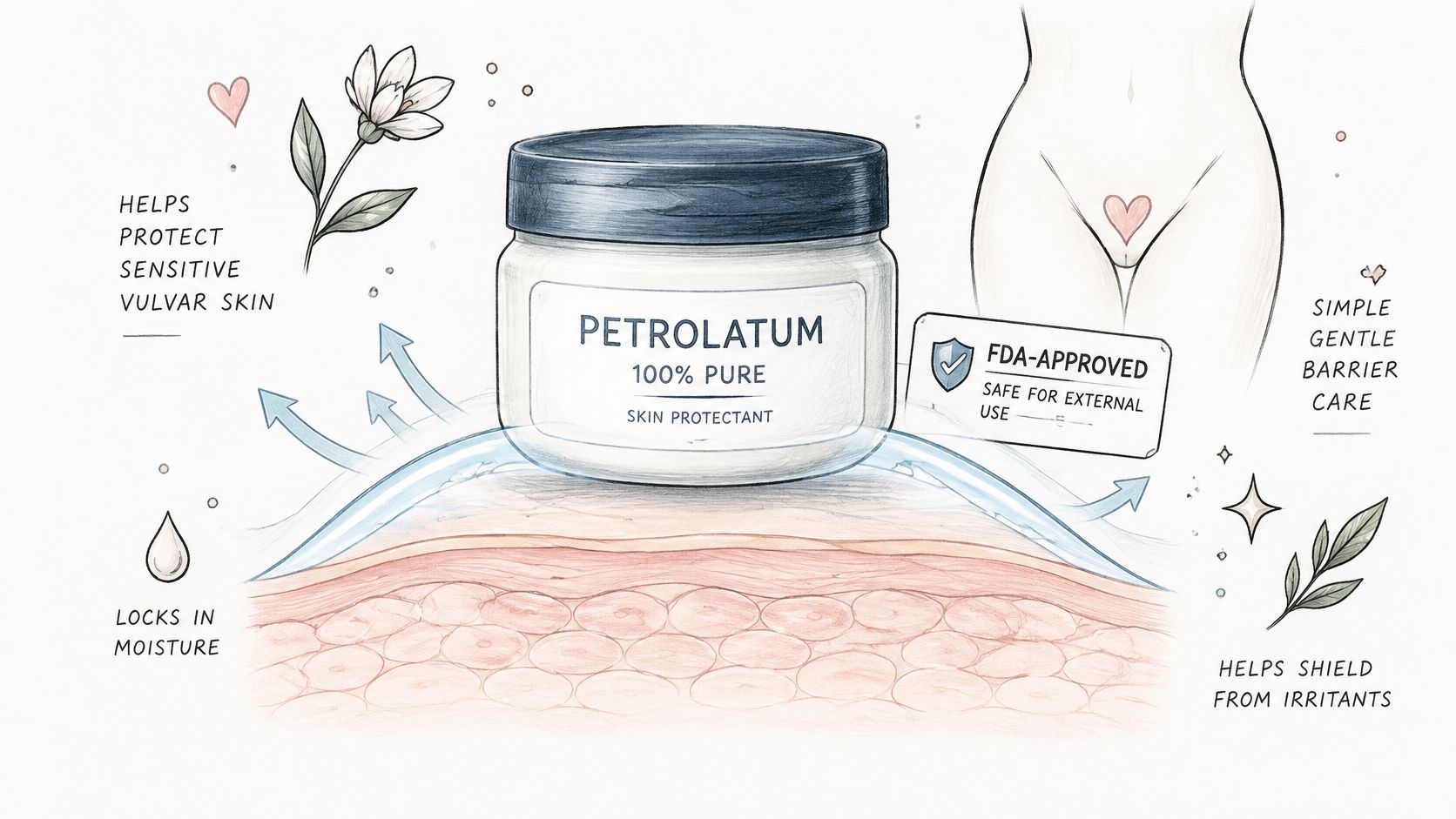
Plain petrolatum is the benchmark I'd start with for uncomplicated friction chafing. It lubricates rubbing surfaces and forms a protective film that limits moisture loss. Its established use as a barrier ingredient is discussed in this barrier-care evaluation.
Ointments generally contain less water and need fewer preservatives than creams. For sensitive skin, a short ingredient list makes it easier to avoid potential irritants and identify what caused a reaction.
This illustration shows where a protective surface layer fits into external skin care.
Compare the base, not the packaging
| Ingredient | Strengths | Watch for |
|---|---|---|
| Plain petrolatum | Highly occlusive, low water content, established skin-protectant use | Greasy feel, clothing transfer, and incompatibility with latex |
| Zinc oxide ointment | Thick protective film against moisture | Heavy texture and difficult removal; check for added fragrance |
| Dimethicone, a silicone | Slick glide, often with a less greasy feel | Check whether protection lasts through your activity |
| Plant oil and butter blends, such as coconut, shea, and jojoba | Emollient feel and barrier support | Oil-based formulas can weaken latex; botanical ingredients can cause reactions |
| Fragranced products with many preservatives | Scent or additional cosmetic features | Potential irritation or contact allergy; avoid fragranced formulas on vulvar skin |
| Multi-botanical blends | Often marketed for soothing properties | More ingredients to assess; test cautiously before sensitive-area use |
The performance test is reduced rubbing under wetness and pressure, not how moisturizing a product feels. A laboratory study of human skin under wet incontinence-pad conditions found that a tested barrier cream reduced both static and dynamic friction compared with untreated skin and comparator products. That mechanical result doesn't establish symptom relief or superiority on vulvar tissue.
For broader texture comparisons, ALODERMA's guide to creams to calm reactive skin is useful context, but facial or body tolerability doesn't establish vulvar suitability.
Among plant-based options, Soothe & Restore Salve is an organic coconut- and jojoba-oil balm marketed for dryness, itching, and irritation. Assess those ingredients as you would any other oil-based blend, and don't use a comfort product as infection treatment.
Selection rule: Control moisture, choose a bland barrier, and judge it by how your skin feels during movement, not by its scent or marketing claims.
How to Treat Chafed Skin Step by Step
The immediate goal is to stop further injury while protecting the rubbed surface. Adding more products won't compensate for a seam that keeps scraping the same patch.
The basic sequence is simple: remove the rubbing, clean gently, then protect.
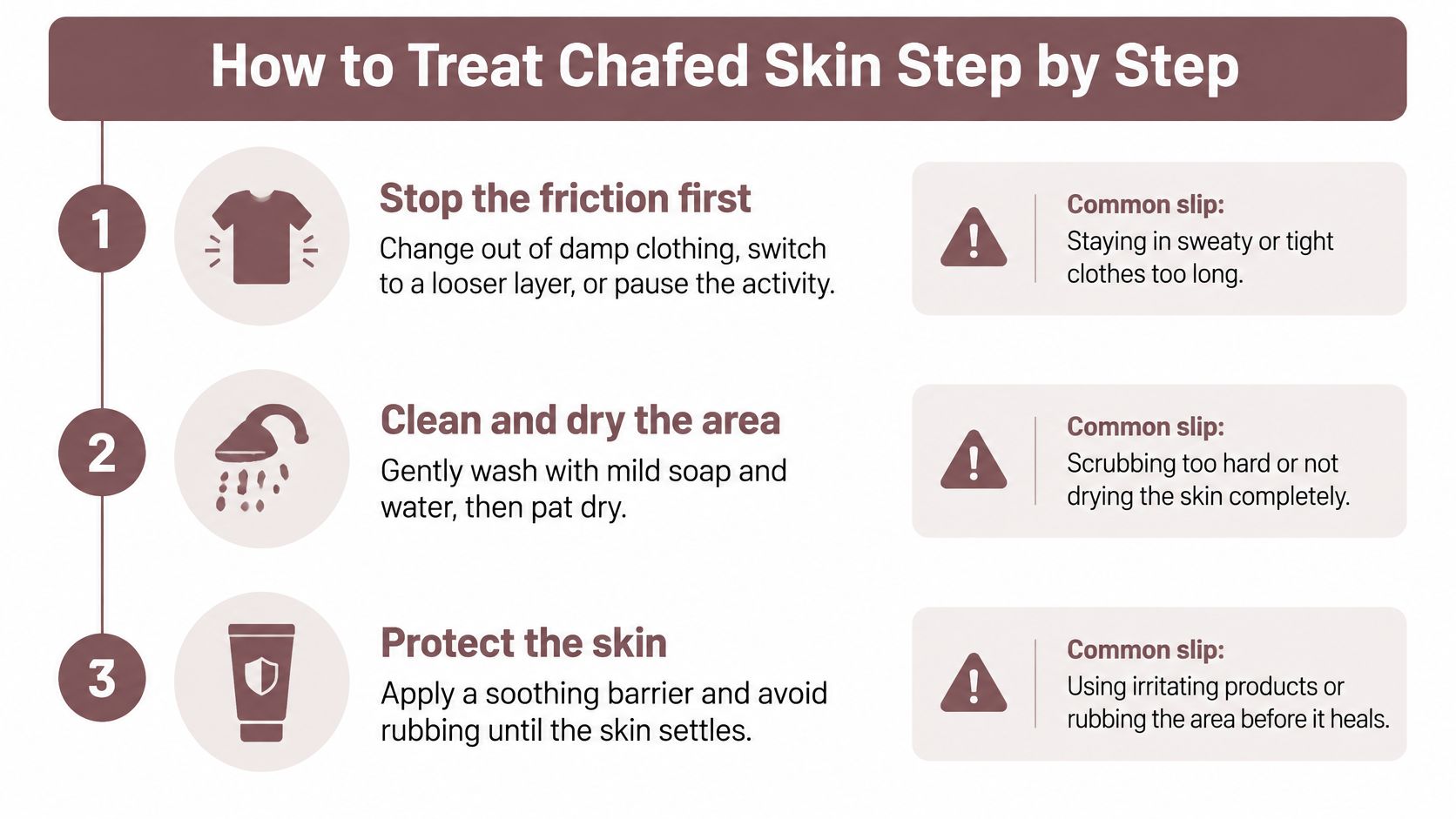
Clean and protect without scrubbing
The University of Iowa Health Care vulvar skin-care guidelines support gentle care and bland external protectants. Use that approach rather than treating raw skin like something that needs disinfecting.
- Stop the friction first. Remove damp clothing and switch to a loose, soft layer. Pause the activity if each movement stings, rather than applying ointment and immediately continuing.
- Rinse with lukewarm water. Use your hand, not a washcloth, brush, or exfoliating glove. Plain water is a sensible choice for irritated vulvar skin; if you use cleanser on surrounding skin, choose a mild, fragrance-free formula.
- Remove cleanser residue completely. Rinse gently instead of washing repeatedly. The common mistake is assuming extra cleansing will make irritated skin heal faster.
- Pat completely dry. Press a clean, soft towel against the area without dragging it across the skin. Check folds for lingering dampness before applying the barrier.
- Spread a thin, continuous film. Use enough plain petrolatum or another tolerated fragrance-free ointment to leave a light sheen over the rubbed patch. A visible mound is unnecessary and more likely to transfer onto clothing.
- Choose clothing that doesn't restart the rubbing. Don't pull a tight seam directly over the tender area. Ointment remains on the surface, so there's no need to wait for it to disappear like a lotion.
- Reassess rather than automatically adding more. After washing or heavy sweating, inspect the area and replace the film where needed. If application increases burning, remove the product gently and stop using it.
Judge the direction of recovery
Improvement means less tenderness during ordinary movement and no new raw patches. Increasing discomfort, new blisters, or spreading irritation means the routine needs reassessment, not a thicker coat.
Keep the ointment external unless the product is specifically labeled otherwise. The vulva is the external genital area; the vagina is internal.
Use a single new ointment rather than stacking balms, powders, and medicated creams. If your skin reacts, you'll have a clearer idea of what to stop.
Daily and After-Activity Routines That Prevent Chafing
Prevention works best when you plan around your actual rubbing points. You don't need to coat every skin fold because your inner thighs chafed during a walk.
Repeated skin-to-skin or clothing friction causes superficial inflammation, and moisture makes injury more likely, as described in this sports-dermatology review. Your routine therefore needs both a barrier and a way to manage dampness.
Match application to the activity
| Routine | When | What to apply | Watch for |
|---|---|---|---|
| Daily prevention | In the morning, on clean, dry skin | Thin film only on areas that regularly rub, such as thighs, groin, underarms, or beneath a bra band | Applying everywhere when only a small patch needs protection |
| Before exercise or a long day | Before getting dressed for the activity | Thin film on known friction zones | A thick layer transferring onto fabric |
| During long activity | At breaks, particularly after heavy sweating | Pat dry and replace the film where it has worn away | Continuing after stinging begins |
| After activity | When changing out of sweaty clothing | Rinse, dry, and protect tender areas if needed | Leaving sweat and grit against irritated skin |
| Period days | Check at pad changes | Thin external film if needed and compatible with the pad | Reduced absorbency or product transfer |
There's no universal reapplication clock that fits every ointment, climate, and workout. Use renewed rubbing, heavy wetness, washing, and loss of the surface film as prompts to check, rather than waiting until the skin becomes painful.
For exercise-related vulvar discomfort, the guide to workouts and vaginal health can help you assess the wider routine.
A barrier that works during a short walk may need adjustment for cycling, prolonged sweating, or a different pair of shorts.
If the same spot repeatedly becomes sore, examine the clothing or equipment touching it. More ointment isn't always the missing piece.
Using Ointment With Pads, Condoms and Medication
What should you use, where, and when? The answer changes when a barrier meets latex, an absorbent pad, or a prescribed treatment.
An ointment can be suitable for external skin yet unsuitable for everything else touching that area. The Melbourne Sexual Health Centre genital skin-care guidance warns that oil-based emollients can damage latex condoms and diaphragms.
Check the interaction before applying
| Situation | Interaction | What to do |
|---|---|---|
| Latex condoms or diaphragm | Oil-based emollients can degrade latex and cause breaks | Keep oil-based products away from latex; use a compatible water-based lubricant |
| Absorbent pads | Some barriers can reduce absorbency and worsen wetness against skin | Choose a pad-compatible product, apply sparingly, and check performance |
| Prescribed steroid or antifungal cream | An emollient may dilute or interfere with treatment | Ask the prescriber or pharmacist about order and spacing; don't mix them together |
| Urine or fecal moisture | Ointments can protect external skin against wetness | Clean gently, dry, then apply the recommended barrier |
| Internal vaginal use | External skin protection doesn't establish internal suitability | Keep it external unless specifically labeled for internal use |
| Sweat during exercise | Protection can wear away during activity | Inspect after heavy sweating and replace the film where needed |
Switching to water-based lubricant doesn't cancel out oil already on the skin. Don't assume a quick wipe or wash guarantees that latex is protected. If oil-based ointment may contact a condom or diaphragm, check compatibility with a pharmacist or sexual-health clinician before relying on it.
For pads, notice whether fluid is absorbing normally or remaining against the skin. The guide to pads for sensitive skin can help you evaluate the product itself as another possible source of irritation.
Prescribed creams need their own instructions. Don't improvise a shared application schedule or stir medication into an ointment to make it spread farther.
Even a bland product can sting or cause a reaction. New discomfort after application is a reason to stop and reassess, not proof that the ointment is working.
Tips That Stop Chafing From Coming Back
Clothing changes often do more than upgrading your balm. For sweaty activity, choose moisture-wicking synthetic or blended base layers instead of cotton that stays damp, and check seams while moving rather than only while standing.
Use this comparison to assess your workout layers.
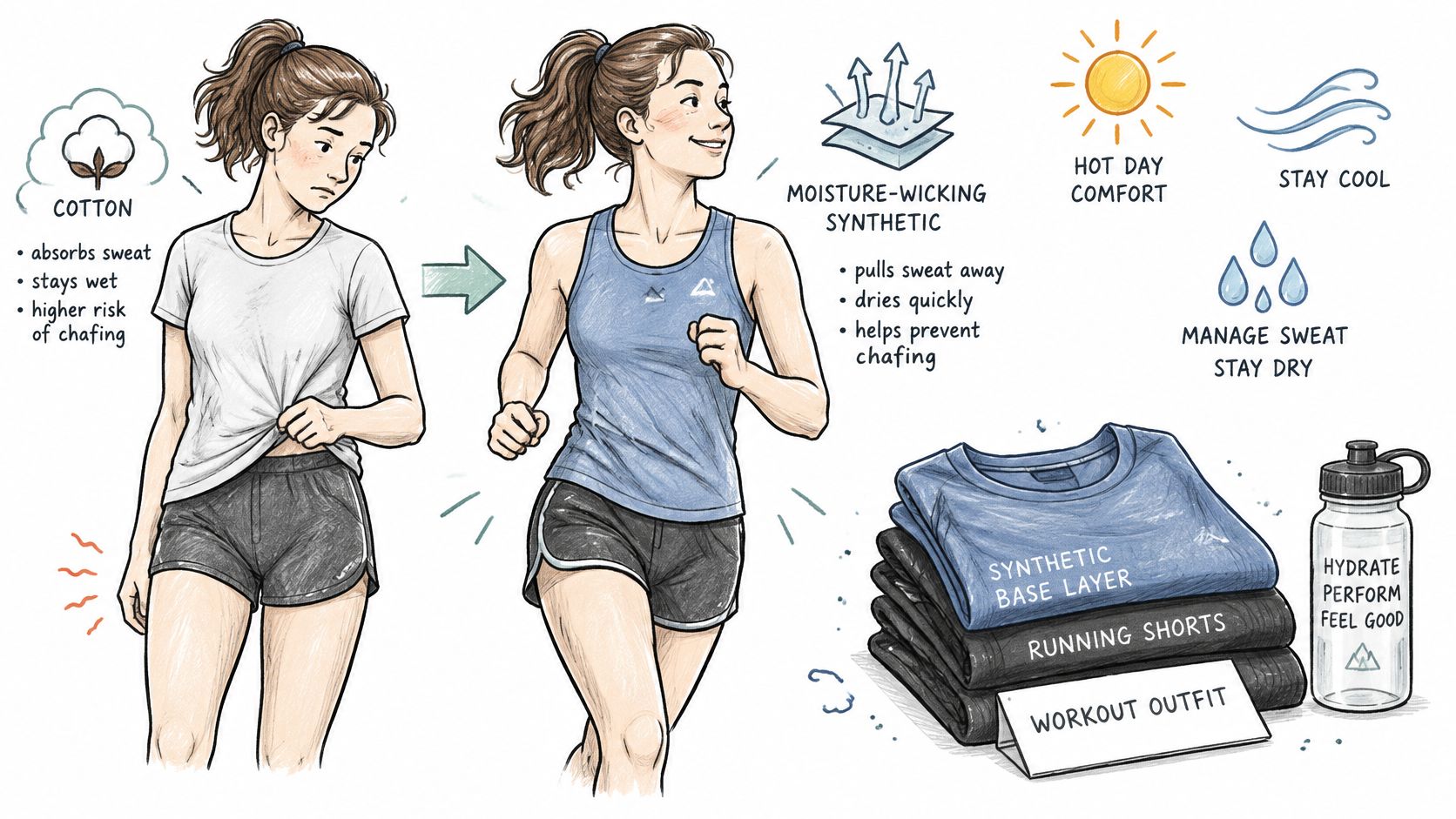
Fix the recurring contact point
- Choose smooth seams. Check underwear edges, bra bands, and shorts hems for a ridge that lands on the sore patch.
- Remove wet layers promptly. Pack dry underwear or a change of clothes for the trip home after exercise or swimming.
- Dry folds carefully. After showering, make sure moisture hasn't remained between touching surfaces.
- Test unfamiliar formulas cautiously. Try a small amount on intact forearm skin before sensitive-area use. A home test can reveal irritation, but it can't guarantee vulvar tolerance or rule out allergy.
- Keep application clean. Use clean fingers or a clean dispenser, avoid sharing products, and don't repeatedly touch raw skin before dipping back into a jar.
A thin layer you reapply beats a thick layer you apply once.
For an additional visual reference, watch the video below.
Prioritize the habit that matches your exposure. Runners need a plan for sweat and repeated motion; swimmers need to get out of wet swimwear; cyclists need to check pressure points and seams rather than relying on ointment alone.
When to Stop Self-Care and See a Clinician
Continue self-care only while the skin is clearly improving. Don't keep labeling recurrent vulvar symptoms as chafing because a balm briefly makes them feel better.
Arrange clinical assessment when any of these applies:
- Blisters or open sores. Painful lesions, bleeding, or cracks that aren't healing need examination.
- Unusual discharge or odor. Changes in color, thickness, or smell suggest something a surface barrier won't diagnose or treat.
- Persistent itching or burning. Symptoms that continue despite removing friction and suspected irritants need a clearer explanation.
- Spreading redness, warmth, or fever. Seek prompt care, particularly if you feel unwell or pain is increasing.
- Lasting skin changes. Shiny, thickened, scaly, or repeatedly affected patches warrant a vulvar skin assessment.
- Repeated episodes. Recurrence despite sensible clothing and skin care means it's time to question the original diagnosis.
- Unfamiliar genital symptoms. If this is your first episode and you're unsure what you're seeing, ask rather than treating by trial and error.
Bring useful details to the appointment
Note when symptoms began, what activity preceded them, and which products touched the area. Bring ingredient lists for your ointment, cleanser, lubricant, wipes, and menstrual products, plus details of any prescribed creams.
If you're pregnant, breastfeeding, or using medication, ask a pharmacist or clinician about an unfamiliar product before adding it to your routine. This is particularly useful for multi-ingredient formulas or when you're already treating a diagnosed condition.
A clinician can distinguish mechanical irritation from infection, contact allergy, or an inflammatory skin condition and prescribe treatment an ointment can't provide. If a red flag is present, book an assessment instead of trying another balm.
Momotaro Apotheca offers plant-based vulvovaginal care products and educational resources for dryness, itching, and irritation. Visit Momotaro Apotheca to review ingredients and external-care options for your routine, while keeping persistent or unusual symptoms on your clinician's agenda.


