


Postpartum Feminine Care: A Complete Recovery Guide
You're home with the baby, sitting carefully on one hip because the other position hurts. There's bleeding, swelling, stitches or bruising, and a peri bottle you're not entirely sure how to use. You may be grateful, exhausted, and wondering whether every strange sensation is normal. Most discharge instructions cover the basics, then send you into a long stretch where you're expected to manage an unfamiliar body with very little follow-up.
Postpartum feminine care isn't a six-week checklist. It's a recovery process with two overlapping tracks: healing from birth-related wounds and responding to hormonal changes that can affect vulvar tissue, vaginal moisture, pelvic-floor function, and intimacy. Breastfeeding can extend the low-estrogen phase, while non-breastfeeding parents may experience a different return of lubrication and menstrual cycling.
More than a third of women experience lasting health problems after childbirth. The World Health Organization data summarized by postpartum health statistics from WorldMetrics includes dyspareunia, urinary incontinence, perineal pain, and low back pain among common postpartum concerns. That makes practical care, symptom tracking, and timely medical support part of recovery, not an indulgence.
Table of Contents
- What Postpartum Feminine Care Actually Means in the First Days After Birth
- Your First 72 Hours of Vulvar and Perineal Care
- Weeks Two Through Six of Recovery
- How Breastfeeding Changes What Your Body Needs
- Products That Are Safe and What to Skip
- Months Three Through Twelve and Getting Back to Yourself
- When to Call a Provider Instead of Waiting It Out
What Postpartum Feminine Care Actually Means in the First Days After Birth
The first night home can feel oddly quiet. Your baby is asleep, your hospital bag is still open, and you're trying to decide whether the burning after urination is expected, whether the bleeding is too heavy, and whether you're allowed to touch the area at all. Nobody may be checking your vulva, perineum, stitches, swelling, or comfort in real time.
That gap matters. Postpartum feminine care means protecting healing tissue, reducing friction, supporting comfortable hygiene, and noticing changes early. It also means separating ordinary recovery discomfort from symptoms that need a clinician. A tender perineum after a vaginal birth has different needs from a closed C-section incision, but both require rest, clean practices, and attention to pain that worsens instead of improving.
The recovery isn't linear. You may feel better one day, then notice more pressure or bleeding after doing too much. Hormones add another layer. Lactation can keep estrogen low, which may contribute to dryness, tissue sensitivity, painful sex, and urinary symptoms. A parent who isn't breastfeeding may still experience these concerns, but their hormonal pattern can shift differently.
Two care tracks to keep in mind
The first track is wound and perineal care. Tears, episiotomies, swelling, hemorrhoids, bruising, and bleeding all make basic activities feel surprisingly complicated. Rinsing instead of wiping, changing pads regularly, and avoiding irritants protect fragile tissue while it closes.
The second track is hormonal tissue care. Dryness and sensitivity aren't signs that you're dirty or failing to recover. They can reflect lactation-related changes that require a different approach to washing, lubrication, intimacy, and clinical treatment.
A useful preparation guide is this fourth-trimester overview of postpartum unmentionables, but treat any general checklist as a starting point, not a substitute for your own discharge instructions.
The practical mindset: your body needs a staged routine, not pressure to “bounce back.”
For the first 72 hours, focus on rinsing, cooling, pain control, bleeding awareness, and rest. During weeks two through six, shift toward gentle movement, scar observation, and a gradual return to daily comfort. After that, hormonal status and pelvic-floor symptoms become increasingly important, especially if breastfeeding continues.
Your First 72 Hours of Vulvar and Perineal Care
The first bathroom trip can feel like a medical procedure when your vulva is swollen, stitched, bruised, or bleeding. Set up supplies before you need them, keeping them in the bathroom and beside the place where you feed the baby.
Build the routine around each void
Fill a peri bottle with warm water. Squeeze it from front to back while you urinate, then rinse again afterward. The stream dilutes urine and clears blood or discharge without rubbing tender tissue. Pat dry with clean toilet paper or a soft cloth. Do not wipe.
Use cold for short intervals. Apply a cold pad or an ice pack wrapped in cloth for 10 to 15 minutes, then remove it before repeating. Never place ice directly on skin. Cooling can ease the sensation of swelling, but numbness means it is time to stop.
Take pain medication exactly as your clinician directed. Ibuprofen and acetaminophen may appear in postpartum plans, sometimes on an alternating schedule, but your medical history, delivery, other medications, and feeding plans determine what you can use. Witch hazel pads and numbing sprays can irritate some people. Keep them on external tissue only, and stop if they sting or make symptoms worse.
Protect the area from friction
Bright red bleeding is common at first. Track whether it is generally easing, and follow your discharge instructions. Use pads rather than tampons or menstrual cups. Change them often enough to stay dry and comfortable, especially after urination or once they feel saturated.
Side-lying usually puts less pressure on the perineum than sitting. If you need to sit, support yourself with pillows and change positions regularly. Rest reduces the repeated strain that can intensify swelling and throbbing.
Take warm showers, but use plain water on the vulvar area. Skip douching, bubble baths, essential oils, and fragranced cleansers while tissue heals. NICE postnatal care guidance advises gentle cleaning, frequent pad changes, and avoiding products that may irritate the area.
For external dryness or irritation, Soothe & Restore Salve is an organic coconut and jojoba balm intended for vulvovaginal dryness, itching, and irritation. Keep it away from open wounds and internal tissue unless your provider approves it. Breastfeeding can prolong hormonal dryness, so a product that feels tolerable now still deserves a provider's review if symptoms persist.
Here's a short visual reminder of the early-care setup:
By hour 72, aim for a repeatable system: warm-water rinsing, short cooling sessions, prescribed pain relief, comfortable pads, and positions that reduce pressure. Feeling normal can take months, especially when breastfeeding keeps tissues hormonally dry.
Weeks Two Through Six of Recovery
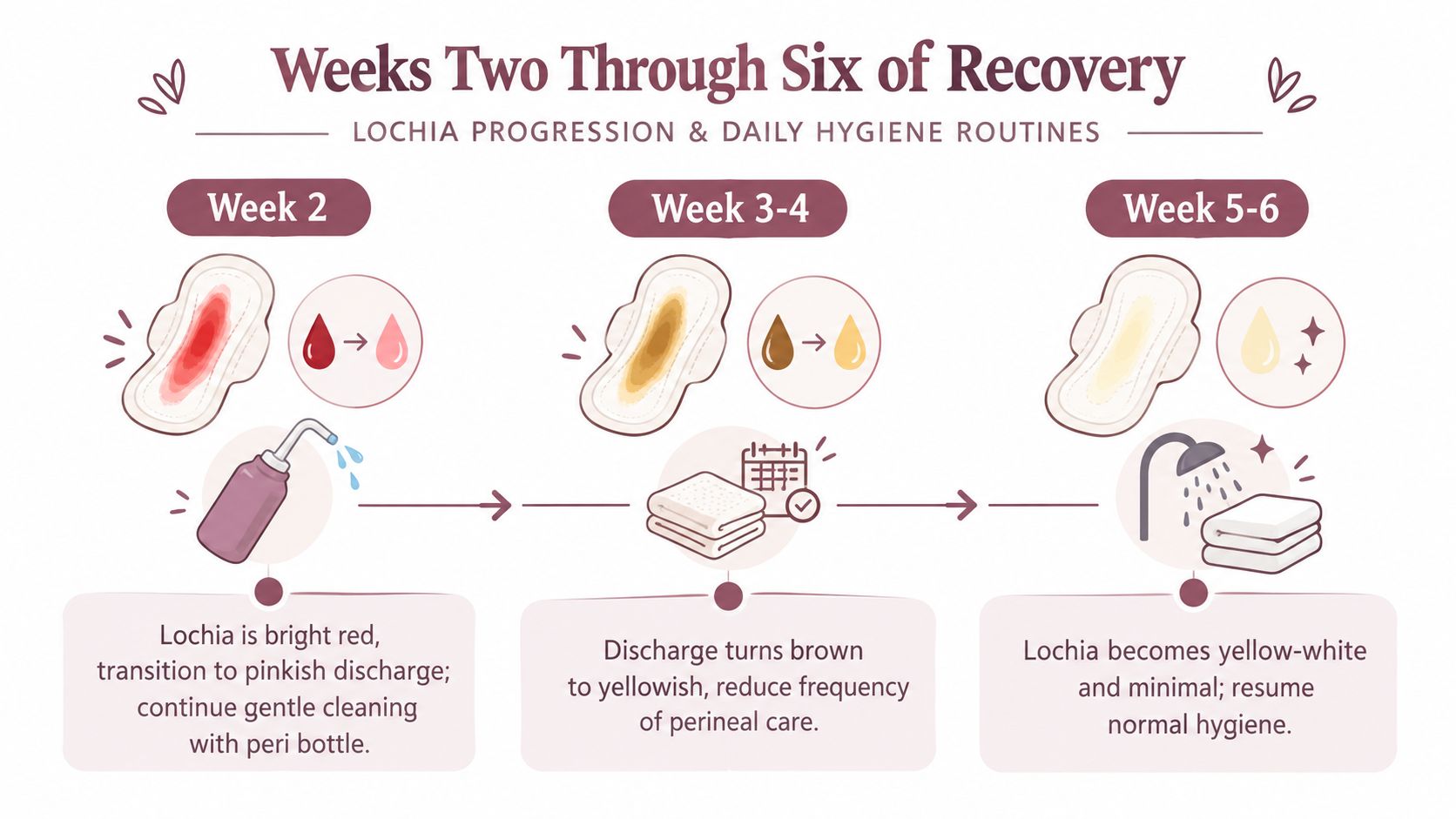
The middle weeks often bring a confusing mix of improvement and setbacks. Bleeding usually tapers, sitting becomes easier, and swelling settles, but one busy day can bring back pelvic pressure or a heavier discharge. Judge recovery by the overall direction, not by one isolated afternoon.
Lochia may begin bright red, then become pinkish, brown, or yellowish before turning yellow-white and minimal. If bleeding increases after it had clearly slowed, take it seriously. Rest, reduce activity, and contact your provider if the change is substantial or comes with pain, dizziness, fever, or other warning signs.
Keep hygiene boring
Boring is exactly right for healing tissue. Rinse with water when needed, pat dry, change pads regularly, and choose fragrance-free products. Cotton underwear can feel less irritating than synthetic fabric, especially when sweat and discharge are present.
Avoid tampons, menstrual cups, and penetration until your clinician has cleared you. A closed-looking surface doesn't necessarily mean deeper tissue has recovered. The same applies to scar care. Sitz baths may be appropriate around the second week if your provider agrees, while silicone scar gel belongs on a wound that has fully closed, not on raw or separated tissue.
Gentle movement is useful, but postpartum recovery isn't a fitness test. Try short walks and relaxed diaphragmatic breathing. Avoid high-impact activity and heavy lifting beyond what your clinician has permitted. If a movement increases bleeding, pressure, pulling, or pain, scale it back.
Track function, not just appearance
A mirror can't tell you whether the pelvic floor is relaxing properly. Notice whether pain trends downward, whether you can sit for longer, and whether your pelvic floor feels less clenched during breathing and walking.
A better question than “Does it look healed?” is “Can I move, urinate, sit, and rest with steadily less discomfort?”
Keep a simple note of pain, bleeding, urination, bowel movements, sitting tolerance, and activity. You don't need a perfect diary. A few observations can help a provider distinguish normal fluctuations from a problem that needs examination.
How Breastfeeding Changes What Your Body Needs
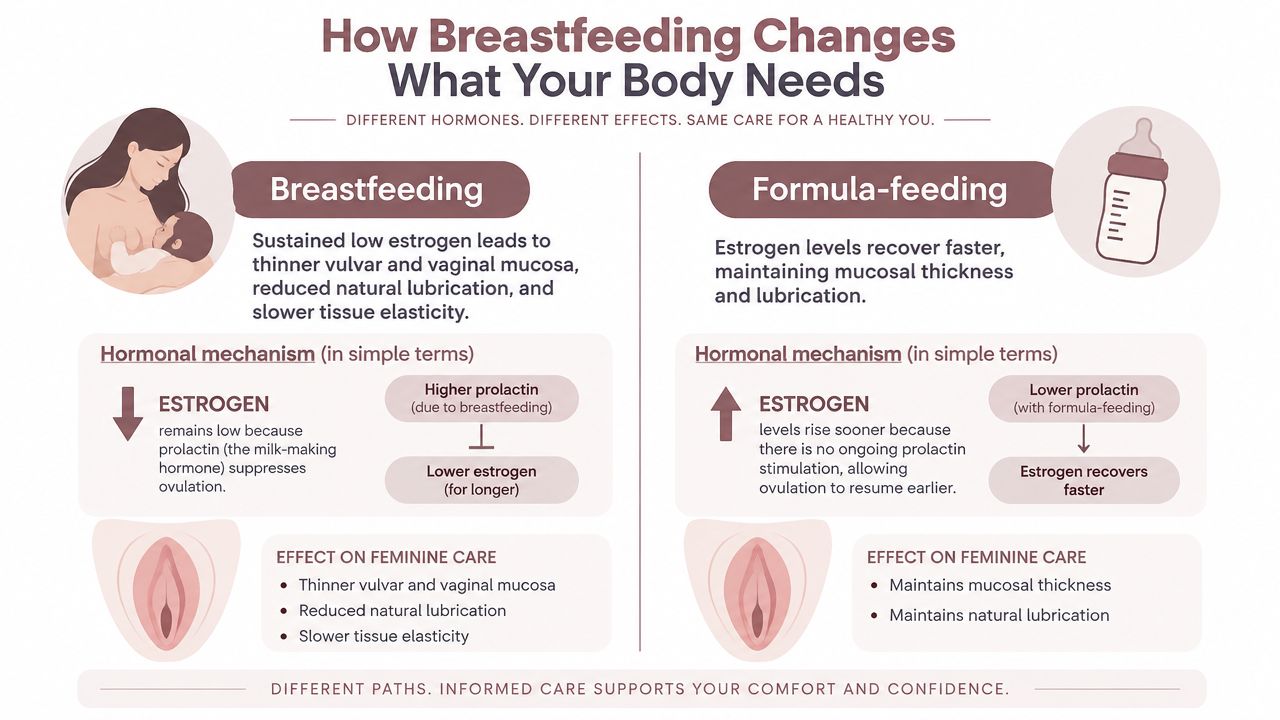
If penetration still burns months after birth, breastfeeding may be part of the reason, even after visible tears have settled. Lactation suppresses estrogen and androgen, creating a hormonal environment linked with dryness, painful intercourse, vulvovaginal atrophy, and urinary incontinence. Canada's maternity and newborn care guidance summarizes findings showing atrophy was more common among breastfeeding women than nonbreastfeeding women, including 57.6% versus 16.7% on gynecologic examination and 70% versus 22% by vaginal pH.
This difference can appear after the obvious birth injuries have calmed. A cleanser that felt fine during the first days may sting later when tissue is drier and more delicate. Use plain water externally when possible, reduce rubbing, and reconsider every product that touches the area. More cleansing will not correct hormone-related dryness.
Adjust comfort instead of forcing a timeline
Breastfeeding and not breastfeeding create different recovery windows. If you are lactating, dryness may continue for months and can make penetration uncomfortable even when your provider has cleared sexual activity. If you are not breastfeeding, estrogen may recover differently, so your routine should follow your symptoms rather than a fixed six-week deadline.
For intimacy, use a generous water-based lubricant and stop if it burns. A vaginal moisturizer serves a different purpose, providing ongoing comfort when it is specifically made for vaginal use and your provider agrees it suits you. Neither product repairs a tear, treats an infection, or replaces an examination when symptoms continue.
Momotaro Apotheca's Coconu Oil Based Lubricant is one product option to review, but check its instructions carefully, especially if you use latex condoms. Wait for clinical clearance before resuming penetration, use enough lubricant to reduce friction, and stop if you develop burning or irritation.
Topical vaginal estrogen is different. It is a prescription treatment that calls for a conversation with a provider, particularly during breastfeeding. Ask about lactation, milk supply, your symptoms, and alternatives. Persistent pain deserves treatment, not endurance.
Survey findings covered by Harvard's postpartum health coverage report that many symptomatic lactating respondents are not asked about genitourinary symptoms, many do not know treatments exist, and fewer than 30% were advised about vaginal estrogen or pelvic-floor physiotherapy. Breastfeeding is not a reason to accept painful care. It means your routine needs to match your hormonal window.
Itching, unusual discharge, odor, or burning needs a proper assessment. Yeast infection, bacterial vaginosis, dermatitis, and urinary problems require different treatment. Use this guide to vaginal yeast infection while breastfeeding to prepare questions, then let a clinician make the diagnosis and treatment plan.
Products That Are Safe and What to Skip
Postpartum product marketing loves elaborate routines. Healing tissue usually prefers the opposite: fewer ingredients, less fragrance, less rubbing, and no product that makes symptoms harder to interpret.
A perineal spray can feel convenient, but read the label. Witch hazel may soothe externally, while alcohol, fragrance, or a strong cooling blend can sting. Lidocaine may be appropriate in some situations, but don't use it internally or repeatedly without medical guidance. Herbal sitz baths can also be irritating, especially when essential oils are added during the early healing window.
| Product Category | Verdict | Watch For | Best Window |
|---|---|---|---|
| Peri bottle | Useful | Warm water, clean bottle, no added fragrance | First days through active discharge |
| Cold pads or wrapped ice packs | Useful briefly | Never place ice directly on skin | Early swelling and acute soreness |
| Witch hazel pads | Sometimes useful externally | Alcohol, fragrance, worsening sting | Short-term external relief |
| Herbal sitz baths | Use caution | Essential oils and complex blends | Only when tissue is closed and provider-approved |
| pH cleansers | Usually unnecessary | Fragrance, parfum, harsh surfactants | Later routine if tolerated |
| Fragranced wipes | Skip | Perfume and preservatives near stitches | Avoid during healing |
| Lubricant | Useful after clearance | Burning, irritating ingredients, insufficient amount | Intimacy resumption |
| Tampons and menstrual cups | Skip initially | Internal use before clearance | Wait for provider guidance |
| Disposable underwear | Practical | Tight elastic, trapped moisture | Heavier bleeding days |
| Washable underwear | Practical | Rough seams, difficult laundering | Lighter bleeding and later recovery |
Read labels without turning care into a chemistry exam
Look for “fragrance” or “parfum” as an immediate caution flag. Prefer short, recognizable ingredient lists and products designed for sensitive external tissue. If pH is listed, treat it as one piece of information, not proof that a product belongs inside the vagina. The vagina is self-cleaning, and a pH claim doesn't make a fragranced product harmless.
For clothing, soft, loose fabrics and gentle seams matter more than matching a curated postpartum set. The same principle applies to baby care. If you're comparing fabrics for your newborn, this resource on gentle clothing for sensitive babies offers a useful way to think about softness and irritants without confusing “natural” with automatically safe.
The products that consistently earn their place are the peri bottle, plain pads, comfortable underwear, prescribed medication, and a cold pack used correctly. The products that often deliver more Instagram appeal than clinical value are strongly scented sprays, complicated essential-oil blends, and anything that promises to make healing happen faster.
For a plain-language look at choosing pH-conscious products, see this guide to pH-balanced vaginal care. If a product burns, stop using it. Postpartum tissue doesn't need to “get used to” irritation.
Months Three Through Twelve and Getting Back to Yourself
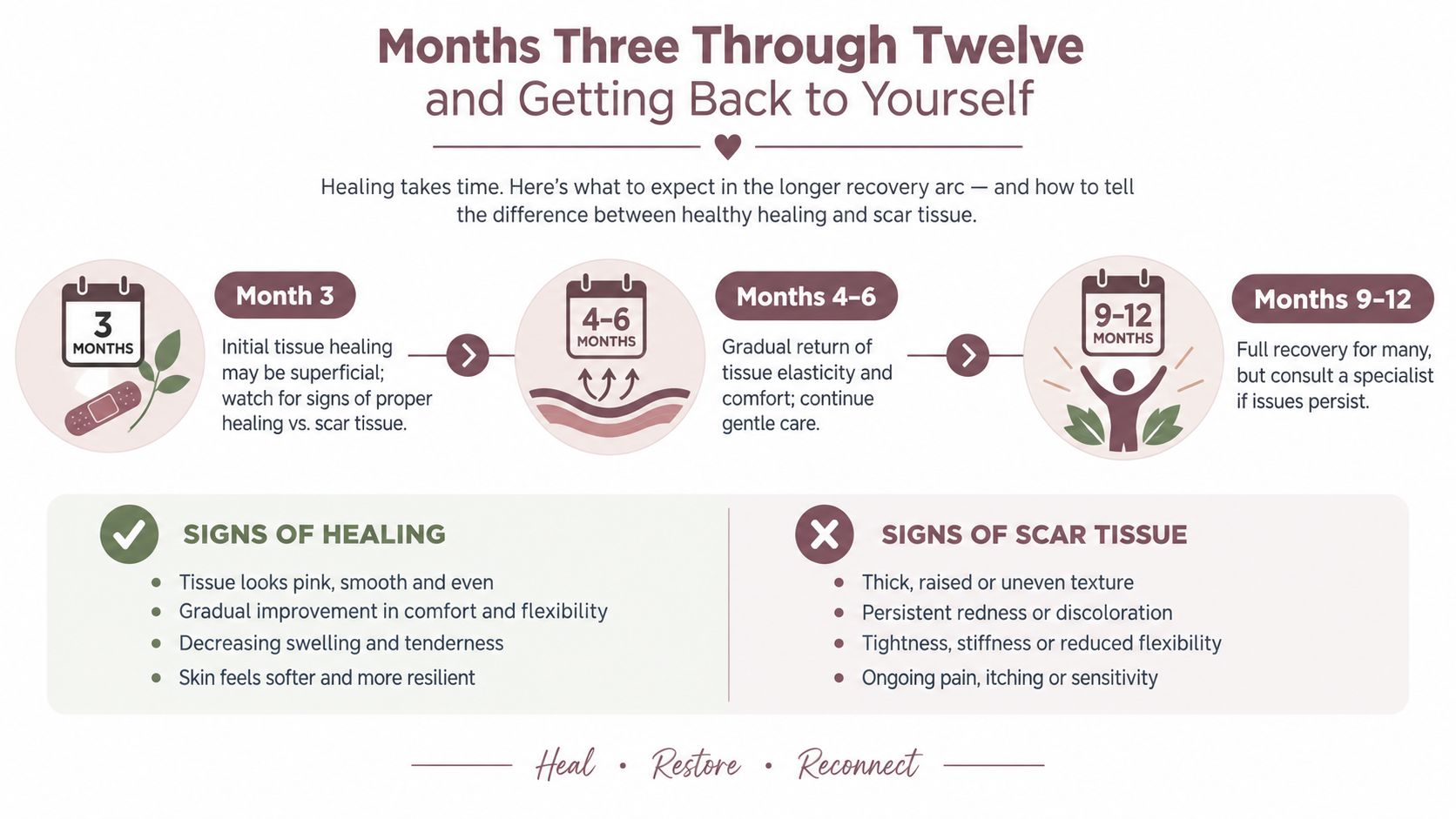
The six-week visit is a checkpoint, not a finish line. A tear can look closed while the scar remains tight, tender, or poorly coordinated with the surrounding pelvic floor. Healthy healing usually brings gradually improving comfort, more flexible tissue, and less guarding. Scar tissue that needs attention may feel like a specific pulling point, a sharp spot with touch, or pain that stays the same instead of easing.
Painless intimacy requires more than permission. You need enough lubrication, tissue that tolerates stretch, and a pelvic floor that can lengthen rather than brace. Start with non-penetrative touch, then progress only when your body remains comfortable during and afterward. Use plenty of water-based lubricant, choose positions that reduce pressure on the perineum, and stop at pain rather than trying to push through it.
Rebuild in layers
Before strengthening, practice release. Slow breathing into the ribs and abdomen, supported child's pose if comfortable, gentle hip mobility, and conscious pelvic-floor relaxation can help you notice whether you're gripping. Kegels aren't automatically the answer. A tight pelvic floor can need lengthening and coordination before more contractions help.
If a tear or episiotomy scar remains tender after the wound is fully closed, a pelvic-floor physical therapist can assess the tissue and teach scar mobilization. Dilators or graduated insertables may be useful for some people, but they should be introduced with appropriate guidance, especially when pain is sharp or persistent.
Non-breastfeeding parents may see menstruation return earlier than breastfeeding parents, and the first cycles can feel different from pre-pregnancy cycles. Don't treat bleeding changes, severe cramping, or pain as something you have to endure without evaluation.
Use a routine that fits real life
Try a weekly template rather than a demanding daily program:
- Mobility: one short session focused on comfortable hips, spine, and breathing.
- Release: one pelvic-floor relaxation session, guided by a therapist or a trusted clinical resource.
- Hydration: one deliberate moisturizing or hydration step that suits your symptoms and provider's advice.
- Check-in: note whether comfort, sitting, movement, and intimacy are improving over time.
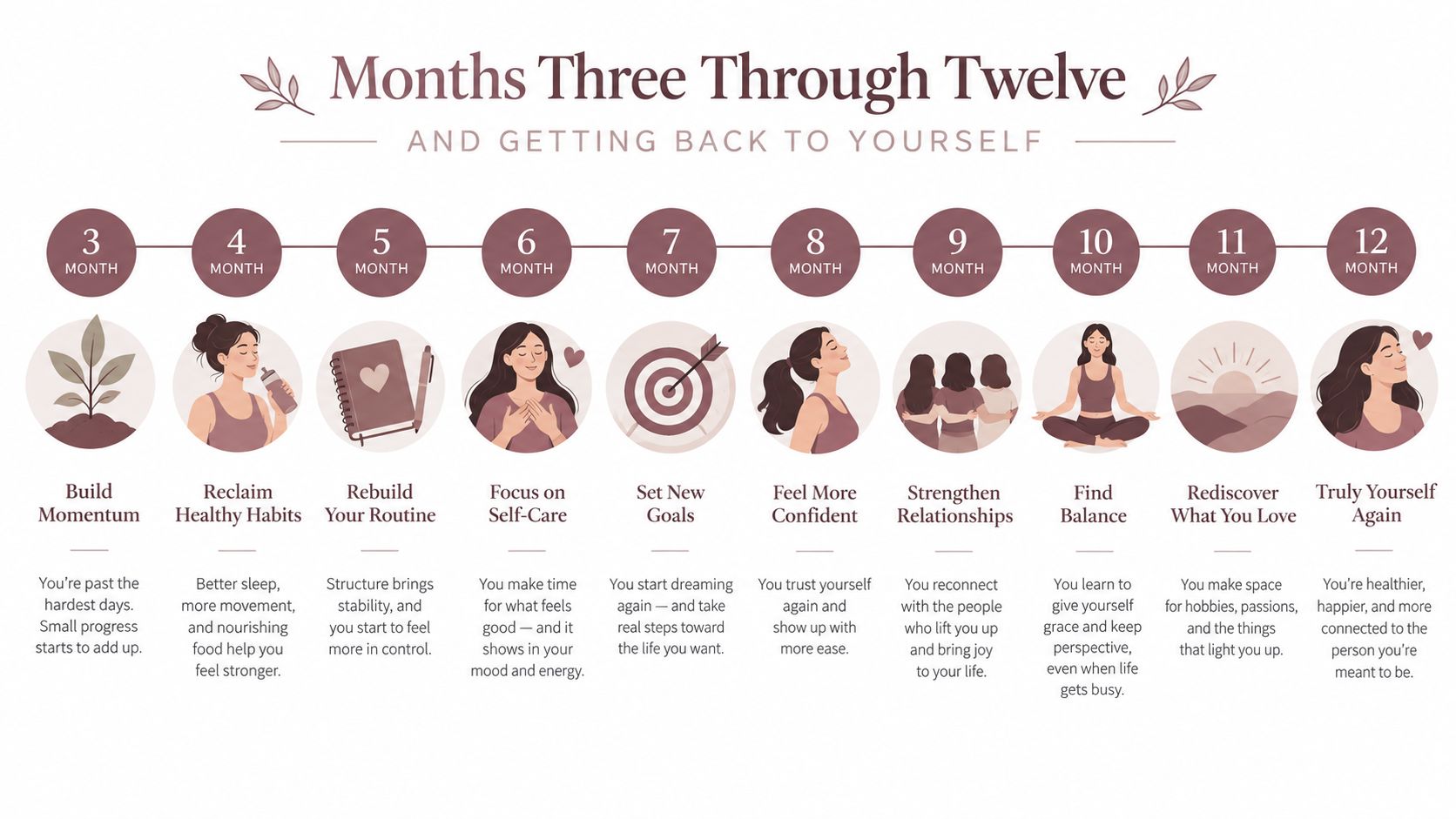
You're rebuilding when you can adjust activity and feel better afterward. You're white-knuckling when every attempt requires bracing, pain medication just to tolerate ordinary movement, or pretending symptoms don't matter because the baby needs you. At this stage, a pelvic-floor physical therapist may offer more useful, specific help than another rushed postpartum appointment.
When to Call a Provider Instead of Waiting It Out
Postpartum recovery can be uncomfortable, but you should not have to guess whether a symptom is safe to watch. Contact your provider promptly for heavy bleeding, foul-smelling lochia, fever, increasing perineal or incision pain, wound separation, or new urinary or bowel problems. NICE guidance recommends urgent referral for wound breakdown, with same-day referral when the wound has separated (NICE postnatal recommendations).
Get urgent medical help for chest pain, shortness of breath, or a calf that is swollen, red, or tender. A severe headache with visual changes also needs immediate assessment. Thoughts of harming yourself or your baby require urgent support too. Emotional danger signs deserve the same seriousness as physical ones.
Separate urgent symptoms from overdue questions
Some symptoms may not require emergency care, but they still warrant a message to your provider within a day or two:
- Persistent heaviness: Pelvic pressure that does not improve with rest.
- Unexpected bleeding: Flow that returns after tapering or repeatedly increases with ordinary activity.
- Urinary pain: Burning, trouble emptying your bladder, new leakage, or worsening urgency.
- Scar tenderness: A specific painful spot that stays the same or interferes with intimacy.
- Ongoing dryness: Symptoms that make daily life or sex painful, particularly while breastfeeding.
Use concrete language in your patient portal message. Write, “My bleeding had slowed, then became heavier after a short walk,” or, “I have sharp pulling pain on the left side of my scar when touched.” Include when it began, whether it is improving, and any fever, odor, swelling, or discharge.
Calling isn't overreacting. Triage helps decide whether a symptom is routine, urgent, or somewhere in between.
“Everyone says postpartum is uncomfortable” is not a reason to dismiss symptoms. Ordinary discomfort should gradually become more manageable. Worsening pain, new warning signs, or symptoms that stop you from functioning deserve professional attention, even if another parent had a similar experience.
Momotaro Apotheca offers plant-based vulvovaginal wellness products, including a salve for external dryness, itching, and irritation. Use these products for comfort support, not to replace diagnosis or wound assessment, and review the available options at Momotaro Apotheca.


