


Vaginal Yeast Infection While Breastfeeding: Safe Treatments
The baby is finally latched. The room is dark. You shift in bed and notice that the itching has gone from annoying to impossible to ignore. Maybe there's swelling. Maybe the discharge looks different. Maybe everything in your pelvic floor has felt vaguely terrible since birth, so now you're trying to figure out whether this is a yeast infection, normal healing, stitches, dryness, or one more postpartum surprise nobody warned you about.
If you're searching for answers in the middle of a night feed, you're in very good company. New parents deal with vaginal symptoms all the time after birth, and yeast is one of the possibilities. It's not rare, dirty, dramatic, or a sign that you've done anything wrong.
What matters is sorting the symptoms into the right bucket. A vaginal yeast infection while breastfeeding is usually very manageable. The bigger problem is that online advice often turns into two extremes: panic about medication, or a useless shrug that says “ask your doctor” without telling you what's considered safe. Let's do better than that.
Table of Contents
- You Are Not the Only Person Googling This at 3 AM
- What Actually Happens in a Vaginal Yeast Infection
- Why Postpartum and Lactation Change the Picture
- Recognizing the Symptoms Without Panic
- Comparing the Safe Treatment Options While Nursing
- Vaginal Yeast Infection, Nipple Thrush, or Just Postpartum Pain
- Everyday Habits That Lower the Odds of Another Round
- When to Skip the Internet and Call Your Provider
You Are Not the Only Person Googling This at 3 AM
At 3 a.m., with a baby on your chest and your phone lighting up the room, a new kind of itching can feel bigger than it is. Postpartum bodies do a lot at once. They heal, bleed, sweat, leak milk, and react to very little sleep. It makes sense that many parents cannot tell, at first, whether they are dealing with yeast, stitches, dryness, or skin that is tired of pads and friction.
You are not overreacting by checking.
Vaginal yeast infections are common in general. Major U.S. guidance notes that almost half of women have two or more vaginal yeast infections over their lifetime, according to WomensHealth.gov guidance on vaginal yeast infections. So if this feels familiar, or if it shows up after birth, it falls well inside normal human territory.
The confusing part is that the internet often throws three different problems into one pile. That is how people end up scared of the wrong thing, or treating the wrong area.
- Vaginal yeast infection usually causes vulvar itching, burning, irritation, and sometimes thick white discharge.
- Nipple or breast thrush symptoms tend to show up as nipple pain, burning with feeds, or pain that seems to shoot deeper into the breast.
- Ordinary postpartum irritation can come from healing tissue, low-estrogen dryness during lactation, lochia, pads, hemorrhoid products, or friction.
Those categories matter because the treatment is not interchangeable. A vaginal yeast infection while breastfeeding is often treated with topical azoles such as miconazole or clotrimazole, and fluconazole is also commonly used in lactating patients when a clinician thinks it fits. Breastfeeding changes some medication decisions, but it does not erase your options.
A practical starting point helps. Symptoms in the vagina or on the vulva point in one direction. Pain centered in the nipples or deep in the breast points in another. Raw, generalized discomfort after birth may have nothing to do with Candida at all.
That is the part many articles skip. “Check with your provider” is fine advice, but you also deserve to know what to ask about, what is usually safe, and why postpartum symptoms do not follow the same script as pregnancy.
What Actually Happens in a Vaginal Yeast Infection
A vaginal yeast infection, also called vulvovaginal candidiasis, happens when Candida yeast overgrows in the vagina and on nearby vulvar skin. Candida usually lives there in small amounts. Trouble starts when the local balance shifts and yeast gets the upper hand.
Think of the vagina like a garden bed. Different organisms live there all the time. When the usual balance holds, nothing takes over. When that balance gets disrupted, Candida can spread fast and crowd out the calm.
What overgrowth feels like
When yeast overgrows, it tends to irritate tissue rather than sit there. That's why symptoms often feel very external and very noticeable.
Common signs include:
- Itching that feels hard to ignore
- Thick white discharge that may look clumpy
- Redness or swelling around the vulva
- Burning when urine touches irritated skin
- Soreness with friction, including sex or even tight clothing
Not everyone gets every symptom. Some people mostly notice itching and rawness. Others notice the discharge first.
What yeast infection is not
A yeast infection isn't the same thing as every kind of postpartum discharge or pain. Lochia, healing tissue, dryness, contact irritation from pads, and even hemorrhoid care products can all create discomfort that feels vaginal at first glance.
That's why pattern matters more than one isolated symptom.
A little discharge alone doesn't diagnose yeast. Itching plus redness plus that distinct raw, inflamed feeling is a much more convincing picture.
Yeast overgrowth is miserable, but it's also usually very treatable. The postpartum twist is that your body has been through a major hormonal and physical reset, which changes how this all shows up.
Why Postpartum and Lactation Change the Picture
A lot of online advice blurs pregnancy and breastfeeding together, as if they create the same hormone setup and the same yeast risk. They do not.
After birth, estrogen drops fast. If you are breastfeeding, it often stays on the lower side for a while. That matters because low estrogen usually causes a different set of problems than pregnancy did. Instead of pushing the body toward the classic pregnancy pattern of extra discharge and higher yeast risk, lactation more often brings dryness, thinner tissue, and a raw, easily irritated feeling.
That is one reason postpartum vulvovaginal symptoms get mislabeled so often. A burning, itchy vulva during breastfeeding can be Candida. It can also be low-estrogen irritation, pad friction, healing skin, or two things at once.
The postpartum factors that still set you up for trouble
Breastfeeding itself is not usually the whole explanation. The bigger issue is the pileup of postpartum conditions that can throw the vaginal environment off balance.
Common examples include:
- Antibiotics during labor or after delivery. These can reduce the bacteria that normally help keep yeast in check.
- Constant moisture. Lochia, sweat, and pads can keep the area warm and damp.
- Friction. Mesh underwear, pads, tight leggings, and frequent wiping can leave already-sensitive skin feeling much worse.
- Healing tissue. Tears, stitches, and general postpartum soreness make the area more reactive.
- High blood sugar. If you have diabetes or blood sugar has been running high, yeast may become more likely.
The practical takeaway is simple. Postpartum bodies are often primed for irritation, and irritation can look a lot like infection at first glance.
Why low estrogen changes the symptoms
Low estrogen during lactation works a bit like having skin that has lost some of its usual cushion and stretch. Tissue can feel dry, sting with urine, and react to products or friction that would not have bothered you before. That can mimic a yeast infection closely enough that people start antifungals when the problem is dryness or contact irritation.
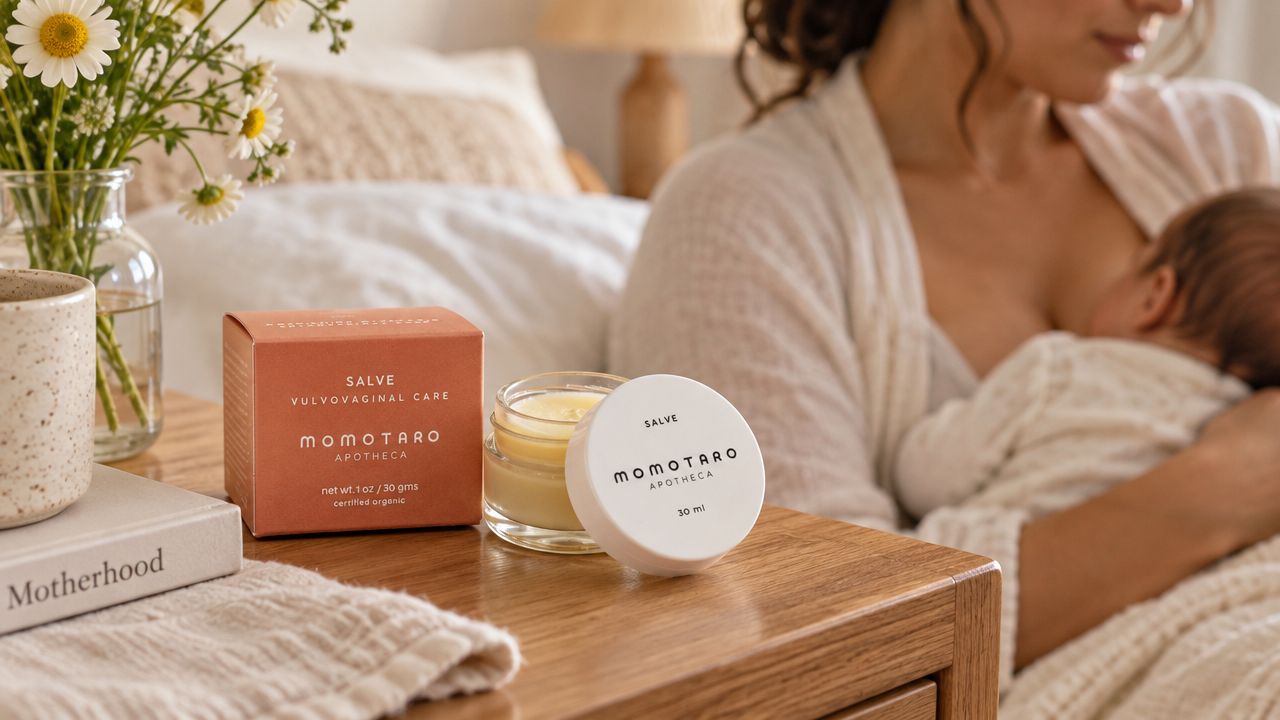
That is also why external comfort products can help with symptoms without fixing the underlying cause. For example, Soothe & Restore Salve is described by Momotaro Apotheca as an organic balm designed to comfort vulvovaginal dryness, itching, and irritation related to yeast infections, bacterial vaginosis, and other vulvovaginal infections. A product like that may calm irritated outer skin. It does not treat an internal yeast infection the way antifungal medication does.
This distinction matters postpartum. You are not just asking, "Is this uncomfortable?" You are asking, "Is this yeast, hormone-related dryness, healing, or a mix?" That is the question that helps you choose the right treatment instead of guessing.
Recognizing the Symptoms Without Panic
The classic yeast infection pattern is usually pretty recognizable once you separate it from normal postpartum messiness. The hard part is that many new parents keep assuming everything weird below the waist is just recovery.
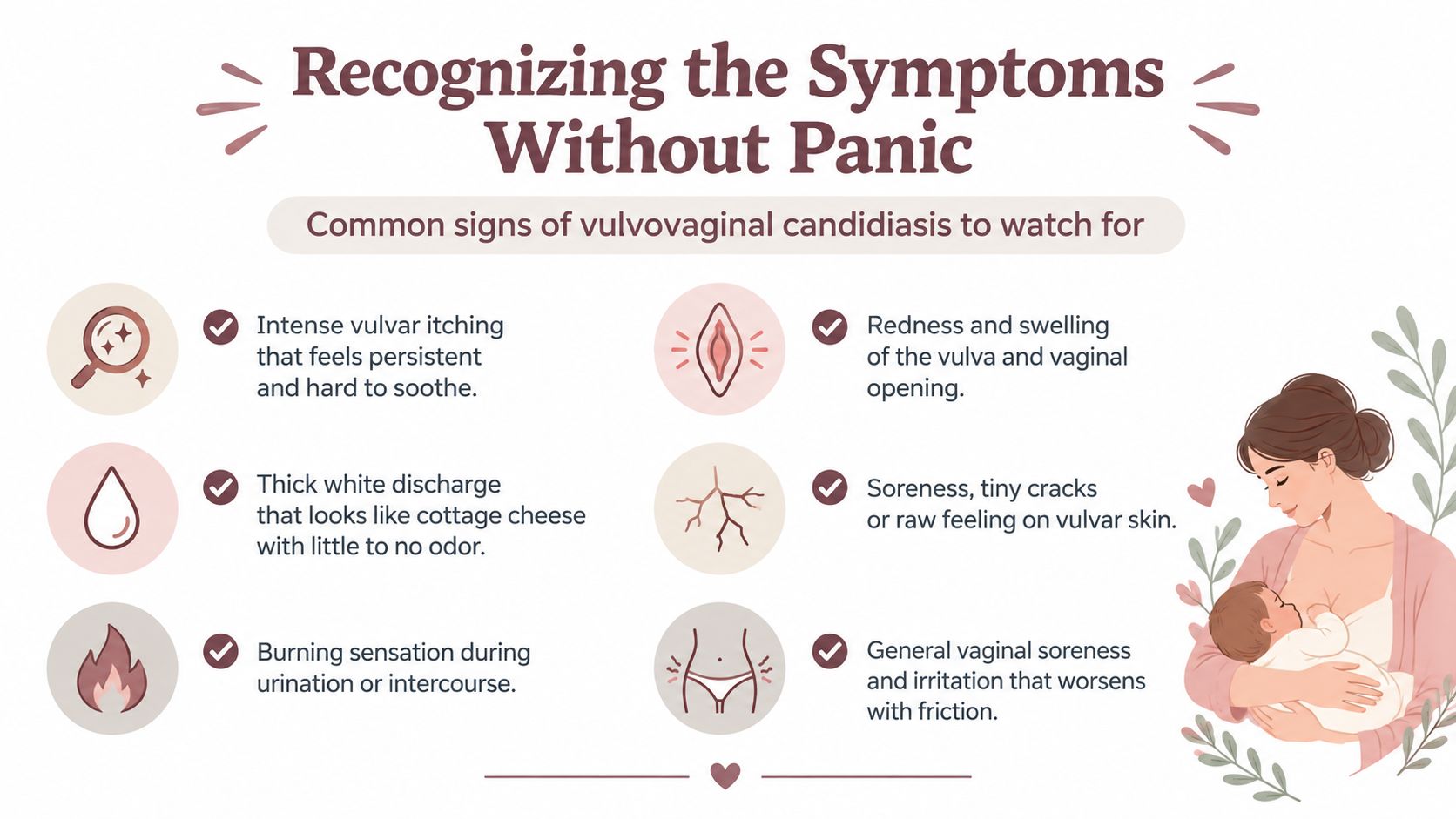
This visual can help you quickly compare your symptoms with the usual yeast picture.
Signs that fit a classic yeast pattern
A straightforward vaginal yeast infection often includes several of these at the same time:
- Intense itching around the vulva or vaginal opening
- Thick white discharge with little to no odor
- Red or puffy vulvar skin
- Burning with urination, especially when urine hits inflamed skin
- Pain with sex or friction
- Tiny cracks or a raw feeling in irritated skin
One symptom alone doesn't prove much. The combo matters.
What postpartum parents often miss
A lot of people dismiss yeast because they assume the soreness is from:
- healing stitches
- a tear
- normal lochia irritation
- dryness from breastfeeding
- friction from large pads or mesh underwear
That's reasonable. It's also why symptoms can drag on longer than they should.
A few clues make me more suspicious of yeast than routine healing:
- Itching that keeps ramping up
- Symptoms that feel more irritated than injured
- A rash that spreads into the groin crease
- Soreness that isn't fading the way healing usually does
If you're trying to sort out whether this is yeast or external postpartum irritation, this piece on postpartum itchy labia can help you think through the overlap.
Here's a short walkthrough if you want a calmer explanation in video form after reading:
If the picture is classic and you've had yeast before, self-treatment can be reasonable. If it's your first time, the symptoms are fuzzy, or things feel unusually painful, get someone to actually look.
That's not me punting to “consult your doctor.” It's because bacterial vaginosis, dermatitis, allergic reactions, and postpartum dryness can all impersonate yeast pretty well.
Comparing the Safe Treatment Options While Nursing
Here's the plain-language version many postpartum parents are looking for at midnight: the usual first-line yeast infection treatments are generally still on the table while breastfeeding. The names to know are topical azoles such as clotrimazole and miconazole, and oral fluconazole. A reviewed lactation summary notes that a single 150 mg dose of fluconazole is commonly used and that the amount transferred into milk is below an infant treatment dose, which is why short-course maternal treatment is generally considered compatible with breastfeeding in routine cases, according to this reviewed summary on oral antifungal treatment during breastfeeding.
That does not mean every itchy, sore postpartum vulva needs a pill. It means breastfeeding alone is usually not the reason to avoid standard treatment.
Topical azoles
Topical azoles are often the easiest place to start, especially if symptoms are mild, clearly typical, or mostly vaginal and vulvar. These include:
- Clotrimazole
- Miconazole
- Butoconazole
- Terconazole
They work locally, which means the medication mostly stays where the problem is. For many nursing parents, that makes them feel less complicated.
A practical question to ask is not “Is this safe enough?” but “How many days make sense for my symptoms?” Short courses can work for straightforward infections. If symptoms are more intense, keep coming back, or never sounded like a classic yeast infection in the first place, clinicians often choose a longer topical course, commonly 7 to 14 days, based on standard vaginitis treatment guidance.
Oral fluconazole
Fluconazole gets treated online like a dramatic exception. In real practice, it is a familiar antifungal medication.
For an uncomplicated yeast infection, the common regimen is one 150 mg tablet. For recurrent or more stubborn infections, a clinician may use more than one dose or a longer schedule instead of repeating over-the-counter treatment at random. That is the part to check with your provider, because extended regimens depend on whether this is Candida, which Candida species is involved, and how often you have been getting symptoms.
Side-by-side comparison
| Feature | Topical Azoles (clotrimazole, miconazole, etc.) | Oral Fluconazole |
|---|---|---|
| How it's used | Cream or suppository placed in or around the vagina | Oral tablet |
| Best fit | Mild, first-time, or clearly uncomplicated symptoms | Useful if oral treatment is preferred or topical treatment has not helped |
| Breastfeeding compatibility | Generally low whole-body absorption | A single 150 mg dose is commonly considered compatible with breastfeeding |
| For tougher cases | Longer treatment courses are often used | A clinician may prescribe repeated dosing |
| What to ask your provider | Which product and how many days | Whether this looks uncomplicated or needs an extended plan |
What is genuinely safe, and what belongs in the "ask first" bucket
Usually reasonable while nursing: standard topical azoles, and in many cases fluconazole.
Worth checking before you use it: boric acid suppositories, repeated self-treatment when you are not sure it is yeast, and vaginal products with essential oils or “detox” claims.
That split matters. A soothing product can make irritated skin feel better. It does not necessarily treat a fungal overgrowth. If you want symptom-relief ideas alongside standard treatment, this guide to a natural remedy for yeast infection is most useful when you keep comfort care and antifungal treatment in separate mental boxes.
One example of a symptom-support product is the Complete Infection Defense Kit, which Momotaro Apotheca describes as a bundle combining internal and external support for symptoms tied to yeast infections, BV, and pH imbalance. That may help with comfort and routine care. If you have a true vaginal yeast infection, medication is still the treatment doing the actual antifungal work.
Vaginal Yeast Infection, Nipple Thrush, or Just Postpartum Pain
Late-night searching tends to collapse all of this into one phrase, but these are three different situations.
When it's a vaginal yeast infection
This is mostly a vulva and vagina story. You're looking at:
- itching
- thick white discharge
- redness
- burning when urine hits irritated skin
- soreness with friction
No breast symptoms required.
When it's nipple or breast Candida symptoms
This picture looks different. In lactating patients, Candida can involve the nipple-areolar complex or deeper breast tissue, and guidance describes burning, shooting, or stabbing pain that can be mistaken for ordinary nipple damage. Management commonly recommends treating both mother and infant at the same time to reduce ping-pong reinfection during breastfeeding according to URMC breastfeeding guidance on treating yeast while breastfeeding.
That can include:
- shiny or flaky nipple skin
- pink, irritated areolae
- pain during or after feeds
- a baby with white patches in the mouth or a stubborn diaper rash
When it's just postpartum pain, dryness, or vasospasm
This one gets overlooked because the internet loves a dramatic diagnosis. Sometimes the problem is:
- a shallow latch causing cracked nipples
- pump friction
- dry vulvar tissue from low estrogen
- vasospasm that hurts more in cold air
- basic perineal soreness that hasn't settled down yet
Not every ongoing symptom means yeast. In fact, one breastfeeding protocol specifically points out a real blind spot: persistent symptoms are often over-attributed to Candida, and prolonged antifungal courses are not well supported when the pain keeps going without clear evidence of yeast, as noted in the Toronto breastfeeding candidiasis protocol.
Ongoing pain that doesn't respond to antifungals is a clue, not a personal failure. It may mean the diagnosis was off.
If dryness is part of the picture, especially with low-estrogen postpartum tissue, some of the same practical ideas used in lifestyle changes for dryness relief can still be useful. The stage of life is different, but gentle moisture support, friction reduction, and irritation avoidance can still apply.
Everyday Habits That Lower the Odds of Another Round
Prevention advice needs to work for someone who hasn't had a full shower in peace for days. You do not need a ten-step “candida cleanse.” You need a few boring habits that reduce moisture, friction, and irritation.
The practical basics
These matter more than people think:
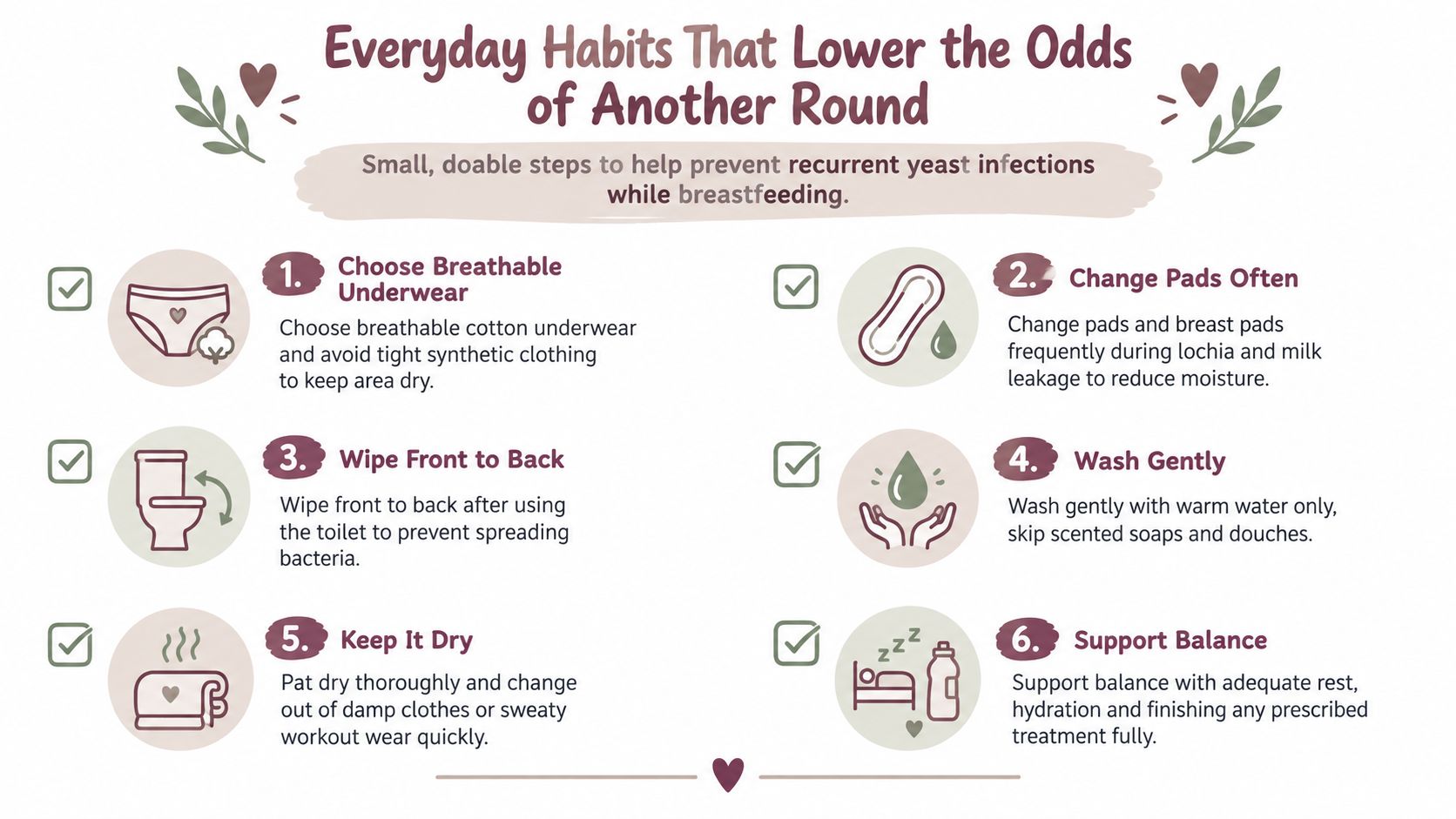
- Wear breathable underwear. Cotton is less swampy than tight synthetic fabrics.
- Change pads and breast pads often. Damp fabric sitting against skin for hours is a setup for irritation.
- Pat dry after bathing. Yeast likes moisture. Your vulva doesn't need to stay damp.
- Skip scented washes and douches. The vagina is not asking for perfume.
- Change out of sweaty clothes quickly. Workout leggings and damp underwear aren't helping.
- Wipe front to back. It's simple, but it cuts down on extra irritation and contamination.
This checklist sums up the low-drama version.
What to do with diet and supplements
You do not need to go on a harsh anti-candida food crusade while nursing. Restrictive plans tend to make exhausted parents miserable without fixing the basics.
A more grounded approach:
- Notice added sugar habits. If you're living on sweet convenience food because newborn life is chaos, small improvements may help overall balance.
- Eat normally and consistently. Blood sugar swings feel bad for many reasons.
- Think of probiotics as support, not rescue. They may be part of a broader routine, but they are not the same as treating an active infection.
For a prevention-focused routine that's more realistic than internet detox culture, this guide on how to prevent recurring yeast infections is worth reading.
Don't forget the breastfeeding setup
If nipple or breast yeast is part of the story, everyday hygiene gets more specific. Guidance commonly recommends:
- cleaning pump parts and items that contact milk or nipples
- using disposable breast pads during treatment
- continuing treatment for several days after symptoms resolve
Those steps come from the same breastfeeding management principles discussed earlier, especially when reinfection is the problem rather than the first infection.
Also consider your partner if symptoms keep boomeranging. If a partner has genital symptoms, they may need evaluation too. Shared towels also aren't doing you any favors.
When to Skip the Internet and Call Your Provider
It is 3:12 a.m., you are sore, tired, and trying to decide whether this is a basic yeast infection or the start of something more complicated. That is usually the moment to stop scrolling and ask a better question: does this still sound like ordinary yeast, or has it drifted out of that lane?
A simple vaginal yeast infection is usually miserable but straightforward. Repeated symptoms, severe pain, fever, unusual discharge, or breast symptoms that do not fit the usual pattern deserve an actual exam. If you keep having episodes over and over, your provider may want to confirm that it is really Candida and not bacterial vaginosis, dermatitis, low-estrogen postpartum irritation, or another cause entirely.
Red flags that deserve prompt attention
Call your provider if:
- symptoms are not improving after treatment
- you have fever
- the discharge has a strong odor or looks unlike typical yeast discharge
- you have bleeding you cannot explain
- the vulva is very swollen, cracked, or sharply painful
- you have deep breast pain, cracked nipples, or feeding pain that keeps getting worse
- the symptoms keep returning
The repeat-infection piece matters. If you have had multiple infections across the year, or this keeps boomeranging back after treatment, that moves the situation out of the quick self-treat category. At that point, the useful questions are specific: Do I need a swab? Could this be a non-albicans Candida strain? Is this irritation from dryness, pads, soaps, or friction? Do my nipple symptoms and vaginal symptoms seem connected, or are they separate problems happening at the same time?
Medication questions are worth asking clearly too. During lactation, topical azoles are commonly used first, and fluconazole is often used when a clinician thinks it fits the situation. Those are real, standard options, not taboo drugs. The bigger issue is choosing the right treatment for the right problem.
The assumption worth challenging
A lot of bad internet advice treats all vulvar burning and postpartum soreness as yeast until proven otherwise. That shortcut causes trouble. Low estrogen during breastfeeding can leave vaginal and vulvar tissue dry and easy to irritate. A healing tear, contact dermatitis, or pelvic floor tension can also create pain that antifungals will not fix.
Bring a short symptom timeline to the visit:
- what you used, including over-the-counter creams or suppositories
- when the symptoms started
- whether the symptoms are vaginal, nipple-related, breast-related, or all three
- any recent antibiotics
- whether feeding, pumping, sex, or wiping makes the pain worse
That kind of detail helps a clinician sort out whether you are dealing with yeast, skin irritation, latch-related nipple trauma, or a mix.
If the late-night Googling is tipping into spiraling, this thrive counseling health anxiety guide can be a helpful reset. Postpartum bodies do odd things. The internet is not always good at telling the difference between common, treatable symptoms and actual danger.
You can usually keep breastfeeding while being treated. You do not need to panic because the word fluconazole showed up in a forum. You do need professional help when the symptoms are severe, recurrent, unusual, or not acting like classic yeast.
Momotaro Apotheca offers plant-based vulvovaginal care for symptoms like itching, dryness, irritation, and general postpartum discomfort, including options that may help with external comfort while you're treating the cause. If you want gentle, non-prescription support that fits into postpartum life without adding more chaos, visit Momotaro Apotheca.


