


Urinary Tract Burning Sensation After Urination: Causes
You pee, stand up, and then it hits. Not a dramatic pain, just a sharp sting, a hot little after-burn, or a raw feeling that lingers for a few seconds. It's easy to jump straight to “I must have a UTI,” especially if you've had one before.
Sometimes that guess is right. Sometimes it isn't.
A urinary tract burning sensation after urination is a symptom, not a diagnosis. The useful question isn't only “Is it a UTI?” It's also where the burning seems to be coming from, and when exactly it shows up. That small shift can help you tell the difference between bladder irritation, urethral inflammation, vaginal or vulvar irritation, and other causes that can feel surprisingly similar.
This is the puzzle most people don't get taught. A burn at the very end of peeing can come from the bladder, the urethra, the vulva, or nearby tissues. Your body is giving clues. You just need a calmer way to read them.
Table of Contents
- What That Sting at the End of Peeing Actually Means
- The Most Common Reasons It Happens
- Comfort Steps You Can Try at Home Today
- Red Flags and How Clinicians Figure Out the Cause
- When It Keeps Coming Back or Never Goes Away
- Smart Daily Habits to Lower Your Risk
- Quick Decision Guide and Your Next Step
What That Sting at the End of Peeing Actually Means
The medical word for burning, stinging, or pain with urination is dysuria. It's one of the most common urinary symptoms, and acute cystitis, usually a bladder infection, is its most frequent cause. But it can also happen with urethral irritation, sexually transmitted infections, vaginal conditions, stones, and other disorders, which is why the sensation by itself doesn't give a final answer according to the CDC's clinical overview of UTI and lower urinary symptoms.
In adults older than 40, dysuria affects about 3% of people at any given time, and in the United States, acute cystitis and related lower urinary tract symptoms lead to about 7 million outpatient visits each year, with about one-fifth of those visits happening in emergency departments in the same CDC overview. In plain language, this complaint is common, and it deserves real attention if it keeps happening.
The body parts that can create the same feeling
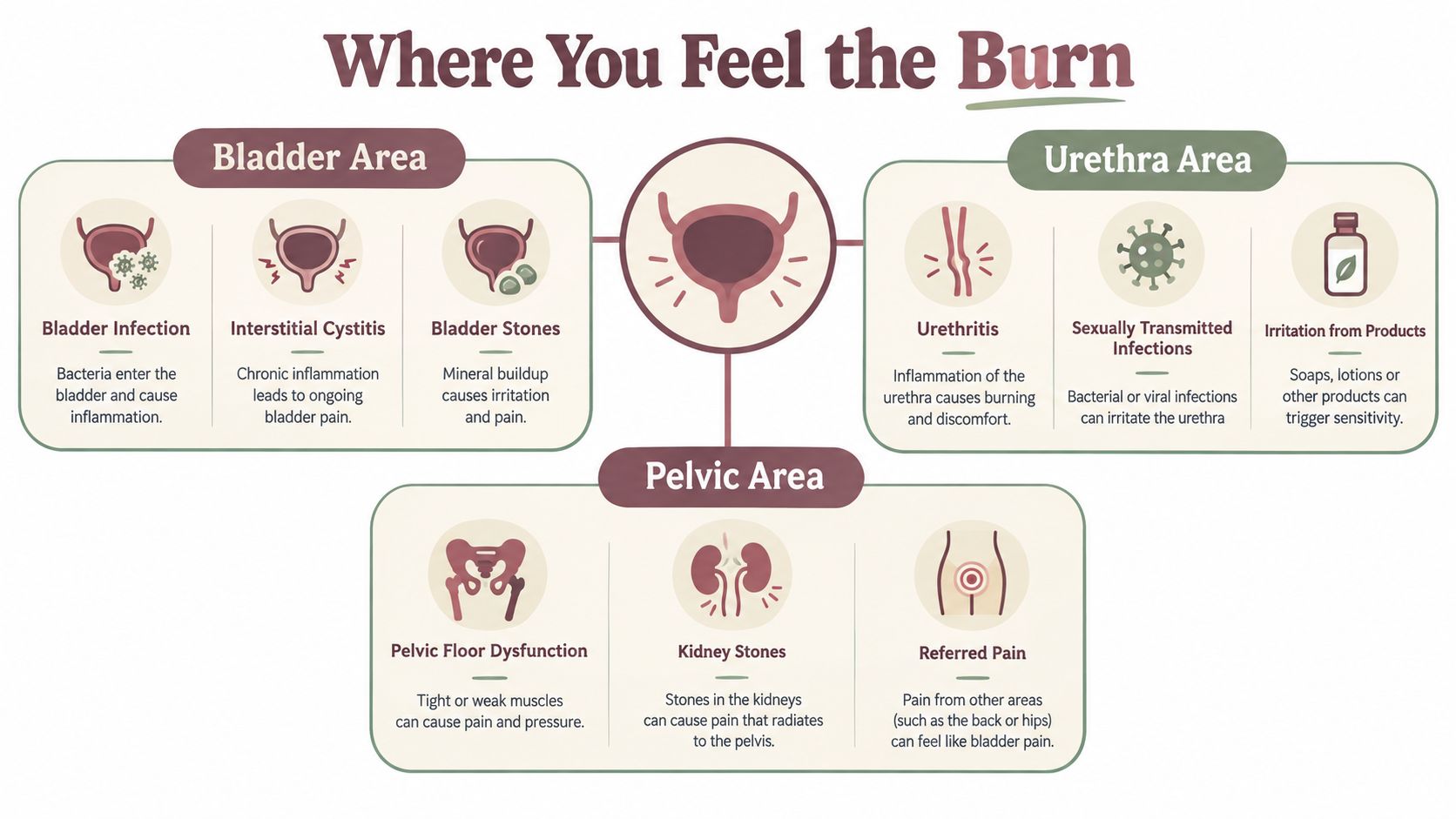
A lot of confusion comes from the fact that several nearby body parts can produce a similar burn:
- Bladder. Burning paired with urgency, frequency, or pressure can point toward bladder irritation or infection.
- Urethra. This is the tube urine travels through. Inflammation here can create a very focused, internal sting.
- Vulva. If urine touches irritated external skin, the burn may feel more like it's on the outside.
- Vagina. Vaginal infections or dryness can irritate tissue around the urethral opening and mimic urinary pain.
That's why timing matters. Burning during the stream can feel different from burning right after you finish. Location matters too. Is it deep, internal, and urethra-like? Or is it more like urine hitting tender skin?
Burning is information, not an automatic verdict.
What to pay attention to before you assume
A quick self-check helps. Notice:
- Where you feel it. Deep inside, at the opening, or on the outer skin.
- What comes with it. Urgency, frequency, discharge, itching, odor, blood, fever.
- What happened before it started. Sex, a new soap, a recent antibiotic, dehydration, menopause-related dryness.
Those details often matter more than the single word “burning.”
The Most Common Reasons It Happens
If you sort this symptom by location, it gets much easier to understand. That matters because “burning after peeing” gets treated like a synonym for UTI, even though it isn't. The Mayo Clinic's overview of painful urination causes notes that dysuria can come from urethritis, sexually transmitted infections, vaginitis, genital herpes, stones, interstitial cystitis, dermatologic disease, and irritation from soaps, perfumes, spermicides, and other products, not only bacterial cystitis. It also points out that vaginal discharge lowers the likelihood of a UTI and should steer attention toward vaginitis or cervicitis instead in Mayo Clinic's causes of painful urination.
Women hear “it's probably a UTI” for a reason. UTIs are common. The CDC estimates that 50% to 80% of women experience at least one UTI during their lifetime, and 30% to 40% experience recurrent infections. Among U.S. adults aged 18 to 64 receiving outpatient care, annual uncomplicated UTI prevalence ranged from 3.0% to 4.0% across age groups, and UTIs were more common among females than males in every age group in the CDC clinical overview. Common doesn't mean automatic, though.
Burning that feels deeper in the bladder area
This cluster often comes with urgency, frequency, or a “need to pee again right away” feeling. A bladder infection is the classic cause. So are bladder irritation, stones, and interstitial cystitis or painful bladder syndrome.
A helpful clue is that bladder-type burning often feels internal, not like urine touching sore skin. If it's paired with repeated bathroom trips or suprapubic pressure, bladder causes move higher on the list.
Burning that feels centered in the urethra
Urethral burning can feel narrow, focused, and internal, almost like the tube itself is irritated. This may happen with urethritis, including sexually transmitted infections, or with noninfectious irritation after friction, products, or inflammation.
If there's recent sexual exposure, the urethra deserves special attention. That doesn't mean panic. It means don't assume every urethral sting is “just a UTI.”
Burning that feels external
When readers say, “It burns after I pee, but really it's the skin,” I start thinking about the vulva and vagina. Vaginitis, bacterial vaginosis, yeast-related irritation, dryness, or external dermatitis can all make urine feel suddenly harsh when it touches inflamed tissue.
If there's itching, odor, discharge, redness, or tenderness with wiping, this cluster becomes much more likely. A practical consumer explainer on urinary tract discomfort and what can feel similar can help readers separate urinary and vulvovaginal discomfort before assuming antibiotics are the answer.
Some people use mixed-support products when symptoms seem partly external and partly vaginal. For example, the Complete Infection Defense Kit is described by Momotaro Apotheca as combining internal and external support for BV, yeast infections, and pH imbalance, including topical soothing care and urinary tract support. That kind of option may fit when irritation seems vulvovaginal, but it still doesn't replace testing if the cause is unclear.
Comfort Steps You Can Try at Home Today
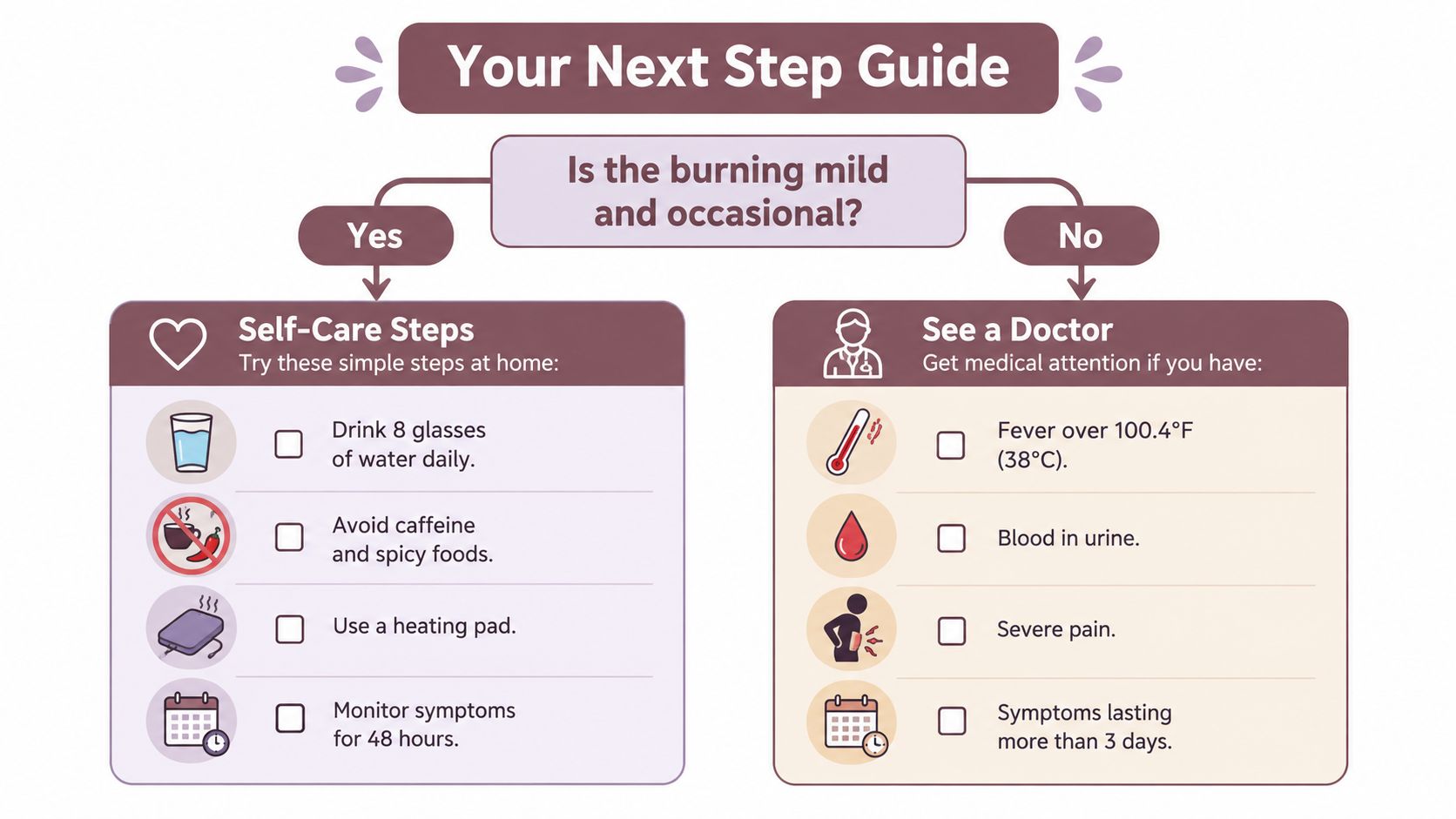
When the burn is mild and you don't have red-flag symptoms, the immediate goal is calming tissue, not guessing wildly. Think comfort first, diagnosis second. You're trying to reduce irritation while you watch the pattern.
Start with the simplest pressure relievers
A few same-day habits often help:
- Drink steadily, not all at once. If your urine is very concentrated, it can feel harsher on already irritated tissue.
- Don't “just in case” hold your pee for hours. Long stretches can make bladder discomfort feel louder.
- Use gentle warmth. A heating pad or warm compress over the lower abdomen can ease that clenched, irritated feeling.
- Choose loose, breathable underwear and bottoms. Friction can make external burning stick around.
If you need to leave the house, it can help to sip fluids consistently instead of chugging a large amount right before errands. That's often easier on an irritated bladder.
Remove anything that could be making tissue angrier
This is where many people get unstuck. Put fragranced products on pause for a few days and see what changes.
- Skip scented soaps and washes around the vulva.
- Avoid wipes, sprays, and deodorizing products.
- Pause spermicides or new lubricants if symptoms started after use.
- Use plain, gentle cleansing. Water on the external area is often enough.
A practical read on quick relief for UTI discomfort while you sort out next steps can be useful if you're trying to lower discomfort without jumping straight into self-diagnosis.
Practical rule: If urine seems to burn more when it hits the outside than when it passes internally, think irritation first, not only infection.
Be careful with over-the-counter symptom products
Urinary pain relief tablets can temporarily reduce discomfort for some people. If you use them, read labels closely and remember they can mask symptoms without fixing the cause. The same goes for intimate washes and pH-marketed products. If a product stings on contact, heavily perfumes the area, or leaves you feeling drier, it's probably not helping.
A simple test is often best. Calm things down, remove likely irritants, drink enough fluids, and watch whether the burning fades, stays the same, or gains new symptoms.
Red Flags and How Clinicians Figure Out the Cause
Some patterns deserve prompt care because they can signal a more complicated infection or a cause that shouldn't be handled with guesswork. A clinician will usually sort your symptoms by urinary, vaginal, sexual-health, and whole-body clues, then decide which tests make sense.
The big red flags are fever, chills, flank pain, vomiting, pregnancy, or symptoms in men, all of which should prompt timely medical evaluation as described in the study discussion on dysuria, UTI, and vulvovaginal causes. Persistent symptoms with systemic illness also deserve quick attention.
What a clinician usually asks first
The history matters a lot. A practical diagnostic pathway from the American Academy of Family Physicians recommends separating urinary symptoms from vulvovaginal symptoms by asking about:
- Frequency and urgency
- Suprapubic pain
- Blood in the urine
- Vaginal discharge, odor, or itching
- Recent intercourse
- Pregnancy
- Diabetes or immunosuppression
- Prior resistant organisms
That same guidance recommends urinalysis for people with dysuria generally, with urine culture reserved for complicated presentations, recurrence, treatment failure, atypical symptoms, or suspected kidney involvement in the AAFP review on dysuria evaluation and management.
Why a dipstick helps, but doesn't settle everything
Urine dipsticks are useful, but they aren't magic. In symptomatic patients, nitrite positivity has a positive predictive value of about 75% to 95%, and more-than-trace leukocyte esterase has a positive predictive value of about 65% to 85%. When both are present, the predictive value approaches 95% for a positive culture in the AAFP review.
The catch is just as important. Nitrite-negative urine does not rule out infection. Low bacterial counts, frequent urination, and organisms that don't reduce nitrate can all produce a negative nitrite result even when symptoms are real in the same AAFP review.
A fast urine test can point in the right direction. It can't always tell the whole story by itself.
When sexual-health or vulvar evaluation matters
If the picture includes urethral burning, discharge, external itching, or STI risk, testing may need to go beyond the urine cup. That can include STI screening and, when symptoms are mainly external, a vulvar or pelvic exam. For people who want a lower-pressure way to understand sexual-health support options before booking care, it may help to browse XO sexual health chat options.
If you've been told “your urine was fine” but the burning is still there, this guide to urinary tract discomfort with no infection is a useful next read because it speaks directly to that frustrating in-between situation.
When It Keeps Coming Back or Never Goes Away
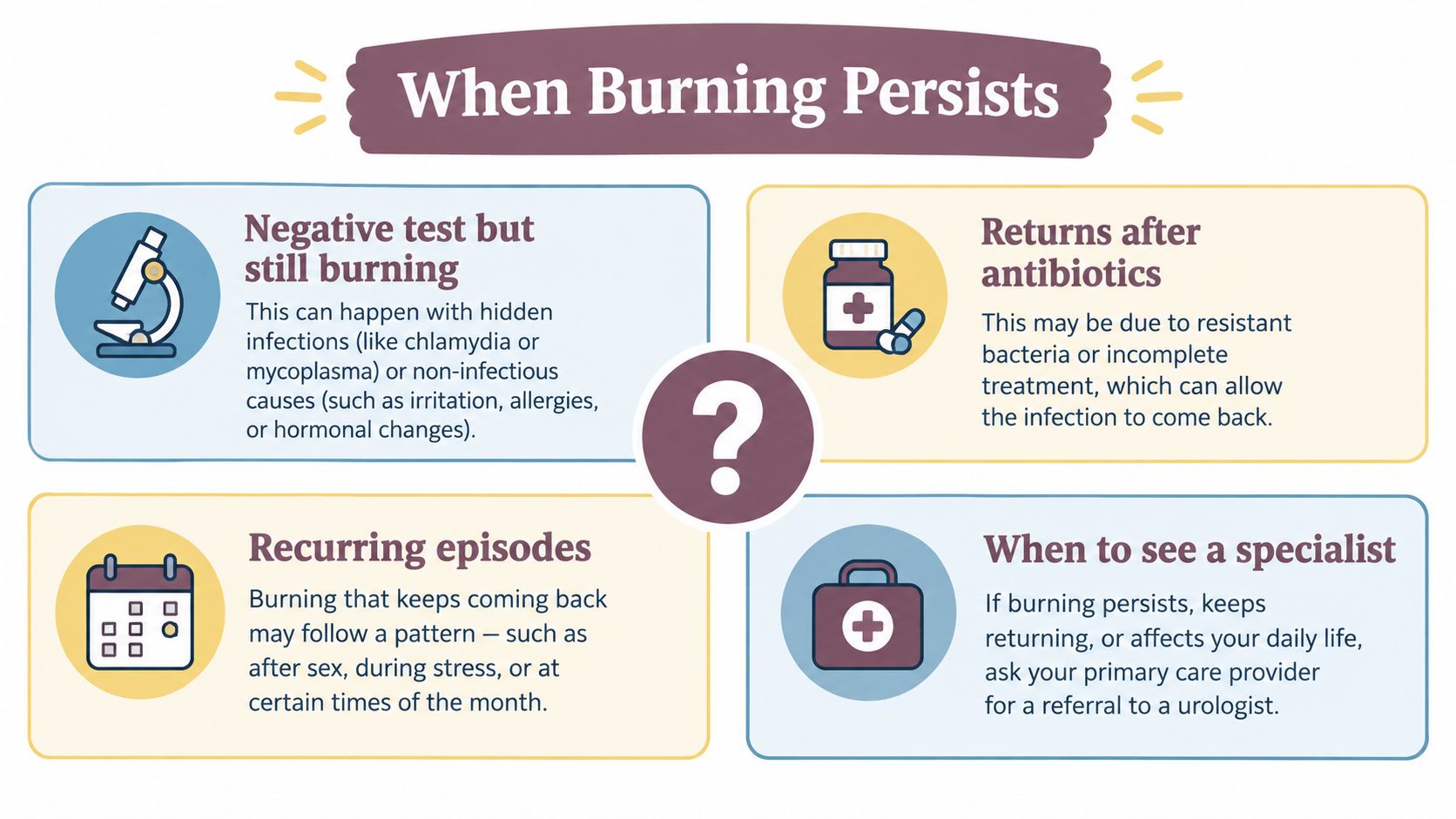
This is the part many people find most upsetting. You took the antibiotics, or the quick test was negative, and yet the burn keeps showing up. That doesn't mean the symptom is imaginary. It means the first label may not have explained the whole picture.
A recent review on recurrent urinary symptoms notes that genitourinary syndrome of menopause can affect up to 84% of postmenopausal people, and that urinary frequency or dysuria without a positive culture may reflect estrogen-related tissue and microbiome changes rather than bacterial infection. The same review states that asymptomatic bacteriuria, bacteria present without urinary symptoms, does not require treatment. It also notes that persistent symptoms after microbiological cure should prompt evaluation for alternative causes in this review on recurrent UTI, menopause-related changes, and ongoing symptoms.
When tests and symptoms don't line up
A negative culture doesn't automatically mean “nothing is wrong.” It can mean the problem is coming from another source, such as:
- Vaginal or vulvar tissue changes, especially around perimenopause or menopause
- Interstitial cystitis or painful bladder syndrome
- Dermatologic conditions
- Pelvic floor tension
- Urethral irritation that isn't bacterial
The same goes for repeated treatment. If symptoms return quickly, the question becomes whether this is a new infection, a relapse, or a different problem wearing the same costume.
Menopause changes are often missed
Perimenopause and menopause can change tissue quality, moisture, comfort, and the local microbiome. Some people notice burning, frequency, or “UTI-like” discomfort even when cultures don't support infection. That's why clinician conversations about local vaginal estrogen, when appropriate, can matter.
This is also where overusing antibiotics can backfire. If the symptom is driven by dryness, tissue fragility, or chronic bladder pain, another round of antibiotics won't fix the main issue.
Persistent burning deserves a wider lens, not just a repeat of the first guess.
When specialist input can help
If symptoms have become recurrent, prolonged, or hard to explain, a urology, gynecology, or pelvic-pain evaluation may be the next sensible move. People exploring broader approaches sometimes also look at resources discussing treatment plans for interstitial cystitis to understand what multidisciplinary care can involve.
Smart Daily Habits to Lower Your Risk
Prevention works best when it's boring and repeatable. You don't need a dramatic routine. You need a few habits that lower irritation and make it easier to notice when something changes.

A routine that's easy to stick with
Try building around these basics:
- Hydrate consistently. Not perfectly, just regularly enough that your urine usually isn't dark and harsh.
- Pee after sex if that helps your body. Many people prone to post-coital urinary discomfort find this lowers irritation.
- Keep cleansing simple. Use gentle, fragrance-free products externally, and avoid over-washing.
- Wear breathable fabrics. If tight synthetic clothing leaves you feeling rubbed raw, your body is giving useful feedback.
- Swap products that seem to trigger you. Pads, liners, detergents, lubes, and spermicides can all matter.
Support options, without turning them into magic bullets
Some people add supplements or a structured vulvovaginal routine, especially if symptoms tend to show up around sex, travel, hormonal shifts, or recurrent irritation. Momotaro Apotheca offers product categories and routines for urinary tract and bladder concerns, after-sex care, and menopause-related comfort, along with a self-guided quiz for building a personalized routine. That can be one option alongside hydration, friction reduction, and clinician-guided care.
If burning tends to cluster around perimenopause or menopause, it's worth asking a clinician whether the pattern fits hormone-related tissue change rather than infection alone. If your symptoms are recurrent and documented, some people also discuss clinician-supervised preventive strategies, which may include vaginal estrogen where appropriate.
Quick Decision Guide and Your Next Step
The fastest way to think about this symptom is to match the pattern before you match the label. Mild, occasional burning after dehydration or product exposure is different from deep internal burning with urgency, and both are different from external burning with itching or discharge.
Matching Your Burning Pattern to a Likely Cause
| What you notice | Most likely cluster | First sensible step |
|---|---|---|
| Burning seems external, especially when urine touches skin | Vulvar or vaginal irritation | Pause fragranced products, use gentle cleansing, watch for itching or discharge |
| Burning feels deep and comes with urgency or frequency | Bladder or urinary tract | Seek urinalysis and follow clinician guidance if it persists |
| Burning feels narrow and urethra-centered, especially with STI risk | Urethral irritation or STI-related cause | Arrange sexual-health evaluation and testing |
| Burning keeps returning despite treatment or negative tests | Non-UTI or recurrent pattern | Ask about broader evaluation, including vulvovaginal and hormonal causes |
Notice where it burns, when it burns, and what comes with it. That's often the clearest next clue.
If your symptoms are mild, start with hydration, irritant reduction, and a day or two of observation. If there's fever, flank pain, vomiting, pregnancy, visible blood, systemic illness, or the pattern keeps returning, book care promptly and describe the burn as precisely as you can.
Momotaro Apotheca offers plant-based vulvovaginal wellness products, educational guides, and a self-guided quiz that can help you build a routine for irritation, urinary discomfort, and tissue support without guessing blindly. If you want a next step that's practical and body-aware, visit Momotaro Apotheca and explore the resources that fit your symptoms and life stage.


