


Urinary Tract Discomfort No Infection: Causes and Relief
You've got the burning, the constant urge to pee, or a heavy feeling low in your pelvis. You make an appointment expecting a straightforward UTI diagnosis, but the urine test is negative. Maybe this has happened more than once, leaving you wondering whether the discomfort is being missed, misread, or somehow dismissed.
A negative culture doesn't mean nothing is wrong. Urinary tract discomfort without infection can come from the bladder, urethra, pelvic floor muscles, vulvovaginal tissues, or the nerves that connect these areas. Once you stop treating every flare as a simple infection, the pattern often becomes easier to understand and manage.
Table of Contents
- When It Feels Like a UTI but Nothing Shows Up
- Understanding the Basics of Noninfectious Urinary Symptoms
- The Main Causes of Urinary Tract Discomfort Without Infection
- How Doctors Work Up Persistent Bladder and Urinary Symptoms
- Matching Your Symptom Pattern to the Most Likely Cause
- Practical Relief and Everyday Prevention Strategies
- When It Is Time to See a Specialist
- Putting It All Together and Taking the Next Step
When It Feels Like a UTI but Nothing Shows Up
Maya, 34, has visited urgent care three times this quarter for the same pattern: pressure above her pubic bone, a sharp burn during urination, and an urge that returns minutes after leaving the bathroom. She expects another UTI, so she brings a urine sample and prepares for antibiotics.
The tests point elsewhere. Her dipstick is clean, and each culture reports no bacterial growth. She receives reassurance but no clear explanation, then starts monitoring every bladder sensation. Coffee feels risky, sex feels complicated, and each bathroom trip becomes a check for worsening symptoms.
Her experience highlights an important distinction: burning, urgency, frequency, and pressure are sensations, not diagnoses. Infection is one possible cause, alongside bladder, urethral, pelvic-floor, vulvovaginal, hormonal, and nerve-related conditions. A clinical reference notes that up to 23% of women and 14% of men with dysuria may not have an infection (clinical reference on dysuria and urinary symptoms). Dysuria means painful urination, so “dysuria without infection” names a symptom pattern, not the final explanation.
Your symptoms are real even when your culture is negative. A blank lab report means the investigation may need a wider lens.
Start by matching the symptom pattern rather than forcing a UTI label. Ask where the discomfort begins, when it appears, what triggers it, and what eases it. Pain that builds with bladder filling may suggest a different pathway from burning at the vaginal opening, pain after sex, difficulty relaxing to urinate, or symptoms linked to hormonal tissue changes. A brief record of timing, triggers, urine tests, menstrual or menopausal changes, and relief can give your clinician a clearer map. For general background, see this guide to urinary tract health and supportive care.
Understanding the Basics of Noninfectious Urinary Symptoms
Urinary discomfort can start in more than one place. The bladder stores urine, the urethra carries it out, pelvic floor muscles help control the passage, and nearby vulvovaginal tissues can become irritated. Pelvic nerves then interpret pressure, urgency, or pain. Because these parts work together, a sensation that resembles a UTI may come from the bladder, urethra, muscles, tissues, or nerves.
A useful first sorting tool is the difference between irritative symptoms and obstructive symptoms. Irritative symptoms include burning, urgency, frequency, and bladder pressure. Obstructive symptoms include hesitancy, a weak stream, straining, or the sense that urine will not pass easily. Both patterns can occur together. Pain may cause the pelvic floor to tighten, and those tense muscles can make starting or emptying urination harder.
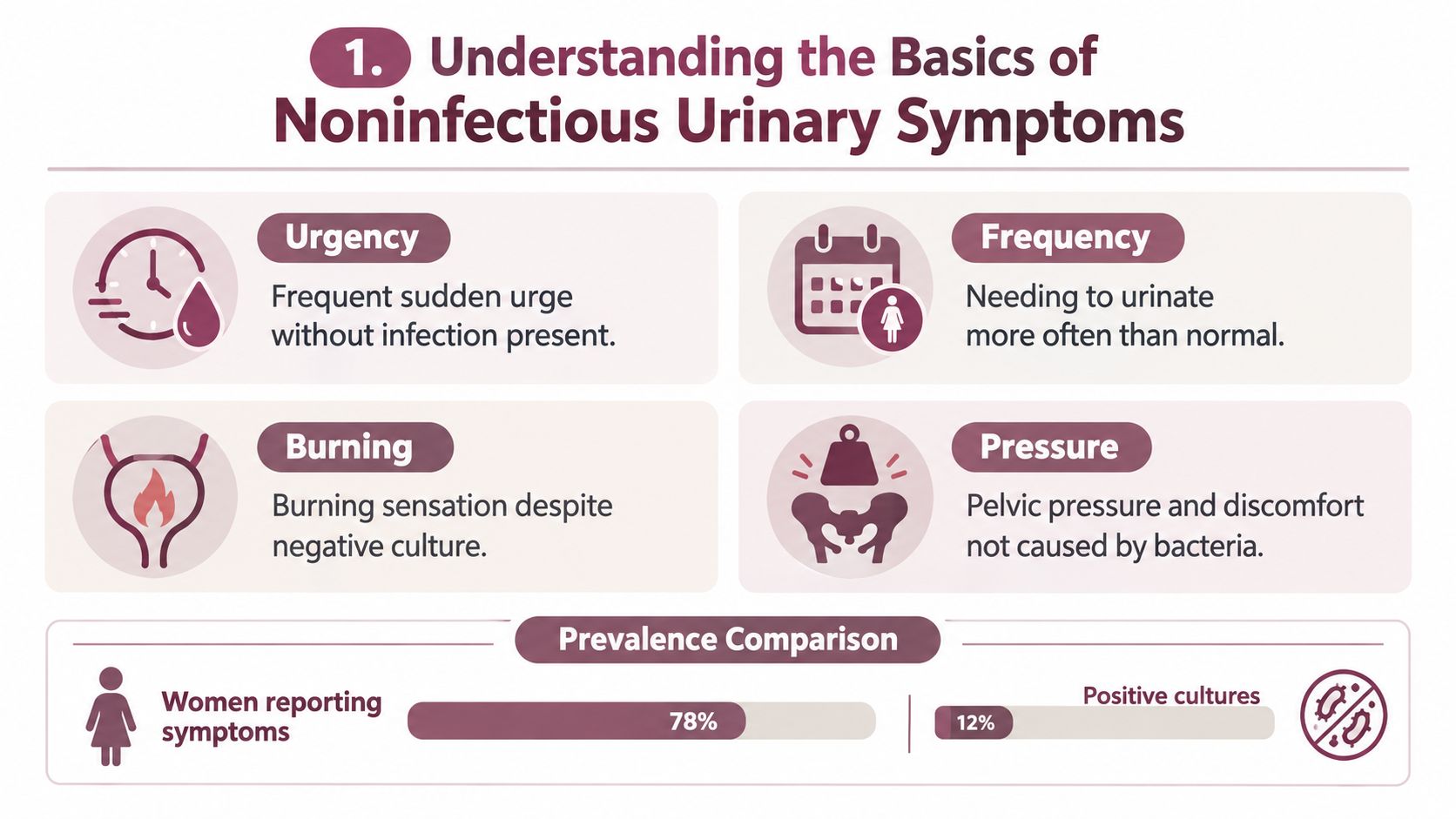
Three terms that often cause confusion
- Dysuria without infection means urination hurts, while testing does not show an active bacterial cause.
- Sterile pyuria means white blood cells appear in urine even though a routine culture does not grow bacteria. Antibiotic exposure, stones, sexually transmitted infections, genital tract inflammation, medication effects, and structural urinary conditions can contribute, according to primary-care guidance on sterile pyuria and UTI diagnosis.
- Asymptomatic bacteriuria means bacteria are present without urinary symptoms. Bacteria in a sample therefore do not automatically explain discomfort or prove that treatment is needed. Interpretation depends on symptoms, examination findings, medical history, and the test itself.
The practical takeaway is urinary symptoms aren't synonymous with infection. A culture can help identify bacteria, but it cannot explain every source of pelvic discomfort. Matching the timing, location, triggers, and associated symptoms to a pattern helps point the evaluation toward bladder pain, urethral symptoms, pelvic floor dysfunction, vulvovaginal irritation, or hormonal tissue changes.
The Main Causes of Urinary Tract Discomfort Without Infection
Several conditions can feel similar at first but behave differently over time. The location of pain, the relationship to bladder filling, and the presence of external irritation can provide useful clues.
Interstitial cystitis and bladder pain syndrome
With interstitial cystitis or bladder pain syndrome, discomfort tends to feel bladder-centered. You might notice pressure or aching above the pubic bone that builds as the bladder fills and eases, at least temporarily, after urination. Frequency can become prominent because emptying the bladder feels safer than waiting.
This condition is more than a rare explanation. One U.S. population study estimated national IC/BPS prevalence at 0.87%, with 1.08% in women and 0.66% in men (population study and review of IC/BPS prevalence). Estimates vary widely depending on whether researchers count formal diagnoses or symptom patterns, which helps explain why many people go unrecognized.
You can read a focused explanation of interstitial cystitis and bladder pain syndrome.
Urethral pain syndrome
Urethral pain syndrome usually concentrates the burning at or near the urethral opening. Urgency may accompany it, but the sensation doesn't necessarily track with bladder fullness. Expert guidance defines it as chronic or recurrent episodic urethral pain and notes that there isn't one specific treatment, so persistent lower urinary symptoms with negative cultures deserve broader evaluation (European Association of Urology chronic pelvic pain guidance).
Vulvovaginal irritation
Soap, fragranced products, lubricants, pads, tight clothing, yeast-related irritation, bacterial imbalance, skin conditions, or discharge can inflame tissue close to the urethra. The burning may feel strongest when urine touches the external skin rather than deep inside the bladder. Itching, soreness, redness, altered discharge, or pain with contact points toward this category.
Pelvic floor dysfunction
Pelvic floor muscles can tighten to protect against pain, friction, stress, or prior irritation. If they don't relax during urination, you may experience hesitancy, interrupted flow, deep pelvic aching, post-void discomfort, or pain with sitting. Some people also notice symptoms after exercise or intercourse rather than after drinking a particular beverage.
Genitourinary syndrome of menopause
Genitourinary syndrome of menopause, or GSM, develops when lower estrogen changes the vulvar, vaginal, and urinary tissues. Dryness, stinging, recurrent microtears, discomfort with penetration, and urgency can appear together. A person may describe the sensation as a UTI even though the main problem is fragile, under-lubricated tissue.
Post-coital irritation
Symptoms after sex can come from friction, insufficient lubrication, sensitivity to seminal fluid or barrier products, or pelvic muscle guarding. Timing matters. A flare that repeatedly begins after intercourse, without fever or systemic illness, deserves an evaluation that includes external tissue and pelvic floor factors rather than automatically assuming infection.
How Doctors Work Up Persistent Bladder and Urinary Symptoms
A persistent burning or urge deserves a pattern-based workup. Clinicians usually begin by checking what the urine shows, then look beyond the urinary sample when the findings do not match infection. They may repeat urinalysis and culture, while reviewing whether antibiotics were taken before collection. Timing, collection technique, and treatment can all affect the first result, so repeating a test has a purpose. It is not a plan to order the same test indefinitely.
White blood cells without bacterial growth are called sterile pyuria. This finding can follow earlier treatment and may also occur with stones, genital or sexually transmitted infections, medication effects, or inflammatory and structural urinary conditions. Repeated findings may prompt another culture, STI testing, imaging, or cystoscopy, depending on the history and examination.
What the appointment may include
A pelvic examination checks for external tenderness, discharge, vulvovaginal irritation, tissue thinning, skin changes, and pelvic floor tenderness. It can help separate burning caused by urine touching irritated external tissue from discomfort that feels deeper and bladder-centered. That distinction directs the next questions and tests.
A bladder diary supplies information a single urine sample cannot. Record drinks, voiding times, approximate urgency, pain location, sexual activity, bowel symptoms, menstrual or menopausal changes, and anything that eased the flare. Some clinicians use the Pelvic Pain and Urgency/Frequency questionnaire to screen for bladder and pelvic pain patterns.
Invasive tests should answer a specific question. Cystoscopy, urodynamic testing, and pelvic imaging may help when symptoms persist, blood appears in the urine, obstruction is suspected, or the initial evaluation suggests a structural or functional problem. Many people do not need every test at the start. The goal is to match each test to the symptom pattern, then use the results to guide supportive care or specialist referral.
Matching Your Symptom Pattern to the Most Likely Cause
No symptom chart can diagnose you, and several causes can overlap. Still, comparing timing and sensation can help you describe the problem clearly at your appointment.
| Condition | Hallmark Sensation | Key Timing | Common Triggers |
|---|---|---|---|
| Interstitial cystitis or bladder pain syndrome | Bladder pressure, frequency, and pain | Builds as the bladder fills, may ease after voiding | Certain foods, stress, hormonal shifts |
| Urethral pain syndrome | Burning focused near the urethral opening | May recur in episodes without clear bladder fullness | Local irritation, friction, sex |
| Vulvovaginal irritation | External soreness, stinging, itching, or discharge changes | Often noticeable with wiping, urination, or contact | Soaps, fragrances, products, infections, skin sensitivity |
| Pelvic floor dysfunction | Deep ache, difficulty relaxing, post-void discomfort, or sitting intolerance | May follow prolonged sitting, activity, stress, or intercourse | Muscle guarding, pain, bowel strain |
| Genitourinary syndrome of menopause | Dryness, stinging, microtears, and urinary urgency | Can be persistent or linked to penetration | Hormonal tissue changes, friction |
| Post-coital irritation | A flare after sexual activity without systemic illness | Often begins soon after sex or within the following day | Friction, seminal fluid, lubricants, barrier products |
The most useful clue may be what doesn't happen. For example, external soreness without bladder pressure suggests a tissue problem more than a bladder-centered syndrome. Difficulty starting urine or feeling unable to relax points toward muscle coordination. A predictable flare after sex suggests reviewing lubrication, products, friction, and guarding.
Keep the chart as a conversation tool, not a self-diagnosis. Your clinician still needs to rule out infection and other urinary or gynecologic causes.
Practical Relief and Everyday Prevention Strategies
Daily habits can reduce irritation while you're arranging a proper evaluation. They work best when you apply them gently and observe your response rather than imposing a long list of rigid restrictions.
Start with hydration spread across the day. Avoid swinging between dehydration and suddenly drinking large amounts, which can intensify urgency. If your symptoms flare, temporarily experiment with reducing coffee, alcohol, carbonated drinks, citrus, and artificial sweeteners. A symptom diary can show whether a specific drink is a trigger for you.
Make bathroom time less reactive
Try not to urinate automatically every time you pass a bathroom. Frequent “just-in-case” voiding can train your bladder to respond to smaller volumes, although forcing yourself to hold urine through pain isn't helpful. Sit comfortably, relax your jaw and belly, let your feet rest on the floor, and give the pelvic floor time to release.
Double voiding can help when you feel incompletely emptied. Urinate, pause without straining, breathe slowly, and try again once. If hesitancy or incomplete emptying keeps happening, mention it to a clinician rather than repeatedly pushing harder.
Loose clothing and breathable underwear may reduce contact irritation. Review soaps, wipes, sprays, pads, lubricants, and barrier products, especially if symptoms began after introducing something new. You can find more ideas for identifying bladder irritation causes and common triggers.
Soothe the pelvic floor
Diaphragmatic breathing, warm baths, gentle walking, and supported stretching can encourage a guarded pelvic floor to soften. Think of a reverse Kegel as releasing downward and outward rather than squeezing upward. Stop if an exercise increases pain, pressure, or urinary symptoms.
For sex, use generous lubrication, slow down when tissue feels dry, consider post-coital urination if it feels comfortable, and note whether a specific condom or lubricant precedes a flare. Heat or cold packs over clothing may provide short-term comfort. Supplements such as quercetin, L-arginine, or aloe vera extracts are sometimes used as supportive options, but they aren't substitutes for diagnosis and can interact with medications or medical conditions.

The Bladder & Belly Kit combines a daily probiotic with a urinary and pelvic health supplement containing D-mannose, cranberry, uva ursi, and hibiscus. The product information advises consulting a medical professional before use, particularly during pregnancy, breastfeeding, medication use, or an existing medical condition. It also advises stopping use if symptoms last beyond 7 days or an allergic reaction occurs, and notes that the product's statements haven't been evaluated by the U.S. Food and Drug Administration.
When It Is Time to See a Specialist
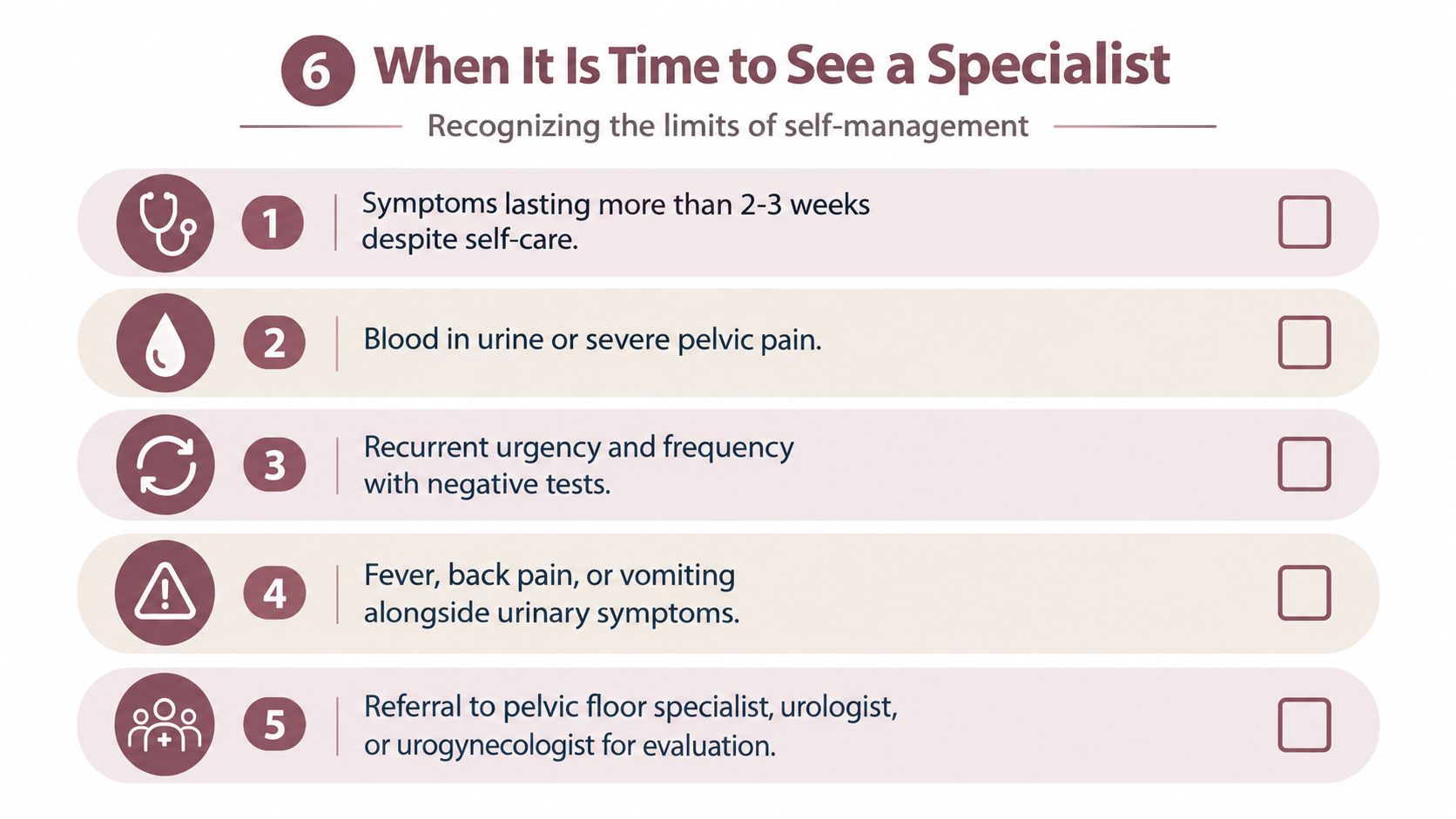
Self-care can calm irritation, but it can't identify a persistent source of pain. Arrange a broader evaluation when symptoms continue beyond four to six weeks despite lifestyle changes, become more intense, or keep returning after antibiotic courses without culture confirmation. Blood in the urine, new incontinence, worsening painful intercourse, pelvic heaviness, or nighttime frequency that disrupts sleep also deserve medical attention.
Seek urgent care for fever, back or flank pain, vomiting, or a marked decline in how you feel alongside urinary symptoms. Those signs can indicate a more serious urinary problem and shouldn't be managed with supplements or watchful waiting.
Choosing the right kind of help
- Urologist: A useful fit for bladder-centered pain, blood in the urine, suspected bladder pain syndrome, recurrent urinary symptoms, or possible structural causes.
- Urogynecologist: Often appropriate when GSM, vulvovaginal tissue changes, prolapse symptoms, or overlapping pelvic conditions are part of the picture.
- Pelvic floor physical therapist: A strong option when examination findings suggest muscle guarding, poor relaxation, painful sitting, or difficulty coordinating urination.
Bring a concise diary showing where the pain occurs, when it starts, what triggers it, how long it lasts, and what relieves it. This lets the specialist begin with your pattern instead of restarting the story from the first urgent-care visit.
Putting It All Together and Taking the Next Step
A negative culture closes one door, but it doesn't close the conversation. Urinary tract discomfort without infection can reflect interstitial cystitis or bladder pain syndrome, urethral pain syndrome, pelvic floor dysfunction, vulvovaginal irritation, GSM, or a repeatable post-coital trigger. The distinction comes from combining testing with location, timing, associated symptoms, and relief patterns.
Use a layered plan:
- Track the pattern: Start a two-week diary of pain location, urgency, voiding, drinks, sex, products, bowel symptoms, and sleep disruption.
- Reduce obvious irritation: Spread hydration through the day, review bladder irritants, avoid harsh products, and make bathroom time unhurried.
- Relax rather than tighten: Try diaphragmatic breathing, warm baths, gentle movement, and pelvic floor release.
- Escalate thoughtfully: Book an appointment if pain has lasted beyond a month, symptoms recur, or any warning sign appears.
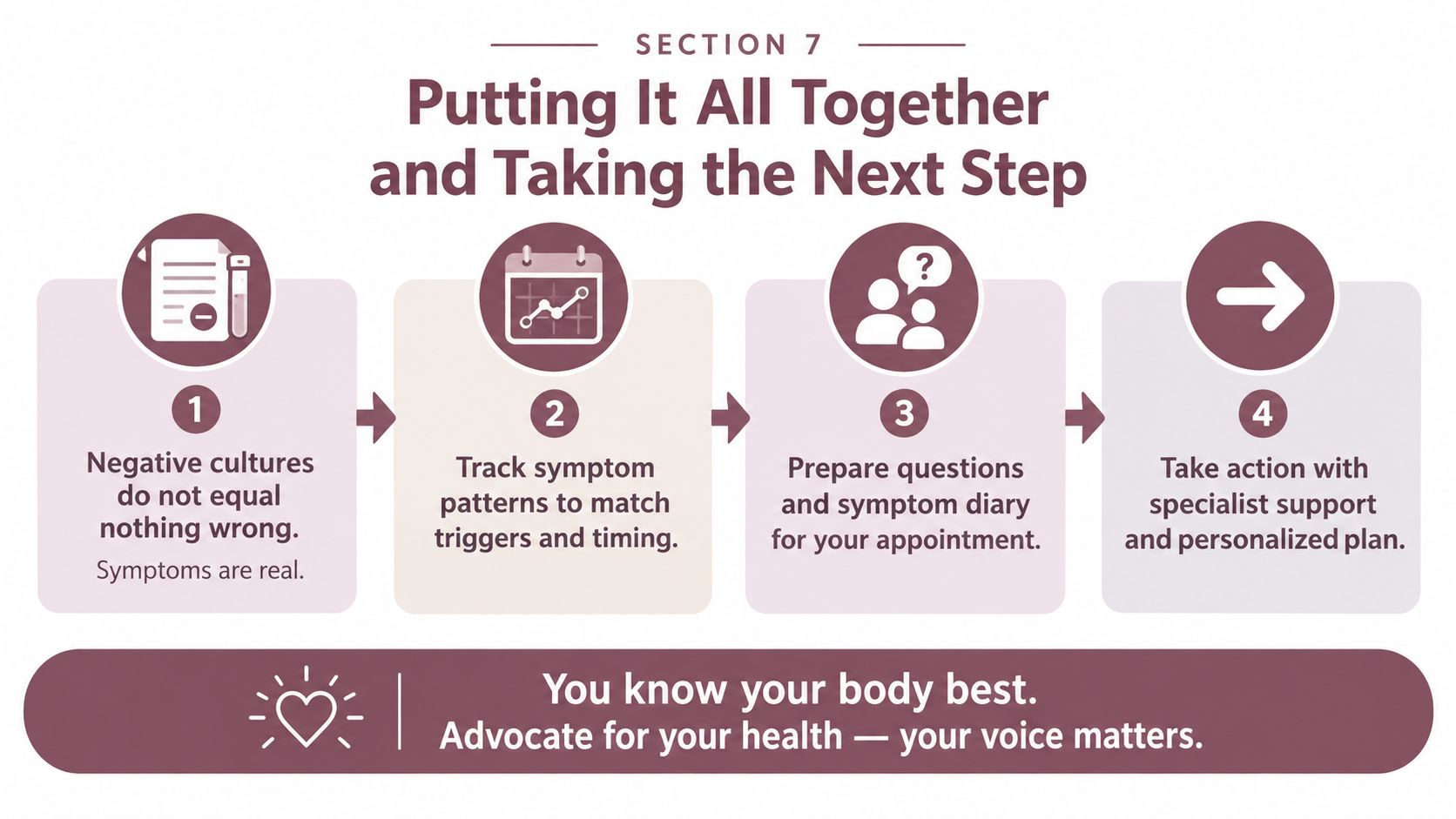
Before the visit, rehearse one plain-language sentence: “My burning is mostly external and follows sex,” or “My pressure builds as my bladder fills and eases after I urinate.” That kind of description gives your clinician a starting point and helps you advocate for the right evaluation. A negative test doesn't erase your experience. It helps define the next question.
Momotaro Apotheca offers plant-based vulvovaginal care products and wellness kits for concerns including irritation, dryness, post-coital discomfort, and urinary tract support. Visit Momotaro Apotheca to explore supportive options, then discuss any supplement or persistent symptom with a qualified healthcare professional.


