


Urinary Tract Infection After Sex: Causes and Relief
You wake up the morning after sex with a familiar burn. You need to urinate again almost immediately, but only a small amount comes out. The discomfort can feel alarming, especially when it seems to appear after intimacy you expected to enjoy.
A urinary tract infection after sex is a real and understandable pattern. Sexual activity can move bacteria toward the urethra, and some bodies are more vulnerable because of anatomy, hormonal changes, contraception, dryness, or a history of infections. This isn't a sign that you're dirty or that you've done something wrong. It's a health issue with practical prevention and treatment options.
The most useful distinction is between preventing an isolated episode and managing recurrent post-coital infections. Urinating after sex may be a reasonable habit, but repeated infections deserve a more complete plan with a healthcare professional.
Table of Contents
- Why Sex Triggers Urinary Tract Infections
- Anatomy and Risk Factors That Increase Vulnerability
- Recognizing UTI Symptoms Early
- Evidence-Based Prevention Strategies
- Immediate Relief and Supportive Care
- When to See a Healthcare Provider
- Managing Recurrent Post-Coital UTIs
Why Sex Triggers Urinary Tract Infections
Maya notices the change the day after sex. First comes pressure low in her pelvis and the repeated feeling that she needs the bathroom. By the next morning, urination burns. She has not changed her soap, neglected hygiene, or done anything unusual. The sequence is familiar: intimacy, a symptom-free interval, then urinary discomfort.
Sex can trigger a UTI when movement and friction carry bacteria from nearby genital or anal areas toward the urethral opening. After entering the urethra, bacteria may travel upward into the bladder. A UTI is not a sexually transmitted infection. Sexual activity can instead create an opportunity for bacteria already present on the body to reach the urinary tract.
Symptoms may take time to appear, so the connection is easy to miss. In a prospective study of community-dwelling postmenopausal women, symptomatic UTI risk was highest 2 calendar days after intercourse, with an adjusted hazard ratio of 3.42 using the primary definition and 3.26 with a broader definition based on lower bacterial counts. Both findings came from the same prospective study of postcoital UTI risk.
Why the bladder becomes involved
The lower urinary tract includes the urethra and bladder. When bacteria multiply in the bladder, they can cause burning, urgency, frequent urination, and pelvic pressure. If infection reaches the upper urinary tract, symptoms may include fever, chills, nausea, vomiting, or pain in the back or side.
The key idea: Postcoital UTIs happen when bacteria reach a vulnerable location. They do not indicate poor cleanliness, sexual irresponsibility, or personal failure.
The period after intercourse deserves attention even when symptoms are delayed. Mild external tenderness can result from friction and may settle, while increasing urgency or burning during urination suggests a possible infection. A single episode may call for prompt assessment and practical prevention. Repeated episodes need more than relying on one habit, such as urinating after sex. A healthcare professional can help confirm that infections are recurring, identify patterns, and discuss a prevention plan suited to the individual.
Anatomy and Risk Factors That Increase Vulnerability
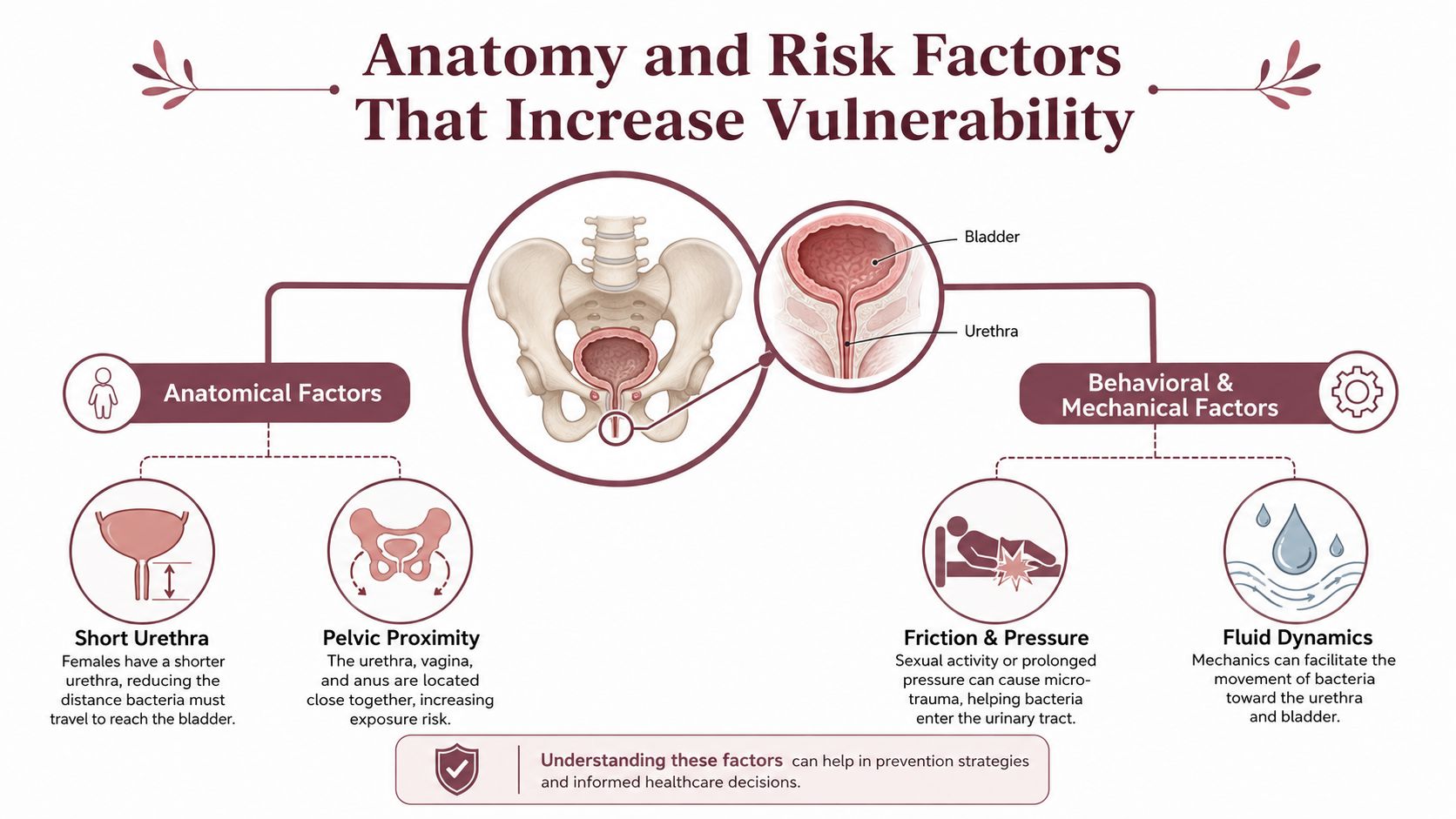
After sex, bacteria do not need to travel far to reach the urinary tract. The urethra is relatively short in people with female anatomy, and the urethral, vaginal, and anal openings sit close together. Sexual contact can add movement and pressure to this arrangement, much like brushing debris toward an already nearby doorway.
Factors you can change
Sexual activity can vary in friction, pressure, and bacterial transfer. Penetration, oral contact, switching from anal to vaginal contact without cleaning or changing barriers, and vigorous movement may bring bacteria closer to the urethra. No single position automatically causes a UTI. The relevant conditions are the direction of movement, the amount of pressure, and how the tissues respond during that encounter.
Dryness may intensify friction and irritation. Reduced lubrication can contribute to tiny areas of tissue damage around the vulva and vaginal opening, which may make discomfort more likely. For practical guidance about comfort and moisture, see these tips for managing vaginal dryness.
Spermicides also deserve attention. Older epidemiologic research found that vaginal intercourse increased UTI risk, and reported higher risk with a condom-protected sex act in the previous 2 weeks after adjustment for other factors. The study also associated having a sex partner for less than 1 year, compared with 1 year or more, with about twice the risk. These findings do not mean condoms cause UTIs. They suggest checking whether a spermicide is present, since the spermicide may be the relevant factor (epidemiologic study of first-time UTI risk).
Factors that aren't personal failures
A new sexual partner or a change in sexual frequency can coincide with UTIs because the body is exposed to different patterns of friction and microbes. A prior UTI can also signal a recurring pattern. Neither circumstance means you caused the infection.
Postmenopausal changes add another possible influence. Lower estrogen can affect the tissues and the protective vaginal environment near the urinary tract. Repeated symptoms during this stage call for individualized care rather than repeated hygiene advice alone.
One-time prevention habits may help after an isolated encounter, but recurrent post-coital UTIs require a broader plan. A healthcare professional can confirm that infections are recurring, look for patterns, and discuss options beyond urinating after sex.
For external dryness or friction-related irritation, Soothe & Restore Salve is described as an organic balm for vulvovaginal dryness, itching, and irritation. External comfort care does not diagnose or treat a bladder infection, so persistent urinary symptoms still need medical evaluation.
Recognizing UTI Symptoms Early
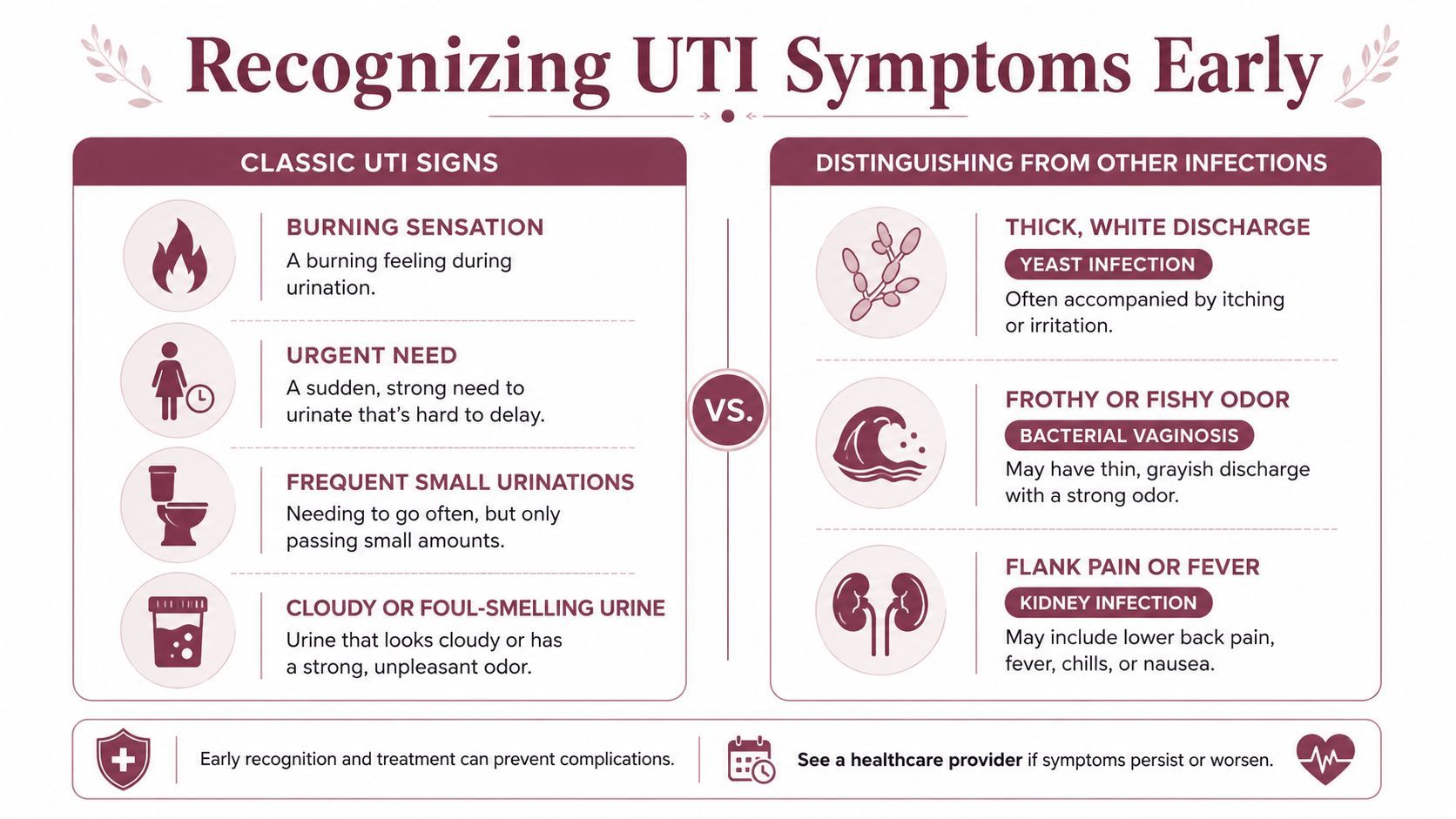
The easiest way to recognize a developing UTI is to focus on urinary symptoms, not just discomfort around the vulva. Burning during urination, a sudden urge to go, frequent trips to the bathroom, and passing only small amounts are classic signs. Cloudy, unusually strong-smelling, or bloody urine can also occur.
Use the symptom pattern, not one sign
External burning after sex can come from friction, dryness, a yeast infection, bacterial vaginosis, or another vulvovaginal condition. A yeast infection more often involves itching and thick, white discharge. Bacterial vaginosis may involve an unusual odor or discharge. An STI can produce discharge, sores, blisters, pain during sex, or urinary discomfort, so testing may be necessary when exposure or symptoms raise that possibility.
A UTI usually centers on urination and bladder sensations. A kidney infection is more concerning because it may involve fever, chills, nausea, vomiting, or pain in the back or side. Don't try to identify the cause from urine odor alone, and don't assume every post-sex burn is a UTI.
For a broader explanation of symptom patterns, causes, and treatment choices, consult this complete overview of urinary tract infection symptoms, causes, and treatment options.
A product such as the Bladder & Belly Kit combines a daily probiotic with a urinary tract supplement containing D-mannose and cranberry. Its product information advises consulting a medical professional before starting a supplement, particularly during pregnancy, breastfeeding, medication use, or illness. Supplements shouldn't replace urine testing or prescribed treatment when infection is suspected.
Evidence-Based Prevention Strategies
“Pee after sex” can be a sensible habit, but it is only one tool. Urinating may help move some bacteria away from the urethra. It does not address spermicide exposure, friction, hormonal changes, or a pattern of infections that repeatedly follows intercourse.
Start with habits that reduce irritation and support normal urination. Drink fluids regularly, without forcing a large amount in a short time. Urinate when you feel the need, and consider going after sex if it is comfortable for you. Wipe from front to back, wash the external genital area gently, and avoid douching, scented products, and harsh soaps. These steps protect the surrounding tissue, much like reducing friction protects skin, but they cannot guarantee that bacteria will not enter the urinary tract.
Compare the common strategies
| Strategy | What it can address | What to remember |
|---|---|---|
| Urinating after sex | May help clear bacteria near the urethra | Useful as a simple habit, but not a complete recurrent-UTI plan |
| Gentle external cleansing | Reduces exposure to irritating products | The vagina doesn't need internal washing |
| More lubrication | Limits friction and irritation | Choose a product compatible with your body and contraception |
| Avoiding spermicides | Removes a recognized risk factor | Check condoms and contraceptive products carefully |
| Cranberry or D-mannose | May be considered as supportive prevention | Evidence and suitability vary, so discuss supplements with a clinician |
| Prophylaxis | Targets clearly recurring episodes | Requires professional assessment and monitoring |
Cranberry products and D-mannose may influence bacterial attachment or urinary tract conditions, but they are not guaranteed protection or treatments for an active infection. Probiotics have the same limitation. A label describing urinary or vaginal support cannot determine whether burning is caused by a UTI.
If episodes seem connected to spermicide, stopping that product may be an important change. Review condoms and other contraceptive products because spermicide may not always be obvious from casual use.
Recurrent infections that reliably follow intercourse require a different conversation from one-time prevention. Ask a clinician whether post-coital prophylaxis is appropriate. The EAU guidance and 2025 AUA recurrent UTI update describe post-coital and continuous low-dose antibiotic prophylaxis as similarly effective approaches, and discuss methenamine and vaginal estrogen for selected patients.
For a focused explanation of D-mannose and cranberry options for UTI prevention, consider how the evidence and your health history apply. Prevention should match your pattern, rather than depend on one ritual repeated without reassessment.
Immediate Relief and Supportive Care
When symptoms begin, focus on comfort while arranging appropriate medical advice. Drink fluids normally, rest, and use a heating pad over the lower abdomen if warmth eases bladder pressure. An over-the-counter pain reliever may help some people, but check the label and ask a pharmacist or clinician if you have kidney disease, stomach ulcers, medication interactions, pregnancy, or other health concerns.
Some urinary pain products can temporarily reduce burning, but symptom relief doesn't prove that the infection has cleared. Avoid using leftover antibiotics or taking someone else's prescription. The right treatment depends on the likely infection, your history, local prescribing considerations, and sometimes urine testing.
Protect irritated external tissue
If sex has left the vulva sore, rinse the external area with lukewarm water and pat dry. Avoid douches, fragranced washes, deodorizing sprays, and aggressive scrubbing. Wear loose, breathable clothing if tight fabric increases rubbing.
External soothing care may help with irritation caused by dryness or friction, but it won't treat bacteria inside the bladder. That distinction matters because a person can have both external irritation and a urinary infection at the same time.
Comfort is supportive care, not a diagnosis. Feeling better for a few hours doesn't tell you whether bacteria remain in the urinary tract.
The quick relief guide for UTI discomfort can help you think through comfort measures, but seek medical guidance if symptoms intensify, persist, or include warning signs. Avoid sexual activity if it worsens pain, and don't delay evaluation because symptoms began after intercourse and seem familiar.
When to See a Healthcare Provider
A suspected UTI deserves professional attention when symptoms are strong, worsening, or recurrent. Burning and urgency can be uncomfortable but may also signal an infection that needs prescription treatment. Waiting too long is particularly risky when symptoms suggest that infection may be moving beyond the bladder.
Seek urgent medical advice for fever, chills, nausea, vomiting, back or side pain, or significant weakness. Blood in the urine, severe pain, pregnancy, immune suppression, kidney problems, or symptoms that don't improve within 48 hours also warrant prompt contact with a healthcare professional. These signs can point to a more complicated infection or another condition requiring different care.
What evaluation may involve
A clinician may ask when symptoms began, whether they follow sex, whether you've had previous UTIs, and which antibiotics or contraceptives you use. A urine test can look for findings consistent with infection, while a urine culture may help identify the bacteria and guide antibiotic selection, particularly when infections recur or treatment hasn't worked.
Vaginal symptoms, STI exposure, discharge, sores, or pain during sex may lead to additional testing. Treating the wrong condition can prolong discomfort, so an accurate diagnosis is more useful than guessing from a single symptom.
If antibiotics are prescribed, take them exactly as directed and ask what to do if side effects occur. Don't save unfinished medication for another episode. Repeated self-treatment can expose you to unnecessary drugs, obscure the true diagnosis, and contribute to antibiotic resistance.
A recurring pattern after sex should also change your threshold for care. Instead of treating each episode as an isolated inconvenience, record the timing of intercourse, symptom onset, test results, and treatments. That record can help your clinician decide whether the pattern is post-coital and whether preventive treatment makes sense.
Managing Recurrent Post-Coital UTIs
If burning, urgency, or bladder discomfort returns after intercourse, treat the pattern as a clinical clue rather than an inconvenience to manage by guesswork. Recurrent episodes may be true UTIs, but irritation, yeast infection, bacterial vaginosis, sexually transmitted infections, or another bladder condition can feel similar. Confirming the cause comes before choosing prevention.
Sex-associated cystitis has been recognized as a recurring pattern in clinical research, which helps explain why intercourse can matter when symptoms repeatedly follow sex. The finding applies to the study population, not everyone with urinary symptoms.
Treatment can be individualized
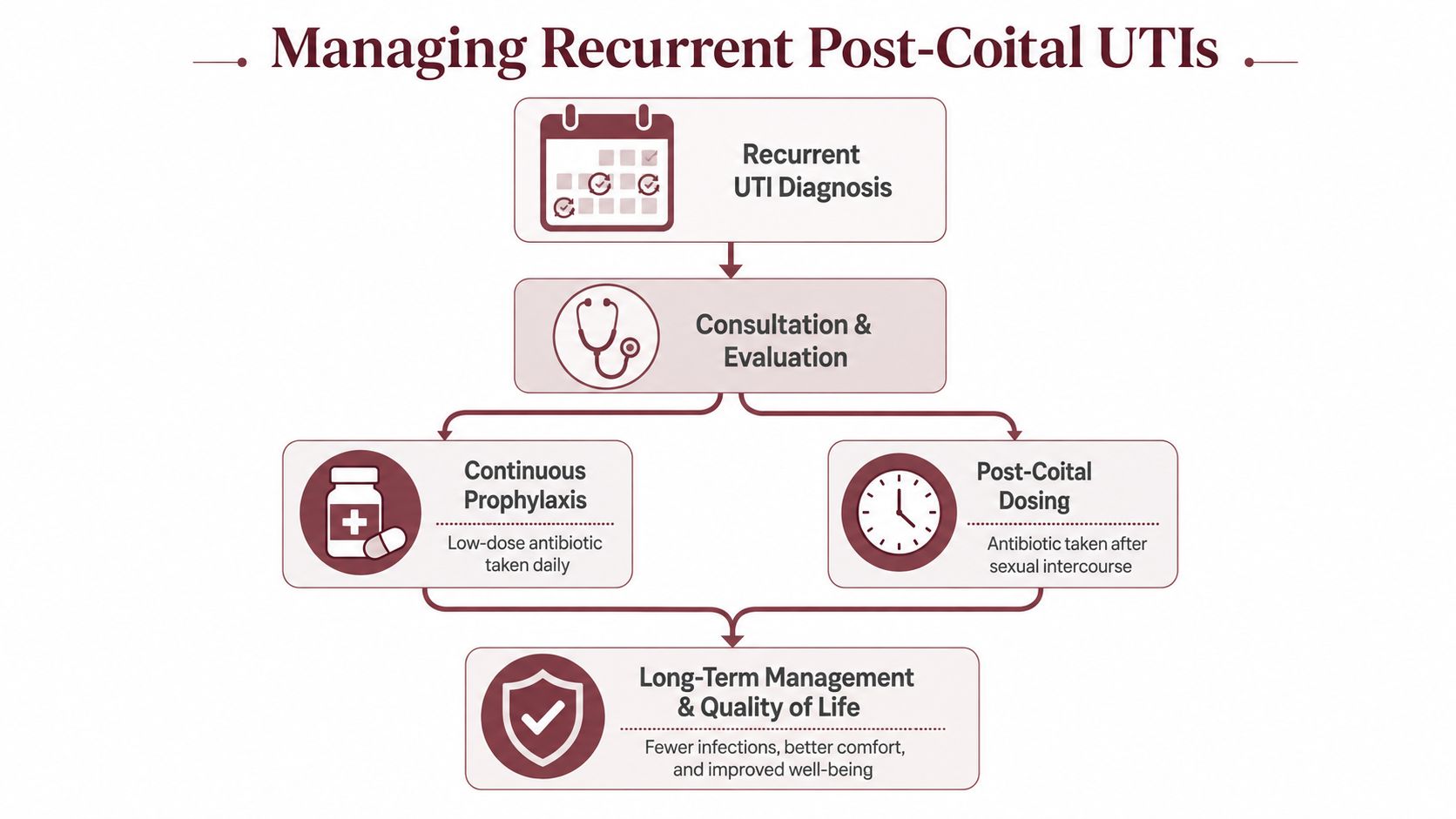
A clinician may discuss post-coital prophylaxis, a prescribed preventive dose taken after intercourse when episodes reliably follow sex, or continuous low-dose prophylaxis, preventive medication taken on a regular schedule. The choice depends on culture results, medical history, allergies, kidney function, previous medication exposure, and your preferences.
Professional guidance describes these antibiotic approaches as similarly effective for some patients. It also discusses non-antibiotic options such as methenamine and vaginal estrogen for women with low estrogen levels. These choices are not interchangeable. Vaginal estrogen, for example, requires a clinician to assess whether it fits your health history and hormonal stage.
A prevention plan may combine infection confirmation with a review of triggers, contraception, lubrication, hydration, supplements, methenamine, vaginal estrogen, or antibiotic prophylaxis. A single after-sex habit may help with one episode, while recurrent infections often require a customized plan that weighs symptom control against unnecessary antibiotic exposure.
Repeated post-coital infections deserve a prevention plan, not repeated guesswork.
You can maintain an intimate life while addressing this condition. Tell your healthcare provider how symptoms relate to sex, bring previous culture results, and ask which preventive option suits your circumstances.
Momotaro Apotheca offers plant-based, non-prescription vulvovaginal care products and urinary tract support options, including routines for after-sex comfort and bladder wellness. Visit Momotaro Apotheca to review its products and educational resources, and use them as supportive care alongside professional evaluation when symptoms recur.


