


How to Get Yeast Infection Relief During Pregnancy
A clinician-confirmed vaginal yeast infection during pregnancy is treated with a seven-day topical azole, not an oral tablet or a plant-based insert. That's the useful filter when you're standing in the pharmacy late at night, itchy and uncomfortable, looking at creams, pills, boric acid, and products labeled natural.
Thick discharge and burning can make you want to buy whatever promises the fastest relief. You deserve relief, but the safest plan separates two jobs: medicine treats the infection; gentle external care soothes irritated skin.
Table of Contents
- Safe and Unsafe Yeast Relief in Pregnancy
- How to Finish a Seven Day Topical Azole Course
- Comfort Steps That Stay Outside the Vagina
- Signs That Need a Clinician Instead of Another Cream
- Yeast Care After Birth and While Healing
- Confirm the Plan Before the First Dose
Safe and Unsafe Yeast Relief in Pregnancy
Yeast symptoms aren't a sign that you're dirty or doing pregnancy wrong. Hormonal changes can make Candida, a fungus that may already be present in the vagina, more likely to overgrow. Scrubbing harder won't correct that and can leave the outer skin even sorer.
A systematic review published in Clinical and Experimental Obstetrics & Gynecology concluded that vaginal Candida infection affects more than 30% of pregnant women overall, although reported prevalence or incidence ranged from 9.9% in a U.S. study to 65.6% in a Tanzanian study. Those differences reflect different populations and testing approaches, including whether researchers counted Candida being present or causing symptoms.
Use the shelf as a filter
Pregnancy yeast options to use or avoid
| Option | In pregnancy | Why |
|---|---|---|
| Intravaginal clotrimazole or miconazole for the full pregnancy course | Recommended after clinician confirmation | Topical azoles are the recommended treatment approach |
| Oral fluconazole, including a single standard dose | Don't use for pregnancy self-treatment | Epidemiologic studies associate exposure with spontaneous abortion and congenital anomalies |
| High-dose fluconazole for many weeks in the first trimester | Avoid | This prolonged exposure pattern has separate concerns about birth defects and miscarriage |
| Four-day or other short-course antifungal | Don't substitute | Shorter treatment can leave infection unresolved |
| Boric acid suppositories | Don't use as treatment | Not a pregnancy substitute for an azole; inserted products may irritate tissue |
| Oils, essential oils, balms, or plant products inserted vaginally | Don't use as treatment | Soothing isn't a cure, and irritation can complicate diagnosis |
| External vulvar comfort on intact skin | Adjunct only, if your clinician agrees | Can ease skin irritation while the prescribed antifungal treats the infection |
| Applicator for a pessary late in pregnancy | Often skip when instructed | Your maternity clinician may direct insertion by hand instead |
The important distinction isn't prescription versus nonprescription. Some appropriate antifungal medicines are sold over the counter, but that doesn't make every formulation or course length appropriate for pregnancy. Likewise, natural describes a product's ingredients, not its pregnancy safety or ability to clear Candida.
Confirm what you're treating
Itching, soreness, burning, and discharge can also occur with bacterial vaginosis, dermatitis, or another infection. Even if you've had yeast before, a familiar sensation isn't enough to identify the cause this time.
“Thrush” can also describe Candida-related problems elsewhere on the body. If you're breastfeeding an older child, Bornbir's explanation of thrush symptoms in breastfeeding parents and babies provides context for nipple and infant symptoms, which need their own assessment rather than vaginal treatment instructions.
Pharmacy rule: Choose a confirmed treatment plan, not the package with the fastest promise.
Take the recommended option to your GP, obstetric clinician, or midwife for confirmation. You can leave the avoid options on the shelf tonight without leaving your discomfort unaddressed.
How to Finish a Seven Day Topical Azole Course
After your clinician confirms yeast, ask them to name the active ingredient, formulation, and course length. Photograph the box or write down the instructions so you don't accidentally buy the shorter version beside it.
Use this visual reminder to keep treatment separate from skin comfort.
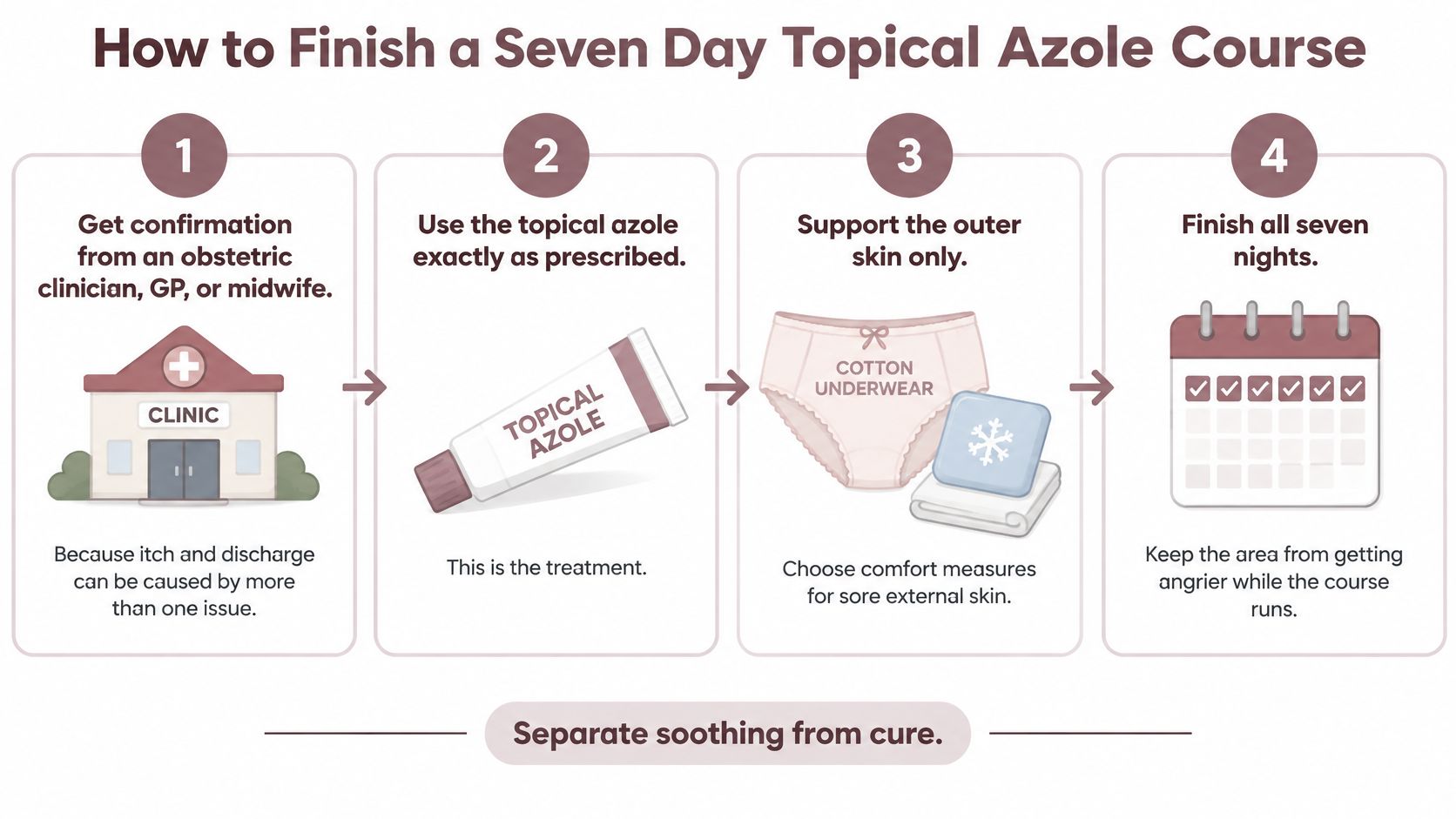
Follow the course from confirmation to reassessment
- Get the diagnosis confirmed. Tell your obstetric clinician, GP, or midwife about the discharge, smell, itch, pain, and any products you've already used. They may examine the area or collect a sample because bacterial vaginosis, dermatitis, and sexually transmitted infections can resemble yeast.
- Use the exact intravaginal azole they recommend. Common choices include clotrimazole cream or a pessary, which is a solid vaginal medicine, and miconazole. Check whether the package contains internal medicine, external cream, or both: a cream intended only for outer skin doesn't automatically treat infection inside the vagina.
- Build treatment into bedtime. Wash your hands before and after using the medicine, and follow the measured amount on your instructions. Bedtime often makes vaginal treatment easier to manage because you can lie down afterward; don't add extra medicine because some cream leaks out.
- Check the insertion instructions. Particularly later in pregnancy, your maternity clinician may recommend inserting a pessary with a clean finger rather than an applicator. Don't force insertion through pain or assume the applicator in the box is appropriate just because it's included.
- Keep using the medicine when itching eases. Feeling better tells you that irritation is settling, not that you can shorten treatment. A practical reminder on your phone or a mark on the package can prevent an early stop when you're tired or distracted.
- Return for assessment if symptoms remain. Don't stack another pack onto the first or switch to an oral antifungal yourself. Persistent symptoms need an examination and, when appropriate, testing to identify resistant yeast or a different cause.
Why finishing matters
The pregnancy recommendations in the CDC candidiasis guidance specify topical azole treatment for seven days; the Cochrane review summarized in the evidence estimates that four-day regimens cure only slightly more than half of infections, whereas seven-day regimens cure more than 90%. That comparison is a reason to finish the prescribed course, not a guarantee that every person will respond.
Say the itching settles before you've finished the pack. It's tempting to save the remaining doses for another episode, but that leaves the current treatment incomplete and creates a leftover medicine you might later use for the wrong condition.
Clotrimazole is poorly absorbed into the bloodstream, but poor absorption doesn't mean you should choose a formulation yourself. Keep use clinician-directed, especially early in pregnancy, and ask the pharmacist to clarify any mismatch between the clinician's instructions and the leaflet.
This accompanying video can support your understanding, but your maternity clinician's directions take priority over general demonstrations.
A completed course means you used every scheduled dose as instructed. If symptoms haven't resolved, the next action is a return appointment, not a stronger home remedy.
Comfort Steps That Stay Outside the Vagina
The prescribed topical azole is the treatment. Everything else is for sore outer skin and for avoiding additional irritation while treatment runs.
The vulva is the outside area, including the labia; the vagina is the internal canal. That distinction matters when a product says it comforts intimate skin. External permission isn't permission to insert it.
These comfort measures focus on reducing friction and moisture against irritated skin.
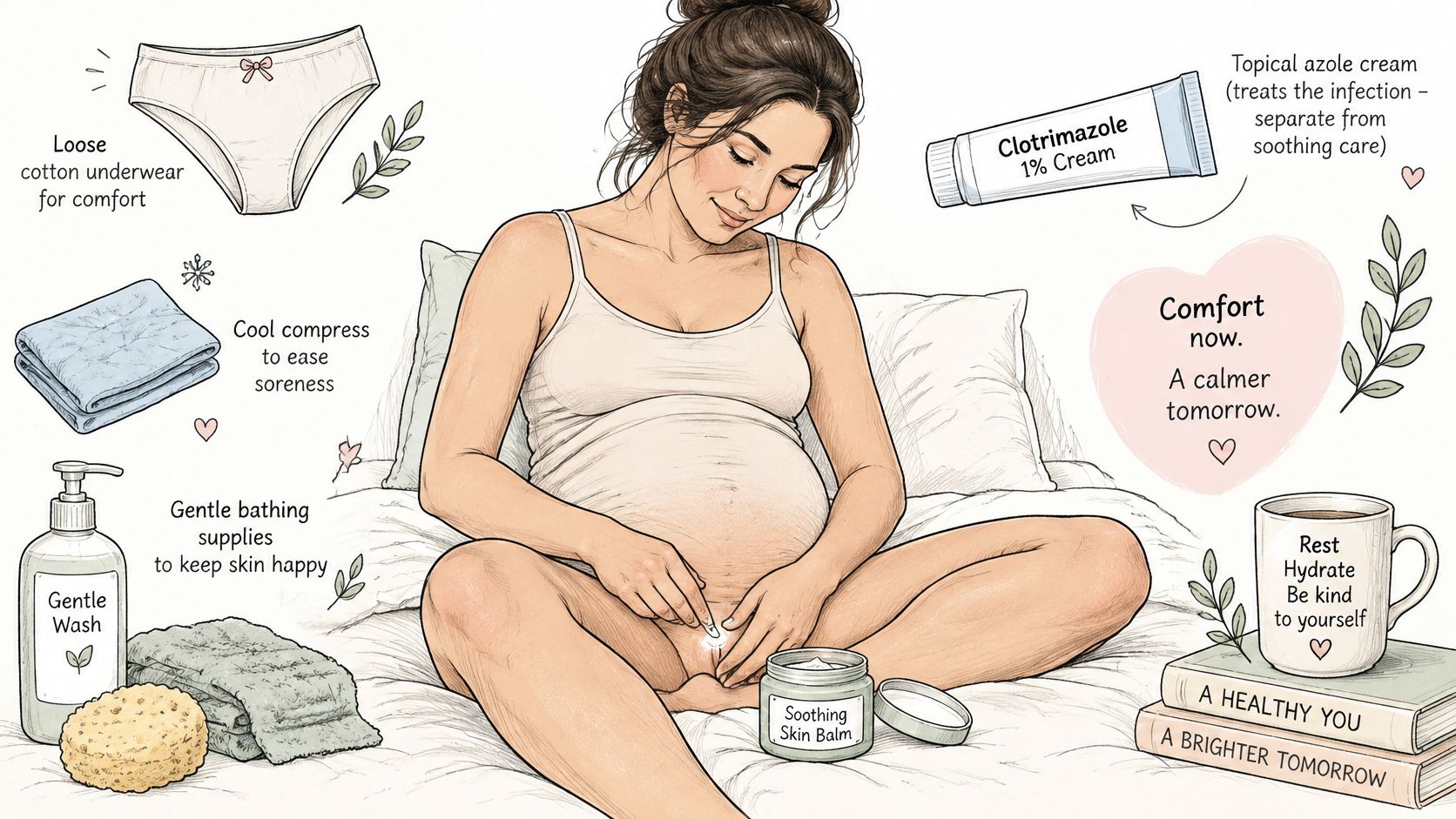
Make daily care less irritating
- Choose breathable clothing. Cotton underwear and loose waistbands can feel more comfortable than tight leggings against inflamed skin.
- Change out of damp clothes. Remove sweaty exercise clothes or a wet swimsuit rather than sitting in them.
- Clean gently. Use water on the vulva, or a mild unscented cleanser externally if tolerated, then pat dry instead of rubbing.
- Skip extra products. Douches, scented wipes, internal washes, and bubble bath can make soreness worse.
- Cool the outside. A cool, clean compress over the outer skin can ease discomfort. Don't apply ice directly or insert the cloth.
A plain warm bath may feel soothing, but keep the water comfortably warm rather than hot. If bathing stings or makes you feel more irritated, stop and use a gentle rinse instead.
Sex can wait while tissue feels raw. Friction, semen, lubricants, or condom materials may sting inflamed skin, and you don't need to push through discomfort. Ordinary yeast doesn't automatically mean a partner needs treatment, although a partner with symptoms should seek their own assessment.
Keep balm use narrow
The NHS pregnancy thrush guidance advises speaking with a GP or midwife before treatment and identifies clotrimazole cream or a vaginal pessary as options, rather than anti-thrush tablets. Ask about external comfort products during that same conversation, including the full ingredient list.
One optional external product is Momotaro Apotheca's Soothe & Restore Salve, an organic balm with coconut and jojoba oils marketed for dryness, itching, and irritation. Its role here would be skin comfort only, after your prenatal clinician agrees, not treatment for Candida.
If cleared, apply a small amount with clean hands to intact outer skin only. Keep it off broken skin and mucous membranes, and stop if it burns, increases redness, or causes a rash.
If it goes inside the vagina and isn't the prescribed azole, it isn't part of this pregnancy treatment plan.
Even welcome relief from a balm doesn't prove that the yeast is gone. Keep symptom comfort and infection treatment separate when deciding whether you need follow-up.
Signs That Need a Clinician Instead of Another Cream
Thick, white, clumpy discharge with itching is a familiar yeast pattern, but it's still a possible diagnosis rather than confirmation. Thin discharge with a fishy smell suggests a different possibility, such as bacterial vaginosis. Burning when you urinate could come from urine touching irritated skin, a urinary tract infection, or both.
A 2024 hospital-based study published in BMC Pregnancy and Childbirth found vaginal candidiasis in 26.8% of pregnant women, affecting 85 of 317 participants. The finding describes that hospital population, not the likelihood that your particular itch is yeast.
Match the symptom to the next action
Pregnancy symptoms and the next move
| What you notice | More likely lane | Next move |
|---|---|---|
| Itch with thick, white, clumpy discharge | Possible yeast, still unconfirmed | Clinician or midwife confirms, then the full pregnancy topical azole course |
| Thin discharge with a fishy smell | Possible bacterial vaginosis | Don't use a yeast cream as the fix; get tested |
| Burning when you urinate | Possible UTI, irritation, or both | Same-day clinical check rather than an antifungal alone |
| Fever, pelvic pain, bleeding, sores, or foul discharge | Not a straightforward yeast picture | Urgent assessment; stop adding products |
| Symptoms still there after the prescribed topical azole course | Resistant yeast or another cause | Examination and testing, not a repeat empiric course |
| Another episode during this pregnancy | Recurrent or mislabeled symptoms | Fresh diagnosis before new treatment |
A comparison of bacterial vaginosis, UTIs, and yeast infections can help you describe what's happening. It can't determine which condition you have, especially when symptoms overlap.
Don't let temporary soothing delay testing
Say a balm reduces the sting when your underwear touches your skin, but the unusual discharge continues. The skin may feel better while the underlying condition remains untreated. That's a reason to report both changes, not to assume the infection has cleared.
Repeated antifungal use without confirmation can also irritate tissue and make it harder to understand the original symptoms. If the prescribed course hasn't worked, a clinician may need to identify the Candida species, consider resistance, or investigate a non-Candida cause.
Useful details to bring include:
- The sequence of symptoms. Explain whether itching, discharge, smell, or urinary pain appeared first.
- The products used. Bring names or photos of antifungals, washes, balms, and inserted products.
- The response. Describe what improved, what stayed the same, and what became worse.
Contact your prenatal clinician, GP, or midwife the same day for new severe symptoms, urinary pain, recurrence, or persistent symptoms after treatment. Fever, bleeding, severe pelvic or abdominal pain, or feeling acutely unwell warrants urgent maternity assessment or urgent care. Don't wait for a cream to work when those symptoms are present.
Yeast Care After Birth and While Healing
You're home after birth, wearing a pad, managing lochia, and trying not to catch your stitches when you sit down. Then the itching starts. A leftover tube from pregnancy may feel like an easy answer, but postpartum discomfort needs a fresh look.
Estrogen falls after delivery, and breastfeeding can contribute to dryness. Pads, moisture, friction, tears, and stitches can make the vulva uncomfortable without Candida being the cause. Yeast can still happen, but so can a wound problem or bacterial infection.
Treat healing skin as healing skin
Until your maternity clinician confirms what's happening, keep care simple:
- Change pads regularly. Choose unscented pads and replace them when damp or soiled.
- Clean without scrubbing. Follow your discharge instructions, wipe front to back, and gently pat the area dry.
- Avoid fragranced wipes and internal products. Healing tissue doesn't need deodorizing or vaginal cleansing.
- Protect tears and stitches. Keep balms and other nonprescribed products off broken skin and repair sites until your clinician says they're healed.
Let the area air when practical and comfortable. Don't try to keep it perfectly dry by rubbing, repeated washing, or using powders.
Postpartum caution: New itching isn't an automatic refill of your pregnancy treatment.
If symptoms return while you're nursing, this explanation of vaginal yeast infection while breastfeeding can help you prepare questions for your appointment. Oral medication still needs an individualized review after birth; pregnancy guidance isn't a substitute for checking lactation suitability and your own medical history.
Separate vulvar symptoms from other postpartum pain
Recovery can involve several uncomfortable areas at once. If you're also managing back discomfort, Restore Osteopathic Medicine's postpartum pain guide addresses that separate concern, but back pain with fever, urinary symptoms, or feeling unwell needs medical assessment rather than being assumed to be routine recovery.
Once the skin is intact and your clinician agrees, simple external barrier care may help localized dryness or friction. Plant-based suppositories still aren't substitutes for antifungal treatment when an infection is confirmed.
Call your maternity team promptly for fever, spreading redness, worsening wound pain, or foul-smelling lochia. Heavy bleeding, severe pain, faintness, or feeling seriously unwell needs urgent assessment.
The useful distinction after birth is the same practical one: medicine for a confirmed infection, gentle external care for sore skin, and specific instructions for wounds that are still healing.
Confirm the Plan Before the First Dose
If this is your first suspected episode, symptoms are severe, or nobody has assessed the symptoms during this pregnancy, don't start a short-course pack, an oral tablet, or an insertable plant product tonight. Contact your prenatal clinician, GP, or midwife and ask for a diagnosis and a pregnancy-appropriate plan.
The U.S. Centers for Disease Control and Prevention candidiasis guideline recommends only topical azoles applied for seven days during pregnancy and advises against oral fluconazole, including a single 150-mg dose, because epidemiologic studies associate exposure with spontaneous abortion and congenital anomalies. If you've already taken a tablet, tell your clinician the product, dose, and timing rather than assuming that exposure means harm occurred.
Bring a clear request
You don't need technical language to get useful advice. Tell the clinician:
- What you notice. Describe the discharge, itch, smell, burning, and any pain.
- When it started. Explain how long symptoms have lasted and whether they're changing.
- Where you are in pregnancy. Give your pregnancy week and ask about insertion instructions.
- What you've used. Include medicines, supplements, washes, and comfort products.
An OB-GYN appointment checklist can help you organize those details. Ask what improvement to expect and how to arrange reassessment if symptoms persist.
Relief isn't worth an unreviewed medication exposure.
If a clinician has already confirmed yeast and named the product, follow that instruction and complete the course. Maintain optional comfort care on intact outer skin, and don't add products because progress feels slower than you hoped.
A nonprescription product quiz can help match comfort preferences, but it can't diagnose Candida or approve ingredients for pregnancy. The useful outcome is a confirmed treatment, a clear avoid list, and an agreed point to reassess.
Momotaro Apotheca offers nonprescription vulvovaginal comfort products and educational resources for dryness, itching, and irritation. Visit Momotaro Apotheca to explore external care options you can review with your prenatal clinician, while keeping antifungal medicine responsible for treating a confirmed yeast infection.


