


The Best pH Balanced Soap for Sensitive Skin 2026
The popular advice is simple: buy a “feminine” wash, choose something scented, and use it every day. That advice misses the more important question. The best pH balanced soap isn't the product with the prettiest label or strongest freshness claim. It's the cleanser that removes sweat and residue while causing the least disruption to the vulvar skin and the vulvovaginal microbiome.
The vulva is designed to protect itself. The vagina is an internal environment with its own ecology, and it doesn't need to smell like perfume or feel aggressively scrubbed to be healthy. A thoughtful routine starts with three questions: What does pH mean? What does “balanced” prove? And how can you cleanse in a way that respects the area's barrier?
Table of Contents
- Why Your Vulva Does Not Need a Scented Soap
- What pH Balanced Actually Means for Skin
- Conventional Soap vs Syndets vs Intimate Washes
- How to Read a pH Balanced Soap Label
- A pH-Conscious Cleansing Routine for the Vulva
- Real Life Scenarios Where Rules Bend Slightly
- Choosing the Best pH Balanced Soap for Your Needs
- Frequently Asked Questions About pH Balanced Soap
Why Your Vulva Does Not Need a Scented Soap
A scented soap can make the bottle smell pleasant. It cannot make vulvar skin healthier. Fragrance, parfum, and essential oils may irritate sensitive skin, especially when used repeatedly on a moist area where exposure can linger. “Feminine freshness” often turns a normal body process into a product problem, rather than addressing a medical need. For a clearer discussion of normal scent and care, see this guide to understanding how to make it smell good down there.
The vulva has external skin and folds that can collect sweat, oil, discharge, and traces of urine. Gentle cleansing of the outside may be reasonable after exercise or sex, but cleaning the vulva is different from cleaning inside the vagina. The vagina maintains its own internal environment. Douching or inserting soap can disturb that environment instead of improving it. Consumer medical guidance summarized in this evidence-focused discussion of intimate cleansing generally discourages routine feminine washes because they may irritate vulvar skin and affect its microbial conditions.
The question worth asking
Ask, “Which routine removes what needs removing without stripping what protects me?” That question shifts attention from scent claims to the cleanser's actual effect on skin and the vulvovaginal microbiome.
Research on vaginal washing has associated soap-and-water cleansing with a roughly 44% reduction in Lactobacillus detection. Lactobacillus is part of the normal vaginal microbial ecosystem. One wash does not guarantee an infection, and this finding does not mean everyone must avoid every external cleanser. It does show why a stronger clean feeling is not automatically healthier.
Practical rule: A promise of fragrance, deodorizing, or an unusually strong clean feeling is a reason to inspect the formula, not proof that the product belongs in your routine.
A pH-conscious approach starts with the cleanser, not its perfume. Check whether “balanced” describes a measured finished-product pH or just a reassuring label. Then use the smallest amount of the mildest suitable product, allowing water-only cleansing to do more of the work whenever it can.
What pH Balanced Actually Means for Skin
pH is a way of describing acidity and alkalinity on a scale from 0 to 14. Think of a pool test strip: it doesn't tell you whether the water looks clean, it tells you what chemical conditions the water has. Skin can be assessed through the same basic lens. Lower numbers are more acidic, higher numbers are more alkaline, and healthy skin generally prefers a gently acidic surface.
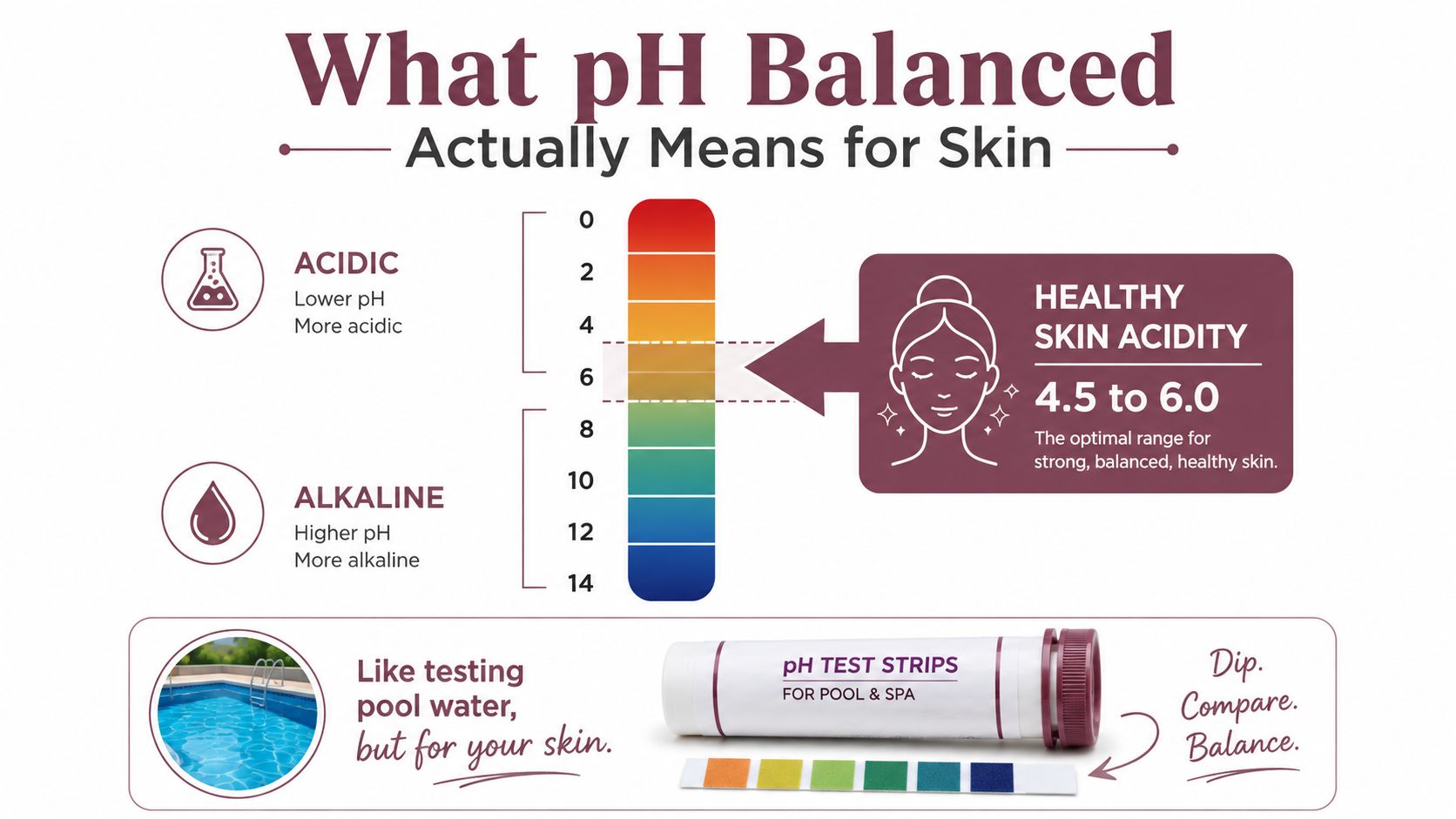
Healthy skin typically maintains an acid mantle around pH 4.5 to 5.5, according to expert dermatology literature on skin acidity and barrier function. This slightly acidic surface supports barrier integrity, helps skin retain hydration, and creates conditions less favorable to pathogen overgrowth. The “acid” in acid mantle doesn't mean dirty or unhealthy. It's closer to a protective setting your skin maintains naturally.
Why the vulva responds quickly
The vulva is moist, folded, and sensitive to friction and chemical exposure. The 2025 vulvar-care review linked above describes vulvar pH as around 6 and notes that repeated washing with conventional soap can alter skin proteins and lipids, increase water loss, and raise irritation risk. In everyday language, an alkaline cleanser can move the skin away from its comfortable chemical neighborhood and leave it more reactive.
That's why someone may notice burning, itching, tightness, or stinging after a product that technically removes dirt. Cleansing performance and skin compatibility aren't the same thing. A product can create lather and remove oils while still asking too much of the barrier.
For practical education on the habits and ingredients that support recovery, this guide to repairing a damaged skin barrier offers useful context. The reusable label-reading mental model is simple: skin likes gently acidic conditions, not a high-alkaline reset after every wash. You can also explore this explanation of vaginal pH and a balanced environment for more vulvovaginal-specific context.
Conventional Soap vs Syndets vs Intimate Washes
“Soap” is an umbrella word on the shelf, but the chemistry underneath can differ sharply. A true soap bar is created through saponification, usually leaving an alkaline finished product. A syndet, short for synthetic detergent bar, uses detergent systems that can be formulated closer to skin pH. An intimate wash is usually a liquid cleanser marketed for the external genital area, often with milder surfactants and a more acidic target.
A 2022 review reported conventional soap pH in the range of 8.5 to 11.0, while skin generally sits around pH 4 to 6 and syndets are usually pH 5.5 to 7.0. The difference is like moving from a neighborhood with a gentle slope to one with a steep hill. Your skin can adapt temporarily, but repeated trips in the wrong direction may increase stress.
Cleanser types at a glance
| Cleanser type | Typical pH range | Effect on skin barrier | Best for |
|---|---|---|---|
| Conventional true soap bar | 8.5 to 11.0 | More likely to raise skin pH and increase barrier stress | General body use only when tolerated, not the first choice for sensitive vulvar skin |
| Syndet bar | 5.5 to 7.0 | Usually closer to the acid mantle and often less disruptive | Sensitive or irritation-prone skin seeking a bar format |
| Intimate wash | Varies by formula, often designed toward acidic pH | May be mild, but fragrance and surfactants still matter | External use when the formula is genuinely fragrance-free and well tolerated |
Comparative testing makes the distinction more than theoretical. In a forearm study, alkaline soap caused a substantial increase in skin pH at all measured time points, while an acidic syndet significantly decreased pH at the final measured point. The same research found that alkaline soaps could cause erythema and increase transepidermal water loss, or TEWL, particularly when cleansing action was strong. A separate controlled study found that alkaline and creamy soaps increased TEWL after patch removal, but the alkaline soap still showed a significant increase at 72 hours, as reported in the clinical comparison of cleanser effects.
How to identify the format
A true soap bar often feels hard, dense, and traditionally “soapy,” with ingredients such as saponified oils or sodium salts of fatty acids. A syndet may be labeled soap-free, dermatological bar, cleansing bar, or syndet. A liquid intimate wash may advertise pH compatibility, but the bottle's claim still needs to be checked against the ingredient list and your response.
For a broader look at gentler bathing products and sulfate-free choices, the Skin Perfection bathing guide can provide additional formulation context. If dryness is the main concern rather than odor, this guide to gentle vaginal cleansing is more relevant than a list of heavily fragranced washes.
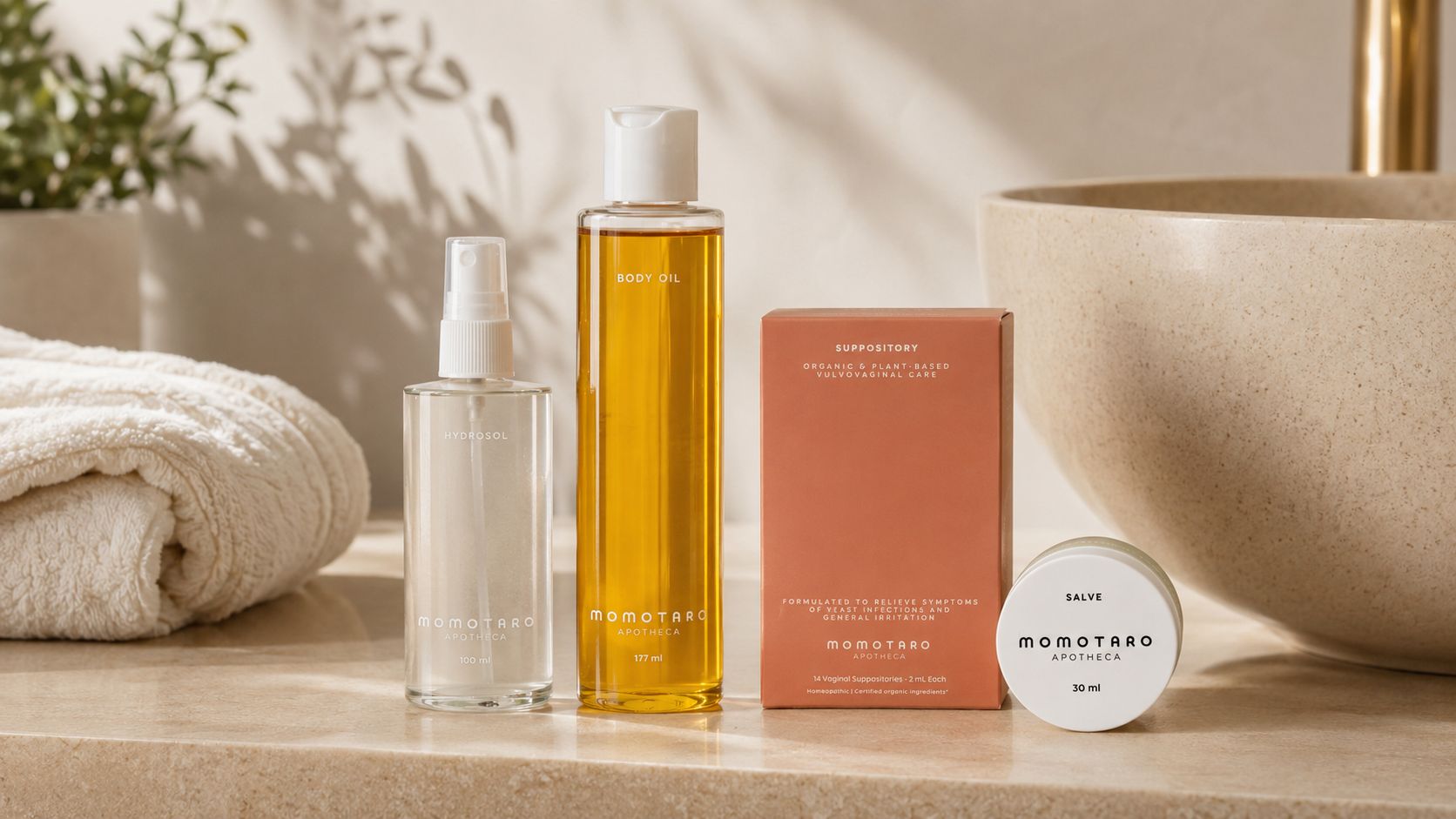
For readers considering topical support alongside cleansing, the Vulvovaginal Dryness Bundle includes a salve, suppository, hydrosol, and body oil. Its product information describes external moisture and barrier support, but it also advises medical consultation for first-time symptoms, pregnancy, breastfeeding, medication use, or symptoms that persist.
How to Read a pH Balanced Soap Label
The phrase pH balanced sounds precise, but it often isn't. A manufacturer may mean that the product was formulated with skin comfort in mind, or it may refer to a measured finished-product pH. Those are different claims. Ingredients can be mild while the final formula still lands outside the range you expected.
A 2024 analysis found that pH information was disclosed on none of 37 soaps and only 32 syndets, or 15%, according to the product-testing evidence summarized in the review of bathing soaps, shampoos, and cleanser labeling. The same analysis found that nine bars were labeled “balanced,” yet measured pH ranged from 3.59 to 6.88. That spread is why “balanced” should start a question rather than end one.
Red flags deserve more attention than promises
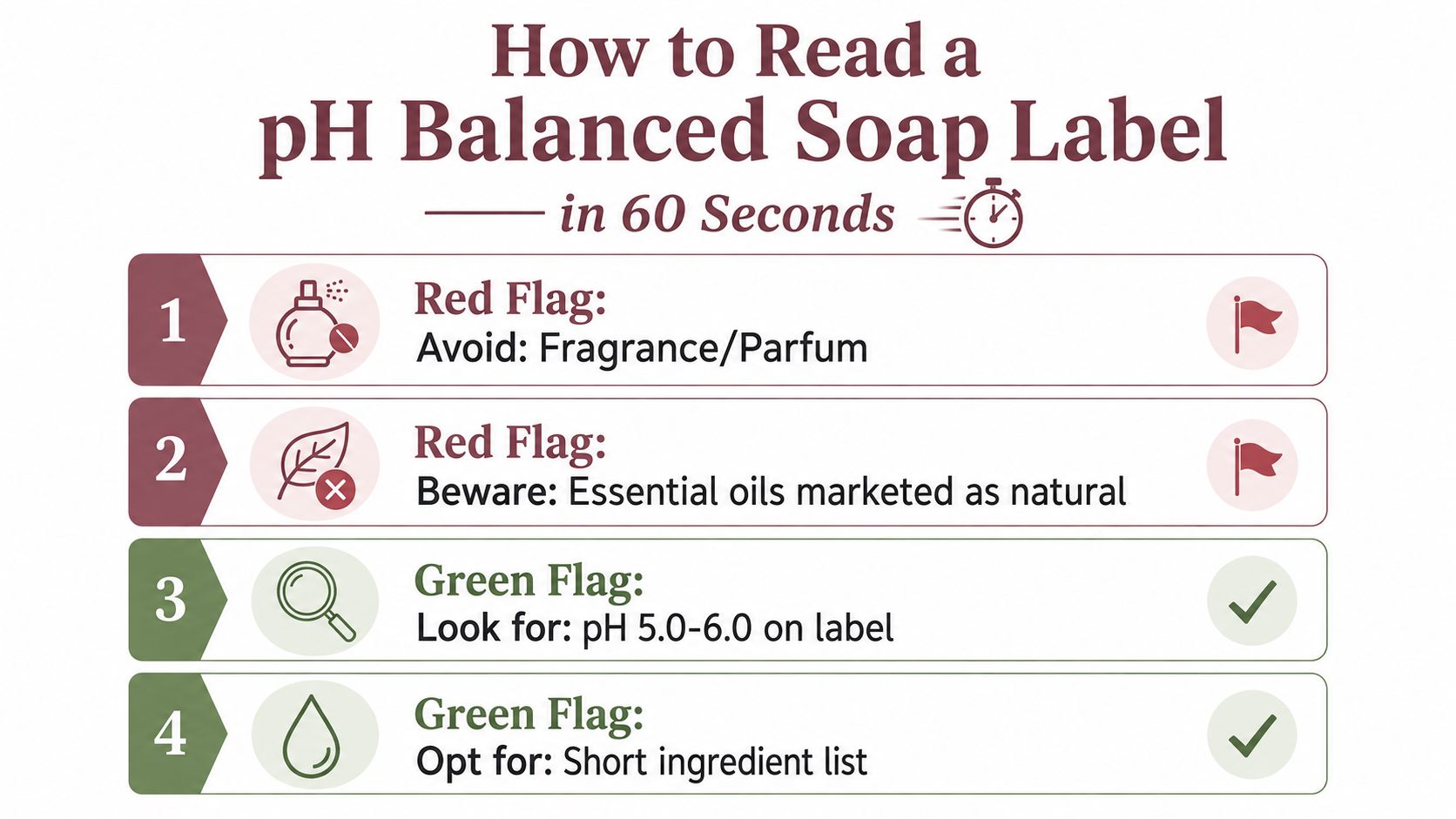
Scan for fragrance, parfum, and essential oils promoted as natural. Natural describes an origin, not a guaranteed irritation profile. A sensitive vulva may also react to aggressive surfactants such as SLS or SLES, especially when the product creates a strong, stripping lather.
“Gentle,” “dermatologist tested,” and “for sensitive skin” are useful signals only when paired with transparent formulation details. They don't tell you the finished pH, how much fragrance is present, or whether the product was tested on vulvar skin.
Better signals on the package
Look for a disclosed pH near the physiologic skin range, preferably from a manufacturer willing to explain how and where it was measured. A short ingredient list can make troubleshooting easier, while fragrance-free is more informative than a vague “fresh” or “unscented” positioning.
A syndet label is another useful clue, though it isn't a guarantee of tolerance. If the packaging gives no pH, no fragrance status, and no meaningful ingredient transparency, choose based on the lowest-risk formula rather than the loudest promise.
A pH-Conscious Cleansing Routine for the Vulva
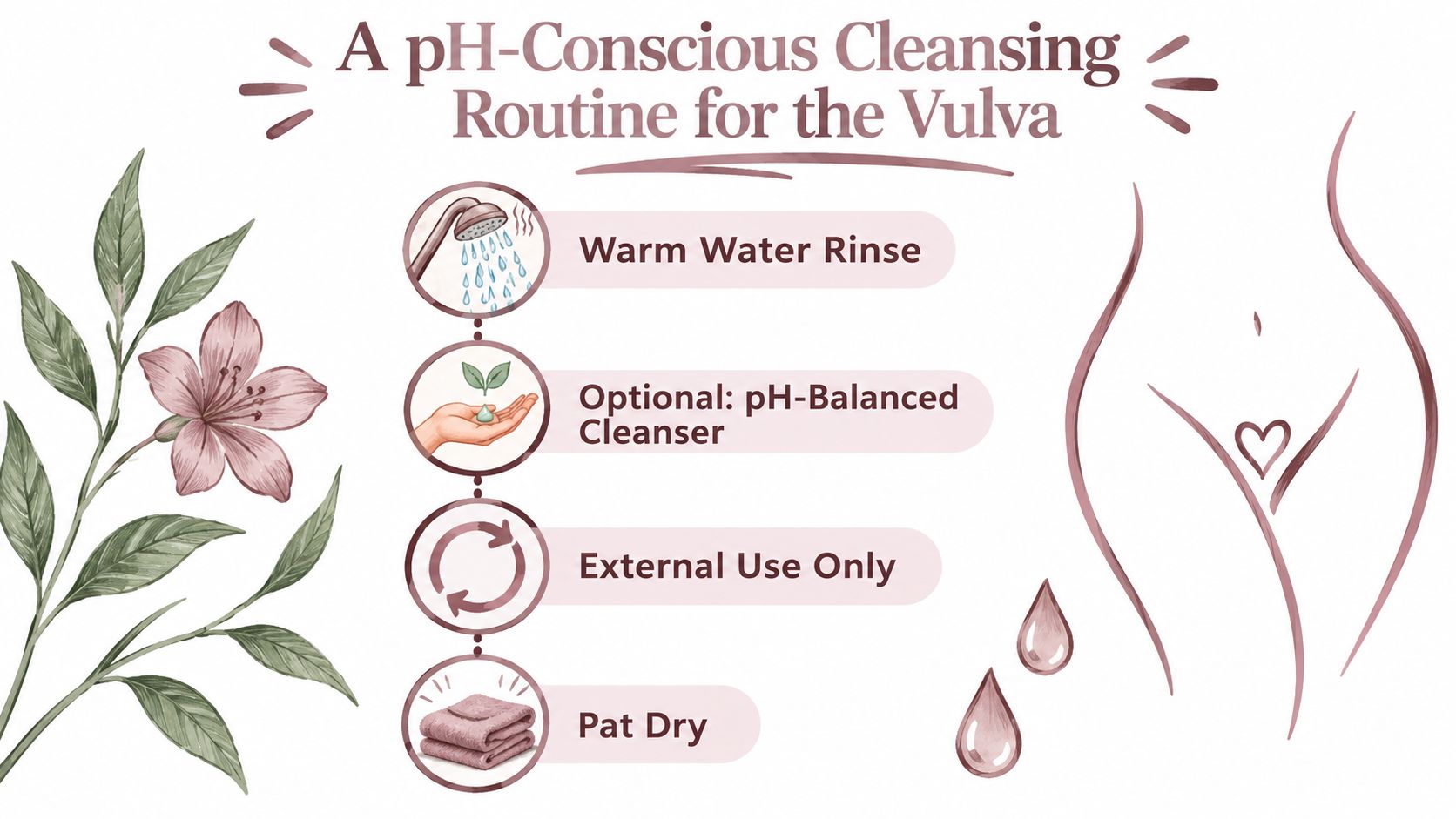
Start with warm water, not hot water. For many people, a careful rinse over the external vulva removes sweat and ordinary residue without requiring cleanser. Water alone is a sensible default when you aren't dealing with visible residue, heavy sweat, or a situation where you personally prefer additional cleansing.
If you choose a cleanser, use a small amount on your clean hands and apply it only to the external vulva. Don't put soap or wash into the vagina. The aim isn't to scrub every fold until the area feels “squeaky.” That tight sensation can signal that you've removed too much of the skin's protective material.
A low-friction daily sequence
- Rinse with warm water. Let the water flow over the external area without directing pressure internally.
- Use optional cleanser sparingly. Choose a fragrance-free, low-pH formula when water alone doesn't feel sufficient.
- Use your hands. Washcloths, loofahs, and scrubbing tools add friction that sensitive skin may not tolerate.
- Rinse completely and pat dry. Press a soft towel against the area instead of rubbing.
The same approach works after exercise. Change out of damp clothing, rinse when practical, and avoid responding to sweat with repeated rounds of scented wash. More washing isn't automatically more protective if each wash adds friction or surfactant exposure.
Where moisture support fits
Cleansing and moisturizing have different jobs. A topical balm or salve may support external comfort when dryness or friction is the main issue, but it shouldn't be used to cover unexplained odor, discharge, sores, or persistent burning. Ingestible or probiotic products also shouldn't be treated as a guaranteed way to “reset” the vaginal microbiome. If symptoms suggest infection, diagnosis matters more than adding products.
A layered routine therefore looks modest: water for ordinary cleansing, a compatible external cleanser when needed, and barrier support only when dryness or friction calls for it. That restraint is part of the treatment philosophy, not a failure to do enough.
Real Life Scenarios Where Rules Bend Slightly
After sex, a warm-water rinse may be enough to remove lubricant or bodily fluids from the external skin. If you prefer cleanser, use a small amount externally and rinse well. What shouldn't change is the boundary: no douching, no internal soap, and no attempt to erase a normal body scent with perfume.
After a sweaty workout, timing matters more than intensity. Change damp clothing, rinse the external vulva when you can, and use a fragrance-free cleanser only if sweat, sunscreen, or product residue remains. Aggressive scrubbing won't make the area healthier, and repeated washing can leave the barrier more uncomfortable.
Travel creates a different problem. Long periods in tight clothing, limited access to showers, and unfamiliar wipes can tempt you into using whatever is available. Carry plain water access when possible, breathable underwear, and a small familiar product you've already tolerated. Don't test a new scented wash in a hotel bathroom before a long day of walking.
When dryness becomes the central issue
Perimenopause can bring changes in comfort and sensitivity. In that setting, the best answer may involve less cleanser, more attention to friction, and external moisture support rather than a stronger wash. The same principle applies postpartum, when tissue may feel especially tender and new symptoms deserve professional assessment instead of experimentation.
A flexible routine changes with sweat, sex, clothing, and dryness. It doesn't abandon the basic rules of external use, low fragrance exposure, and gentle handling.
Persistent odor, unusual discharge, sores, significant pain, or burning that doesn't settle shouldn't be managed by escalating cleanser. Those symptoms can have several causes, and a clinician can help distinguish irritation from infection or another condition.
Choosing the Best pH Balanced Soap for Your Needs
There isn't one universally best pH balanced soap because the right choice depends on what your skin is asking for. A person without symptoms may need very little product. Someone with recurrent irritation may benefit more from stopping a fragranced wash than from replacing it with another specialized bottle.
Three practical profiles
The minimalist: Start with warm water on the external vulva. If you want cleanser, choose a fragrance-free syndet or low-pH wash with a disclosed finished-product pH. Use it intermittently rather than assuming daily lather is necessary.
The reactive type: Prioritize a short ingredient list, no fragrance or parfum, and no essential oils marketed as a soothing shortcut. If a product stings, stop using it. A topical barrier product may be more useful than changing between multiple cleansers, but persistent or recurrent symptoms need clinical evaluation.
The dry or changing body: During postpartum recovery or perimenopause, comfort and friction control may matter more than stronger cleansing. Water-only care, breathable clothing, and a carefully chosen external balm can form the foundation, with cleanser used only when needed.
The image below presents product categories, but its suggested pH values shouldn't be treated as verified measurements for every bar. Packaging claims still need confirmation from the manufacturer and should be judged alongside fragrance status, ingredients, and your own skin response.
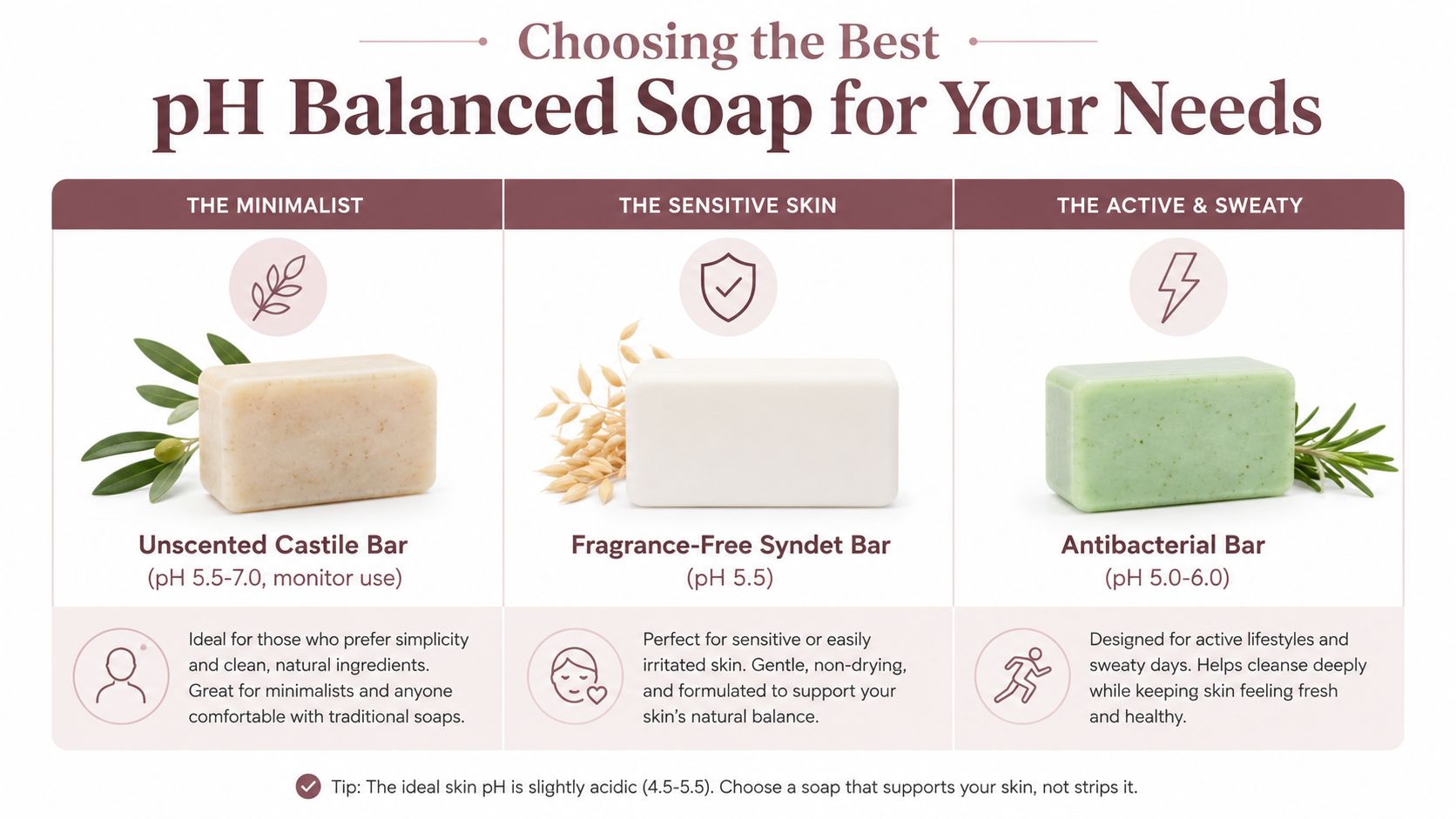
“Organic” and “plant-based” can appeal to shoppers who want a particular sourcing philosophy, but neither term proves pH compatibility or freedom from irritants. If you're comparing body products more broadly, this review of a luxury body wash for less may help you think about texture and bathing preferences, though vulvar use still requires a separate ingredient and tolerance check.
The strongest decision rule is simple: choose the least disruptive option that meets the actual cleansing need. Sometimes that's a syndet. Sometimes it's a dedicated fragrance-free external wash. Sometimes the best product is no cleanser at all.
Frequently Asked Questions About pH Balanced Soap
Is pH balanced soap safe during pregnancy or postpartum?
A low-pH, fragrance-free cleanser used externally may be tolerated, but pregnancy and postpartum care can involve unusual sensitivity, healing tissue, or medical restrictions. Use the smallest amount needed and ask a healthcare professional before introducing a new product, especially if you have pain, tearing, itching, discharge, or burning.
Can I use it inside the vagina?
No. Soap belongs on external skin only. The vagina is self-maintaining, and internal washing can disrupt its microbial and chemical environment.
How long does the microbiome take to recover?
There isn't a dependable recovery timetable that applies to everyone. The practical response is to stop the suspected irritant, simplify cleansing, and seek care if symptoms continue or recur.
What if a pH balanced product still stings?
Stop using it. “Balanced” doesn't guarantee that every ingredient suits your skin, and stinging can signal irritation, allergy, broken skin, or an unrelated condition. Don't keep testing the product on a sensitive area.
Momotaro Apotheca offers plant-based, pH-conscious vulvovaginal care, including topical salves, oils, hydrosols, and curated routines for concerns such as dryness and irritation. Visit Momotaro Apotheca to review the formulas and choose a routine that complements a gentle, external-only cleansing approach.


