


How to Make It Smell Good Down There Without pH Disruption
The fastest way to make it smell “better” down there is usually the wrong one. Perfume, deodorizing sprays, douches, and scented washes can cover a problem for a few minutes, then leave the vulva more irritated and the vaginal microbiome more vulnerable than before. A healthier goal is simpler, keep the area comfortable, dry, and pH-aware so your body's own self-cleaning system can do its job.
Table of Contents
- Why Your Vagina Is Not Supposed to Smell Like Flowers
- What Actually Causes Vulvovaginal Odor
- Daily Hygiene Habits That Support a Healthy Scent
- Which Products Help and Which Ones Make Odor Worse
- Lifestyle Adjustments That Reduce Odor Triggers
- When Vaginal Odor Means You Should See a Clinician
Why Your Vagina Is Not Supposed to Smell Like Flowers
A healthy vagina doesn't smell like a bouquet, a candy shop, or a body spray aisle. It has its own normal scent, sometimes musky, tangy, earthy, or just distinctly human, and that's not a flaw. The pressure to make it smell like flowers has pushed a lot of people toward products that promise freshness while creating more irritation.
A healthy scent is usually a sign of balance
The vagina normally maintains a strongly acidic environment, with a typical pH around 3.8 to 5.0 in reproductive-age women, which helps support Lactobacillus-dominant flora and suppress odor-causing overgrowth. When that acidity gets disrupted, odor can change too, and a rise above 4.5 makes bacterial vaginosis more likely, according to clinical guidance summarized by Cleveland Clinic's vaginal odor resource. BV is one of the most common causes of vaginal odor worldwide, so a “fresh scent” problem is often really a pH and microbiome problem. See the clinical overview on vaginal odor and pH balance.
That's why “smelling good” is not about making the vagina scentless. It's about keeping the vulva clean, dry, and unbothered so the natural ecosystem stays steady.
The myth of masking usually backfires
Fragranced products can make people feel cleaner for a moment, but the vulvar skin is delicate. Perfumed formulas can irritate tissue and disrupt the balance that keeps odor in check. Once that balance shifts, the body may answer with more smell, more sensitivity, or both.
Practical rule: if a product is designed to make the vagina smell like a candle, it's probably solving the wrong problem.
That mindset shift matters. Once you stop chasing floral scent, it becomes much easier to choose routines that support comfort instead of fighting your body.
What Actually Causes Vulvovaginal Odor
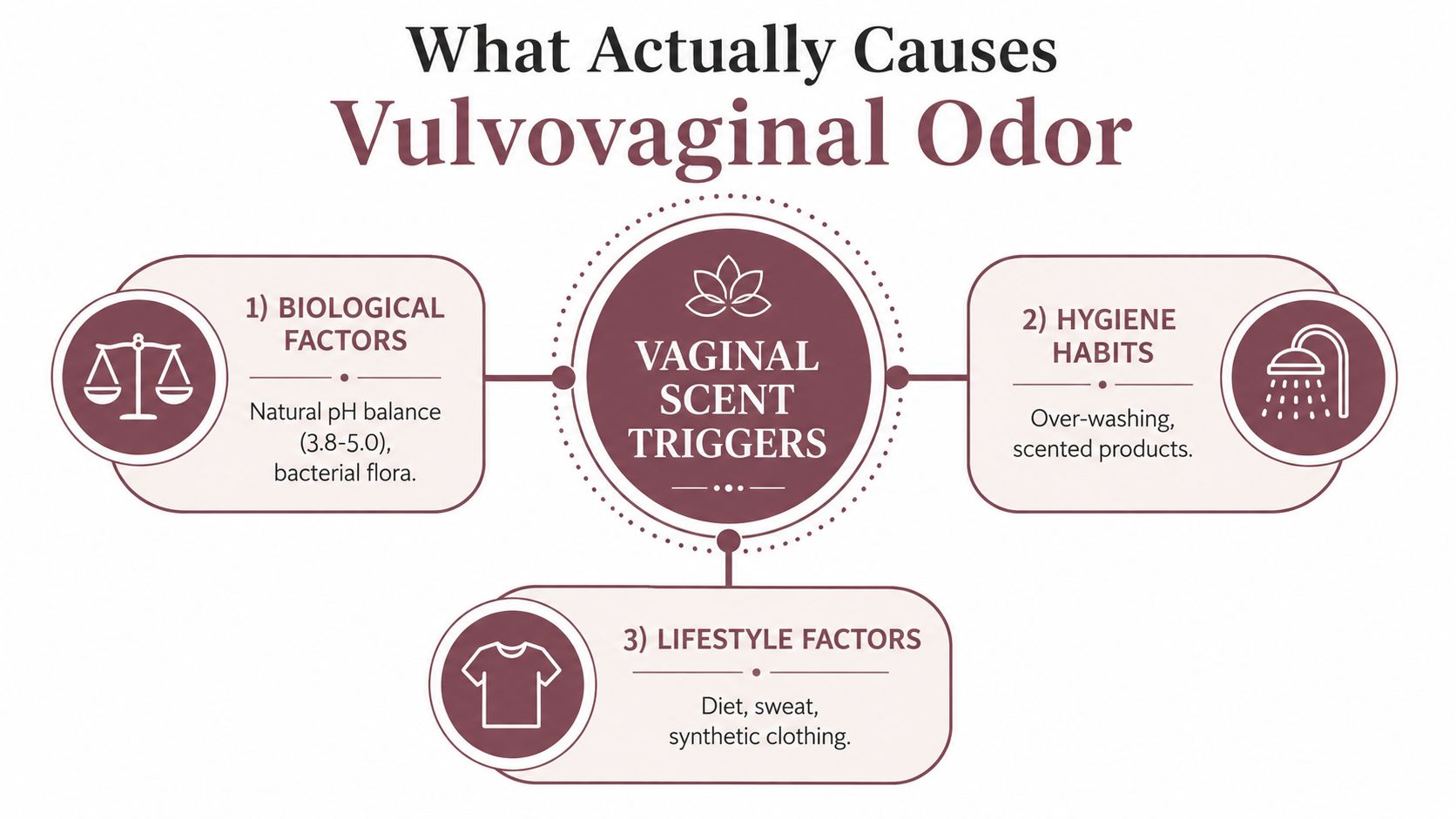
Odor changes for different reasons, and not all of them mean something is wrong. Some shifts are temporary and tied to sex, menstruation, sweat, or trapped moisture. Others reflect an imbalance that deserves attention, especially when the scent is strong, persistent, or paired with itching or unusual discharge.
Biology sets the baseline
The vaginal environment is meant to stay acidic, and that acidity helps keep the microbiome in a Lactobacillus-dominant state. When the balance holds, odor-causing overgrowth is less likely. When it doesn't, the smell can turn sharper, fishier, more sour, or just noticeably different.
That's the part many miss when they ask how to make it smell good down there. The answer starts with the ecosystem, not the fragrance drawer. A quick search can send people down a rabbit hole, so if you want a broader symptom guide, this article on what different vaginal smells can reveal about health can help you separate normal variation from warning signs.
Hygiene habits and lifestyle factors change the scent
Menstrual blood can temporarily alter smell, especially if pads, tampons, or liners stay on too long. Sex can also shift odor, because semen can raise pH and change the way the vagina smells for a while. Sweat, damp underwear, tight synthetic fabrics, and lingering moisture all make odor more noticeable because they create a place where bacteria can thrive.
A strong or unusual smell isn't automatically a hygiene failure. Clinically, it's often treated as a clue that something inside the vagina has changed, not as proof that someone “didn't wash enough.” That's why scented products usually miss the point. They don't fix the biology, and they can make the odor cycle harder to break.
The first product category to think about is also the simplest: anything that respects the acidic environment instead of pushing against it. If you're looking at a support routine, the Complete Infection Defense Kit is one example of a plant-based bundle that combines internal and external support for BV, yeast, and pH imbalance, but the bigger lesson is to look for pH-conscious care rather than perfumed cover-ups.
Daily Hygiene Habits That Support a Healthy Scent
Keep the cleaning external
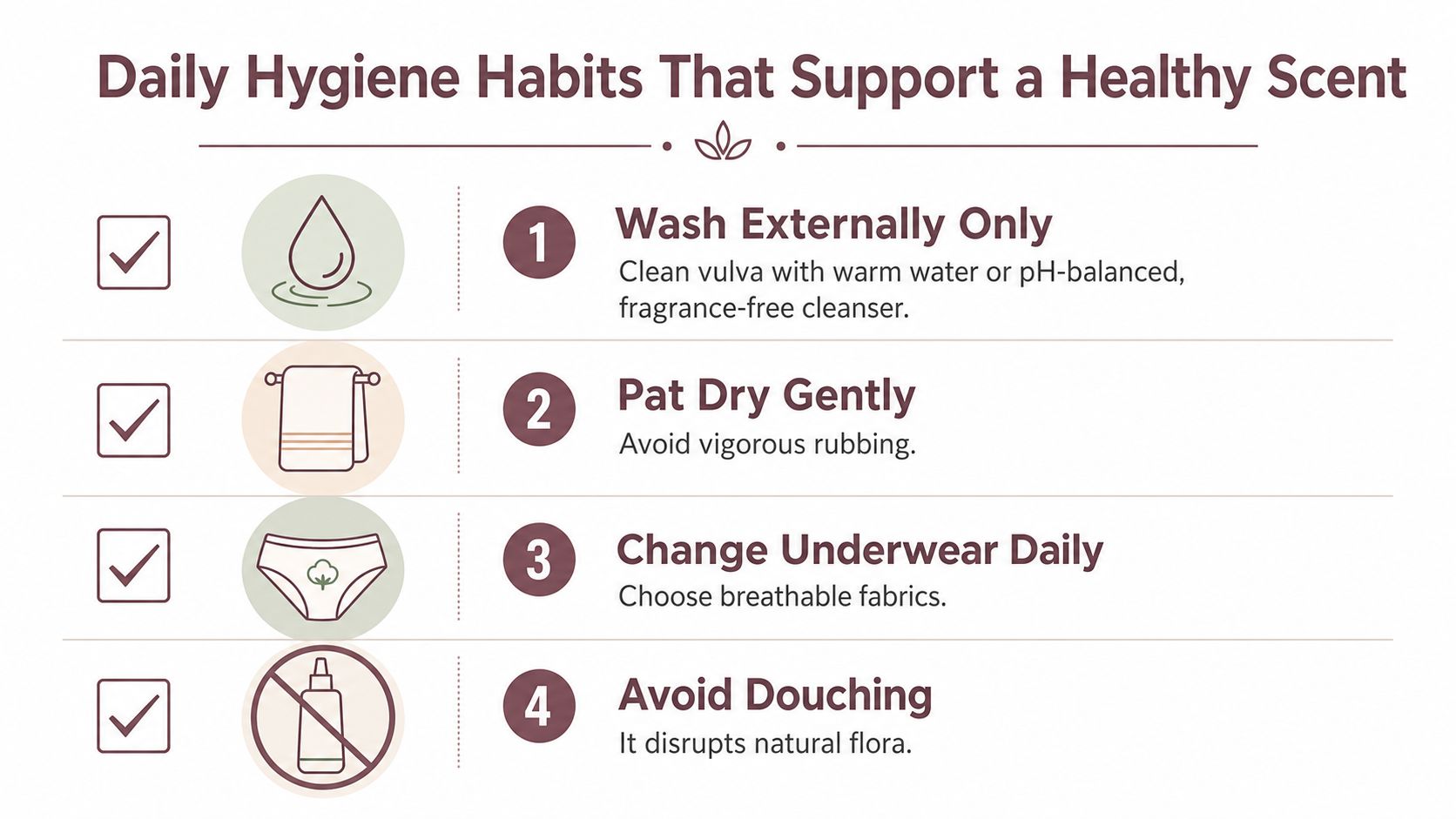
The vulva, the external folds and skin, is the part that needs washing. The vagina itself does not need internal cleansing. Warm water is enough for many people, and if you prefer a cleanser, use one that's pH-conscious and fragrance-free. The goal is to remove sweat, discharge, and residue without stripping the protective environment.
Clean the outside gently, leave the inside alone, and let the vagina do what it was built to do.
That rule cuts through most of the confusion. The more aggressively people scrub, scrub again, or reach for “feminine wash” marketing, the more likely they are to irritate the tissue they're trying to freshen.
Dry completely and change out of moisture fast
After washing, pat dry instead of rubbing. Rubbing can irritate already sensitive skin, especially if there's friction from underwear or shaving. Dryness matters because trapped moisture makes odor more noticeable and can feed bacterial overgrowth.
The same logic applies after sweating, swimming, sex, or exercise. Change out of wet or tight clothes promptly, and don't let liners or pads sit around longer than needed during menstruation. Frequent product changes limit trapped moisture and reduce the chance that scent gets stronger over the course of the day.
Stop doing the things that make the problem worse
Douching is the clearest example. It strips away protective bacteria and raises pH, which can make odor worse over time rather than better. Perfumed wipes, sprays, and deodorants can trigger irritation for the same reason.
If you shave, use a gentle formula that doesn't leave the skin stripped or stinging. A useful, non-intimate example is ALODERMA's guide to gentle shaving cream, because the same sensitive-skin logic applies here, fewer irritants, less friction, less fallout.
Which Products Help and Which Ones Make Odor Worse
Intimate care marketing loves the word “fresh,” but the label often matters less than the formula. A product that smells pretty can still make odor worse if it changes pH, adds fragrance, or irritates vulvar tissue. The safest way to judge a product is to ask whether it supports the microbiome or tries to overpower it.
Helpful products respect the tissue
Fragrance-free, pH-conscious cleansers are useful because they clean without flooding the area with perfume or harsh surfactants. Unscented wipes can help after sweating or during travel, as long as they're gentle and not packed with extra fragrance. Plant-based external balms can also be useful when irritation is part of the picture, because comfort often reduces the cycle of rubbing, scratching, and more irritation.
If you want a concrete example, Momotaro Apotheca's ph balance wash is positioned around pH-conscious external care rather than internal deodorizing. That distinction matters, because the goal is support, not masking.
Harmful products usually try to deodorize the vagina itself
Douches are the most obvious problem, but scented sprays and antibacterial soaps can be just as disruptive. They're built to cover or erase odor, not to preserve the environment that prevents odor from returning. Powders can also trap moisture or irritate skin, especially in warm areas where sweat and friction are already present.
Here's a simple way to sort the shelf:
- Choose: fragrance-free external cleansers, unscented wipes, and plant-based products made for the vulva rather than the inside of the vagina.
- Avoid: douches, scented sprays, antibacterial soaps, and anything that promises to make the vagina smell like perfume.
- Question carefully: any product with heavy fragrance or a vague “feminine freshness” claim.
- Use only when needed: supportive balms or oils for external comfort, not as a substitute for diagnosis when symptoms are persistent.
For a clinician-centered take on what to do when symptoms point to imbalance, the BV care from XO clinicians resource is useful because it reinforces that odor isn't always a hygiene issue. That's the key mental reset, choose products that cooperate with pH, not products that try to fight the body.
Lifestyle Adjustments That Reduce Odor Triggers
What you wear, how fast you change, and how you handle sweat all matter more than you might think. Vulvovaginal odor tends to show up when moisture stays around too long or when the microbiome gets nudged off balance by friction, heat, or leftover fluids. Small routine shifts can make a real difference without turning your life into a regimen.
Clothing and moisture control do a lot of the work
Breathable underwear helps the area stay drier, and that matters because moisture is one of the easiest ways to invite odor. Tight synthetic leggings or underwear can trap heat and sweat, so it's smarter to switch into something looser when you can. This is especially helpful after workouts, long commutes, or any day that involves a lot of sitting and sweating.
Food, hormones, and routines all show up in scent
People often notice changes around menstruation, after sex, or during life stages when hormones shift. Those changes don't always mean disease, but they do mean the tissue may need a little more support and less friction. A consistent routine matters more than occasional aggressive “refreshing.”
For broader microbiome support, some people also build in probiotic habits and gentler self-care. If you want a plant-based overview of microbiome-centered routines, the ultimate guide to maintaining a healthy vaginal microbiome fits well with a low-irritation approach.
Post-sex and post-exercise habits are especially useful
Urinating soon after sex is a practical step for urinary tract health, and it also supports a cleaner-feeling routine after intercourse. Changing out of sweaty clothes quickly matters just as much after exercise. If you're building a plant-based care routine, the best products are the ones that fit those moments, external comfort after friction, moisture control after sweating, and no fragrance that competes with the body's own balance.
The point isn't perfection. It's consistency, clean, dry, breathable, and low-irritation most of the time.
When Vaginal Odor Means You Should See a Clinician
Normal scent variation comes and goes. Clinically concerning odor tends to be stronger, persistent, or paired with other symptoms, and that's when self-care stops being enough. A fishy odor, especially after sex, often points clinicians toward bacterial vaginosis. A yeasty or bread-like smell with itching can point toward a yeast infection. A foul smell with unusual discharge raises concern for trichomoniasis or another infection that needs proper testing.
If the odor keeps returning, worsens, or comes with burning, itching, pain, or discharge that feels clearly off for your body, don't keep trying to mask it with perfumes. Ask for an exam and appropriate testing so the cause gets treated directly. For a practical consumer-level overview of OTC options to compare with clinician advice, this FindMyScript yeast infection info resource can help you understand why symptom-matching matters.
Supportive plant-based care can still have a role while you're waiting for answers, especially for external comfort. It just shouldn't replace diagnosis when symptoms keep coming back or smell patterns change in a way that's clearly not your normal.
If you want plant-based vulvovaginal care that keeps pH and sensitivity in mind, visit Momotaro Apotheca for external balms, microbiome-conscious support, and routines designed around comfort rather than fragrance. Their product lineup is built for people who want to support the body's natural balance instead of masking it.


