


Can Alcohol Cause Yeast Infections: Drinking & Yeast
You have a drink with friends, head home, and then the thought shows up. Not about the hangover. About the itching, irritation, or that familiar sense that your vaginal balance may be about to tip in the wrong direction.
That worry isn't irrational, and it isn't vain. A lot of people notice a pattern between drinking and yeast symptoms, but most explanations stop at “alcohol has sugar, and sugar feeds yeast.” That's only part of the story. If you're prone to yeast infections, alcohol can raise risk through several overlapping pathways, and understanding those pathways makes prevention much more practical.
The short answer is yes. Can alcohol cause yeast infections? In susceptible people, it can absolutely help trigger one. Not because a glass of wine somehow “contains enough alcohol to kill yeast” inside the body, but because drinking can weaken the systems that normally keep Candida in check.
Table of Contents
- That Glass of Wine and the Worry That Follows
- How Alcohol Creates a Welcome Mat for Yeast
- Are Some Alcoholic Drinks Worse Than Others
- Beyond Alcohol Other Yeast Infection Risk Factors
- Your Proactive Plan for Preventing Yeast Infections
- Frequently Asked Questions About Alcohol and Vaginal Health
That Glass of Wine and the Worry That Follows
You have a drink at dinner, enjoy the evening, and think nothing of it. Then the next day, or the day after, you notice itching, irritation, or discharge and start doing the familiar mental math. Was it the wine. The cocktail. The sugary mixer. Or is the timing a coincidence?
That question is reasonable.
In practice, alcohol can be part of the picture for some people, especially if symptoms tend to show up after weekends, vacations, celebrations, or any stretch of more frequent drinking. I hear this pattern often in vulvovaginal care. A patient is not necessarily drinking heavily, but their body still reacts as if the terrain shifted.
A yeast infection happens when Candida overgrows beyond what the vaginal environment can comfortably keep in check. Alcohol is rarely the whole story. More often, it acts like a nudge in the wrong direction in a body that is already somewhat vulnerable because of stress, cycle changes, recent antibiotics, blood sugar swings, or a microbiome that is less stable than usual.
That is why the usual one-line explanation, “sugar feeds yeast,” feels incomplete. Sugar matters, but it is only one pathway. Alcohol can also weaken short-term immune defenses and, with some drinks, disturb the broader microbial balance in ways that make yeast more likely to gain ground. If blood sugar regulation is already an issue, the effect can be stronger. This related piece on how sugar affects the body through several pathways, not just one obvious one helps explain why the simple version misses so much.
You are not overreacting if you have noticed a pattern.
The more useful question is whether alcohol is acting as a trigger for your body, not whether it causes every yeast infection in every person. For many people, that distinction changes everything. It turns vague worry into something more practical. You can start looking at dose, drink type, timing, and your other risk factors instead of blaming yourself or dismissing what your body keeps showing you.
How Alcohol Creates a Welcome Mat for Yeast
A lot of people ask a fair question here: if alcohol kills germs on a countertop, why would drinking it make yeast problems more likely? Because the vagina is not a counter that needs sterilizing. It is a living ecosystem, and alcohol can disturb that ecosystem in several ways at once.
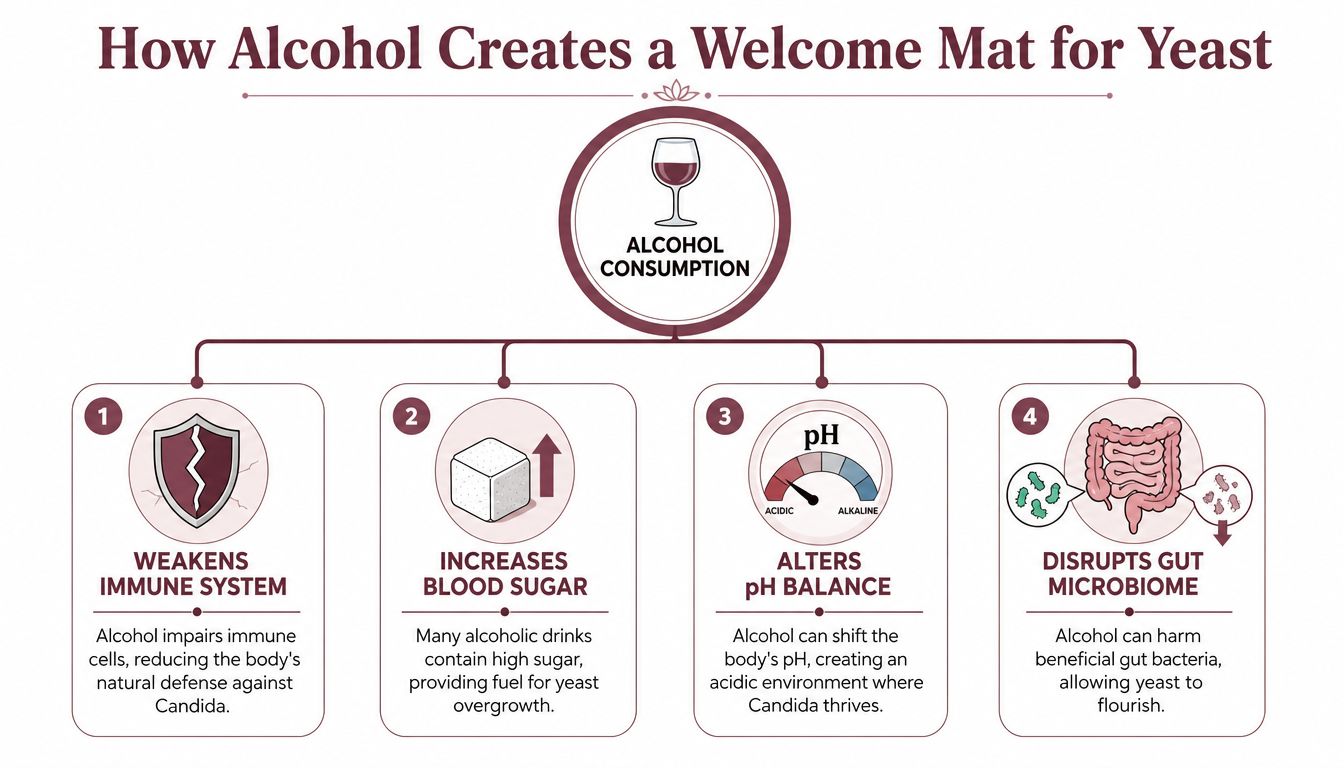
It does not kill yeast inside the body
Drinking alcohol does not disinfect the vagina, the gut, or the bloodstream. What it can do is shift the conditions that usually keep Candida in check. In practice, that matters far more than the disinfectant idea.
Candida is often present without causing symptoms. Trouble starts when the balance around it changes. Alcohol can change that balance through three main pathways, and that is the part many simplified articles miss.
Three pathways matter most
The first is immune suppression. Even short-term alcohol intake can blunt parts of the immune response that normally help control Candida. If your immune system works like a security team, alcohol can leave fewer guards actively watching the door for a while. That does not guarantee an infection, but it can make overgrowth easier if you are already under strain from stress, poor sleep, cycle-related changes, or a recent illness.
The second is blood sugar disruption. This is the pathway people usually hear about, but the underlying issue is broader than “sugar feeds yeast.” Sweet cocktails, mixers, and dessert drinks can push blood sugar up quickly. Alcohol can also make glucose regulation less steady, especially in people who already notice crashes, cravings, or insulin resistance. That matters because yeast tends to do better in a less stable metabolic environment. This explanation of the multiple ways sugar can stress the body, not just the obvious ones is a helpful companion if this pattern sounds familiar.
The third is microbiome disruption, including a less discussed issue with some fermented drinks. The vagina and gut rely on protective bacteria to keep yeast from taking over. Alcohol can interfere with that balance. Beer and wine may also be more problematic for some people because they are fermented products, and some patients report they react differently to them than they do to plain spirits. In clinic-style counseling, the conversation then gets more precise. The question is not only how much you drank. It is also what type, how often, and what else was happening in your body that week.
Practical rule: If symptoms reliably show up after drinking, treat alcohol as a meaningful trigger, not a coincidence.
That is why one person can drink occasionally and notice nothing, while another gets itching or irritation after a couple of glasses during a stressful week. The alcohol is only part of the story. Your baseline resilience, blood sugar stability, immune status, and microbial balance shape the outcome.
Are Some Alcoholic Drinks Worse Than Others
Yes, some drinks are more likely to create trouble. The difference isn't just taste or alcohol content. It's the overall package: sugar, fermentation, and what else comes along for the ride.
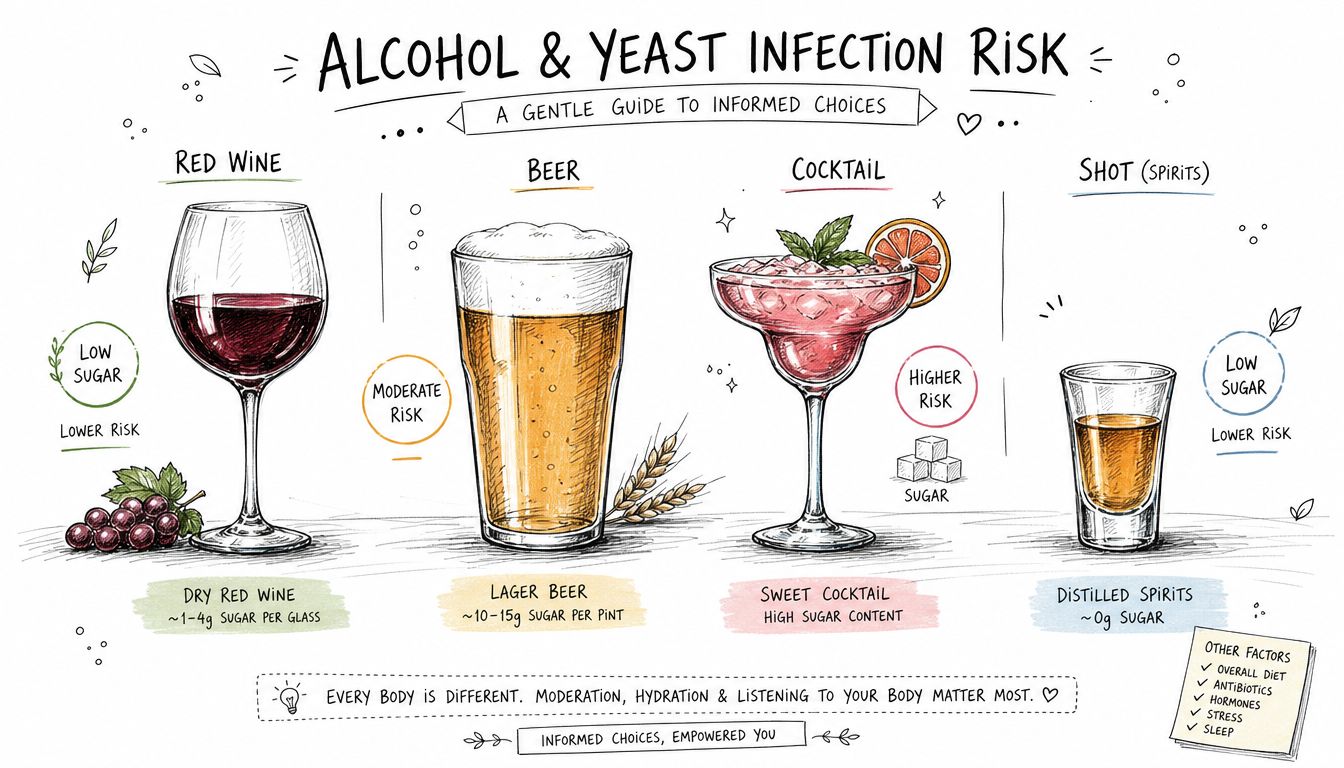
The higher risk end of the spectrum
Sweet cocktails are an obvious problem for many people. They combine alcohol with syrups, juice, soda, or liqueurs, which can sharply increase the sugar load. Beer and wine can also be more challenging for some bodies, and not only because they're fermented.
One under-discussed issue is the mycotoxin and mold contamination gap. Existing content often says “alcohol feeds yeast” but rarely addresses that wine and beer may contain Saccharomyces cerevisiae and mold or mycotoxins that could worsen Candida overgrowth. That nuance is described in this discussion of wine, beer, and mold-related Candida flare concerns. It isn't mainstream counseling, but it's a useful lens when someone says, “I do much worse with wine than with other drinks.”
For seasonal patterns, there's also a practical reality. Celebrations often stack multiple triggers together: richer food, more sugar, less sleep, stress, and more alcohol. That's one reason many people feel more symptomatic around travel and holidays. This guide on why yeast infections or BV seem to love the holidays captures that cluster well.
Lower risk does not mean no risk
Clear spirits such as vodka or gin, mixed with unsweetened soda water or another low-sugar mixer, are often the lower-risk choice for someone who doesn't want to abstain completely. They don't carry the same obvious sugar burden as many cocktails, and they may avoid some of the fermentation-related issues people notice with beer and wine.
A simple way to think about it:
| Drink type | Common concern | Practical takeaway |
|---|---|---|
| Sweet cocktails | High sugar load | Most likely to trigger symptoms in sugar-sensitive people |
| Beer | Fermentation plus possible yeast-related sensitivity | Often worth limiting if flare-ups are recurrent |
| Wine | Fermentation, and for some people possible mold or mycotoxin sensitivity | Common suspect when symptoms repeatedly follow wine nights |
| Clear spirits with unsweetened mixers | Lower sugar exposure | Often a better harm-reduction option, not a free pass |
The goal isn't perfection. It's pattern recognition. If one category reliably precedes symptoms, trust that signal and adjust accordingly.
Beyond Alcohol Other Yeast Infection Risk Factors
Alcohol rarely acts alone. In practice, yeast risk is often cumulative. A drink that's tolerated easily on a calm, well-rested week may lead to symptoms when it lands on top of antibiotics, poor sleep, a high-sugar weekend, tight synthetic clothing, or sex that leaves tissue irritated.
Yeast risk is usually cumulative
When I counsel patients on recurrent symptoms, I ask them to think less about one “bad” item and more about stacked exposures. Candida takes advantage when multiple protective layers thin out at once.
A short list of common contributors includes:
- Antibiotic use: These can reduce the bacteria that normally help keep yeast in balance.
- Sleep loss and stress: Both can leave immune function less resilient.
- High-sugar eating patterns: These often travel with drinking and can add metabolic fuel.
- Tight or non-breathable clothing: Heat and moisture don't cause yeast by themselves, but they can make an already irritated environment more hospitable.
- Hormonal shifts: Some people notice more vulnerability at specific points in their cycle.
If you're trying to optimise female gut and vaginal health, it helps to look at the whole terrain rather than chasing one culprit at a time.
Yeast infection and BV are not the same thing
Loose discussions of alcohol in “vaginal health” articles often lead people to conclude that every post-drinking symptom must be yeast. However, this may not be the case. Bacterial vaginosis, or BV, is a different imbalance with a different mechanism and often a different feel.
Alcohol has an independent association with BV risk, with a prevalence ratio of 1.25 (95% CI: 1.13–1.37) linked to intercourse in the context of alcohol use, according to this PMC review on alcohol use and bacterial vaginosis. That's separate from Candida overgrowth. So if symptoms are more about odor, thin discharge, or a pattern after sex rather than classic itching and thick discharge, don't assume yeast and self-treat blindly.
Mislabeling BV as yeast is one reason people get stuck in a cycle of “nothing works.”
Your Proactive Plan for Preventing Yeast Infections
A common pattern goes like this. You have a couple of drinks, sleep poorly, wake up dry and irritated, then spend the next day wondering whether a mild itch is nothing or the start of another flare. Prevention is about interrupting that chain early, before irritation, blood sugar swings, immune strain, and microbiome disruption pile up.
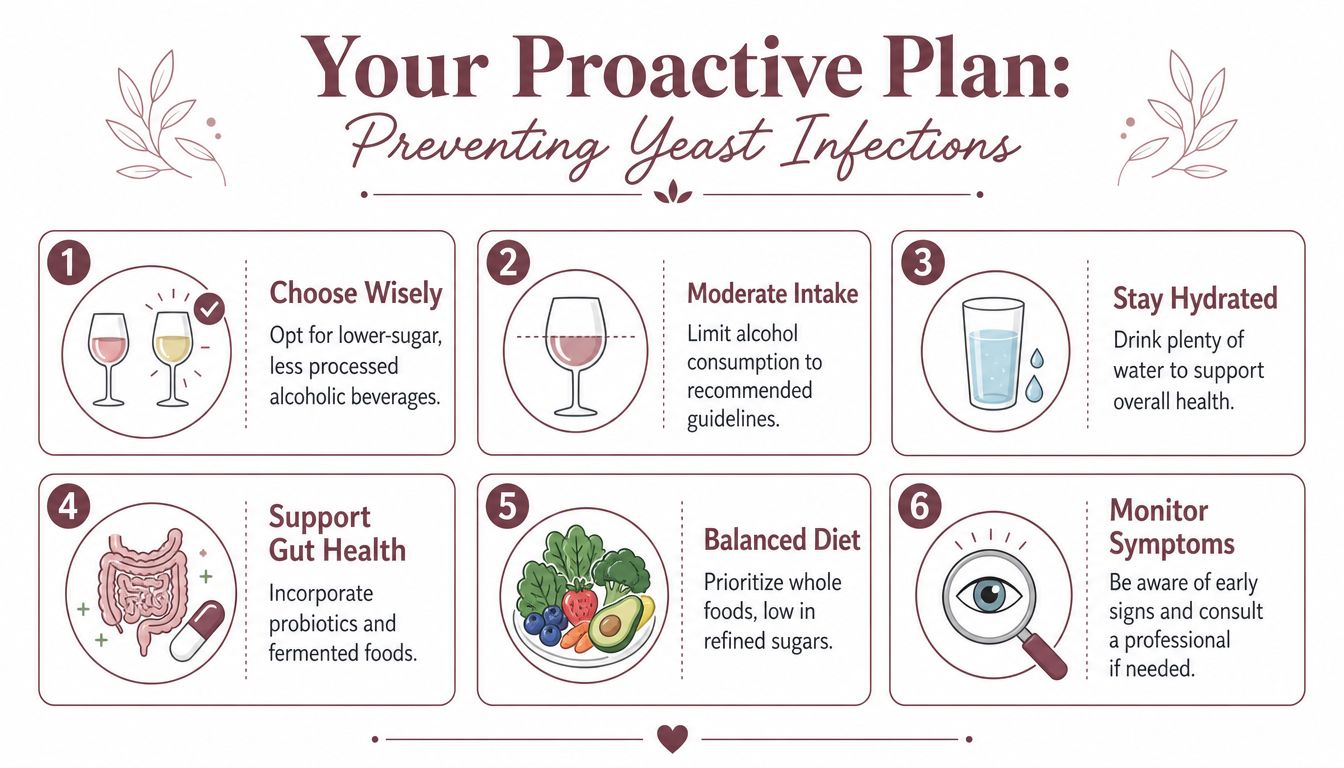
What helps before and during drinking
Start with pattern recognition, not perfection. If symptoms tend to show up after sangria, sweet cocktails, or multiple glasses of wine, that history matters more than any “best alcohol” list online.
The goal is to lower exposure across the three pathways discussed earlier. Keep blood sugar steadier, avoid stacking immune stress, and be selective with drinks that seem to aggravate your system. For some people that means choosing a lower-sugar drink. For others, it means drinking less often, spacing drinks out, or skipping the beverages that repeatedly line up with symptoms.
A practical plan looks like this:
- Eat before you drink: A meal with protein, fat, and fiber helps blunt the rapid rise and fall in blood sugar that can follow alcohol on an empty stomach.
- Alternate alcohol with water: Water does not neutralize alcohol, but it can reduce the dehydration and tissue irritation that often make the next day feel worse.
- Be careful with sugary mixers: Juice-heavy cocktails, frozen drinks, and dessert-style alcohol can be a harder hit if blood sugar swings are part of your trigger pattern.
- Watch your personal repeat offenders: Some people do worse with beer or wine than with spirits, possibly because ingredients beyond alcohol itself can affect the gut and vaginal microbiome.
- Skip irritating vulvar products that night: Scented wipes, fragranced washes, and alcohol-heavy products can add surface irritation to tissue that is already under stress.
For readers who want broader clean beverage gut health insights, it helps to view prevention through both the gut and vaginal microbiome, not just sugar content alone.
What helps after symptoms start
Once symptoms begin, keep the response simple. More alcohol usually adds friction at the exact moment your body is trying to restore balance.
Use this sequence:
- Pause drinking for a few days. This removes one of the most common aggravators while you assess what is happening.
- Avoid self-diagnosing too quickly. Itching, burning, discharge changes, and irritation are not always yeast. Recurrent symptoms deserve a proper check.
- Support recovery habits. Hydrate, wear loose breathable clothing, and keep vulvar care bland and fragrance-free.
- Rebuild thoughtfully if flares are recurrent. This guide to probiotics for optimal vaginal health can help if you are building a longer-term prevention routine.
- Track the full context. Note the drink type, amount, timing in your cycle, recent antibiotics, sex, sleep, and stress. The trigger is often the combination, not alcohol alone.
One drink that is “fine” for a friend may be a reliable trigger for you.
That is why the best prevention plan is usually specific and a little boring. Fewer high-sugar drinks. Fewer irritants. Better timing with food. More attention to your own pattern, especially if certain beverages seem to trigger symptoms through more than one pathway at once.
Frequently Asked Questions About Alcohol and Vaginal Health
Does topical alcohol in products cause yeast infections
Topical alcohol usually causes trouble through irritation, not by triggering the same internal effects as drinking. Alcohol-heavy wipes, cleansers, sprays, and fragranced products can dry the vulvar skin barrier, and irritated tissue often burns, stings, or itches in ways that feel a lot like infection.
That overlap matters.
If symptoms start after using a new product, stop the product first and keep care plain. Use lukewarm water, skip fragrance, and choose products made for sensitive vulvar skin. In clinic, I often see people treat “yeast” repeatedly when the bigger issue is contact irritation that keeps the area inflamed.
Can you keep drinking while treating a yeast infection
Taking a break from alcohol is the safer call while symptoms are active. Alcohol can worsen dehydration, increase local irritation, and keep pressure on the same three pathways discussed earlier: immune response, blood sugar swings, and microbiome disruption. That does not guarantee a longer infection in every case, but it can make recovery less predictable.
There is also a practical medication issue. Some antifungal treatments and some oral antibiotics used when the diagnosis turns out not to be yeast can interact poorly with alcohol, or make nausea, flushing, or fatigue more noticeable. If you already feel inflamed and uncomfortable, adding a drink rarely improves the situation.
If you're looking for supportive lifestyle ideas alongside treatment, these natural ways to feel better fast may help you think more broadly about recovery habits.
How quickly does risk drop after you stop drinking
It depends on what alcohol was doing in your body. If your main issue is high-sugar cocktails causing glucose spikes, risk may settle fairly quickly once those drinks stop. If the pattern is more about repeated heavy drinking, poor sleep, stress, or a disrupted gut and vaginal microbiome, improvement often takes longer.
This is one reason symptom tracking helps. Write down the drink type, amount, whether you drank with food, where you were in your cycle, and whether antibiotics, sex, or stress were also in the picture. A sweet mixed drink, a run of poor sleep, and recent antibiotics create a very different risk pattern than one small glass of dry wine with dinner.
Does one type of alcohol matter more if I keep getting yeast infections
Yes. For some people, the problem is not “alcohol” as one single category. Sugary drinks can push blood sugar higher. Heavier drinking can blunt immune defenses. Certain drinks may also be harder on the gut microbiome, especially if you already react poorly to fermented or mold-prone foods.
That is why blanket advice often falls short. If symptoms repeatedly follow one drink category, such as sweet cocktails, cider, beer, or dessert wine, treat that pattern as useful information rather than bad luck.
If I get symptoms after drinking, is it definitely yeast
No. Yeast is common, but it is not the only cause of itching, burning, discharge changes, or vulvar irritation. Bacterial vaginosis, contact dermatitis, friction, semen sensitivity, and some skin conditions can all look similar at first.
Recurrent self-treatment is where people get stuck. If the same symptoms keep returning after alcohol, especially if there is odor, pelvic pain, spotting, or a new sexual partner, get checked instead of guessing. A correct diagnosis saves time and usually shortens the whole ordeal.
If you're building a gentler vulvovaginal care routine, Momotaro Apotheca offers certified organic, alcohol-free support for common concerns like irritation, dryness, and recurrent imbalance. Their education-first approach and pH-conscious formulations make them a thoughtful option for people who want daily care that respects sensitive tissue.


