


First Period Postpartum What to Expect and When
You're a few weeks postpartum, standing in the bathroom and trying to decide what you're seeing. The bleeding had faded, then a fresh red flow appeared. Is it your first period, leftover lochia, or just another hormonal change? If you're breastfeeding, the uncertainty can last much longer, and your body may not follow the timeline you expected.
The first period postpartum isn't a single date on the calendar. It's one sign that your reproductive hormones are moving out of pregnancy and early postpartum patterns, but that shift can happen at very different times. Learning to recognize patterns, rather than waiting for one “normal” day, can make the experience much less confusing.
Table of Contents
- Understanding Your First Period After Birth
- How to Tell Lochia Anovulatory Bleeding and a True Period Apart
- When Your First Postpartum Period Is Likely to Return
- How Your First Postpartum Period May Feel Different
- Gentle Ways to Manage Flow Comfort and Vulvovaginal Care
- Fertility Breastfeeding and What the First Period Means for Contraception
- Tracking Your Cycle and Knowing When to Seek Care
Understanding Your First Period After Birth
Lochia and a true period can look similar, but they signal different processes. Reading the pattern helps you tell whether your body is still healing, releasing hormones without ovulating, or returning to a menstrual cycle.
Lochia is the uterus clearing blood, mucus, and tissue after birth. It often shifts from bright red to pink, brown, or pale discharge as healing continues. A later red flow does not automatically mean menstruation. Hormonal changes can also cause spotting or an irregular bleed before ovulation has returned.
The postpartum uterus works like a room being reset after a major event. It first clears and repairs the space, then hormonal signals begin flickering back on. A true period becomes more likely once an ovulatory cycle has developed, although the first cycles may differ from your pre-pregnancy pattern.
Why there isn't one normal return date
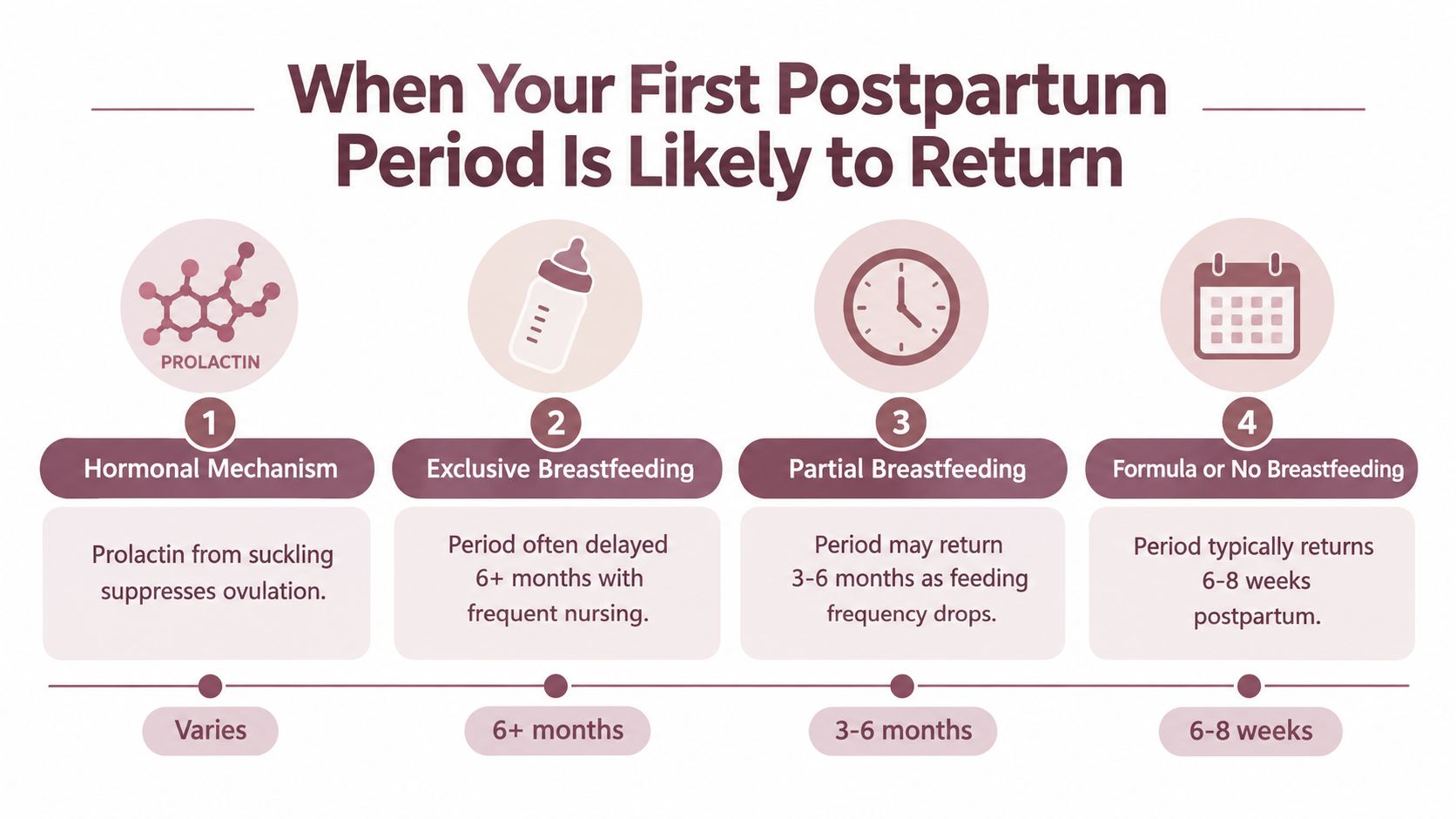
Breastfeeding intensity strongly affects the timing. People who are not lactating often resume ovulation and menstrual function within 6 to 8 weeks postpartum, while breastfeeding can delay menstruation for several months or even more than a year, as described in the clinical review of postpartum ovulation and menstruation.
The timing can shift with feeding frequency, supplementation, pumping, nighttime nursing, and weaning. These changes alter the hormonal signals involved in ovulation, so a later period is not automatically a problem, and an earlier bleed is not automatically a true menstrual cycle.
A simple record can make the pattern easier to read. Note when bleeding starts, how its color and flow change, whether it fades and returns, and how it relates to feeding changes. A broader timeline of cycles from puberty through menopause also shows why reproductive patterns change across life stages.
The first bleed is a milestone, not a universal deadline. Understanding what preceded it gives you more useful information than a calendar date alone.
How to Tell Lochia Anovulatory Bleeding and a True Period Apart
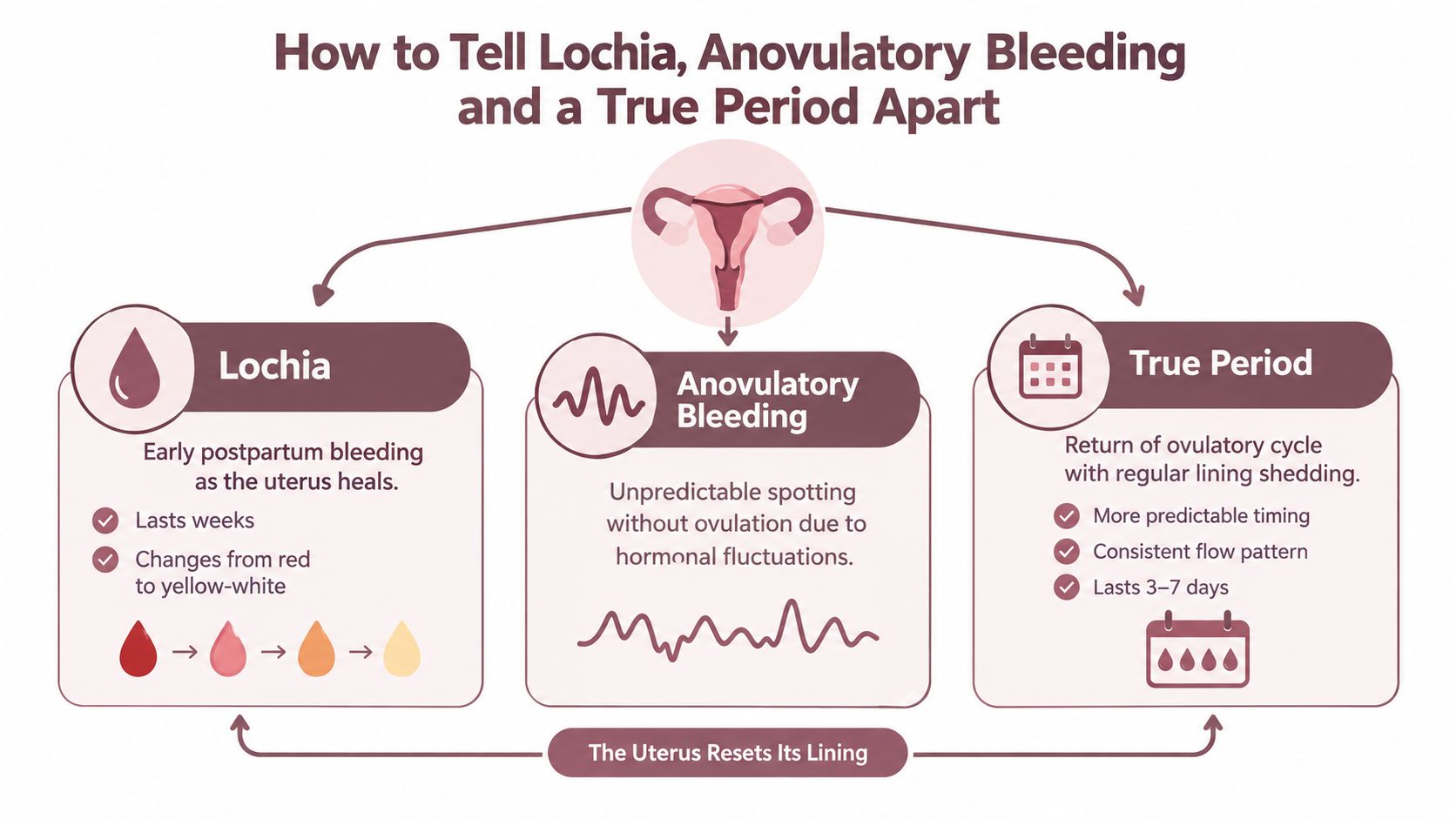
You notice bleeding several weeks after birth and wonder whether your period has returned. Start by reading the pattern, not just the calendar. Postpartum bleeding usually fits one of three categories: lochia, anovulatory bleeding, or a true menstrual period. They can look similar, but they reflect different stages of healing and reproductive recovery.
Lochia is part of healing
Lochia is the flow that follows birth while the uterus clears blood, mucus, and pregnancy-related tissue and repairs the area where the placenta was attached. It may start bright red and fairly heavy, then become lighter, pink, brown, yellowish, or whitish. Activity can make it briefly heavier, much like a healing area that responds when you do more than usual.
Lochia does not require ovulation. It can occur after either a vaginal or cesarean birth, and it does not show that your menstrual cycle has restarted. A sudden increase, strong odor, fever, or worsening pain calls for medical advice rather than an assumption that your period has begun.
Anovulatory bleeding is an uneven hormonal return
Anovulatory bleeding occurs without ovulation. As hormonal communication between the brain, ovaries, and uterus begins to resume, the uterine lining may shed in an irregular way. You might see spotting, a short bleed, or an unpredictable flow that does not settle into a repeating cycle, particularly while breastfeeding.
A bleed alone therefore cannot confirm that fertility has returned. The lining can shed without an egg being released, and ovulation can happen before the first visible period. The restart may happen in stages, rather than all at once.
A true period follows a cycle
A true menstrual period follows a cycle in which the uterine lining builds and then sheds. Signs such as premenstrual mood changes, breast tenderness, pelvic aching, or bleeding that repeats after several weeks may offer clues. The first cycles can still be irregular, so one familiar symptom cannot prove that ovulation occurred.
Practical rule: Read postpartum bleeding as one clue in a larger pattern, not automatic proof that your period or fertility has returned.
Color adds context but cannot identify the cause by itself. This guide to period blood color explains common color changes. Seek clinical assessment if the bleeding is unusually heavy or painful, or if you feel unwell.
When Your First Postpartum Period Is Likely to Return
If you are feeding around the clock and still have no period, that can fit a normal postpartum pattern. If bleeding returns soon after feeds become less frequent, that can also be normal. The useful skill is recognizing the pattern rather than waiting for one fixed date.
Breastfeeding changes the timetable because suckling raises prolactin, the hormone involved in milk production. Higher prolactin can quiet the hormonal signals needed for ovulation. Frequent nursing, including overnight feeds, usually creates stronger suppression than longer gaps or regular supplementation. Feeding intensity shapes a range, not a dependable calendar.
Nonlactating patterns
For people who aren't breastfeeding, menstrual and ovulatory function commonly return within 6 to 8 weeks postpartum, according to the clinical reference on postpartum physiology. A review of earlier studies found that most nonbreastfeeding women had their first period between 45 and 94 days after delivery, with one study reporting an average of 74 days postpartum (review of postpartum menstrual resumption).
These are population patterns, not a schedule for your body. Hormonal recovery can take longer when other postpartum changes are still underway, and a later period does not automatically signal a problem.
Breastfeeding intensity matters
Breastfeeding may delay menstruation for many months or longer. Earlier clinical data found that menstruation returned sooner among nonlactating women than among partly or fully lactating women. By 6 to 12 weeks, some partly lactating women had resumed menstruation, while fewer fully lactating women had done so. The pattern supports a practical point: more frequent milk removal, especially overnight, often keeps ovulation quieter for longer.
A Japanese cohort reported a median return time of 42 weeks overall, with 38 weeks in the normal group and 78 weeks in the delayed group (Japanese cohort study). These figures show why a range is more useful than a promised return date.
What can shift the pattern
A period may appear after feeds become less frequent, formula or expressed milk is added, nighttime nursing changes, or weaning begins. Some breastfeeding parents menstruate early, while others continue without a period long after their feeding pattern has changed. Bodies do not always follow the same sequence.
The key fertility point is that ovulation can precede the first visible bleed. Among breastfeeding women, one study found that first menses was often anovulatory before 6 months, with ovulation patterns changing later (study of ovulation and first menses during breastfeeding). A first bleed therefore cannot serve as your only fertility signal. If pregnancy isn't desired, discuss contraception before bleeding returns.
For additional context, review these measures for supporting fertility and hormone health.
How Your First Postpartum Period May Feel Different
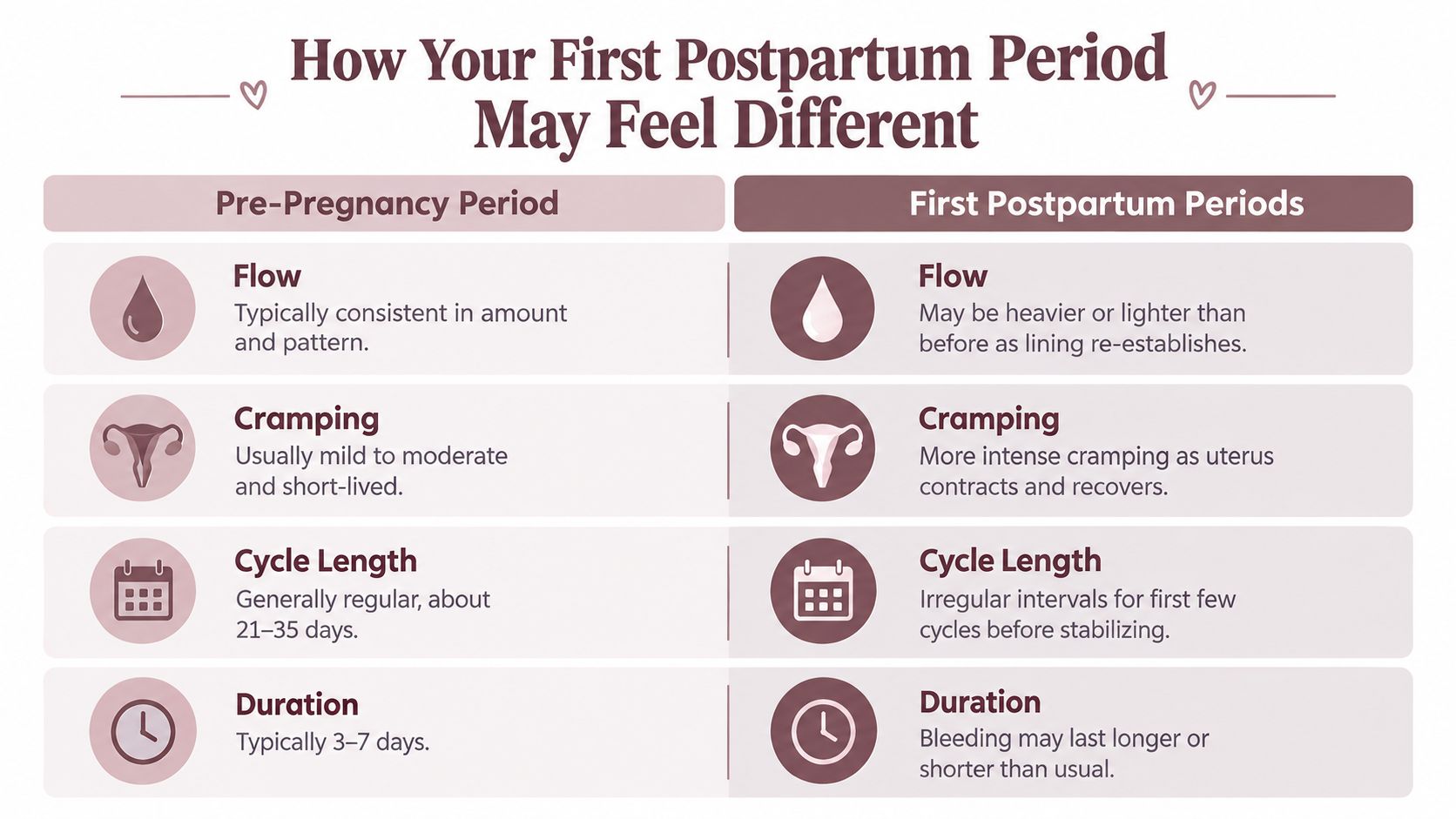
You may notice a bleed that feels familiar, then another that seems entirely different. The first postpartum period is often less like pressing “resume” on an old cycle and more like your body testing its rhythm again. A heavier flow does not automatically signal a problem, and a lighter one does not prove that hormones have settled.
Pregnancy changed the uterus, and its lining is finding a regular cycle again. Hormone shifts can affect cramping, mood, breast sensations, discharge, and the time between bleeds. These clues are useful for pattern recognition, especially when you are sorting a true period from lochia or irregular bleeding.
Flow may be heavier or lighter
The first true period can be heavier, with more pressure, clotting, or pelvic fullness. It can also be lighter, shorter, or mostly spotting, particularly if ovulation has not resumed consistently. Flow alone cannot identify a true period. Consider its timing, whether bleeding follows a pause, and the symptoms around it.
Bleeding that steadily becomes heavier, continues to worsen, or causes dizziness or marked weakness needs medical advice. Severe bleeding should not be dismissed as a normal first cycle.
Cramps can change
Cramps may feel sharper, deeper, or unfamiliar. Menstrual contractions occur while pelvic tissues are still recovering from pregnancy and birth. Breastfeeding can also trigger uterine contractions through hormonal pathways, so sensations may stand out more during or around feeds.
Pain should remain manageable with the comfort measures approved by your clinician. Severe, escalating, one-sided, or unusually persistent pain needs assessment.
Timing may be unpredictable
The first bleed does not always establish a dependable schedule. You might bleed once, wait longer than expected for the next cycle, or notice spotting between periods. Breastfeeding intensity can make this pattern more variable because nursing continues to affect ovulation. As noted earlier, return timing varies widely with feeding patterns.
Use each bleed as one piece of information rather than a final answer. A cycle can be irregular while feeding, sleep, and hormones are still changing, then become more recognizable later.
Your first cycle is information, not a verdict. It helps you learn your postpartum pattern, but it may not match the cycles you have once your body becomes more consistent.
Gentle Ways to Manage Flow Comfort and Vulvovaginal Care
After a long feed, you notice dampness, tenderness, or rubbing from a pad. Postpartum vulvar skin can be more sensitive because of discharge, sweat, stitches, scar tissue, frequent washing, and hormonal dryness. A small, gentle routine often protects the area better than several scented products.

Choose comfort over habit
Choose a product that lets you check the flow without rubbing or holding in moisture. Soft, breathable pads or period underwear may suit healing tissue better than the product you used before pregnancy. If insertion hurts, do not force tampons, cups, or discs. Wait until your clinician confirms that internal products fit your recovery.
Change products when they become damp or uncomfortable. Rinse the vulva with lukewarm water, pat it dry, and wear loose, breathable underwear when possible.
Protect the skin barrier
Skip fragranced washes, deodorant sprays, scented wipes, and vigorous scrubbing. The vagina cleans itself. The vulva generally needs gentle external cleansing, since harsh products can increase dryness and irritation while tissue remains sensitive.
For dry or irritated external skin, a fragrance-free, pH-conscious moisturizer or balm may be more suitable than perfumed lotion. Momotaro Apotheca's Vulvovaginal Dryness Bundle is a plant-based, certified organic option made for intimate skin dryness and irritation. Stop any product that burns, worsens itching, or changes your symptoms.
Make intimacy gradual
Pelvic floor tenderness and vaginal dryness can overlap with your first postpartum period. Begin slowly, use enough lubrication, and treat pain as information rather than a challenge to endure. Ongoing pressure, aching, leaking, or pain deserves a conversation with a qualified pelvic health professional. Ask about non-surgical pelvic floor relief and arrange an assessment if symptoms continue.
Comfort is part of recovery. Burning, rubbing, and painful penetration are signs to pause, not proof that healing is complete.
Fertility Breastfeeding and What the First Period Means for Contraception
You may be feeding your baby around the clock and still release an egg before seeing any period. Fertility can return before you notice, so the first visible bleed is not a reliable starting line for contraception. This applies with exclusive breastfeeding, pumping, combination feeding, or no lactation.
Breastfeeding often delays ovulation because milk removal affects reproductive hormones. Its effect changes with feeding patterns: longer gaps, regular supplementation, and weaning may reduce that suppression. Bleeding can also happen without ovulation, particularly earlier in breastfeeding. Treat postpartum bleeding like a clue in a pattern, not a final answer.
Use a cautious framework
Keep three questions separate:
- Has bleeding returned? Record it, but do not treat bleeding alone as proof of ovulation.
- Could ovulation have occurred? Yes. The first egg can be released before the first period.
- Do you want to avoid pregnancy? If yes, arrange contraception before relying on bleeding or cycle signs.
The lactational amenorrhea method, or LAM, has specific requirements. It is not the same as breastfeeding generally. Its protection depends on strict feeding conditions and a limited postpartum window. Ask your clinician whether your feeding pattern meets those conditions.
Barrier methods, progestin-only contraception, intrauterine devices, implants, and other options can fit different bodies, health histories, bleeding preferences, and feeding plans. A clinician can help you compare when each option can begin and how it fits breastfeeding.
If you track fertility signs, note cervical mucus, bleeding, and changes in nursing frequency. These observations can help you and a qualified provider recognize patterns, but they cannot confirm that ovulation has not occurred. If pregnancy is possible, seek contraceptive advice even when your period has not returned.
Tracking Your Cycle and Knowing When to Seek Care
Bleeding becomes easier to interpret when you record it as a pattern. Note the start date, spotting or flow, how quickly products become saturated, clots, pain, odor, fever, and changes in breastfeeding, pumping, supplementation, or weaning.
A simple postpartum log
- Bleeding: Record color, flow, and whether it follows a lighter interval.
- Symptoms: Note cramps, pelvic pressure, dizziness, fever, or unusual fatigue.
- Clots: Mark whether clots are new, recurring, or increasing.
- Feeding changes: Record longer gaps, missed nighttime feeds, supplementation, or weaning.
Seek medical advice promptly for very heavy bleeding, large or repeated clots, severe or worsening pain, fever, foul-smelling discharge, faintness, or symptoms that feel distinctly wrong for you. If pregnancy is possible, take a pregnancy test and seek advice even without a period.
Irregular cycles can follow changing hormones and feeding patterns. Your notes give a clinician useful context, but they cannot confirm whether ovulation occurred. Bring them to a postpartum, primary care, midwifery, or gynecology appointment, and ask direct questions.
Momotaro Apotheca offers plant-based, certified organic vulvovaginal care for dryness, irritation, and sensitive postpartum skin. Its products and routines address different needs. Visit Momotaro Apotheca for care options and educational resources.


