


Natural Yeast Infection Prevention: Expert Tips for 2026
About 70% to 75% of women experience vulvovaginal candidiasis at least once, and roughly 5% to 10% develop recurrent disease, according to the World Health Organization's candidiasis fact sheet). That scale changes the question. Natural yeast infection prevention isn't about finding a miracle ingredient. It's about protecting the vaginal environment, recognizing personal triggers, and knowing when home measures aren't enough.
The most reliable habits are surprisingly practical: keep the vulvovaginal area dry, avoid irritants, choose breathable clothing, and don't douche. Supplements can have a role, but probiotic evidence is mixed and strain-specific. Natural doesn't automatically mean effective or safe, especially during pregnancy, after menopause, or when symptoms keep returning.
Table of Contents
- Why Prevention Matters More Than Treatment
- Understanding How Yeast Infections Develop
- Lifestyle Changes That Reduce Your Risk
- Evaluating Natural Remedies and Supplements
- Prevention Strategies for Different Life Stages
- Common Myths About Natural Prevention
- When to See a Healthcare Provider
Why Prevention Matters More Than Treatment
A single yeast infection can often be treated. The harder problem is the cycle in which symptoms return, self-treatment provides temporary relief, and the underlying trigger remains. About 40% to 50% of women who have had vulvovaginal candidiasis experience a recurrence, according to a clinical review in the National Library of Medicine. Repeated episodes can affect comfort, sex, sleep, exercise, and confidence.
Treatment removes an overgrowth of Candida, but it doesn't necessarily prevent the next disruption. Broad-spectrum antibiotics can alter protective bacteria, hormonal states such as pregnancy and menopause can change the vaginal environment, and douches or vaginal sprays can irritate tissue and disturb the microbiome. Prevention focuses on reducing those repeated disturbances.
The prevention principle: protect the vaginal microbiome and skin barrier before adding more products.
That doesn't mean every infection is caused by poor habits. Candida overgrowth can occur despite careful hygiene, and some risk factors aren't fully controllable. The useful shift is to identify what you can change without turning vaginal care into a demanding routine.
A prevention-first approach
Start with low-risk behaviors that support the local environment:
- Reduce moisture buildup: Change out of sweaty workout clothing and wet swimsuits promptly.
- Limit irritants: Skip douching, vaginal sprays, and fragranced products that contact the vulvovaginal area.
- Protect the skin barrier: Use gentle external cleansing rather than scrubbing or applying soap internally.
- Review triggers: If infections follow antibiotics, hormonal changes, or a particular product, discuss the pattern with a healthcare provider.
Prevention also protects you from misidentifying another condition as yeast. Itching, burning, discharge, and irritation can have several causes, so repeated antifungal use without confirmation may delay the right care.
The practical goal isn't perfect control. It's fewer disruptions, faster recognition of warning signs, and a plan that combines daily care with appropriate clinical treatment when needed.
Understanding How Yeast Infections Develop
Candida can exist in the body without causing symptoms. Problems arise when changes in the local environment allow it to multiply and irritate vulvovaginal tissue.
A healthy vaginal ecosystem often contains Lactobacillus bacteria, which help maintain an acidic microenvironment that makes harmful microbial overgrowth less favorable. When antibiotics, hormonal shifts, moisture, or irritants disturb that balance, protective flora and the skin barrier may become less effective. The result can be Candida overgrowth, though similar symptoms can also come from other conditions.
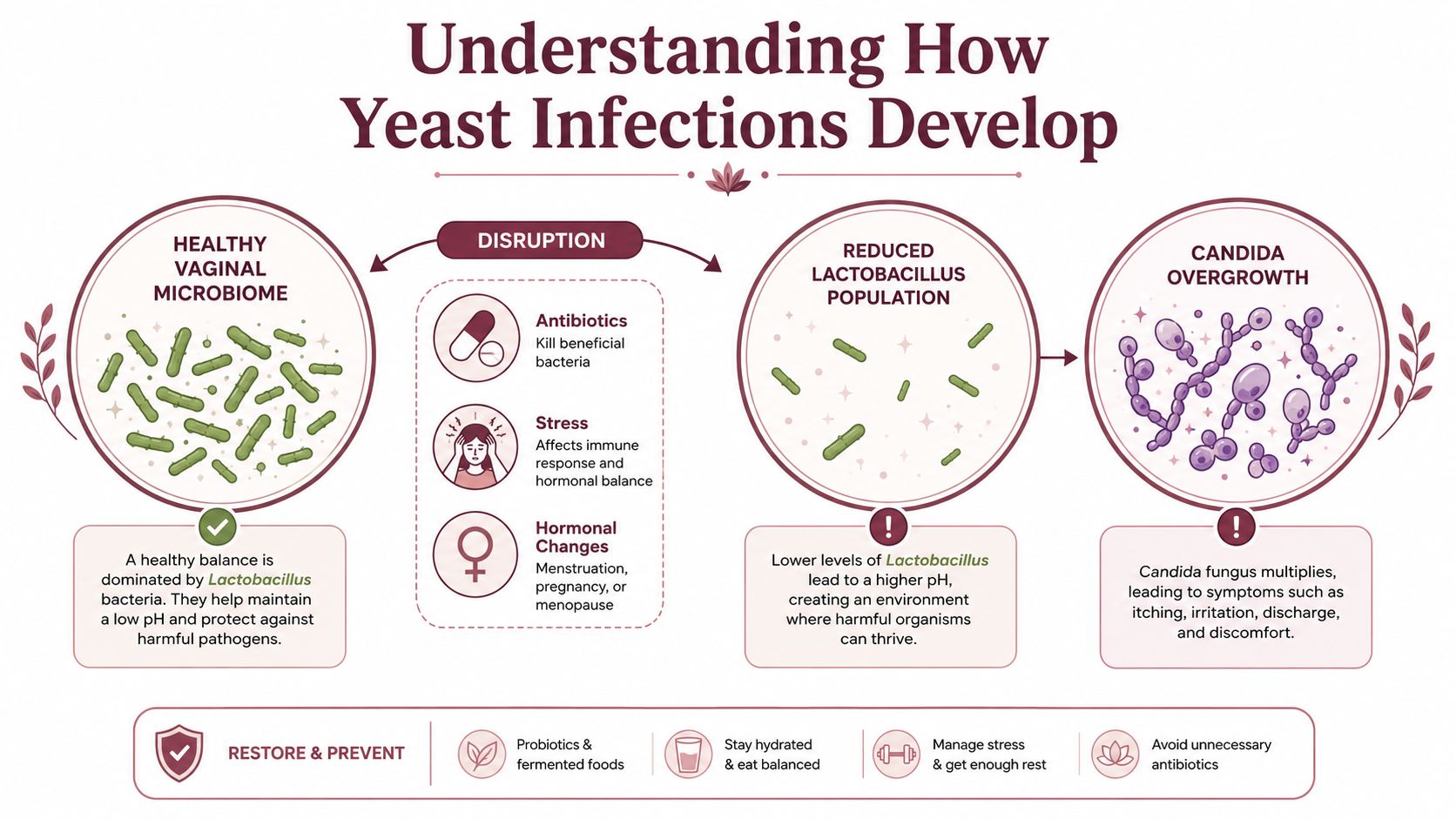
The main disruption pathways
Think of prevention as protecting three connected systems:
- The microbiome: Broad-spectrum antibiotics may reduce bacteria that help maintain balance. Products such as spermicides and douches can also disrupt the local environment.
- The tissue barrier: Harsh soap, fragrance, friction, and excessive washing can irritate the vulvar skin. Irritated tissue may feel like an infection even when Candida isn't the cause.
- The physical environment: Tight, non-breathable clothing and damp fabric can hold heat and moisture close to the skin.
Hormones matter, too. Pregnancy, menopause, and other estrogen-related states can alter the vaginal environment and affect susceptibility. That doesn't mean hormones guarantee an infection. It means prevention may need to change when the body changes.
For a deeper explanation of how protective bacteria, pH, and irritation interact, see this guide to maintaining a healthy vaginal microbiome. If you're considering a multi-product routine, the Complete Infection Defense Kit combines external and internal support, but its product disclaimer states that it isn't intended to diagnose, treat, cure, or prevent disease.
What this means in daily life
You don't need to sterilize the vagina. The vagina is self-cleaning, and aggressive attempts to alter it can create the imbalance you're trying to avoid. Focus on the external vulvar area, breathable clothing, prompt moisture control, and avoiding unnecessary products.
Lifestyle Changes That Reduce Your Risk
The strongest natural prevention habits are also the least complicated. They reduce moisture, friction, and exposure to substances that can disturb the vulvovaginal environment.
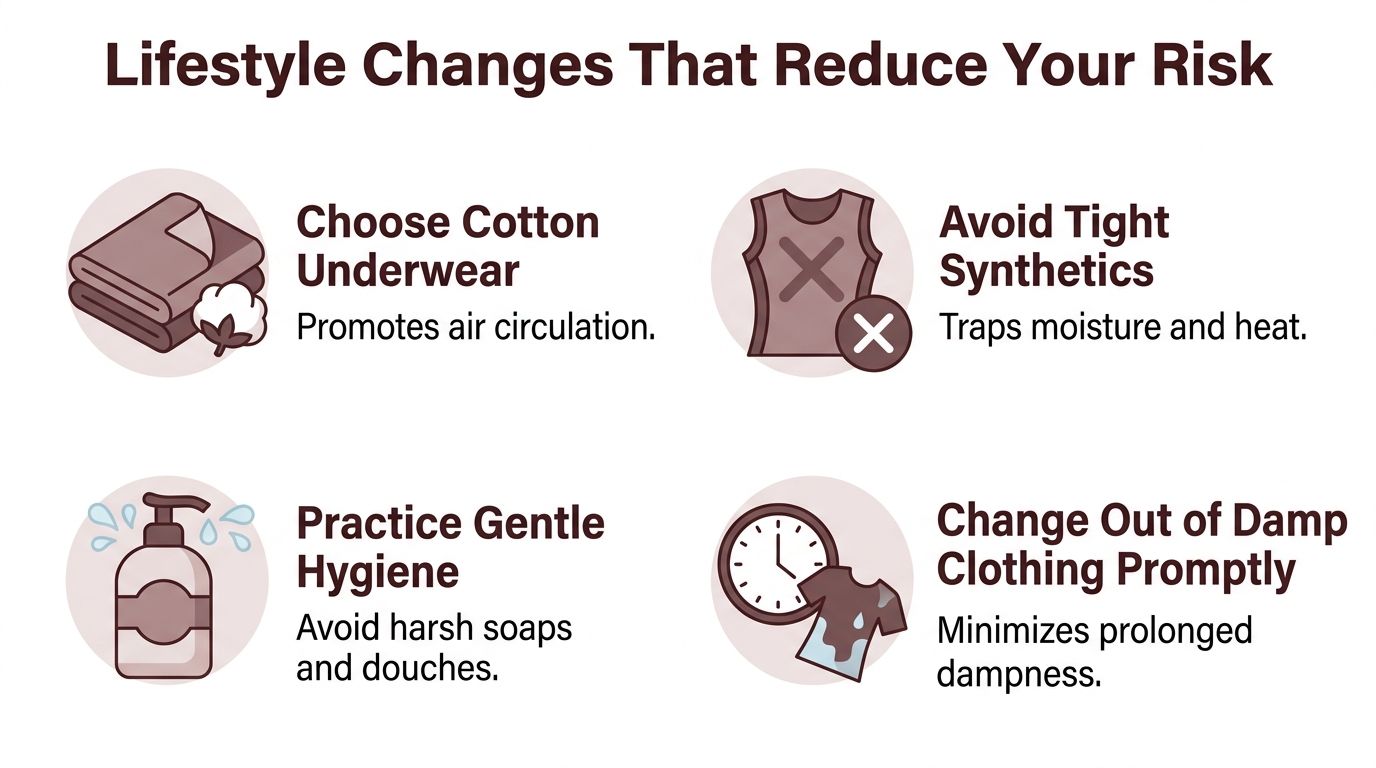
Build a low-irritant routine
- Choose breathable clothing: The WHO advises cotton underwear and loose clothing, while recommending that people avoid synthetic fabrics when possible. Airflow helps limit moisture staying against the skin.
- Change damp clothes quickly: Remove sweaty gym wear and wet swimsuits soon after exercising or swimming. The WHO includes this step in its prevention guidance.
- Wash gently: Clean the external area with water or a mild, fragrance-free approach that doesn't sting. Avoid putting soap, washes, oils, or other products inside the vagina.
- Don't douche: Douching can disturb protective flora and increase the risk of Candida overgrowth. It also masks symptoms rather than identifying their cause.
Laundry products can become overlooked irritants. If underwear leaves the vulvar skin itchy or burning, consider whether fragrance, residue, or fabric friction is contributing. The answer isn't to wash more aggressively. It may be to simplify products and rinse clothing thoroughly.
Sex can also introduce friction and substances that irritate sensitive tissue. Lubrication can reduce friction, while avoiding spermicides or fragranced and flavored products may help people who notice symptoms after sex. These measures don't guarantee prevention, and yeast infections aren't solely a consequence of sexual behavior.
A practical routine might look like this: wear breathable underwear during the day, change after exercise, rinse the external area without scrubbing, and sleep in clothing that doesn't trap heat or moisture. Consistency matters more than adding a long list of supplements.
For another perspective on food claims and recurring symptoms, read this discussion of the Candida diet and recurrent yeast infections. Dietary changes may support general health, but they shouldn't replace diagnosis or antifungal treatment when an infection is present.
Evaluating Natural Remedies and Supplements
Natural prevention works best when each option is judged by its evidence and risk. Changing out of wet clothing has a straightforward, low-risk rationale. Supplements require more caution because results can vary with the strain, dose, delivery method, health context, and whether the product is used alongside standard treatment. This guide to natural remedies for yeast infections and what the evidence supports offers further context.
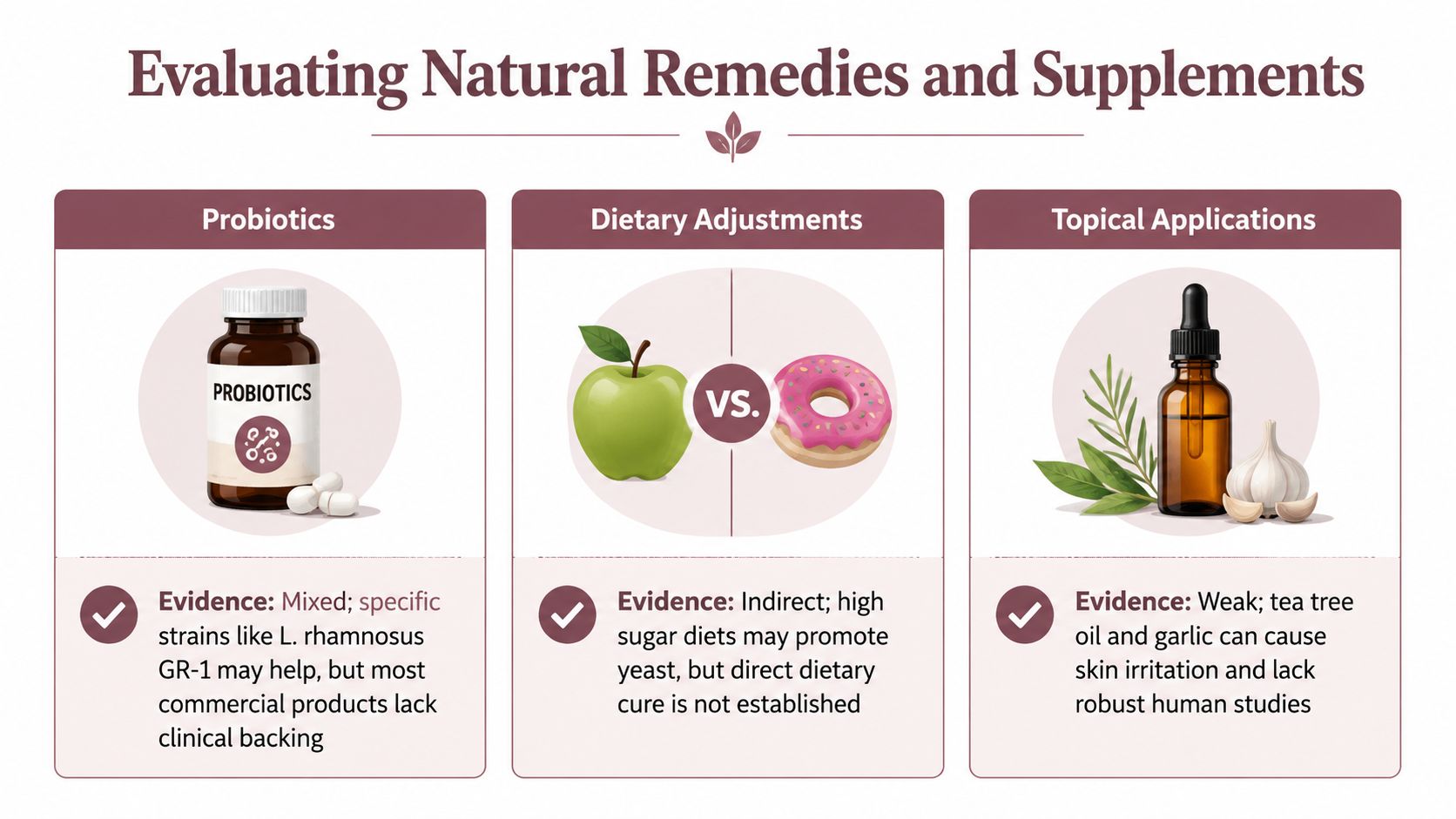
Probiotics are an adjunct, not a guarantee
A Cochrane review of probiotics for vulvovaginal candidiasis found that adding probiotics to conventional antifungal therapy improved short-term clinical cure, with a relative risk of 1.14 and a 95% confidence interval of 1.05 to 1.24, and mycological cure, with a relative risk of 1.06 and a 95% confidence interval of 1.02 to 1.10. It also found lower relapse at one month, with a relative risk of 0.34 and a 95% confidence interval of 0.17 to 0.68.
The evidence was rated low to very low quality, so these results do not establish probiotics as a reliable prevention method. Another review found vaginal probiotics more promising for bacterial vaginosis than for vulvovaginal candidiasis. For documented recurrent infections, a probiotic may be discussed as an add-on, never as a replacement for diagnosis or antifungal care.
Compare the popular options
| Option | What the evidence supports | Sensible expectation |
|---|---|---|
| Probiotics | Possible benefit from selected strains alongside antifungal care | A commercial product may not prevent recurrence |
| Dietary changes | General nutrition supports health, but a direct dietary cure is not established | Avoid extreme restriction based on sugar or carbohydrate fears |
| Topical botanicals | Evidence for many oils, herbs, and household remedies is weak | Do not insert irritating substances into the vagina |
| Gentle daily care | Reducing moisture and irritants aligns with prevention guidance | Make it the foundation of your routine |
Oral and intravaginal probiotics are not interchangeable. A label listing Lactobacillus does not show that its specific strain has been studied for recurrent VVC. Ask a clinician or pharmacist to review the strain and your health context, particularly during pregnancy or with immunocompromise or postmenopausal symptoms.
Prevention Strategies for Different Life Stages
The same routine won't suit every body. Pregnancy, postpartum recovery, perimenopause, menopause, and recurrent infections can each change the balance between tissue comfort, hormones, microbiome, and treatment safety.
Pregnancy and postpartum care
Pregnancy is an estrogen-related state associated with increased Candida overgrowth risk, so new or recurring symptoms deserve professional guidance rather than experimentation. During postpartum recovery, tissue may be especially sensitive to friction and irritants. Keep care simple, avoid inserting unapproved products, and ask a maternity clinician before using supplements, essential oils, or suppositories.
Perimenopause and menopause
Declining estrogen can change vaginal tissue and the local environment. Dryness and burning may resemble yeast infection symptoms, so treating every flare as Candida can lead to unnecessary products and missed diagnoses. Hormone therapy and hormonal birth control can also affect an individual's experience, which makes a symptom diary useful when patterns emerge.
A particularly important safety point concerns probiotics. A 2025 review reported that daily Saccharomyces probiotic use may worsen recurrent vulvovaginal candidiasis in postmenopausal women, as discussed in this review of immune and microbiome approaches to recurrent VVC. That finding challenges the assumption that every probiotic is protective.
For broader context on how aging, inflammation, and neurological health intersect, the Longevity Medical Institute neurology guide may be a useful general resource, though it isn't a substitute for gynecological evaluation.
Recurrent infections
If episodes keep returning, prevention should become personalized. Record timing, antibiotic exposure, hormonal changes, products, and whether a clinician confirmed Candida. Don't automatically increase supplements. A 2025 review found that probiotics don't appear helpful for preventing recurrent VVC overall, while other reviews describe the evidence as inconclusive or potentially useful in selected situations.
Common Myths About Natural Prevention
Natural prevention attracts simple answers, but vaginal health rarely follows a one-size-fits-all formula.
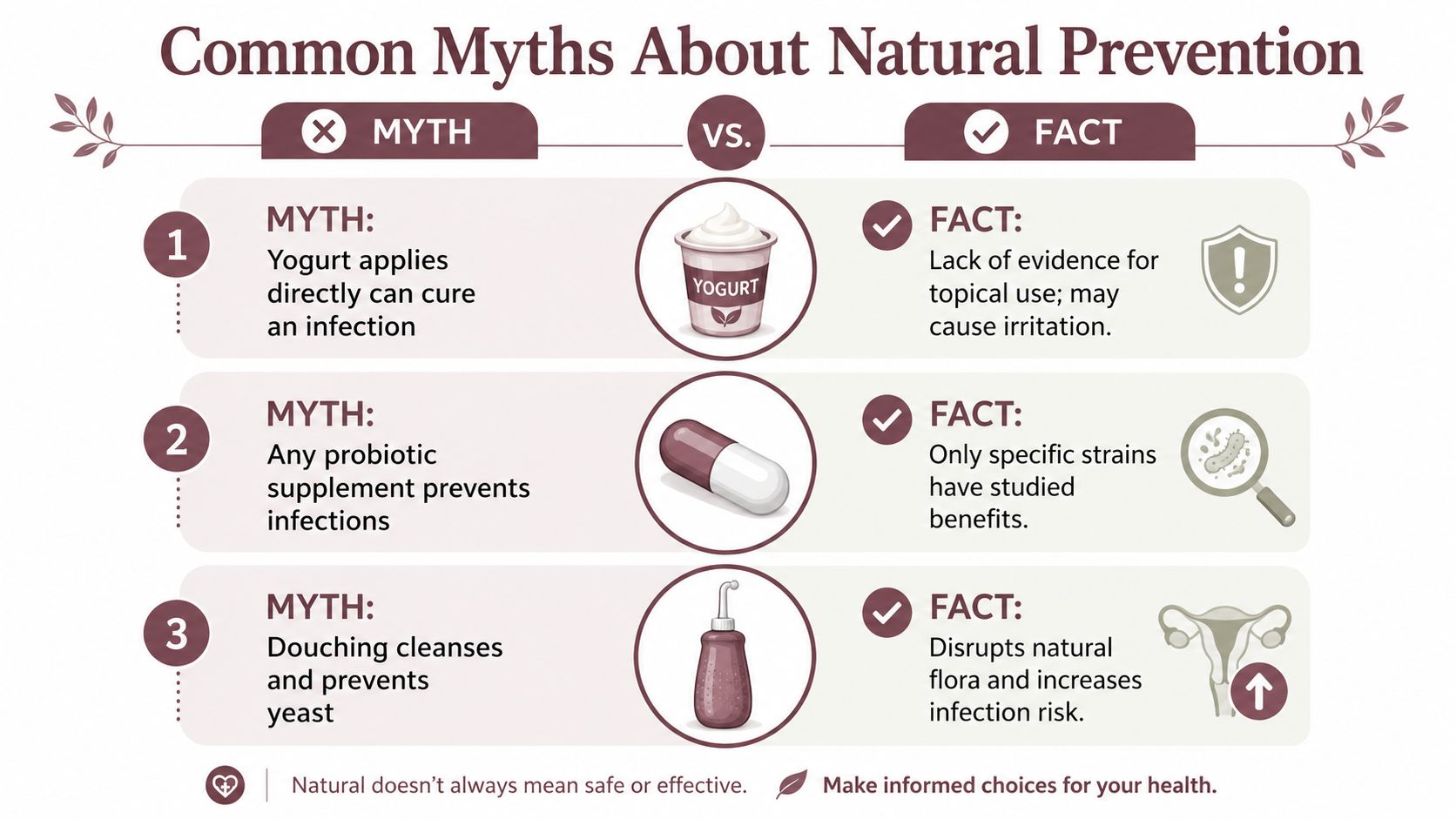
Myth one, yogurt cures an infection
Eating yogurt can be part of a balanced diet, but it isn't an established treatment for vulvovaginal candidiasis. Applying yogurt directly to vaginal tissue has no reliable clinical basis and may introduce irritation or delay appropriate care. The same caution applies to garlic, tea tree oil, and other concentrated substances. “Natural” describes an origin, not a safety profile.
Myth two, any probiotic prevents yeast
Probiotics vary by strain and formulation. The Cochrane evidence supports, at most, a possible adjunctive role alongside antifungal therapy, with low or very low certainty. A capsule that contains Lactobacillus isn't automatically equivalent to a strain used in a clinical trial.
Myth three, douching prevents infection
Douching doesn't cleanse away Candida safely. The WHO advises against it because it can disrupt the vaginal microbiome and contribute to overgrowth risk. A healthy vagina doesn't need internal fragrance, deodorizing, or cleansing products.
Myth four, yeast infections mean poor hygiene
Candida overgrowth can follow antibiotics, hormonal changes, or other shifts that have nothing to do with cleanliness. Scrubbing harder can worsen irritation. Prevention should protect tissue, not punish the person experiencing symptoms.
Recurrent infections aren't something you simply have to tolerate. They do require a more careful plan, because repeated self-diagnosis may miss another cause or a Candida type that needs different management.
When to See a Healthcare Provider
Natural prevention can support low-risk daily habits, but it should not become a test of endurance. Seek professional care when symptoms are new, severe, persistent, unusual, or repeatedly returning.
Arrange an evaluation in these situations:
- This is your first suspected infection: Itching, burning, discharge, and discomfort can also occur with bacterial vaginosis, sexually transmitted infections, urinary conditions, or skin disorders.
- Symptoms do not settle: Ongoing itching, burning, swelling, pain, or discharge calls for assessment rather than repeated self-treatment.
- Episodes recur: Recurrent disease affects about 5% to 10% of women overall, according to the WHO candidiasis fact sheet). A clinician can confirm the diagnosis and check for contributing factors.
- You are pregnant or recently postpartum: Ask your maternity or gynecological provider before using medication, probiotics, essential oils, or suppositories.
- Symptoms are severe or atypical: Cracks, marked swelling, fever, pelvic pain, strong odor, sores, or bleeding deserve prompt medical attention.
A visit may cover symptoms, medications, antibiotics, hormonal changes, sexual health, and previous treatments. The clinician may examine the vulva and vagina, assess discharge, and test a sample with microscopy, culture, or another laboratory method.
Bring a short timeline. Record when symptoms began, which products you used, whether a clinician confirmed yeast before, and whether episodes follow antibiotics, sex, exercise, menstruation, or hormonal changes. These details can help distinguish recurring Candida from irritation or another infection.
Good prevention includes knowing when to stop experimenting. Diagnosis is not a failure of natural care. It helps prevent treatment for the wrong condition.
Use gentle hygiene and keep the area dry while arranging care. Do not insert household remedies or use supplements to mask worsening symptoms. A healthcare provider can help determine whether lifestyle changes, antifungal treatment, maintenance therapy, or a different diagnosis fits your situation.
Momotaro Apotheca offers plant-based vulvovaginal care, including the Soothe & Restore Salve, Daily Probiotic, and other products in its Infection Defense Bundle for external comfort and microbiome-focused support. Review product information and safety guidance, then visit Momotaro Apotheca to explore options for daily care and recurrent irritation alongside appropriate medical guidance.


