


Postpartum Perineal Care: A Complete Recovery Guide
You're home with a newborn, running on little sleep, and holding a peri bottle you barely remember how to use. Every trip to the bathroom brings the same questions: Is this amount of soreness normal? Should the stitches feel tight? Is the burning getting better, or am I missing something?
Those questions deserve more than a quick discharge handout. Postpartum perineal care is a daily recovery task for many people after birth, and it involves more than keeping the area clean. The perineum may be torn, stitched, bruised, swollen, or stretched while also being exposed to lochia, moisture, pressure, and friction. A practical routine can support comfort and protect healing tissue, but it should also help you recognize when self-care isn't enough.
This guide focuses on the decisions that matter at home: how to wash and dry without irritating new tissue, which comfort measures are optional, how to choose pH-conscious products, how to track function rather than appearance alone, and when to contact your midwife, obstetrician, or another clinician. If you're supporting someone in the early postpartum period, learning what a maternity nurse does can also clarify the kind of practical, hands-on help that may make recovery easier. You can also learn more about changes in the vulva during pregnancy, since pregnancy-related changes may continue into the postpartum period.
Table of Contents
- Why Postpartum Perineal Care Deserves Your Full Attention
- Your Immediate Postpartum Hygiene Routine
- Managing Pain and Discomfort Safely
- The 0 to 6 Week Perineal Healing Timeline
- Choosing Products That Support Healing Without Irritation
- Pelvic Floor Recovery and Perineal Health Connection
- Warning Signs and When to Contact Your Provider
Why Postpartum Perineal Care Deserves Your Full Attention
Perineal injury after vaginal birth is common, not an unusual complication. A clinical review reports that more than 85% of women experience some form of perineal trauma, and 60% to 70% receive stitches after vaginal birth. The same review reports that, in the United Kingdom, 23% to 42% of women still had pain or discomfort 10 to 12 days after delivery, while 7% to 10% experienced long-term pain lasting three to 18 months (clinical review of postpartum perineal care).
That context changes how you interpret your own recovery. Soreness, pulling, and tenderness can be expected during healing, but persistent or worsening symptoms shouldn't be dismissed as the unavoidable price of childbirth. The perineum is part of a larger support system involving the vulva, vagina, anal sphincter, pelvic floor muscles, bladder, and bowel. Trouble in one area can affect movement, toileting, sitting, intimacy, and confidence in another.
Practical rule: Normal healing should gradually give you more comfort and function. It doesn't have to improve in a perfectly straight line, but a clear decline deserves attention.
Generic discharge advice often says “keep the area clean” and “use ice.” That leaves important questions unanswered. How much washing is too much? Is itching expected? What does wound separation look like? Should you keep doing pelvic floor exercises if contraction hurts? Which product ingredients are more likely to sting sensitive tissue?
The answers depend on the degree of trauma, the presence of stitches, your symptoms, and how your bowel and bladder function are changing. Routine care protects the wound, while structured self-checks help you identify infection, breakdown, hematoma, or ongoing pelvic floor dysfunction early. Severe injuries receive particular attention because obstetrical anal sphincter injury can affect continence and recovery. A review notes that these repairs are commonly assessed at a six- to 12-week postpartum review (review of perineal trauma and anal sphincter injury).
Your Immediate Postpartum Hygiene Routine
The most useful routine is simple enough to follow when you're tired. Clean hands, warm water, gentle drying, regular pad changes, and breathable clothing do more for healing than a crowded bathroom shelf.
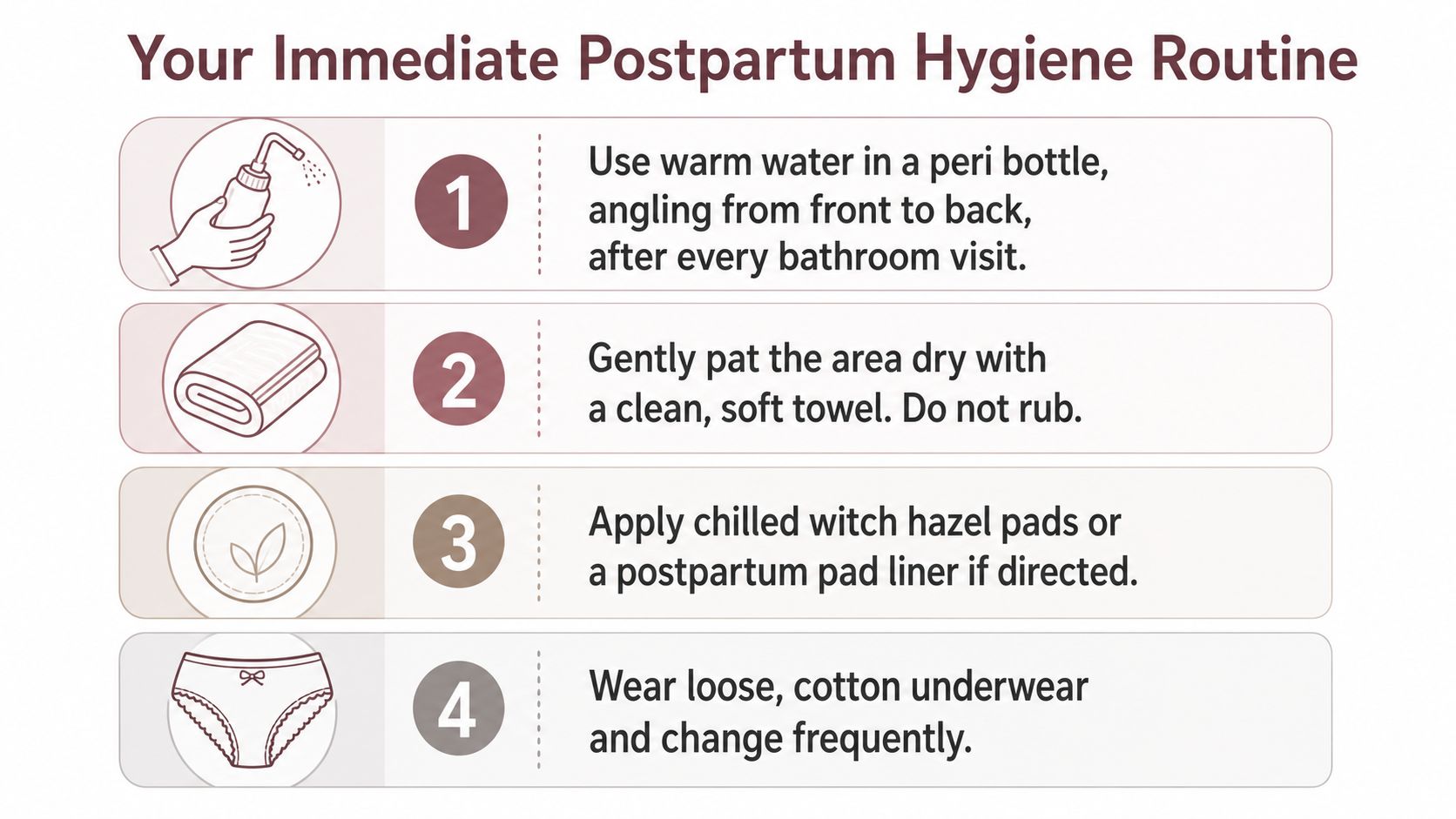
Start with clean hands and warm water
Wash your hands before and after changing a pad or touching the peri bottle. Fill the bottle with comfortably warm water, not hot water. While urinating, angle the stream from front to back over the perineum, then rinse again after you finish.
The water dilutes urine as it passes over tender tissue and helps remove blood or stool without rubbing. Front-to-back flow also limits the movement of bacteria from the anal area toward healing vaginal or perineal tissue. Don't aim a forceful shower stream directly at the stitches.
Dry by pressing, not rubbing
After rinsing, use a clean, soft, unscented towel or disposable material and gently pat the area dry. Rubbing can pull on scabs, irritate swollen tissue, and create unnecessary friction around sutures.
Change your maternity pad regularly, such as every two to four hours or sooner when saturated, following the guidance given by your maternity team (Royal Devon NHS perineal-care guidance). Heavy lochia doesn't mean you need to scrub more often. It means you need clean absorbent protection and gentle rinsing when needed.
Keep clothing loose and breathable
Choose loose cotton underwear and avoid tight seams pressing against the perineum. Some people find that sleeping without underwear, with a clean towel or absorbent pad beneath them, improves airflow. You don't need to go without underwear if it feels uncomfortable or makes bleeding harder to manage.
A lukewarm shower is usually enough for external hygiene. Avoid putting soap directly on vulvar or perineal tissue during the early healing period, especially if the skin is broken or stitched. Plain water around the area is often less irritating than fragranced washes, gels, or wipes.
Know what to skip
Avoid long baths while stitches are healing. One NHS patient leaflet advises waiting until stitches have healed and notes a two-week minimum for avoiding long baths (Royal Devon NHS perineal-care guidance). Follow your own clinician's instructions if they differ, particularly after a significant tear.
A postpartum care basket may include practical items such as clean cotton underwear, maternity pads, a peri bottle, and soft towels. If friends or family want to help, a useful alternative to decorative items is a request for baby gift sets for delivery alongside food, laundry help, or protected rest.
If you're considering a multi-product vulvovaginal kit, read every ingredient and ask your clinician before applying anything to stitches or open tissue. The Complete Infection Defense Kit includes external and internal products described for vulvovaginal wellness, but it shouldn't replace examination or prescribed treatment when infection or wound breakdown is possible.
Managing Pain and Discomfort Safely
Pain relief works best as a layered plan. Start with measures that reduce swelling and pressure, then add medication if your clinician says it's appropriate, and seek assessment when symptoms don't follow a gradual improvement pattern.
Use cold therapy briefly
Wrap an ice pack in a clean cloth or tea towel. Never place ice directly on skin. Apply it to the perineum for 10 to 15 minutes at a time, then remove it and allow the tissue to warm before repeating.
A study of postpartum ice-pack use found no significant pain-relief difference between 10-, 15-, and 20-minute applications, supporting a shorter application rather than prolonged exposure (study of ice packs for postpartum perineal pain). Cold therapy may reduce swelling and inflammation, but it doesn't work equally for every person. It should complement cleansing, drying, and pad changes, not replace them.
Add medication with individualized advice
Ask your provider or pharmacist about acetaminophen or ibuprofen, especially if you're breastfeeding, have allergies, take other medication, or have kidney, stomach, liver, or bleeding concerns. Don't rely on generic dosing from someone else's discharge sheet. Use the product label and the instructions given for your situation.
Topical numbing sprays may make sitting or urinating more comfortable, but numbness can also make it harder to notice worsening symptoms. Use them only as directed, and don't apply products to broken tissue unless your clinician has approved them.
Reduce pressure during daily activities
Side-lying rest can reduce direct pressure while you feed or hold your baby. When sitting is necessary, try a supportive cushion designed to reduce coccyx or perineal pressure rather than remaining seated for long periods. Change positions often, and avoid prolonged standing when it increases throbbing or swelling.
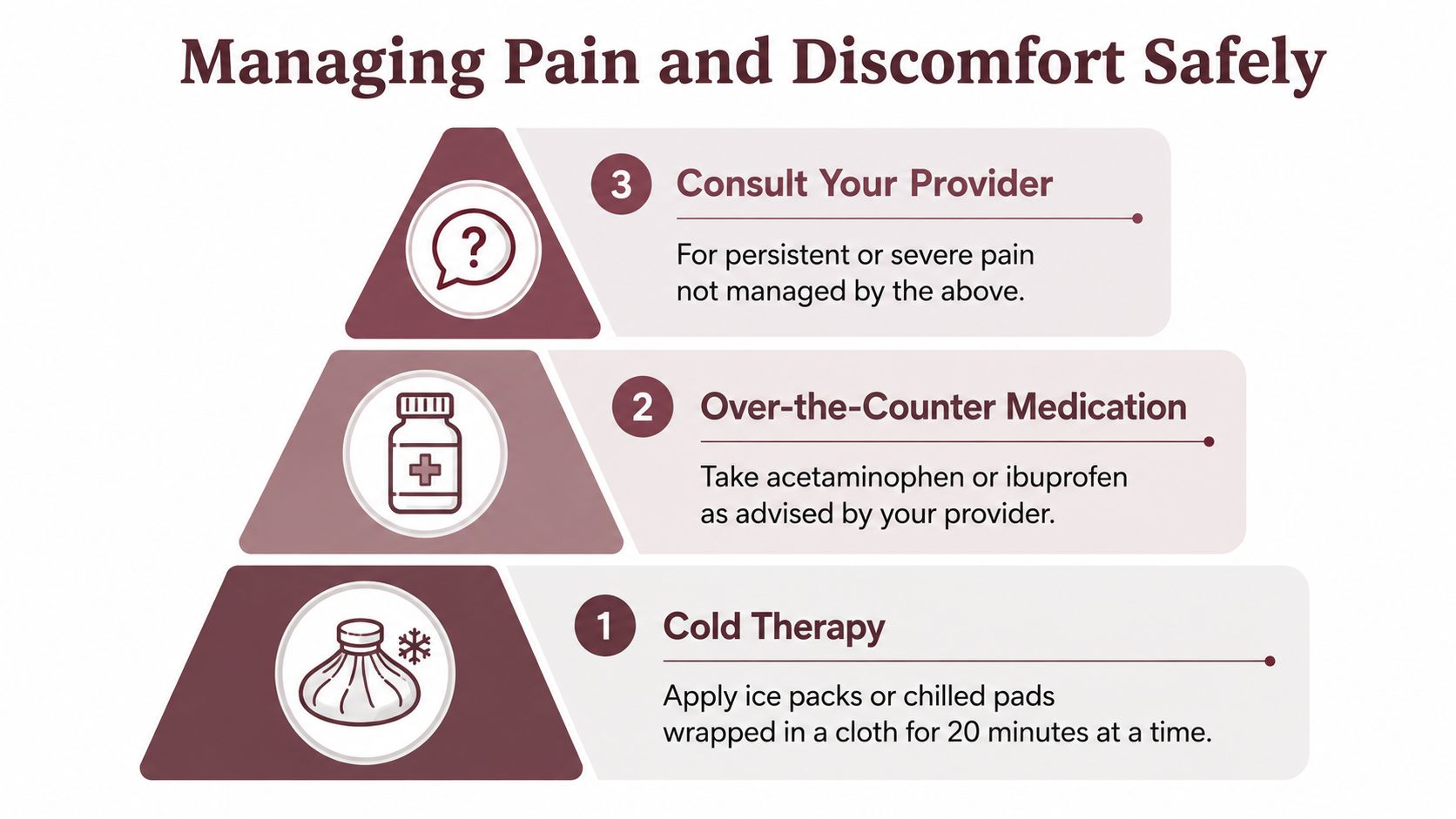
Pain that becomes stronger instead of gradually easing, doesn't respond to the plan you were given, or appears with new swelling, discharge, fever, or wound changes needs clinical review.
The 0 to 6 Week Perineal Healing Timeline
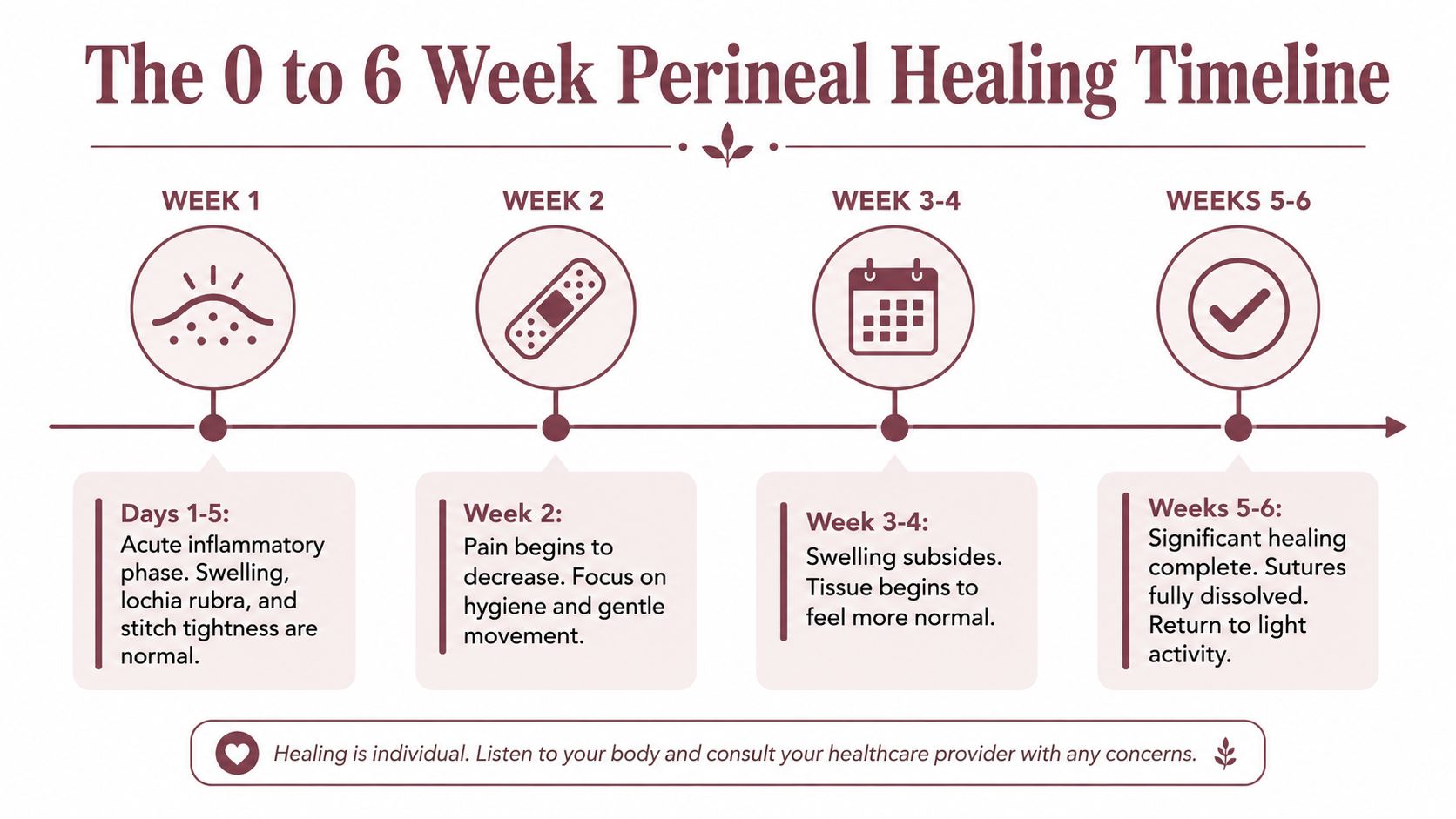
Recovery is not a stopwatch. A small superficial tear, an episiotomy, and a deeper tear won't follow the same pattern, and your sleep, bowel movements, feeding choices, and overall health also affect how recovery feels. Use the timeline as a set of observations, not a promise.
The first several days
During the early phase, swelling, bruising, tenderness, lochia, and a sensation of stitch tightness can occur. Cold therapy, gentle rinsing, careful drying, and regular pad changes are usually more useful than adding multiple topical products.
You should still be able to notice a general direction toward better comfort. Call your provider if swelling grows, one-sided pressure becomes intense, pain suddenly changes, or the wound appears to open.
The second and third weeks
As the initial swelling settles, sitting and walking may become easier, although longer activity can still trigger aching. Dissolvable stitches may feel scratchy or tight before they soften, and itching can occur as tissue repairs.
Focus on function. Can you urinate without increasing burning? Can you pass stool without severe escalating pain? Can you walk a short distance and recover without a major increase in throbbing? A decline in these abilities matters more than whether the area looks normal in a mirror.
The fourth through sixth weeks
By this stage, many people feel substantially better, but tenderness, dryness, scar tightness, or altered sensation may remain. A wound can look closed while deeper tissues and pelvic floor muscles are still sensitive.
The clinical review of perineal trauma notes that some women continue to experience pain beyond the early postpartum period (clinical review of postpartum perineal care). Don't wait for a routine appointment if pain limits walking, bowel or bladder function, or sleep. Deeper injuries may require planned follow-up, and OASIS repairs are commonly reviewed at six to 12 weeks postpartum (review of perineal trauma and anal sphincter injury).
Keep a short daily note rather than inspecting constantly. Record pain direction, walking tolerance, urination, bowel movements, discharge odor, and any new swelling or separation. That information gives your clinician a clearer picture than appearance alone.
Choosing Products That Support Healing Without Irritation
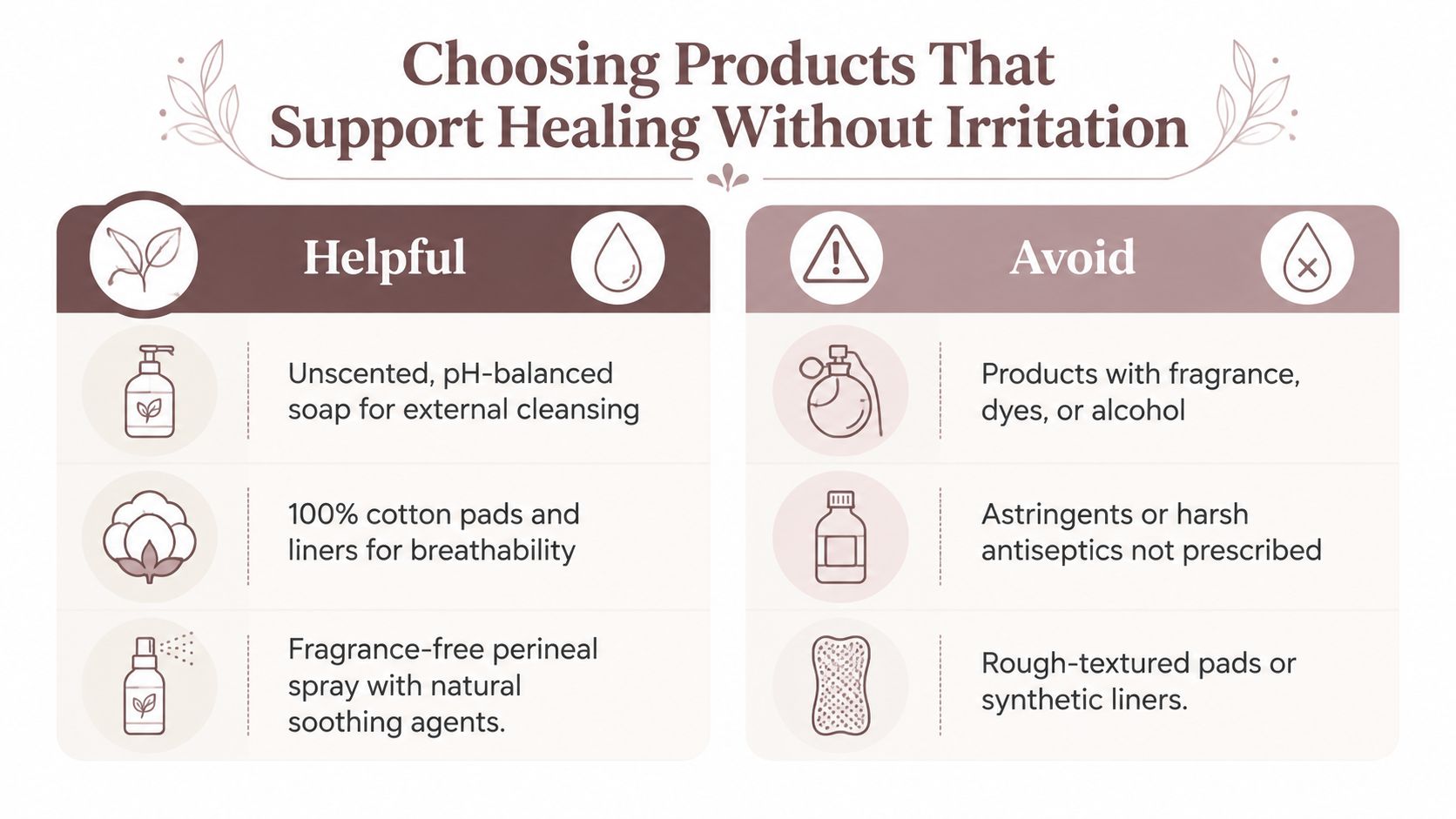
“Postpartum” on a label doesn't automatically mean gentle. Healing perineal tissue has a damaged protective barrier, increased sensitivity, and exposure to moisture and blood. A product can feel refreshing while still causing stinging, dryness, or irritation.
Use a label-based filter
Choose products that minimize ingredients and friction. A practical checklist includes:
- For rinsing: Select a peri bottle that's easy to clean, with no added fragrance or dye.
- For absorption: Look for soft, breathable, unscented pads and liners, ideally made from cotton or another material that doesn't create rough friction.
- For soothing: Consider plain cooling measures or alcohol-free witch hazel products if your clinician agrees.
- For cleansing: Use lukewarm water on healing tissue. If soap is recommended for external skin, choose a mild, unscented option and keep it away from wounds and internal tissue.
Fragranced wipes, scented pads, deodorizing sprays, essential oils, and harsh antiseptics can irritate the area. Essential oils shouldn't be applied directly to stitches. Numbing sprays can hide a change in pain that should prompt an examination, so use them sparingly and according to instructions.
Think pH-conscious, not product-heavy
The vagina maintains its own environment, and postpartum blood, hormonal shifts, breastfeeding-related dryness, and tissue injury can all change how the area feels. More products won't necessarily restore balance. The safer approach is to reduce irritants and avoid putting non-prescribed products inside the vagina while tissue is healing.
For practical ideas around witch hazel pads and a gentle calming postpartum care routine, compare the ingredients with your discharge instructions and stop if burning or redness increases. If dryness persists, read about postpartum vaginal dryness and discuss persistent symptoms with your clinician.
A plant-based external balm may be considered for intact external skin, but it shouldn't be applied to an open wound or stitches without medical approval. Soothe & Restore Salve is described by its maker as an organic balm for external vulvovaginal dryness, itching, and irritation, with coconut and jojoba oils. Treat it as an optional comfort product, not an infection treatment or substitute for wound assessment.
Pelvic Floor Recovery and Perineal Health Connection
You may be able to see that the skin has closed while sitting, walking, or using the bathroom still feels difficult. After a tear, episiotomy, bruising, or substantial stretching, the pelvic floor can tighten to protect the area. Like a hand that stays clenched around an injury, those muscles may keep pain going even as the visible wound improves.
Recovery therefore needs more than automatic Kegel exercises. Contracting a painful, guarded pelvic floor can add tension instead of restoring coordination. Early at-home goals are comfortable breathing, supported position changes, brief gentle movement, and allowing the pelvic floor to soften as you inhale.
Progress by comfort and control
In the early weeks, try diaphragmatic breathing in a supported position. Let your ribs and abdomen expand on the inhale, then notice whether the pelvic floor releases rather than clenches. Stop if you feel more pressure, pulling, pain, or bleeding.
As the tissue heals and activation feels comfortable, begin gentle awareness exercises. After any light contraction, the muscles should fully release. Strengthening can come later, once you can contract and relax without pain or breath-holding, and without increased pelvic pressure or worsening urinary or bowel symptoms.
A pelvic floor physical therapist can check muscle tone, scar mobility, coordination, bladder and bowel symptoms, and pain with intimacy. This care can help after ongoing tenderness, urinary leakage, fecal urgency, heaviness, painful intercourse, or uncertainty about resuming exercise, even without a severe tear.
Scar mobilization may improve tissue movement, but wait until the wound is fully closed and your provider has cleared it. For a broader framework that moves beyond automatic Kegel exercises, see pelvic health priorities beyond Kegels. A practical check at home is simple: symptoms should gradually settle, and daily movement should become easier, not harder.
Warning Signs and When to Contact Your Provider
You don't need to diagnose the problem before calling. Your job is to notice a meaningful change and describe it clearly. Providers expect postpartum questions, and early advice can prevent a manageable issue from becoming more serious.
Call your midwife or obstetric clinician promptly if you notice
- Increasing pain: Pain that worsens rather than improves, especially after the early healing period, or pain that remains uncontrolled despite the plan you were given.
- New redness or swelling: Increasing redness, warmth, swelling, or tenderness around the wound can signal infection or a developing complication.
- Wound separation: A visible opening, missing stitch, gaping wound, or sudden change in the shape of the repair requires assessment.
- Unusual discharge: Foul-smelling, pus-like, or greenish discharge is not something to manage with extra washing or deodorizing products.
- Fever or feeling acutely unwell: A temperature above 100.4°F should prompt medical advice in the postpartum period, particularly with wound pain or abnormal discharge.
- Urinary changes: Burning, urgent frequent urination, inability to empty your bladder, or worsening difficulty passing urine may indicate infection, swelling, or nerve-related problems.
- Bowel or continence changes: New inability to control stool or gas, severe difficulty passing stool, or escalating pain with bowel movements deserves review, especially after a deeper tear.
Heavy bleeding also needs a clear response. Lochia normally changes over time, but bleeding that saturates a pad in under an hour is a reason to seek urgent medical guidance rather than waiting for a routine appointment.
Know when symptoms need urgent care
A perineal hematoma can feel like rapidly increasing pressure, marked one-sided swelling, severe pain, or difficulty sitting or walking. Seek urgent assessment if these symptoms appear, particularly when the swelling is growing or the pain feels out of proportion to what you've experienced.
Hemorrhoids can be painful, but sudden severe anal pain with a firm, very tender lump may need prompt evaluation. If you feel faint, weak, short of breath, confused, or severely unwell along with heavy bleeding or escalating pain, seek emergency care.
Use the simple test that many discharge sheets omit: Is your function improving? If urination, bowel movements, walking, sitting, sleep, or emotional safety is getting worse, contact your care team. You're not being difficult or dramatic by asking for an examination. A wound can't be assessed reliably through reassurance alone, and a short call is an appropriate part of postpartum perineal care.
Momotaro Apotheca offers pH-conscious vulvovaginal wellness products, including an external Soothe & Restore Salve and curated routines for sensitive care. Visit Momotaro Apotheca to review ingredients and choose an option that fits your recovery, while contacting your clinician for pain, infection symptoms, wound changes, or any concern that needs medical assessment.


