


UTI Prevention Supplements: What Actually Works in 2026
The most popular advice about UTI prevention supplements is also the least useful: “Take cranberry, D-mannose, probiotics, or vitamin C. They all do roughly the same thing.” They don't. These products differ in their active ingredients, biological targets, evidence quality, and suitability for different people.
A better question is not, “Which supplement is best?” It's, “Which option fits my pattern of recurrent urinary infections, life stage, medications, and risk factors?” Cranberry has the strongest supplement evidence overall, but its benefit depends on proanthocyanidin, or PAC, content. D-mannose sounds biologically convincing, yet recent high-quality evidence doesn't support it as a reliable standalone preventive. Probiotics may make more sense for some vaginal microbiome concerns, while postmenopausal patients may need to discuss vaginal estrogen or methenamine with a clinician instead of buying another bottle.
Table of Contents
- Why UTI Prevention Supplements Are Not All the Same
- The Major UTI Prevention Supplements and What the Evidence Shows
- How These Supplements Actually Work in the Body
- Common Myths Worth Letting Go Of
- How to Choose a Quality UTI Prevention Supplement
- Where Supplements Fit Next to Hydration, Methenamine, and Vaginal Estrogen
- Safety, Side Effects, and When to Talk to a Provider
Why UTI Prevention Supplements Are Not All the Same
Supplement labels often use words such as “urinary defense,” “bladder balance,” and “natural protection.” Those phrases can make cranberry, D-mannose, probiotics, vitamin C, and botanical blends look interchangeable. The evidence doesn't support that shortcut.
The 2023 Cochrane review of cranberry products is a useful starting point. It covered 50 studies and 8,857 participants and found that cranberry products reduced overall UTI risk by 26% compared with placebo or no treatment, with a similar relative reduction among women with recurrent UTIs. That's meaningful, but it's a moderate preventive effect, not a cure and not proof that every cranberry capsule or juice works equally well. The Cochrane evidence review also found that outcomes varied by population and clinical situation.
D-mannose presents a different problem. Its proposed mechanism is easy to understand, so older articles often present it as a dependable E. coli solution. Yet a high-quality randomized trial using 2 grams daily in 598 participants found no difference in recurrence compared with placebo, and the 2025 American Urological Association update says evidence is insufficient to recommend D-mannose for recurrent UTI prevention. The AUA guideline update is a useful corrective to older marketing.
Match the product to the problem
Ask four questions before choosing anything:
- What kind of evidence supports it? A pooled review of controlled trials carries more weight than a mechanism, testimonial, or laboratory study.
- Is the active ingredient disclosed? “Cranberry extract” tells you less than a stated PAC amount.
- Does the product fit your life stage? Postmenopausal tissue and vaginal microbiome changes may require a different prevention plan.
- Are you trying to prevent or treat? Supplements may have a preventive role, but they shouldn't delay evaluation of active symptoms.
Practical rule: A plausible mechanism can explain how a supplement might work. It can't establish that the supplement prevents infections in real people.
This fit-by-person approach also protects you from unnecessary complexity. Someone with recurrent, culture-confirmed uncomplicated UTIs may reasonably consider standardized cranberry. Someone with persistent burning but negative cultures may need evaluation for bladder pain syndrome, vaginal irritation, or another condition. Someone with infections after menopause may benefit more from a clinician-guided discussion about vaginal estrogen than from stacking several oral products.
The Major UTI Prevention Supplements and What the Evidence Shows
UTI prevention supplements are not interchangeable. The useful question is not which product is “best,” but which ingredient, formulation, and evidence fit a particular person.
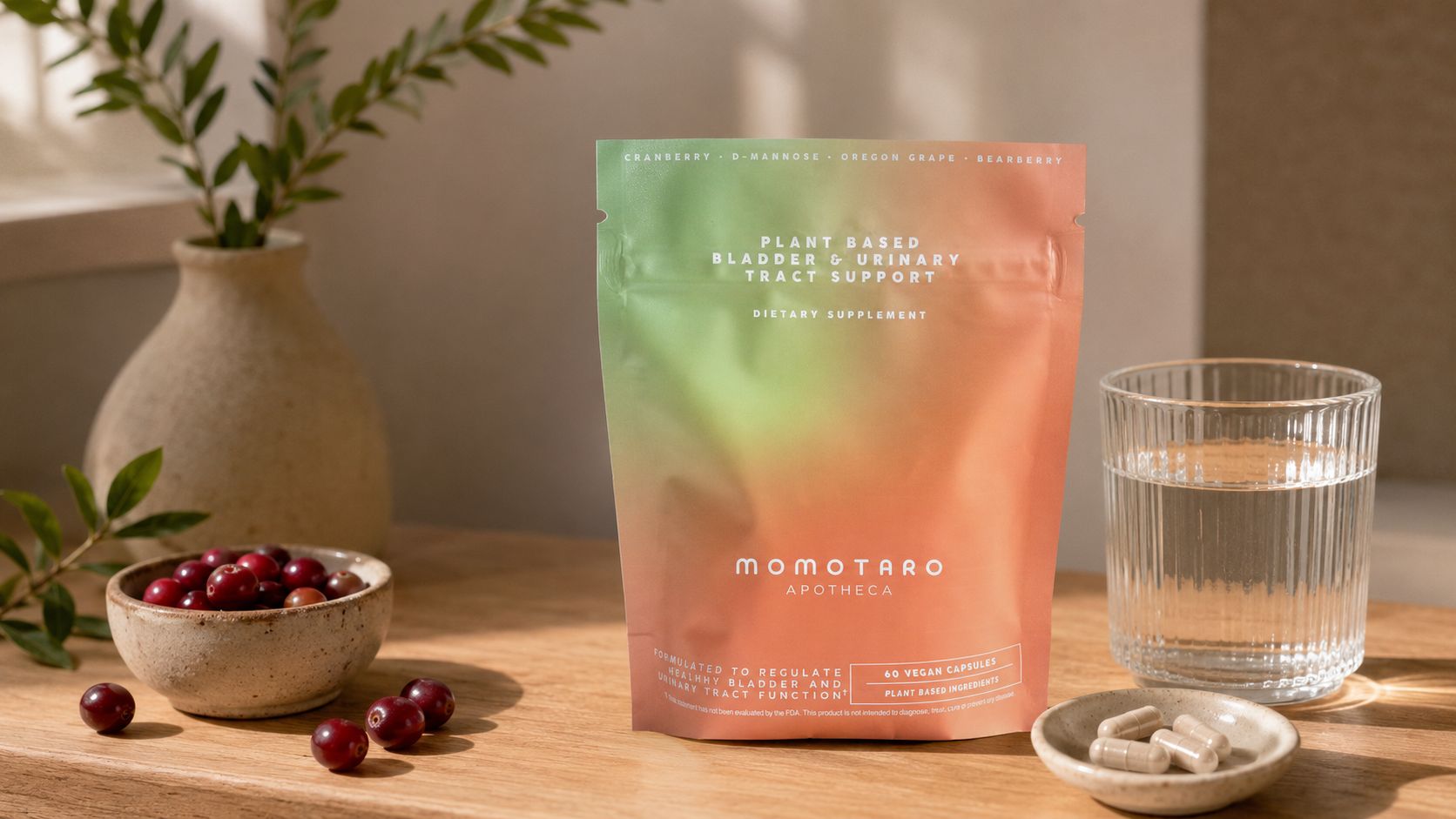
Cranberry
Cranberry has the strongest evidence among common UTI-prevention supplements. The Cochrane review cited above found a reduction in overall UTI risk and among women with recurrent UTIs. A newer PAC-focused meta-analysis found the clearest signal in products providing at least 36 mg of PACs daily, while lower amounts did not show the same significant benefit. The analysis also found benefit mainly with continuous use for 12 to 24 weeks. The 2024 PAC-focused analysis supports checking active PAC content rather than judging a product by its total cranberry extract weight.
Plain-language verdict: cranberry offers modest support, particularly for recurrent uncomplicated UTIs, but the formulation matters.
Juice is a separate choice from a standardized capsule. Sugar content and serving size may matter, especially during pregnancy or for anyone managing blood sugar. Dietary considerations are discussed in this resource on cranberry juice and gestational diabetes risks. For a broader look at product features, see this guide to a bladder support supplement.
D-mannose
D-mannose remains biologically plausible, particularly for infections involving E. coli, because it may interfere with bacterial attachment. The clinical evidence is much less reassuring than that mechanism, however. The AUA says clinicians should tell patients that D-mannose alone may not be effective, following a large randomized trial that found no meaningful difference from placebo.
Plain-language verdict: evidence is insufficient for dependable standalone prevention. It may be a low-risk adjunct for some people, but the research does not support presenting it as a proven replacement for better-supported options.
Lactobacillus probiotics
Probiotics are not one uniform intervention. A vaginal product containing a strain studied for vaginal colonization is not automatically equivalent to an oral capsule containing several unrelated strains. Recent guideline discussion gives vaginal probiotics more attention than oral probiotics alone in some premenopausal patients, but the evidence remains formulation-specific and heterogeneous.
Plain-language verdict: selected patients may have a role for probiotics, particularly when vaginal microbiome support is relevant. Strain and route determine how much the research applies.
Vitamin C and botanical blends
Vitamin C is often promoted as a way to acidify urine. Clinical evidence is limited, and research has not established a dependable preventive effect. Acidic products may also aggravate bladder sensitivity.
Botanicals such as bearberry and other urinary blends have less consistent clinical support than cranberry. Urinary Tract & Pelvic Health Super Supplement is described by its maker as plant-derived and flora-friendly, with support intended for UTIs, interstitial cystitis, bladder discomfort, yeast infections, and bacterial vaginosis. Those descriptions do not prove that the finished formulation prevents recurrent UTIs in controlled clinical trials.
| Supplement | Evidence strength | Guideline position | Key limitation |
|---|---|---|---|
| Standardized cranberry | Moderate support | Commonly considered for prevention | PAC content and duration vary |
| D-mannose | Insufficient for reliable standalone use | AUA advises discussing limited effectiveness | Recent high-quality trial found no recurrence benefit |
| Lactobacillus probiotics | Mixed and strain-specific | Vaginal approaches may be more relevant for some patients | Oral and vaginal products aren't interchangeable |
| Vitamin C | Limited support | Not a primary prevention option | Acidification benefit is uncertain |
| Bearberry and botanical blends | Limited clinical evidence | Not established as standard prevention | Product formulations vary widely |
How These Supplements Actually Work in the Body
A supplement can sound convincing because its biological story is simple. The body, unfortunately, is less simple than the label.
Cranberry PACs and bacterial attachment
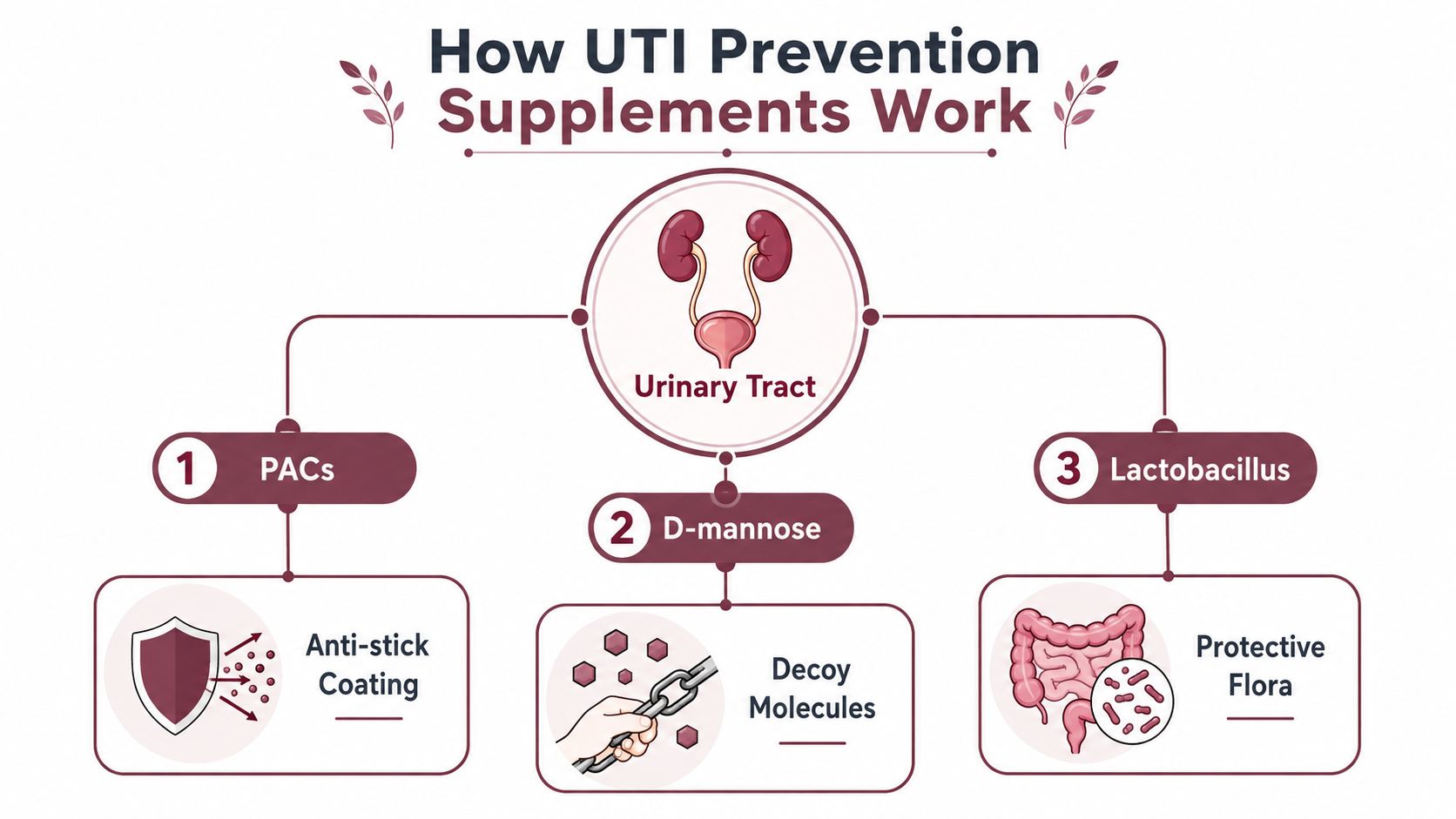
PACs are thought to act less like an antibiotic and more like an anti-stick coating. Some bacteria use hair-like structures to attach to cells lining the urinary tract. PACs may make that attachment harder, so bacteria have fewer opportunities to remain in place.
That mechanism explains why the amount of PACs matters. A capsule can contain a substantial total weight of cranberry extract but still disclose little about the active anti-adhesion compounds. The 2024 analysis found the clearest preventive signal at at least 36 mg of PACs daily, which is why standardized labeling is more informative than a large-sounding extract number. This explanation of D-mannose and cranberry also helps separate their proposed mechanisms.
D-mannose as a decoy
D-mannose is often described as a decoy. Instead of attaching to bladder cells, susceptible bacteria may bind to free D-mannose in urine. Urination can then carry those bacteria out.
The important qualifier is susceptible. This mechanism doesn't mean every UTI-causing organism responds, and it doesn't guarantee that preventing attachment will reduce recurrent infections in real-world patients. The negative randomized evidence matters more than the neatness of the analogy.
Lactobacillus and the vaginal ecosystem
Lactobacillus probiotics aim to support a microbial environment where harmful organisms have fewer opportunities to establish themselves. Certain strains may produce lactic acid, compete for attachment sites, or influence the local environment. But “contains probiotics” is too vague to predict an outcome. Genus, species, strain, route, viability, and the ability to colonize all matter.
A product such as Daily Probiotic is described as being formulated for gut, immune-system, and vaginal-microbiome support. That description identifies its intended wellness use, not a guarantee of recurrent UTI prevention.
Methenamine works differently from these supplements. In acidic urine, it breaks down into formaldehyde, which acts as a urinary antiseptic. Because it's a prescription prevention strategy for appropriate patients, its suitability depends on medical history, kidney function, urine chemistry, and clinician guidance.
Common Myths Worth Letting Go Of
Myth one, any cranberry product will do
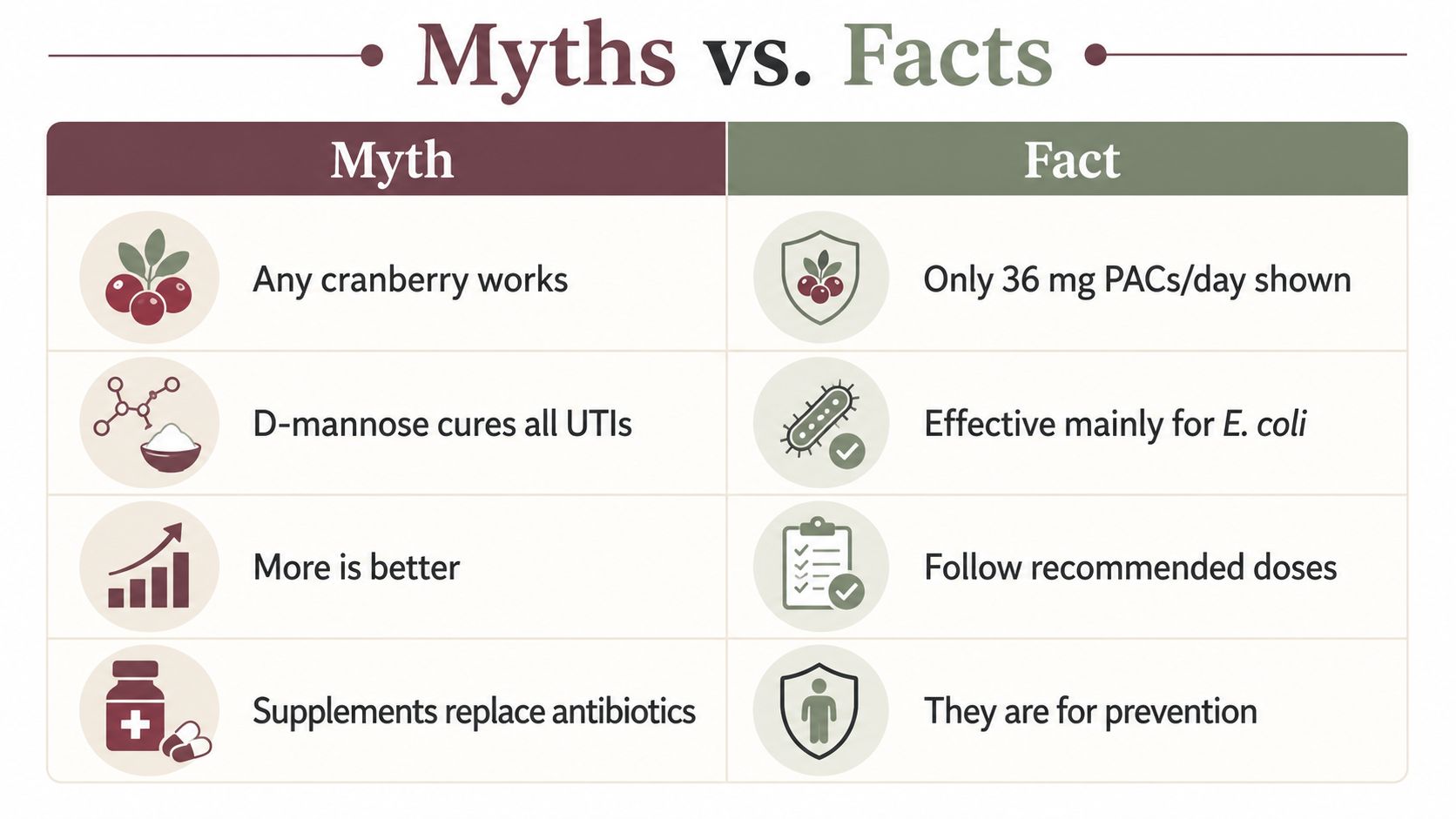
The evidence doesn't support treating cranberry juice, cranberry powder, and every extract capsule as equivalent. The clearest recent signal appeared with products providing at least 36 mg of PACs daily, while lower doses didn't show the same significant benefit. Check the active PAC amount, not just the number of milligrams of “cranberry extract.”
Myth two, D-mannose is a guaranteed E. coli fix
D-mannose's decoy mechanism is reasonable, but clinical outcomes have been inconsistent. The AUA's recent position is more cautious because a randomized trial found no difference from placebo. If you choose it, think of it as an uncertain adjunct, not a reliable prevention plan or treatment for active symptoms.
Myth three, more probiotic species means better protection
A long ingredient list can look impressive while hiding the information you need. Probiotic research depends on specific strains, and an oral product can't automatically reproduce the effects of a vaginal formulation. More organisms and a larger colony-forming-unit number don't prove better UTI prevention.
Myth four, vitamin C can acidify urine enough to stop infections
Vitamin C may alter urine chemistry, but clinical evidence for recurrence prevention is weak. Larger doses can also irritate the digestive tract and create problems for people vulnerable to oxalate stones. Bladder sensitivity makes an acidifying product an especially poor choice without professional advice.
Perimenopause adds another layer. Hormonal changes can alter vulvovaginal tissue and the local microbial environment, so a broader comfort routine may be relevant even when a supplement isn't the main UTI-prevention tool. The Perimenopause Support Kit combines a hydrosol, tonic, and urinary and pelvic health support supplement, according to its product description. It shouldn't replace evaluation of recurrent infections or a discussion of vaginal estrogen where appropriate.
How to Choose a Quality UTI Prevention Supplement
Start with the ingredient that has the clearest evidence for the goal you're pursuing. Don't let a broad “urinary support” blend make you do the work of identifying hidden doses.
Read the active-ingredient panel
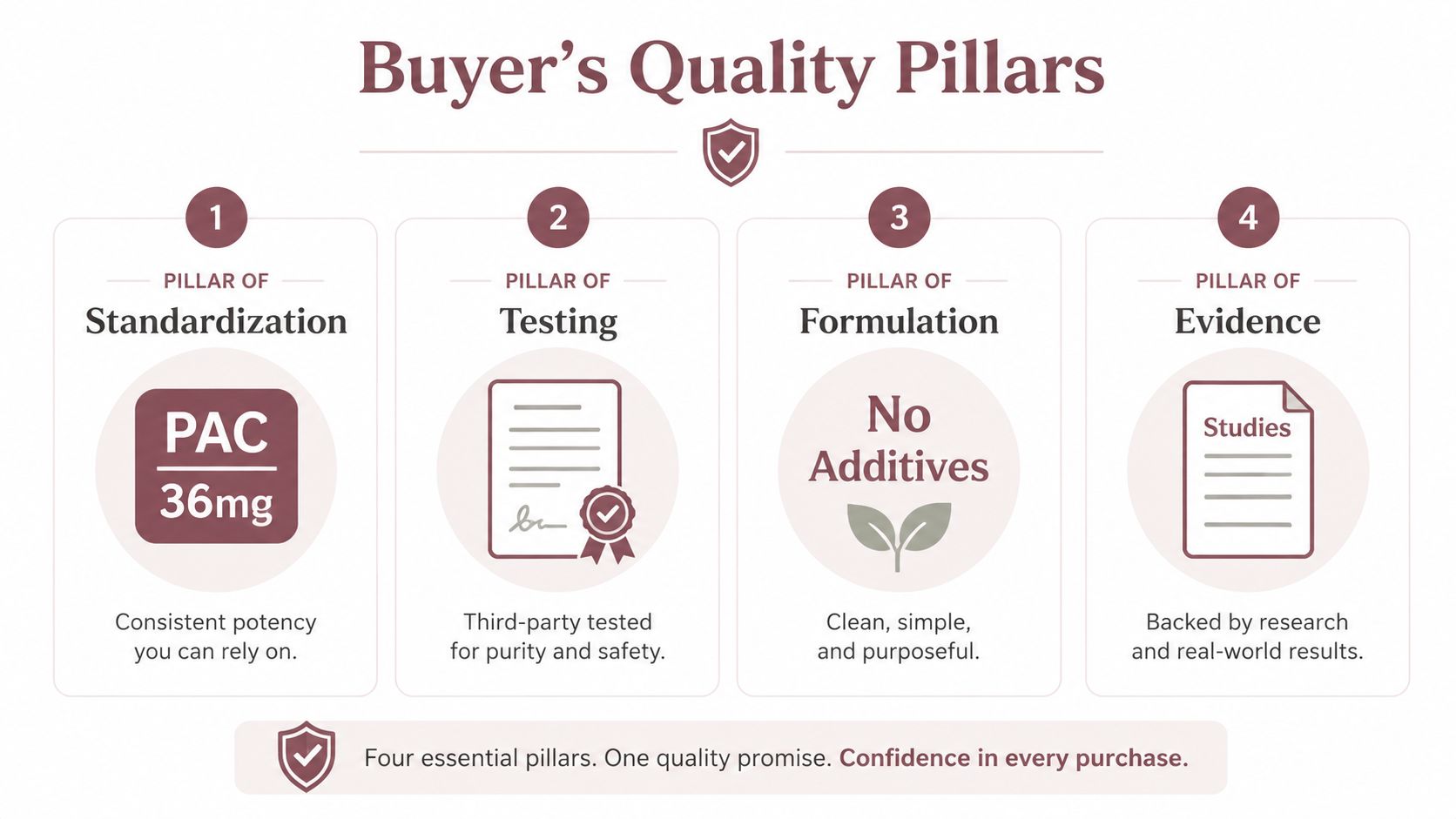
For cranberry, look for a stated PAC amount per serving. The current evidence makes 36 mg of PACs daily a useful reference point, though it isn't a universal guarantee for every individual.
For D-mannose, a transparent label should identify the amount of D-mannose rather than burying it in a proprietary blend. Since clinical evidence is uncertain, avoid products that present it as a guaranteed cure or a replacement for medical care.
For probiotics, look for the full genus, species, and strain designation. “Lactobacillus blend” doesn't tell you enough to compare the product with a specific research formulation.
Check testing and formulation
Third-party testing can provide useful information about identity, purity, and manufacturing controls. Seals from organizations such as USP, NSF, ConsumerLab, or Informed Sport may help, but confirm what the seal covers and whether it applies to the finished product.
Label test: If you can't determine the active dose, the specific probiotic strain, or what independent testing covers, you can't make a meaningful evidence comparison.
Watch for these warning signs:
- Proprietary blends: They can conceal how much of each ingredient you're taking.
- Cure language: Prevention support is not treatment for an established infection.
- Unclear serving instructions: A product may require more than one capsule or scoop to reach the studied amount.
- Unnecessary complexity: More ingredients create more interaction and side-effect questions without necessarily improving evidence.
Finally, compare the cost of the product with the cost of its effective daily dose, not the sticker price alone. A cheaper bottle may provide less active PAC or fewer clearly identified probiotic strains. For broader guidance on how to choose tested supplements safely, focus on verification rather than branding.
Where Supplements Fit Next to Hydration, Methenamine, and Vaginal Estrogen
Supplements sit inside a larger prevention plan. They aren't automatically the first or strongest option for every person with recurrent UTIs.
Hydration is a practical foundation because regular urine flow may help flush bacteria from the urinary tract. Recent guideline discussions also place increased water intake alongside cranberry and methenamine hippurate as prevention options. That doesn't mean drinking excessive amounts is better. Your clinician can help account for kidney, heart, and other conditions that affect fluid recommendations.
Methenamine hippurate deserves attention because it's not a supplement, yet it often gets overlooked in “natural prevention” conversations. It functions as a urinary antiseptic and may offer an antibiotic-sparing option for appropriate patients. A clinician needs to determine whether it fits your health history and medication profile.
Life stage changes the decision
Postmenopausal patients may have vaginal tissue and microbiome changes that make recurrent UTIs more likely. Vaginal estrogen addresses that local environment directly and has stronger guideline support for appropriate patients than most oral supplements. It's not a generic wellness product, so discussing risks, benefits, and formulation with a healthcare professional matters.
| Strategy | Guideline endorsement | Approximate risk reduction | Best candidate |
|---|---|---|---|
| Increased water intake | Supported in recent prevention guidance | Not stated in the verified data | People whose fluid intake is low and who can safely increase it |
| Standardized cranberry | Supported as an option | 26% overall and among women with recurrent UTIs in the Cochrane review | People seeking non-antibiotic prevention with a disclosed PAC dose |
| Methenamine hippurate | Emphasized in recent guideline discussions | Not stated in the verified data | Clinician-selected patients seeking an antibiotic-sparing strategy |
| Vaginal estrogen | Strongly relevant for appropriate postmenopausal patients | Not stated in the verified data | Patients with menopause-related tissue and microbiome changes |
| D-mannose | Evidence insufficient for standalone prevention | No demonstrated benefit in the cited randomized trial | People considering it only after understanding its uncertainty |
For a plain-language overview of layered, non-antibiotic habits, see how to prevent UTI naturally. The central point is simple: use supplements selectively, then escalate to prescription prevention or further evaluation when the pattern calls for it.
Safety, Side Effects, and When to Talk to a Provider
“Natural” doesn't mean universally safe. A supplement's suitability depends on your medications, kidney health, pregnancy status, blood sugar, stone history, and the reason you're having urinary symptoms.
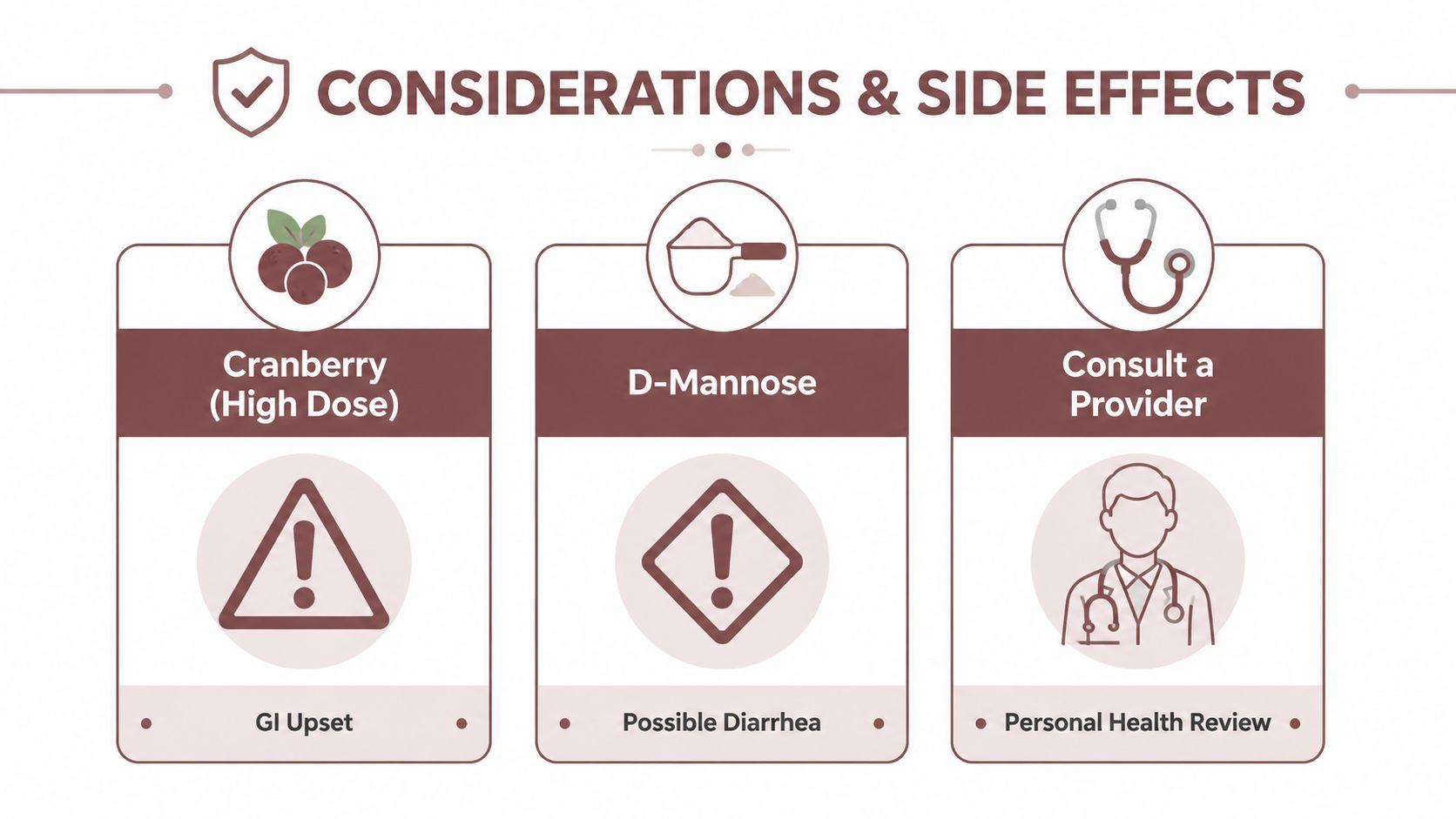
High amounts of cranberry may cause gastrointestinal upset and may not be appropriate for people prone to kidney stones. Cranberry can also interact with warfarin, so anyone taking it shouldn't start a concentrated product without checking with a clinician or pharmacist.
D-mannose is often tolerated, but it may affect blood-sugar management in people with diabetes. Product quality also varies, and unregulated products may contain contaminants. Given the uncertain prevention evidence, there's little reason to accept a poorly labeled product just because its marketing sounds reassuring.
Pay attention to the less obvious risks
Lactobacillus probiotics can cause bloating or digestive discomfort. Serious infection is uncommon, but people who are severely immunocompromised should ask a clinician before using probiotic products.
Vitamin C at high doses can irritate the gastrointestinal tract and increase oxalate kidney-stone risk in susceptible people. Acidic products can also aggravate bladder pain or sensitivity. A supplement that makes burning worse is not helping, even if the label calls it urinary support.
Stop self-treating and seek medical care for fever, flank pain, blood in the urine, pregnancy, worsening symptoms, or symptoms that persist beyond 48 hours. Those signs can indicate a more serious infection or a problem that supplements cannot address.
A prevention product should never delay a urine evaluation when symptoms are active, severe, or unusual for you.
Recurrent infections despite prevention efforts deserve a proper review. A clinician may consider urine cultures, medication and diabetes history, structural causes, menopause-related changes, or prescription options such as methenamine or vaginal estrogen. Supplements can complement that process, but they can't replace diagnosis or treatment.
Momotaro Apotheca offers plant-based, pH-conscious vulvovaginal care products and urinary and pelvic health support options for people managing discomfort, irritation, and recurring concerns. Visit Momotaro Apotheca to explore products and educational resources, then discuss any supplement choice with your healthcare professional if symptoms recur or you take medication.


