


Women's Intimate Care: A Complete Guide for Every Life Stage
Most advice about women's intimate care starts with the wrong premise: that the vagina is dirty, the vulva is failing, or a scented product can make a healthy body more acceptable. It can't. A healthy intimate-care routine isn't about erasing every smell, discharge change, or sensation. It's about understanding anatomy, protecting sensitive tissue, recognizing when symptoms need testing, and adapting care as hormones, sexual activity, pregnancy, recovery, and aging change the body.
That distinction matters because comfort care and medical care aren't the same thing. A gentle external balm may ease irritated skin, but it can't diagnose bacterial vaginosis, candidiasis, a sexually transmitted infection, dermatitis, or menopause-related tissue changes. Women's intimate care works best as health literacy, not as a larger product aisle.
Table of Contents
- Rethinking What Intimate Care Actually Means
- How the Vulvovaginal Ecosystem Works
- Your Everyday Intimate Care Routine
- After-Sex Care and Post-Coital Discomfort
- Life Stage Routines From Postpartum to Perimenopause
- Reading Product Labels Without the Marketing
- Building Your Personalized Routine
Rethinking What Intimate Care Actually Means
The vagina is the internal muscular canal. The vulva is the external genital tissue, including the labia and the skin around the vaginal opening. These structures are connected, but they aren't interchangeable. Confusing them encourages people to put external cleansers inside the vagina, scrub delicate vulvar skin, or treat normal discharge as evidence of poor hygiene.
The vagina doesn't need rescuing from its ordinary biology. It has its own microbial environment, secretions, and cleaning process. The vulva does need care, but vulvar skin is sensitive and can react to friction, fragrance, sweat, menstrual products, detergents, and repeated washing.
Shame creates unnecessary work
The intimate-care market often turns ordinary body functions into problems to solve. A wipe promises freshness. A douche promises control. A perfumed wash implies that your natural scent is unacceptable. This messaging leaves out people whose needs don't fit a narrow idea of polished femininity, including postmenopausal women, postpartum bodies, people with chronic irritation, and anyone who doesn't smell like a spa.
Natural scent isn't the same as infection. A change in odor can matter, especially when it appears with discharge, pain, itching, or burning. But masking an odor doesn't explain its cause, and aggressive cleaning can make irritation harder to interpret.
Bacterial vaginosis is widespread and often silent. The CDC's BV data reports that 84% of women who met laboratory criteria for BV reported no symptoms in the cited U.S. analysis. That makes symptom-only self-assessment unreliable. It also shows why intimate care can't be reduced to smelling clean or buying the right wash.
Practical rule: Use products to support comfort on the external vulva. Use testing and clinical care to investigate persistent or unusual symptoms.
You don't need to buy anything to begin. Learn the difference between the vulva and vagina, notice your baseline, stop treating normal variation as failure, and pay attention when a symptom changes character. That foundation makes every later choice more sensible.
How the Vulvovaginal Ecosystem Works
The vulvovaginal area is an ecosystem, not a surface that becomes healthier the more aggressively you clean it. Microorganisms, tissue, mucus, hormones, and moisture interact continuously. Some bacteria help maintain a stable environment, while hormonal changes, antibiotics, irritation, and other factors can alter that balance.
A useful analogy is a sourdough starter. You don't improve it by pouring disinfectant into the jar. You protect the conditions that allow the useful organisms to thrive. The vaginal microbiome isn't identical to sourdough, of course, but the comparison makes one principle clear: supporting an ecosystem is different from sterilizing it.
What changes normally
Discharge can vary in amount, texture, and appearance across the menstrual cycle. Mucus also responds to hormonal changes, sexual arousal, pregnancy, breastfeeding, and menopause. A shift from your usual pattern deserves attention when it's persistent, strongly unpleasant, accompanied by pain or itching, or associated with bleeding that isn't expected for you. It doesn't automatically mean you need stronger soap.
The vulva is skin. Handle it more like sensitive eyelid skin than like a kitchen surface. The vagina is mucosal tissue with its own cleaning process. That is why internal cleansers, douching, and fragranced products can create a problem while claiming to solve one.
The World Health Organization's guidance on bacterial vaginosis describes BV as a disruption of the vaginal microbial ecosystem rather than a single-organism infection. It also identifies excessive cleansing, douching, and intravaginal practices as behaviors that can disturb protective microbial and mucosal conditions.
Why cleaner isn't always better
Water can remove sweat and ordinary residue from the external vulva without adding a new chemical exposure. If you use a cleanser, keep it external, mild, and fragrance-free, and stop if it stings or leaves the skin tight. No product should go inside the vagina just because its label uses words such as “feminine,” “fresh,” or “balancing.”
A stable routine is deliberately boring. It avoids turning every normal smell or discharge change into a cleaning emergency. That restraint protects the ecosystem you're trying to support.
For readers who want a microbiome-focused overview, this guide to maintaining a healthy vaginal microbiome can provide additional educational context. It shouldn't replace testing when symptoms persist or recur.
Your Everyday Intimate Care Routine
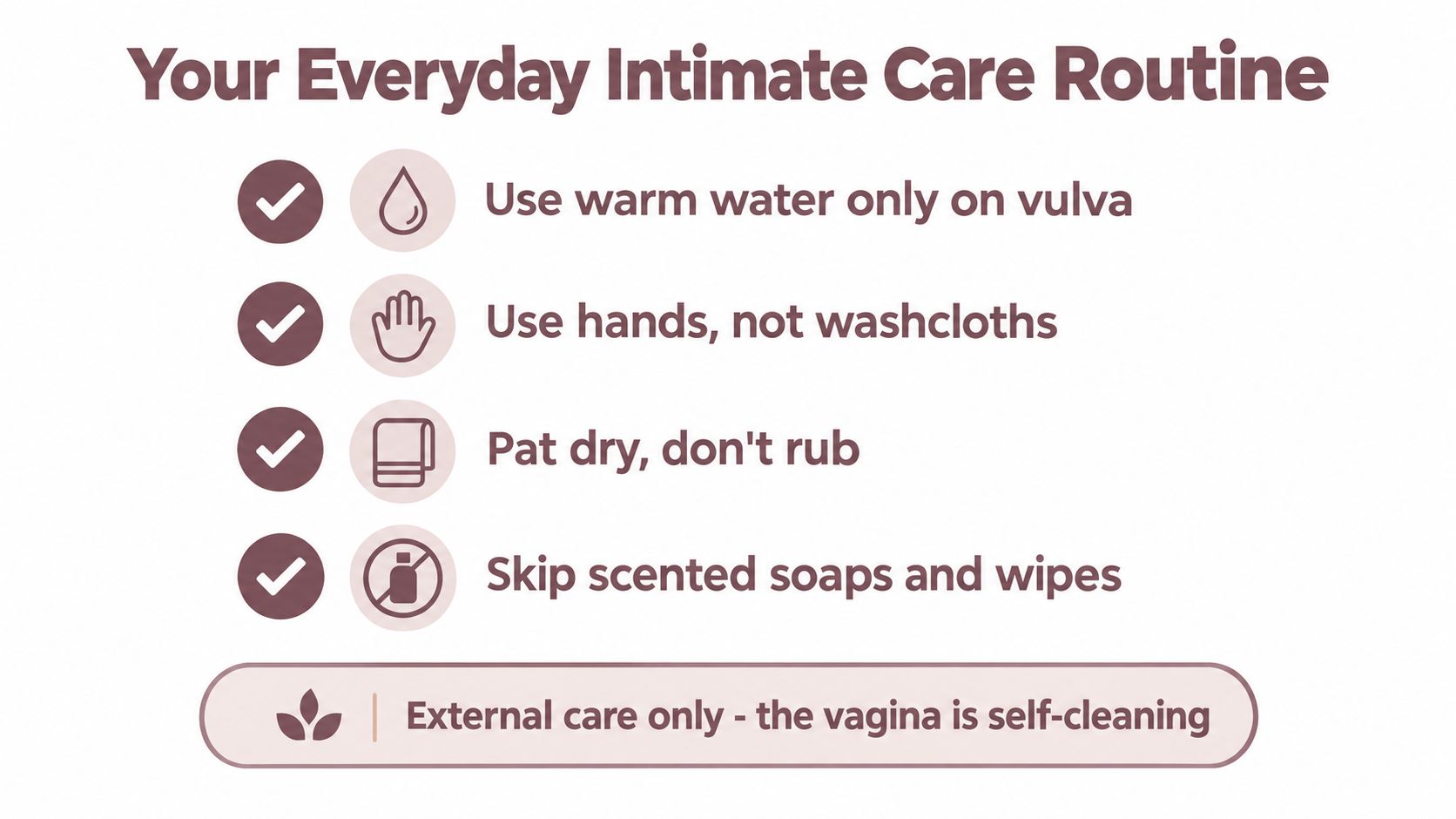
Start with the smallest routine that keeps you comfortable. In the shower, rinse the external vulva with warm water. Use clean hands rather than a rough washcloth, and pat dry instead of rubbing. If you have a diagnosed skin condition or a clinician has recommended a specific cleanser, follow that advice rather than adding several products at once.
The main things to skip are douching, scented wipes, antibacterial soaps, fragranced washes, and body wash that runs over the vulva. These products can irritate sensitive tissue and make it difficult to tell whether a symptom comes from the product or from an underlying condition. “Feminine hygiene” on a label doesn't make a formula appropriate for internal use.
Small habits with a practical payoff
Wipe from front to back after using the toilet. Choose underwear and clothing that don't trap heat or create constant friction, and change out of sweaty workout clothes or wet swimwear when you can. You don't need to make your body sterile after exercise, a sauna, or a hot tub. A rinse, gentle drying, and a change into dry clothing are usually more sensible than scrubbing.
During menstruation, follow the instructions for your specific pad, tampon, cup, or period underwear. Change or clean products according to their instructions and your flow, and wash your hands before and after handling internal menstrual products. If a product causes burning, rash, pressure, or unusual discomfort, stop using it and consider whether the material, fragrance, or friction is contributing.
Avoid turning bathing into treatment. A warm, plain sitz bath may feel soothing for some people during recovery, but scented bath additives can irritate vulvar skin. Sleep without underwear only if it feels comfortable and practical for you. “Breathable” is a comfort preference, not a test of cleanliness.
Your baseline is useful data. Notice your usual discharge, scent, skin comfort, and cycle-related changes so you can recognize a meaningful departure.
Itching, swelling, pain, unusual discharge, persistent odor, burning urination, fever, or symptoms that keep returning move the question beyond routine hygiene. Pregnancy, recent antibiotic use, a new sexual exposure, or a weakened immune system also lowers the threshold for contacting a clinician.
For a simple external-care framework, see this vulva and vaginal wellness routine. The point isn't to add more steps. It's to remove the irritating ones.
After-Sex Care and Post-Coital Discomfort
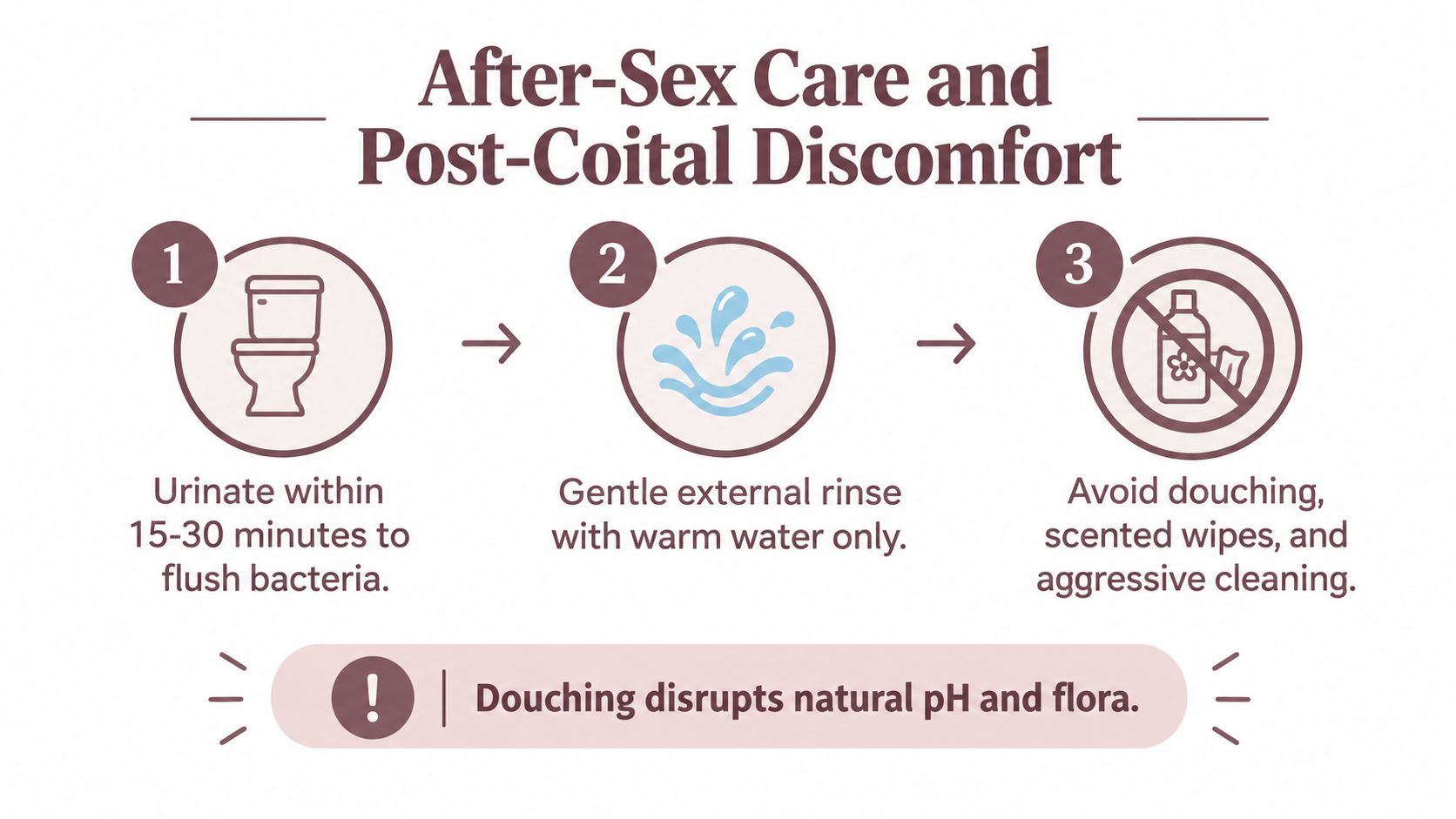
After sex, begin with comfort rather than a decontamination ritual. Urinate when practical, rinse the external vulva with warm water if you want to remove lubricant or bodily fluids, and pat dry. Don't douche, scrub, or use scented wipes to compensate for sex. Those actions can add friction and irritation to tissue that may already be sensitive.
Lubricant is a friction-management tool, not evidence that your body is malfunctioning. Choose a product that feels comfortable, check the full ingredient list, and stop using it if you notice burning, itching, swelling, or a recurring reaction. “Warming,” heavily flavored, or strongly fragranced products deserve particular caution because sensation isn't the same as tissue compatibility.
Separate soreness from warning signs
Friction-related soreness may settle after rest and gentle external care. Recurrent symptoms are different. Burning during urination can point toward a urinary problem, while itching, unusual discharge, or odor can have several possible causes. Post-coital bleeding and pelvic pain deserve evaluation rather than another round of cleansing or a product trial.
BV can overlap symptomatically with other vaginal conditions, and some cases produce no noticeable symptoms. The CDC's clinical information on BV supports the central lesson here: laboratory assessment can identify a condition that self-assessment misses. If symptoms recur, change, or don't respond as expected, ask about appropriate testing, which may include a vaginal swab, urine testing, or sexual-health screening.
A post-sex pattern can also reflect contact dermatitis, vulvar pain conditions, hormonal tissue changes, or another gynecologic issue. You don't need to diagnose yourself from a symptom list. Write down when discomfort starts, what lubricant or barrier method you used, whether there was bleeding, and whether the symptoms happen with every partner or product. That record gives a clinician something more useful than “I think I have an infection again.”
Recurrent post-coital discomfort is a clinical signal, not a hygiene failure.
After-sex care should reduce friction and protect the skin barrier. It shouldn't conceal a pattern that needs an explanation.
Life Stage Routines From Postpartum to Perimenopause
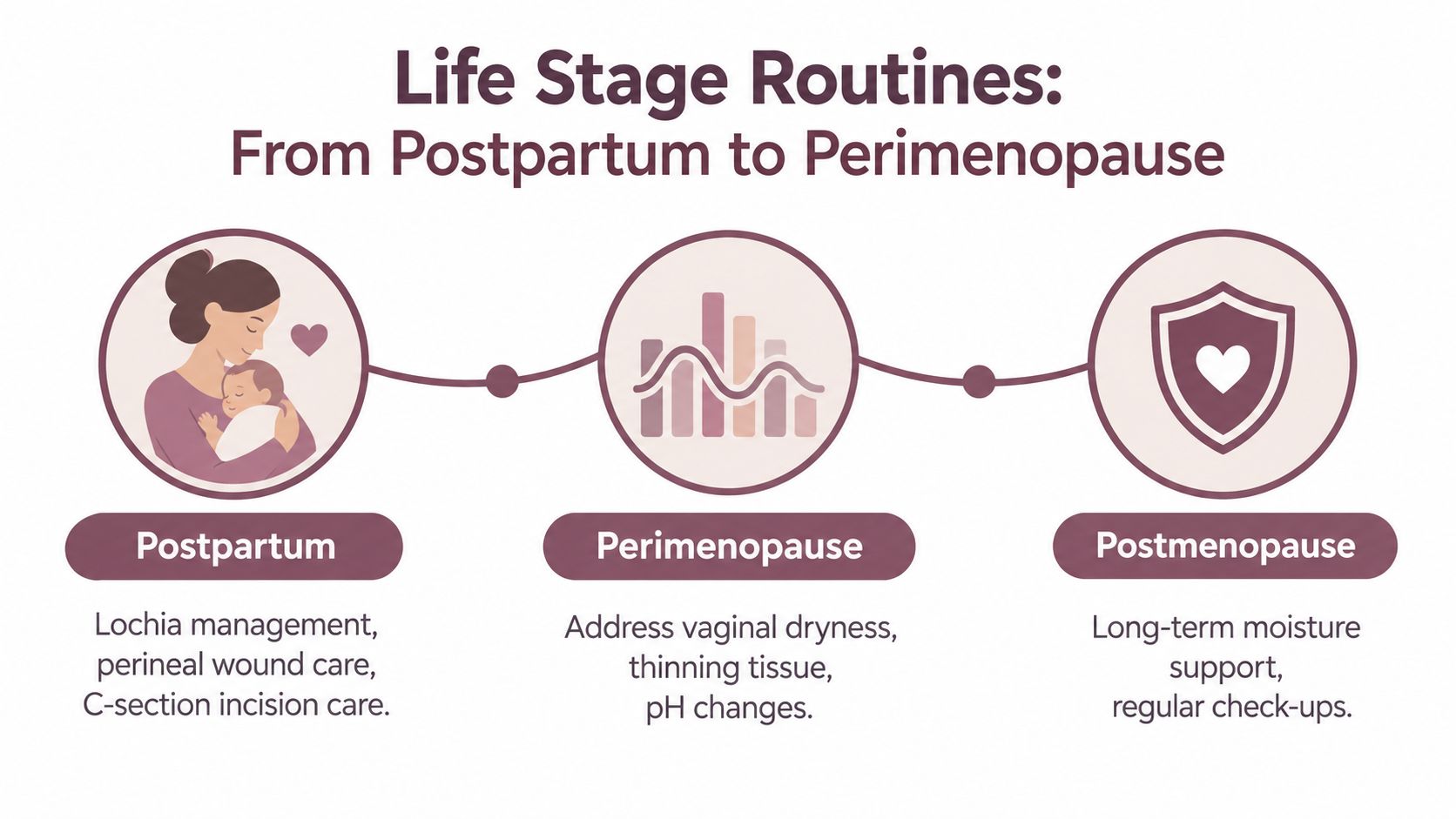
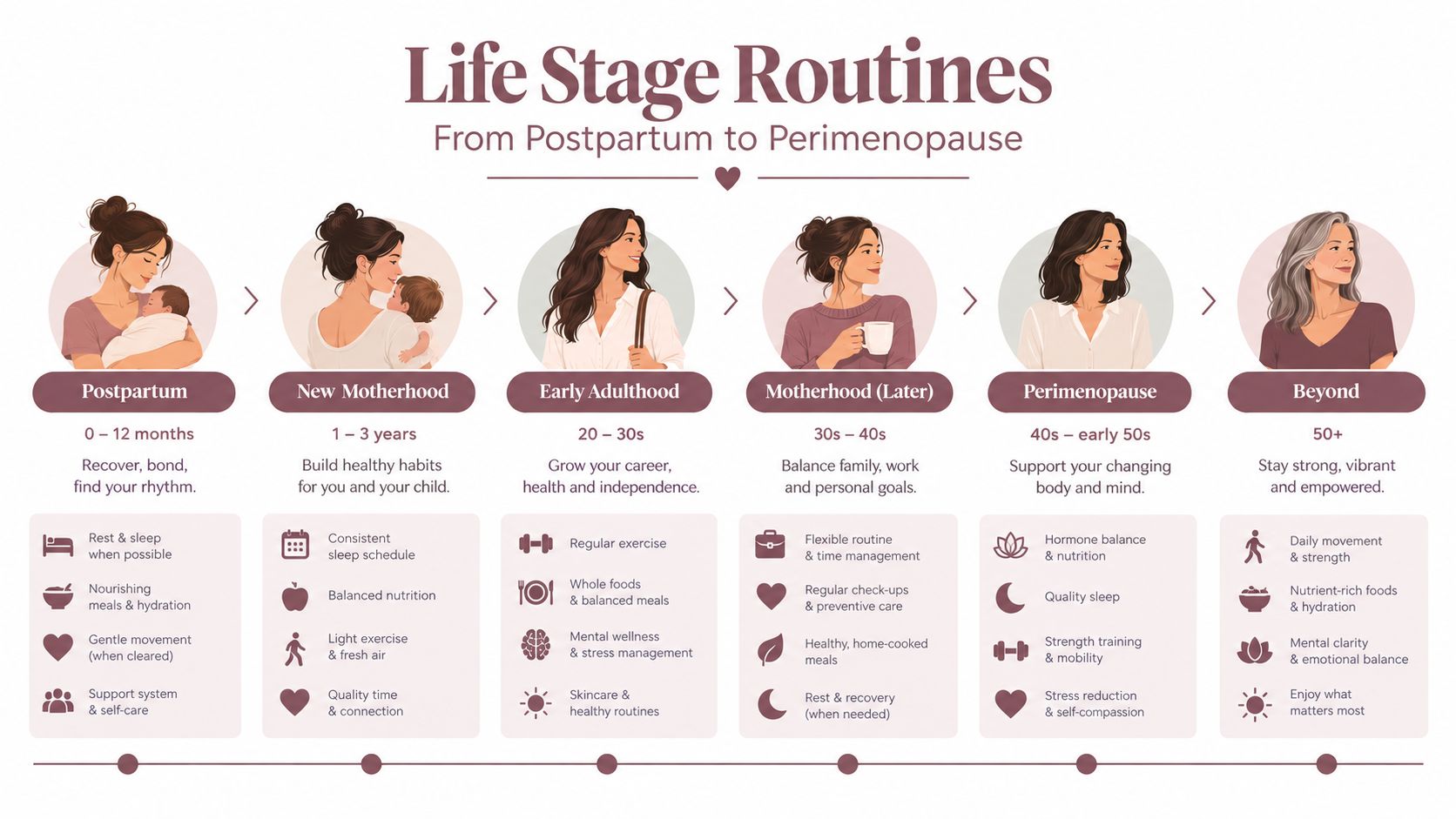
The same body part can need different support at different points in life. Postpartum healing, perimenopause, and postmenopause aren't hygiene problems. They involve changes in tissue, hormones, moisture, sensation, and recovery demands.
Postpartum care is wound-aware care
After birth, follow the instructions given for lochia, perineal stitches, tears, or a cesarean incision. Keep healing areas clean and dry as directed, use only recommended products, and avoid inserting anything into the vagina until your maternity clinician says it's safe. A plain sitz bath or other comfort measure may be appropriate for some people, but pain that worsens, fever, heavy bleeding, foul-smelling discharge, or a concerning wound needs prompt medical advice.
Postpartum bodies also deserve practical support rather than polished expectations. Soft, breathable clothing, careful pad changes, hydration, and help with bowel movements can matter more than a shelf of intimate washes. If sex becomes painful, pause and discuss it. Pain isn't a requirement of recovery.
Hormones change the care equation
During the menopausal transition, declining estrogen can affect lubrication, tissue thickness, elasticity, vaginal pH, urinary comfort, and susceptibility to irritation. The NHS guidance on urogenital atrophy management reports that approximately one in four women experience associated symptoms before menopause, around one in two after menopause, and approximately 70% in their seventies.
Those symptoms can include dryness, irritation, painful intercourse, and urinary symptoms. The same NHS guidance notes that at least one symptom of genitourinary syndrome of menopause is estimated in 14% to 87% of postmenopausal women, with the range reflecting differences in populations, definitions, and methods.
Nonhormonal moisturizers and lubricants can support comfort, but they don't reverse estrogen-related tissue thinning. For persistent symptoms, bleeding, recurrent urinary infections, or unexplained pain, discuss medical options with a clinician. Local vaginal estrogen may be appropriate for some people, and the decision should account for medical history rather than product marketing.
A life-stage routine should evolve, not be discarded. This postpartum feminine-care resource may help with practical recovery questions, while persistent symptoms still belong with a qualified healthcare professional.
Reading Product Labels Without the Marketing
A product label can sound scientific while telling you very little about whether it suits your body. Start by asking three questions: Where is this product intended to go? What problem is it meant to address? What happens if symptoms continue? If the answers are vague, the packaging is doing more work than the formulation.
For external vulvar care, look for a short, transparent ingredient list and avoid products that rely on fragrance, parfum, strong essential oils, menthol, or aggressive sensory effects. “Natural” describes an origin, not a guarantee of safety. A plant extract can still irritate sensitive skin, especially after shaving, sex, childbirth, or a flare.
A quick label-reading comparison
| Ingredient category | Avoid and why | Look for and why |
|---|---|---|
| Fragrance and sensory additives | Fragrance, parfum, menthol, and heavily flavored formulas can make irritation harder to identify | Fragrance-free products with clear use instructions reduce avoidable exposures |
| Essential oils and botanical blends | Tea tree and complex essential-oil blends may be unsuitable for sensitive vulvar skin | A short, disclosed formula makes it easier to identify a reaction |
| Preservatives and additives | If a product repeatedly stings or causes a rash, stop using it regardless of its “clean” claims | Straightforward labeling and patch testing on external skin can support cautious use |
| Lubricant bases | Products that burn, dry quickly, or trigger repeated symptoms aren't a good match | Choose a lubricant for friction reduction and use a moisturizer separately when ongoing dryness is the issue |
| “pH-balanced” language | The phrase alone doesn't prove that a product is suitable for the vulva or vagina | Check the intended site, directions, ingredients, and whether the product is external or intravaginal |
“pH-balanced” also isn't a universal safety certificate. A product designed for external vulvar skin shouldn't be treated as a vaginal treatment, and a product marketed for infection shouldn't be assumed to diagnose or cure one.
The Yuve probiotic buying advice offers a useful framework for comparing probiotic labels, including strains and shelf-life information. Probiotics may be discussed as supportive care, but they shouldn't replace testing or standard treatment for suspected BV, yeast infection, or a urinary infection.
The Bacterial Vaginosis Bundle - Organic BV Treatment Kit is described as including a salve, probiotic, and suppositories for soothing and supportive care. Its own product information advises medical consultation for first-time symptoms and caution during pregnancy, breastfeeding, or medication use. That kind of warning matters. A product can support comfort without becoming a substitute for diagnosis or prescription therapy.
Building Your Personalized Routine
Build your routine in layers. First, establish a minimum that is unlikely to create new irritation: warm water on the external vulva, gentle drying, front-to-back wiping, clothing that feels comfortable, and adequate lubrication during sex. Don't add a cleanser, oil, suppository, probiotic, and wash at the same time. If your skin reacts, you won't know which change caused it.
Then add support for the situation in front of you.
- During postpartum recovery: Follow your clinician's instructions for lochia, wounds, stitches, and incision care. Use comfort measures only when approved, and report worsening pain, fever, heavy bleeding, or concerning discharge.
- During perimenopause: Treat dryness during sex and ongoing dryness as related but distinct problems. A lubricant helps reduce friction during sexual activity, while a moisturizer may provide more sustained hydration. Persistent symptoms can justify a conversation about local treatment options.
- After antibiotics: Pay attention to new itching, discharge, odor, or urinary symptoms rather than assuming you need a familiar remedy. Food-based probiotic choices may be part of general wellbeing, but recurring symptoms need a clinical pathway.
- After exercise or swimming: Change out of wet or sweaty clothing, rinse gently if needed, and let the skin dry. Scrubbing is not a preventive strategy.
- After sex: Urinate when practical, rinse the external vulva with warm water if comfortable, and record recurring symptoms instead of repeatedly self-treating.
Use a clear escalation rule
Self-care may be reasonable when irritation is mild, clearly linked to a new external product, and improves after stopping that product. Seek clinical guidance when you notice:
- Recurring symptoms: Itching, odor, discharge, or burning keeps returning.
- Unexpected bleeding: You have post-coital bleeding, bleeding after menopause, or bleeding that doesn't fit your usual pattern.
- Persistent pain: Pelvic pain, painful sex, unexplained vulvar pain, or pain that interferes with daily life continues.
- Systemic or pregnancy concerns: You have fever, feel acutely unwell, are pregnant, or have symptoms that need pregnancy-specific advice.
- A changed pattern: Your usual symptom has become stronger, lasted longer, or stopped responding to the approach that previously helped.
BV treatment commonly involves antimicrobial therapy, most often metronidazole, according to the WHO's bacterial vaginosis fact sheet. Recurrent BV may require a different management plan from a single episode. Repeating an over-the-counter product without confirming the cause can delay the care you need.
A clinician visit isn't a failure of your routine. It's what a literate routine includes when the available evidence has reached its limit. Keep a short symptom history, bring product names or photographs of labels, and describe timing, triggers, sexual activity, menstrual or menopausal status, and previous test results.
Momotaro Apotheca offers plant-based, cruelty-free vulvovaginal care products, including external balms, oils, ingestibles, and curated routines for daily care, after-sex care, perimenopause, and postpartum needs. Explore the educational resources and supportive product options at Momotaro Apotheca, and choose care that complements clinical evaluation rather than replacing it.


