


Yeast Infection Home Remedy: What Works and When to Stop
It's late, the itching won't settle, and you're searching for a yeast infection home remedy before deciding what to buy. You want relief, but you're not completely sure this is yeast. The useful distinction is comfort versus treatment. You can soothe irritated skin at home, but treating a suspected infection starts with deciding whether self-care is appropriate at all.
Table of Contents
- Check Your Symptoms Before Reaching for a Remedy
- How to Run a Safe Home Care Course Step by Step
- Which Home Remedies Have Evidence and Which to Skip
- Who Should Skip Home Remedies and When Symptoms Keep Returning
- Prepare for the Clinician Visit and Your Next Step
Check Your Symptoms Before Reaching for a Remedy
Is this the same itching, discharge, and burning you've had before, and did a clinician confirm that episode was yeast? If the answer isn't clearly yes, don't use a familiar-looking symptom as your diagnosis.
Yeast infections are common, so recognition can feel reassuring. But itching, redness, burning, and discharge also occur with bacterial vaginosis, sexually transmitted infections, dermatitis, and other conditions. Even a previous diagnosis doesn't guarantee that you can identify the next episode accurately.
Home care suitability by symptom situation
Use this table to choose your next action, not to diagnose yourself.
| Situation | Home care suitable? | Next step |
|---|---|---|
| Familiar itching or thick white discharge, mild to moderate, previously diagnosed | Yes, with an OTC azole if no complicating factors apply | Follow the product's full labeled course |
| First episode, or no prior clinician diagnosis | Not yet | Clinical evaluation and testing first |
| Fever, chills, pelvic pain, or foul odor | No | Prompt clinician evaluation |
| Symptoms that persist after OTC treatment or return within two months | No, stop self-treating | Clinical evaluation and testing, as recommended in the CDC candidiasis guidance |
| Itching or burning with sores, bleeding, or new genital lesions | No | Clinician evaluation, including assessment for a sexually transmitted infection |
The first row is a narrow permission, not a general green light. It applies to familiar, mild to moderate symptoms without pregnancy, frequent recurrence, severe symptoms, or a health condition that complicates treatment.
If burning is your main concern, don't assume it identifies the problem. This guide to UTI versus yeast infection symptoms can help you describe what you're experiencing, but it can't replace testing when the cause is uncertain.
Triage rule: A home remedy may be a first step for a known pattern. It isn't a diagnostic tool.
Your stop point should be clear before you open a package. A first episode needs assessment. An unusual episode needs assessment. A familiar episode that doesn't resolve needs assessment rather than a different household remedy.
How to Run a Safe Home Care Course Step by Step
If you fit the home-treatment row, keep the routine simple. Use a proven medicine for the suspected infection and gentle measures for external discomfort. Adding more products makes it harder to tell what's helping and what's irritating your skin.
Keep the initial decision and gentle washing separate from treatment.
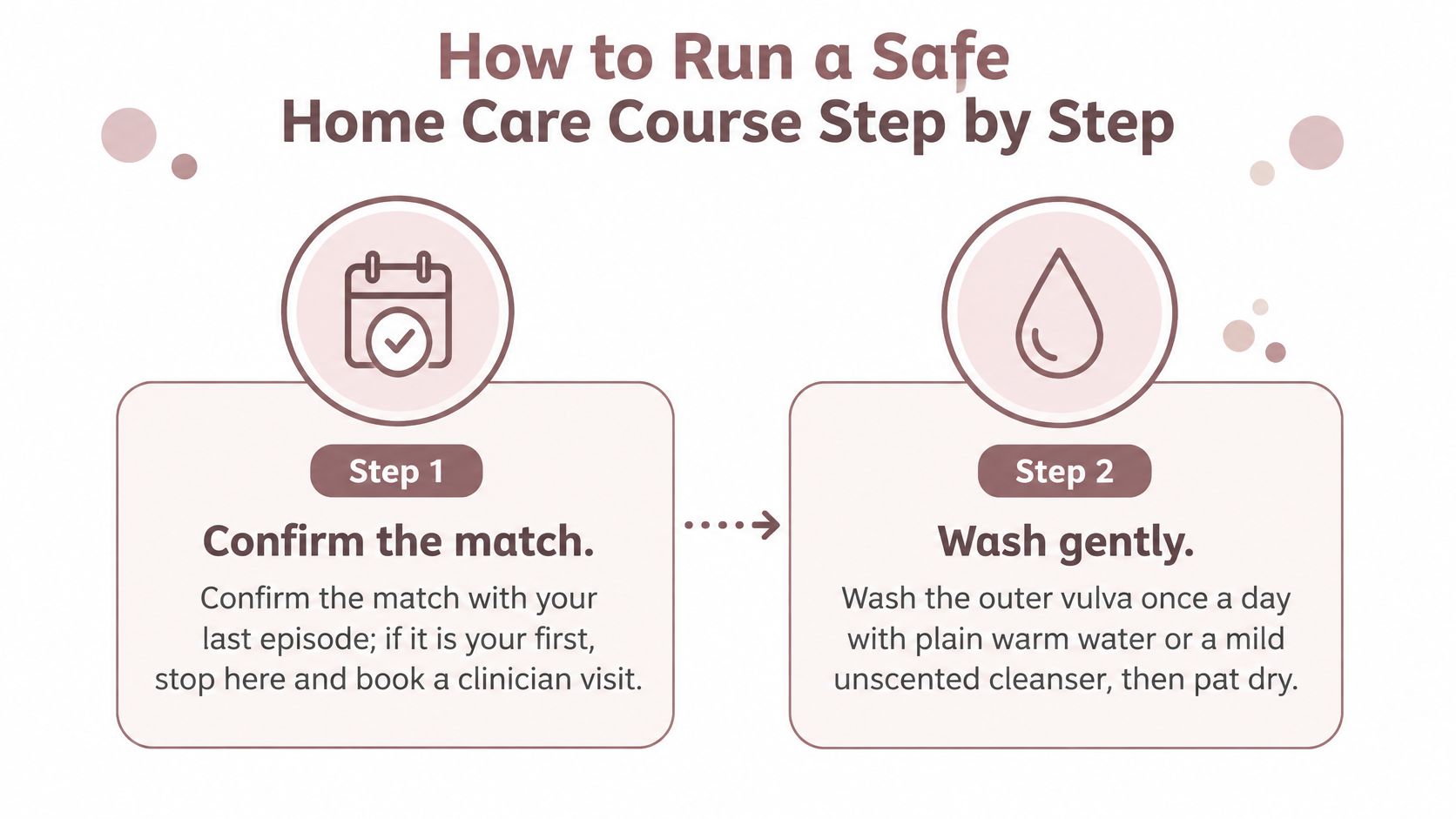
Follow the course without improvising
- Confirm the match. Compare this episode with your previous clinician-confirmed episode, including severity and anything that feels different. The common slip is remembering the itch while overlooking a new odor, pain, or other reason to seek care.
- Wash gently, externally only. Use plain warm water on the outer vulva, or a mild unscented cleanser if it doesn't irritate, then pat dry. Don't scrub, douche, or wash internally to try to remove the infection.
- Choose clothing for comfort. Try breathable cotton underwear, change out of damp swimwear or gym clothes, and sleep without underwear if that feels better. Treat these as comfort choices, not as a way to eliminate yeast.
- Cool the outer area cautiously. A cool compress may ease external itching while you arrange or complete appropriate treatment. Don't apply ice directly or keep using a compress that stings or makes the irritation worse.
- Use the correct vaginal antifungal. Clotrimazole, miconazole, and tioconazole are OTC options with labeled 1-, 3-, or 7-day regimens, as described in Mayo Clinic's vaginitis treatment guidance. Choose the specific product and follow its instructions, rather than treating different formulations as interchangeable.
- Complete the labeled course. Don't stop because itching improves before the medicine is finished. The common mistake is treating symptom relief as proof that no further doses are needed.
- Reassess instead of automatically repeating. At the end of treatment, review whether the itching, burning, and discharge have settled and whether anything new has appeared. If you reach the stop point in the symptom table, arrange testing rather than opening another course.
Keep soothing products in their proper role
An external comfort product belongs beside treatment, not in place of it. For example, Soothe & Restore Salve is an organic coconut- and jojoba-oil balm designed for dryness, itching, and irritation. That intended comfort role doesn't establish it as an antifungal treatment.
Avoid layering a balm, essential oil, intimate wash, and antifungal just because they serve different marketing categories. If you want an additional product while treating an infection, ask a pharmacist or clinician whether it fits your situation and follow its use instructions.
Less itching is welcome. It isn't, by itself, proof that the original diagnosis was correct.
Which Home Remedies Have Evidence and Which to Skip
OTC vaginal azoles have the strongest treatment role among the options below. The CDC guidance linked earlier reports symptom relief and negative cultures in most patients who complete standard azole therapy. That's different from a product feeling cooling or moisturizing.
The practical question isn't whether something is natural. It's whether the evidence supports treating vaginal candidiasis, easing external discomfort, or neither.
Home remedies graded by evidence
| Option | What the evidence shows | Role |
|---|---|---|
| Clotrimazole, miconazole, or tioconazole OTC | Standard short-course azole treatment for uncomplicated infection | Core treatment, followed exactly per label |
| Probiotic taken alongside an antifungal | Possible short-term benefit, but low-quality evidence and no clear lasting benefit | Optional add-on to discuss, not a substitute |
| Probiotic or homeopathic product used alone | No substantial supporting evidence for treating vulvovaginal candidiasis | Don't rely on it |
| Boric acid | A clinician-directed option in specific recurrent or resistant cases | Never self-select; never swallow |
| Vinegar, garlic, essential oils, or food inserted vaginally | Unvalidated treatment with potential for irritation | Avoid |
| Plain yogurt eaten | Not an established treatment in the cited guidance | Food, not treatment |
| Cool compress and cotton underwear | Comfort measures, not antifungal therapy | Use only for symptom relief |
Why possible benefit isn't the same as reliable treatment
The probiotic evidence needs careful interpretation. The supplied Cochrane findings suggest possible short-term benefit when probiotics accompany conventional antifungals, but low-quality evidence and no clear long-term benefit don't justify replacing medicine with a supplement. The CDC guidance above likewise doesn't support probiotics or homeopathic products as established treatment.
WHO guidance on candidiasis) lists specific antifungal medicines, including oral and intravaginal options, and advises discussing home remedies with a healthcare provider. The meaningful difference is a defined treatment plan rather than an anecdotal recipe.
Boric acid needs a separate boundary. It isn't a routine wellness product to try when another remedy disappoints. Mayo Clinic's yeast infection treatment guidance places it within a treatment context, and swallowing boric acid can be fatal.
Don't insert yogurt, garlic, vinegar, or essential oils into the vagina. A food or plant ingredient doesn't become a validated vaginal medicine because someone describes it as antimicrobial.
The trade-off is straightforward: a compress may make you more comfortable without treating yeast. A vaginal antifungal treats an appropriate suspected infection, but it won't solve every cause of itching. Neither should delay testing when your symptoms fall outside the home-care pathway.
Who Should Skip Home Remedies and When Symptoms Keep Returning
Pregnancy, breastfeeding, immune suppression, diabetes, and postpartum recovery deserve an individualized decision. Don't assume that a product you used previously is the right choice now. For these situations, the safest practical boundary is clinician review before starting a new remedy.
If you're pregnant, speak with your GP or midwife before using a thrush treatment. NHS guidance on thrush during pregnancy specifically advises against oral anti-thrush tablets during pregnancy and identifies symptoms that need professional advice rather than assumed thrush treatment.
Home comfort versus medical care by group
| Group | Home comfort measures | Medical step first |
|---|---|---|
| Pregnancy | Only if a GP or midwife approves | Consult before treatment; avoid oral anti-thrush tablets |
| Pregnancy with odor, green or yellow discharge, soreness, or pain urinating | Don't start new measures before review | Seek professional advice promptly |
| Breastfeeding | Only with clinician approval | Request medical review |
| Postpartum recovery | Keep any interim comfort care to a cool compress and cotton underwear pending advice | Check with your clinician before an antifungal |
| Diabetes | Comfort measures with clinician agreement | Obtain an evaluation and treatment plan |
| Immune suppression | Comfort measures with clinician agreement | Seek medical review before a remedy |
If you're breastfeeding, ask which treatment is appropriate rather than relying on pregnancy advice or a previous prescription. If you're recovering after birth, don't label new discomfort as yeast without discussing it with your care team.
If you have diabetes or immune suppression, familiar symptoms still deserve review. The important question isn't whether you recognize the itch. It's whether your current episode needs a different treatment approach.
The postpartum row is a cautious triage recommendation, not a claim that everyone after birth has complicated candidiasis. It keeps an uncertain symptom from becoming a self-diagnosis.
Recurrence needs a plan, not a standing shopping list
The CDC defines recurrent vulvovaginal candidiasis as three or more symptomatic episodes in under one year, in its guidance linked above. Don't wait to meet that definition if treatment has failed or symptoms return at the earlier stop point.
Work through recurrence with a clinician:
- Confirm what's recurring. Ask whether testing or culture is needed to identify Candida, a non-albicans species, or another explanation for the symptoms. Repeated itching isn't confirmation of repeated yeast infection.
- Use the prescribed initial course. Recurrent candidiasis may need longer initial treatment rather than another short OTC attempt. Don't assemble that regimen yourself from leftover medicines.
- Agree on maintenance. A clinician-managed maintenance plan gives you instructions beyond treating each flare in isolation. Ask what to do if symptoms break through.
- Reassess a failed plan. Report persistent or returning symptoms so your clinician can reconsider the diagnosis and treatment. Don't add boric acid or another product independently.
For longer-term discussion points, see how to prevent recurring yeast infections. Use prevention advice alongside confirmed diagnosis, not instead of it.
Your stop point: When episodes keep returning, stop choosing another remedy and ask for a diagnosis-led plan.
For the groups in the matrix, use home comfort measures only where your clinician agrees they fit your circumstances.
Prepare for the Clinician Visit and Your Next Step
Bring a dated symptom record rather than trying to reconstruct each episode from memory. A simple notebook is enough.
Use a tracker to organize what happened and what you tried.

- Record the pattern. Note when symptoms started, what they feel like, and how severe they are. Include menstrual timing, sexual activity, and recent antibiotic courses if relevant.
- List every product used. Write down the medicine or remedy, how long you used it, and whether it helped or irritated. Bring the packaging or a clear record of its name and instructions.
- Check whether you should call sooner. Fever, chills, pelvic pain, or foul odor warrant a prompt call rather than waiting for a routine appointment. Mention pregnancy or other complicating circumstances when you contact the clinic.
- Leave with a clear plan. Ask what the diagnosis is, whether testing is needed, and what should trigger another appointment. Record the end of any prescribed course and the follow-up instructions.
Prepare your questions with this guide to getting ready for an OB-GYN appointment. Ask specifically whether you need a single treatment course or a recurrence plan.
If you prefer a video resource, keep your written questions beside you while watching.
Treat at home only when the symptoms fit your previously confirmed pattern and circumstances, and seek testing when they don't.
Momotaro Apotheca offers plant-based vulvovaginal comfort products and educational resources for concerns such as dryness, itching, and irritation. Visit Momotaro Apotheca to review ingredients and intended uses, and keep comfort care separate from the antifungal treatment or clinical testing your symptoms require.


