


Natural UTI Prevention: A Practical Guide That Works
Most “natural UTI prevention” advice is a shopping list disguised as medical guidance. Buy cranberry, add D-mannose, take a probiotic, drink more water, and hope the next burning episode stays away. That approach wastes money because these options aren't equally supported, and the supplement with the loudest marketing may be the one current guidance no longer recommends.
A more useful plan starts with behavior. Correct low fluid intake, stop routinely holding urine, empty the bladder properly, pay attention to post-coital triggers, and use only a short list of non-antibiotic options with meaningful evidence. Natural prevention can reduce recurrence for some people, but it can't diagnose an active infection or replace care when symptoms suggest kidney involvement, pregnancy-related risk, or another urinary problem.
Table of Contents
- What Natural UTI Prevention Actually Means in 2026
- Hydration as a Measurable Prevention Target
- Voiding Habits and Bathroom Mechanics That Matter
- Post-Coital and Post-Exercise Care Routines
- What the Evidence Actually Says About Cranberry and Other Supplements
- Building a Plant-Based Prevention Routine
- Your Weekly Natural UTI Prevention Checklist
What Natural UTI Prevention Actually Means in 2026
Natural prevention doesn't mean finding a missing nutrient or flushing bacteria with an expensive powder. It means reducing the conditions that make bacterial entry, retention, and recurrence more likely. That usually involves hydration, timely voiding, relaxed bladder emptying, sensible external hygiene, and targeted support where evidence exists.
Cranberry is the clearest example of a plant-based option with trial support. A large 2023 Cochrane review covered 26 studies with 6,211 participants and found that cranberry products reduced symptomatic, culture-verified UTIs overall, with a pooled risk ratio of 0.70, or about a 30% relative risk reduction (Cochrane review). For women with recurrent UTIs, the risk ratio was 0.74, with an absolute risk reduction of 6.3% and a number needed to treat of 16 in that subgroup. That's useful evidence, not a guarantee.
D-mannose deserves a sharper correction. The 2025 American Urological Association guideline reports that a randomized trial involving 598 participants found no recurrence difference between D-mannose and placebo, concluding that evidence is insufficient to recommend it for prevention (AUA 2025 guideline). If you've been told it's an automatic first choice, that advice is behind the evidence.

For practical background on the wider urinary system, see this guide to urinary tract health. Use natural prevention as a layer around appropriate diagnosis and treatment, not as permission to ignore persistent symptoms.
Hydration as a Measurable Prevention Target
“Drink more water” is too vague to use. The meaningful question is whether you're correcting low intake. The American Urological Association recommends offering increased water intake to women with recurrent UTIs whose usual intake is below 1.5 L per day (AUA 2025 guideline). A self-care guide gives a practical range of 1.5 to 2 L per day of water or diluted juice, with pale-yellow urine as a useful adequacy cue (UTI prevention self-care guidance).
The mechanism is straightforward. More fluid produces more dilute urine and more regular bladder emptying, which can reduce bacterial concentration and support clearance. It doesn't mean forcing water until your urine is completely clear. Excessive intake can disturb sodium balance without giving your bladder an extra preventive advantage.
| Metric | Target | Why It Matters |
|---|---|---|
| Usual daily intake | 1.5 to 2 L | Corrects low intake and supports regular voiding |
| Baseline urine color | Pale yellow | Offers a practical, continuous hydration cue |
| Timing | Earlier in the day | Supports hydration without unnecessarily disrupting sleep |
| Low-intake threshold | Below 1.5 L/day | This is the group for whom increased intake has guideline support |
Build the target into your day instead of trying to rescue it at night. Drink steadily in the morning and early afternoon, increase fluids when you're sweating or in a hot environment, and reduce intake near bedtime if nighttime urination is disrupting sleep. Don't use a rigid volume target if a clinician has prescribed fluid restriction or you're managing heart, kidney, or other conditions affected by fluid balance.

If you want to improve access to water during the workday, a resource about a water filter for office taps may help make the habit easier. The Bladder & Belly Kit combines a daily probiotic with a urinary supplement containing D-mannose, cranberry, uva ursi, and hibiscus. Its product information advises consulting a medical professional before use, especially during pregnancy, breastfeeding, medication use, or medical conditions.
Voiding Habits and Bathroom Mechanics That Matter
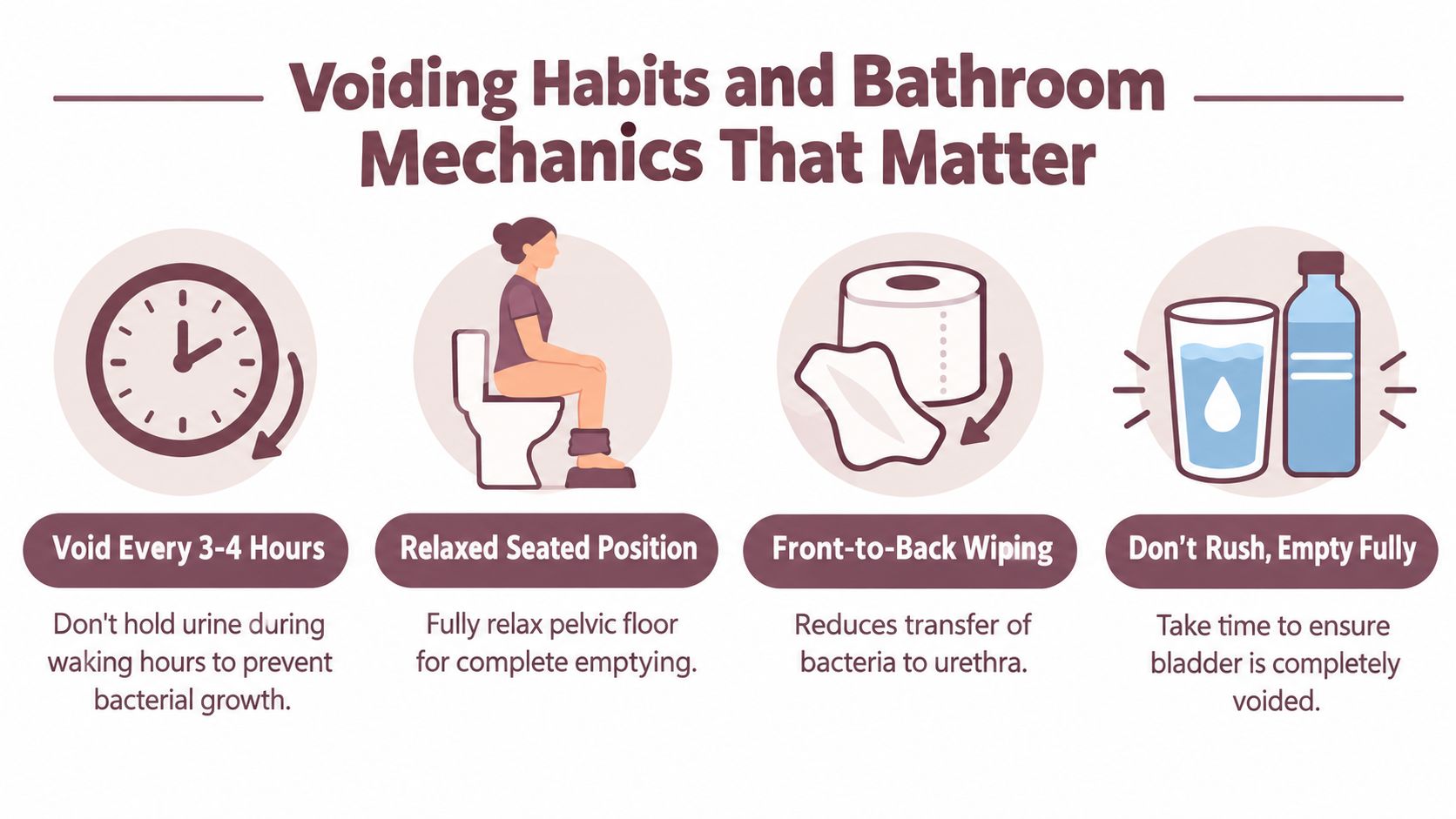
Your bladder isn't a storage contest. Habitually delaying urination gives bacteria more time in the urinary tract and can reinforce poor emptying patterns. A practical waking-hours rhythm is every three to four hours, adjusted for your actual urge and fluid intake, rather than holding urine through meetings, travel, or errands.
Posture matters when you sit down. Hovering over a public toilet often keeps the pelvic floor tense, which makes complete emptying harder. Sit securely when possible, let your abdomen soften, breathe normally, and give yourself enough time to finish. If you consistently feel urine remains, try a gentle double void: urinate, wait briefly while staying relaxed, then try again without straining.
Clean directionally, not aggressively
Wiping front to back is most important after a bowel movement and during situations where stool or menstrual blood can be transferred toward the urethral area. You don't need to scrub after every urination. Excessive wiping, scented wipes, and harsh cleansers can irritate vulvar tissue and make symptoms harder to interpret.
Keep external care simple. Rinse the vulva with water or use a gentle, fragrance-free cleanser externally if you tolerate one. Don't douche or wash inside the vagina. Public bathroom concerns also need proportion: focus on your own relaxed mechanics rather than turning every toilet encounter into a contamination ritual. For readers interested in sanitation design and urinal contamination solutions from BacteriaFAQ.com, the useful principle is reducing avoidable contact, not sterilizing your surroundings.
If incomplete emptying is frequent, don't keep adding supplements. A clinician or pelvic-floor professional should assess retention, pelvic-floor overactivity, prolapse, neurological causes, or another mechanical problem.
Post-Coital and Post-Exercise Care Routines
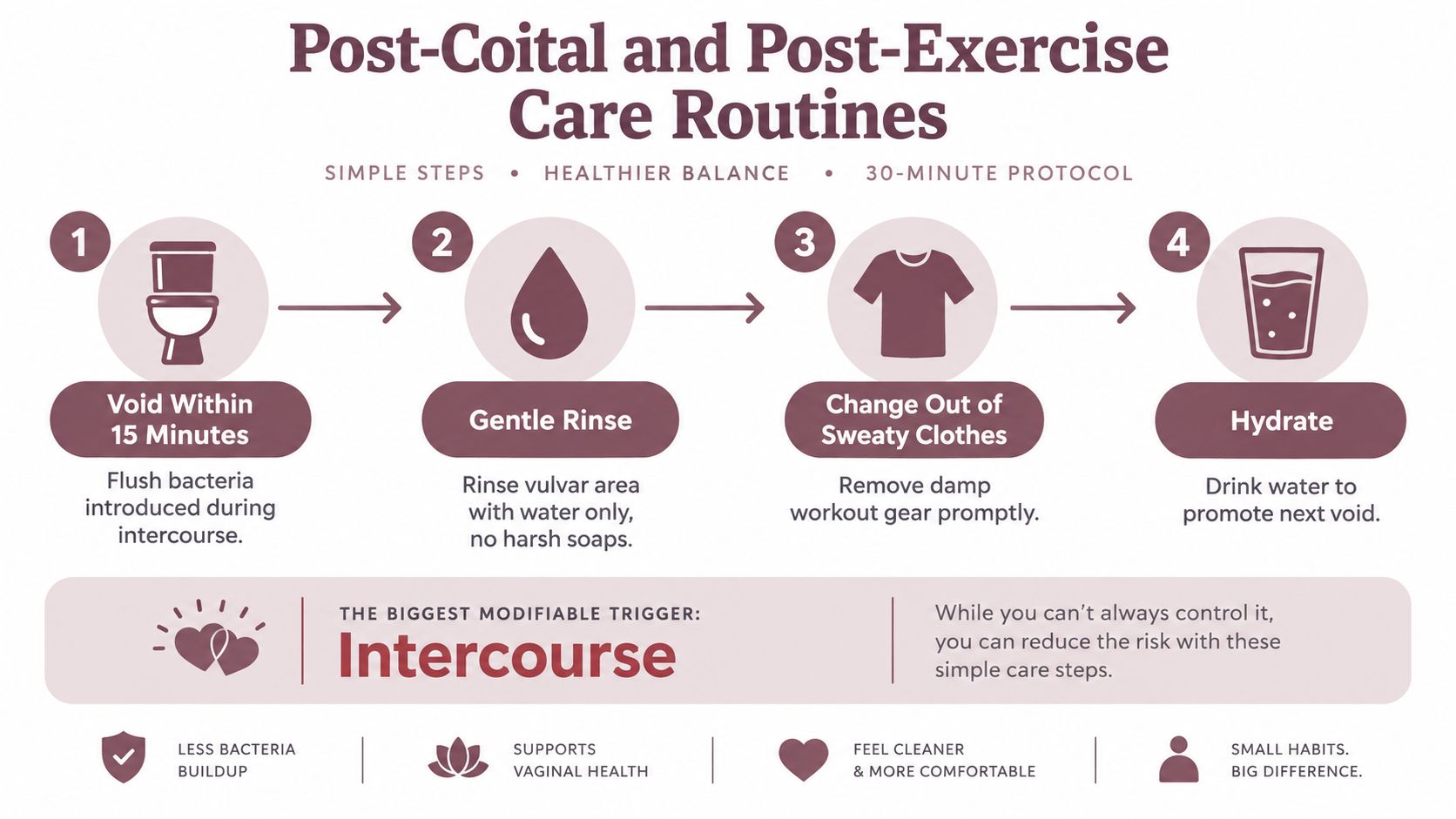
Intercourse is a common trigger for recurrent UTIs because friction and movement can shift bacteria toward the urethral opening. The answer isn't to fear sex or wash aggressively afterward. Use a short, repeatable routine that supports normal bladder clearance and protects irritated tissue.
A simple post-sex sequence
- Urinate soon afterward. Aim for the first practical opportunity, ideally within about 15 minutes, rather than waiting until the next morning. The goal is to empty the bladder after a known trigger, not to force urination when you have no urine available.
- Rinse externally with plain water. Clean the vulvar area gently, but don't put soap, wipes, or antiseptic products inside the vagina or around the urethral opening.
- Drink normally. A glass of water can support the next void, but don't turn post-sex care into rapid overhydration.
- Change damp or restrictive clothing. Breathable underwear and loose sleepwear are more comfortable if the area feels warm or irritated.
You can also reduce mechanical triggers before sex. Adequate lubrication lowers friction, and if recurrent infections follow a consistent contraceptive pattern, discuss alternatives to diaphragms or spermicides with a clinician. Don't assume every post-sex burning episode is a UTI. Irritation, vaginitis, sexually transmitted infections, and pelvic-floor tension can feel similar.
Treat sweat as a clothing problem
Exercise doesn't require a special supplement. Change out of sweaty leggings, shorts, or underwear promptly, rinse externally if needed, and don't sit through a commute in damp fabric. The point is comfort and moisture control, not creating a sterile environment.
For more detail on symptoms that appear after intimacy, use this guide to urinary tract infection after sex. A consistent trigger log can tell you whether the pattern follows intercourse, delayed voiding, low fluid intake, a contraceptive product, or tissue irritation.
Don't use post-coital routines to delay testing when symptoms persist. If burning, urgency, or pelvic pain continues, obtain appropriate medical advice rather than repeatedly escalating home measures.
What the Evidence Actually Says About Cranberry and Other Supplements
The supplement shelf has four recurring pitches: cranberry, D-mannose, probiotics, and methenamine. They don't belong in one undifferentiated “natural remedies” bucket. Cranberry has the strongest plant-based evidence, D-mannose has been downgraded, probiotics remain strain-specific and inconsistent, and methenamine is not a plant supplement at all, though it's an important non-antibiotic prevention option.
A practical evidence comparison
| Supplement | Studied dose | Evidence strength | Best for |
|---|---|---|---|
| Cranberry | About 36 mg PACs daily in technical reviews | Best-supported plant-based option, with modest benefit in recurrent UTI populations | People willing to take a standardized product consistently |
| D-mannose | Evidence reviewed by the AUA includes a trial with 598 participants | Insufficient for routine prevention | People discussing a personal trial with a clinician, not those treating it as proven |
| Oral probiotics | Strain and formulation dependent | Heterogeneous and not strong enough to treat as a universal UTI preventive | People seeking broader vaginal or digestive support |
| Methenamine hippurate | Prescription dosing is clinician-directed | Supported non-antibiotic option for selected patients | Recurrent UTI patients needing a medical prevention plan |
Cranberry's active concern is proanthocyanidin exposure, not drinking a large volume of cranberry cocktail. A technical review highlights benefit around 36 mg PACs per day, while also warning that products differ and some juice trials didn't significantly reduce recurrence (cranberry formulation review). Choose a label that states PAC content rather than relying on “cranberry blend” language.
D-mannose is where consumers need the blunt answer. The current AUA guidance says evidence is insufficient to recommend it for prevention after a large randomized trial found no difference from placebo. That doesn't prove nobody benefits, but it does mean you shouldn't pay a premium for certainty that the evidence doesn't provide.
Probiotics may support vaginal microbial balance, but results depend on the exact strains, route, dose, and outcome measured. A product containing a familiar Lactobacillus name isn't automatically a tested UTI intervention. Methenamine requires medical screening, medication review, and a prescribing conversation, but it deserves more attention than many trendy supplements because it is a recognized non-antibiotic strategy for selected patients.
For a consumer-friendly breakdown of product categories, see this guide to UTI prevention supplements. If you're postmenopausal, vaginal estrogen may be more relevant than another capsule, so discuss tissue and hormonal factors with a clinician.
Building a Plant-Based Prevention Routine
A plant-based routine should be boring enough to repeat. Start with the behaviors that cost nothing, add one targeted option if your recurrence pattern justifies it, and track what happens. “Natural” is a description of the source, not proof of effectiveness or safety.
Morning and midday anchors
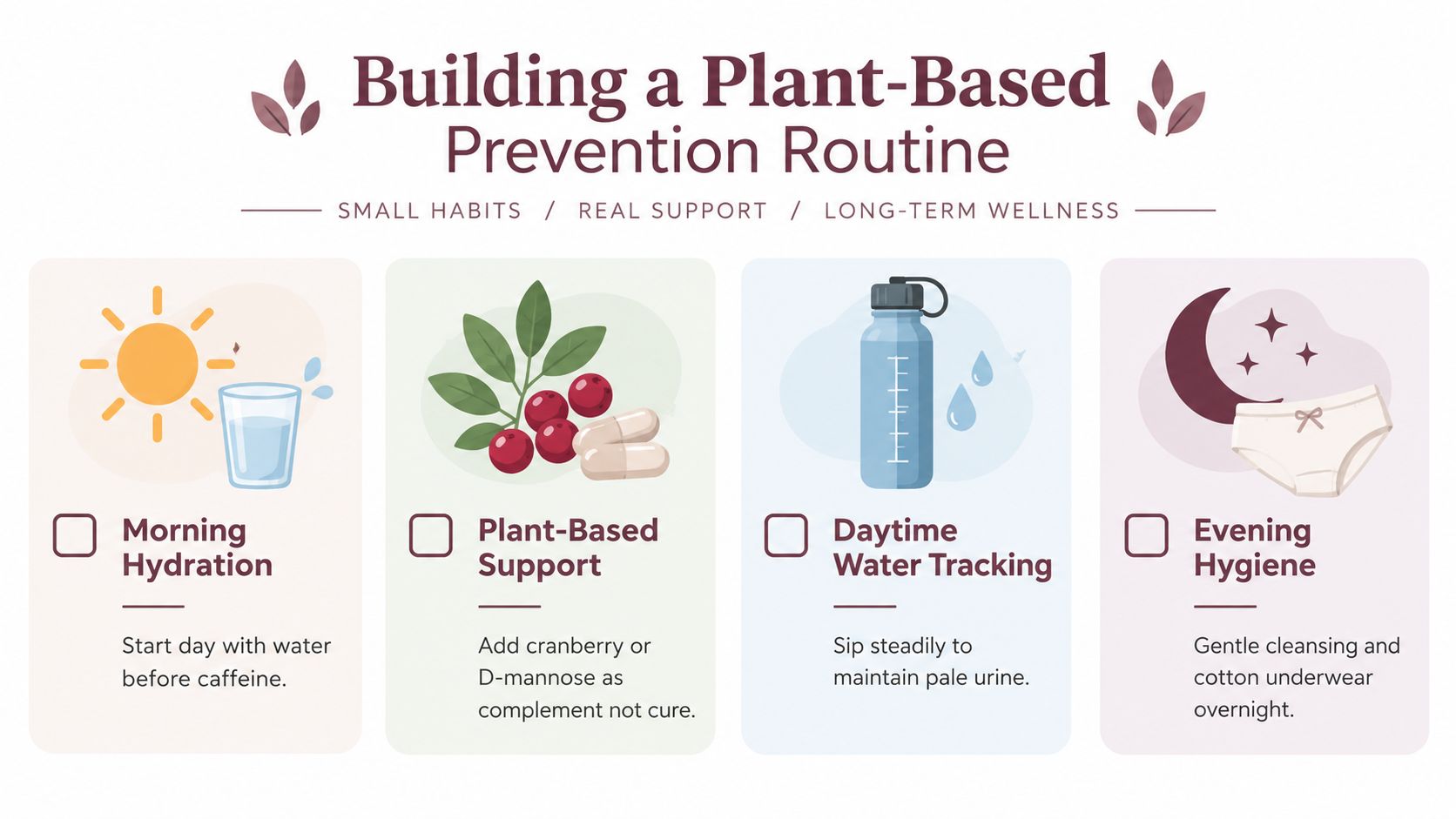
Begin the day with fluid rather than trying to catch up late at night. If your baseline intake is low, work toward the 1.5 to 2 L daily range described in the self-care guidance, while using pale-yellow urine as a practical check (UTI prevention self-care guidance). People with fluid restrictions should follow their clinician's plan instead.
If you use cranberry, select a product that clearly states its PAC amount. Unsweetened cranberry products may fit your preferences, but juice volume alone doesn't tell you whether the product supplies a meaningful standardized dose. Don't buy a bottle just because the front label says “urinary support.”
Use the bathroom before you're desperate. Keep your pelvic floor relaxed, sit rather than hover when possible, and notice whether you feel fully empty. If constipation, pelvic pain, straining, or incomplete emptying is part of the pattern, treat that as a clinical clue rather than a reason to keep layering supplements.
A simple daytime routine can look like this:
- Morning: Drink water, take any clinician-approved supplement, and note your starting urine color.
- Midday: Refill a known bottle, pause for a relaxed bathroom visit, and change damp clothing after exercise.
- Afternoon: Finish most planned fluids before evening, especially if nighttime urination affects sleep.
- Evening: Clean externally only, avoid douches and scented products, and wear breathable underwear if that feels comfortable.
Choose products with disciplined criteria
For cranberry, look for PAC-labeled tablets or capsules. For probiotics, check the strain names and don't assume a gut-only product has proven urinary benefits. Avoid essential oils, internal washes, douches, and preventive boric acid unless a clinician has specifically advised them. These products can irritate tissue, disrupt the vaginal environment, or mask symptoms that need testing.
Food can support general health, but no single food should be sold as a UTI shield. Eat a varied, fiber-rich diet if it suits you, address constipation, and limit beverages that personally irritate your bladder. Don't confuse bladder irritation with infection. Burning after acidic drinks or sex isn't automatically bacterial cystitis.
Apply the trigger routine
If intercourse precedes recurrence, urinate soon afterward, rinse the external vulva with water, drink normally, and change out of damp or restrictive clothing. If a spermicide, diaphragm, lubricant, or condom consistently appears in your symptom log, bring that pattern to a clinician rather than guessing which product is responsible.
Exercise needs the same practical attention. Change out of wet clothing promptly, avoid sitting in sweat-soaked fabric, and maintain normal hydration. No botanical capsule compensates for routinely delaying urination or ignoring a bladder that doesn't empty.
Know when self-management ends
Use a clear decision rule. Stop relying on prevention measures and seek same-day evaluation for:
- Fever above 38°C (100.4°F): This can signal a more serious infection.
- Flank pain or costovertebral angle tenderness: Kidney involvement needs prompt assessment.
- Chills, nausea, or vomiting: These symptoms raise the urgency.
- Blood clots in urine: This requires medical evaluation.
- Inability to urinate despite a full bladder: Retention is not a supplement problem.
Contact a clinician within 24 to 48 hours for burning lasting more than 24 hours despite increased hydration, symptoms returning within two weeks of finishing antibiotics, more than two confirmed UTIs in six months, or any UTI symptoms during pregnancy. Those thresholds and red flags should be treated as decision points, not suggestions.
Arrange a prevention baseline visit before self-managing if you have diabetes, immunocompromise, kidney stones, neurogenic bladder, or a history of pyelonephritis. A useful appointment includes a urine culture with sensitivities, review of trigger patterns, discussion of post-coital prophylaxis when eligible, and consideration of methenamine or vaginal estrogen where appropriate.
Your Weekly Natural UTI Prevention Checklist
Keep the routine small enough that you'll use it on an ordinary week, not just after a frightening episode.
Daily anchors
- Fluids: Work toward 1.5 to 2 L daily when appropriate for your health, with more attention to intake earlier in the day.
- Bathroom timing: Void roughly every three to four hours while awake instead of routinely holding urine.
- Empty fully: Sit, relax your pelvic floor, and try a gentle double void if you regularly feel residual urine.
- External care: Wipe front to back after bowel movements, rinse gently, and skip douches, scented wipes, and harsh cleansers.
After sex or exercise
- After intercourse: Urinate at the first practical opportunity, rinse the external vulva with plain water, and change out of damp or restrictive clothing.
- After exercise: Remove sweaty workout clothes promptly and maintain ordinary hydration.
- Contraception review: If recurrences follow spermicide or diaphragm use, discuss alternatives with a clinician.
Supplement decisions
- Cranberry: If you choose it, use a product that states PAC content, with technical evidence highlighting about 36 mg PACs daily (cranberry formulation review).
- D-mannose: Don't treat it as proven prevention. The AUA reports insufficient evidence after a large placebo-controlled trial (AUA 2025 guideline).
- Methenamine: Use only through a clinician-directed plan, not by copying a dosing schedule from the internet.
- Monthly log: Record confirmed infections, symptoms, fluid habits, sex, exercise, and possible irritants. Arrange care if you have more than two confirmed UTIs in six months or any red flag.
This checklist is a starting framework, not a substitute for culture-guided care.
Momotaro Apotheca offers plant-based, pH-conscious vulvovaginal care, including urinary and pelvic-health products and routines for after-sex care. Visit Momotaro Apotheca to review the available options, then discuss any supplement with a qualified medical professional before starting it.


