


Are Recurring Yeast Infections Normal? a Practical Guide
Occasional yeast infections are common, but three or more symptomatic episodes within fewer than 12 months meet the clinical definition of recurrent vulvovaginal candidiasis and deserve proper evaluation, not repeated self-treatment. The more useful question isn't whether recurring yeast infections are normal, but whether each episode has been diagnosed correctly.
The popular advice is often to keep buying the same over-the-counter treatment whenever itching or discharge returns. That approach can make sense for a familiar, isolated infection, but it becomes unreliable when symptoms keep coming back. Yeast, bacterial vaginosis, sexually transmitted infections, and irritated vulvar skin can feel remarkably similar.
You haven't done anything wrong if you've been treating what seemed like yeast. Bodies are complicated, symptoms overlap, and many people never receive clear guidance about when self-care should become medical evaluation. The practical dividing line is straightforward: an occasional, familiar episode may be manageable, while a pattern that reaches the recurrent threshold needs confirmation and a plan.
Table of Contents
- What the Question Is Really Asking
- The Clinical Definition of Recurrent Yeast Infections
- Common Causes and Risk Factors
- Look-Alike Conditions: BV, STIs, and Dermatitis
- Diagnosis and Treatment Pathways
- When to See a Specialist
- Everyday Habits That Help
- Putting It All Together
What the Question Is Really Asking
When someone searches “are recurring yeast infections normal,” they're usually asking several questions at once. Is this dangerous? Should I see a clinician? Did I cause it? Do I need to change my hygiene, clothing, diet, medication, or sex habits?
“Normal” isn't the most useful medical category here. A symptom can be common without being something you should tolerate indefinitely, and a recurrent condition can be manageable without being something to diagnose yourself. The key issue is whether the recurring symptoms are truly caused by Candida and whether an underlying contributor has been missed.
The CDC definition of recurrent vulvovaginal candidiasis is three or more symptomatic episodes within fewer than 12 months. The CDC estimates that this condition affects fewer than 5% of women, which helps distinguish a genuinely recurrent clinical pattern from the much more common experience of one isolated infection.
A simple way to place your symptoms
Think of the pattern in three broad groups:
- One familiar episode: You have symptoms that match a previous, clinician-confirmed infection and they improve with appropriate treatment.
- A return after treatment: Symptoms come back soon, never fully resolve, or require repeated courses. That deserves a clinical review, even before you reach the formal threshold.
- Three or more symptomatic episodes in fewer than 12 months: This meets the CDC definition of recurrent disease and warrants testing and discussion with a healthcare professional.
The count matters, but it isn't the only thing that matters. Symptoms that are unusually severe, different from your usual pattern, associated with a new sexual exposure, or persistent despite treatment should prompt care sooner.
Practical rule: Don't use frequency alone to decide whether symptoms are “just yeast.” Use frequency, symptom pattern, treatment response, and diagnostic confirmation together.
You can approach this without shame. Recurrent symptoms aren't evidence of poor cleanliness or personal failure. They're a reason to replace guesswork with better information.
The Clinical Definition of Recurrent Yeast Infections
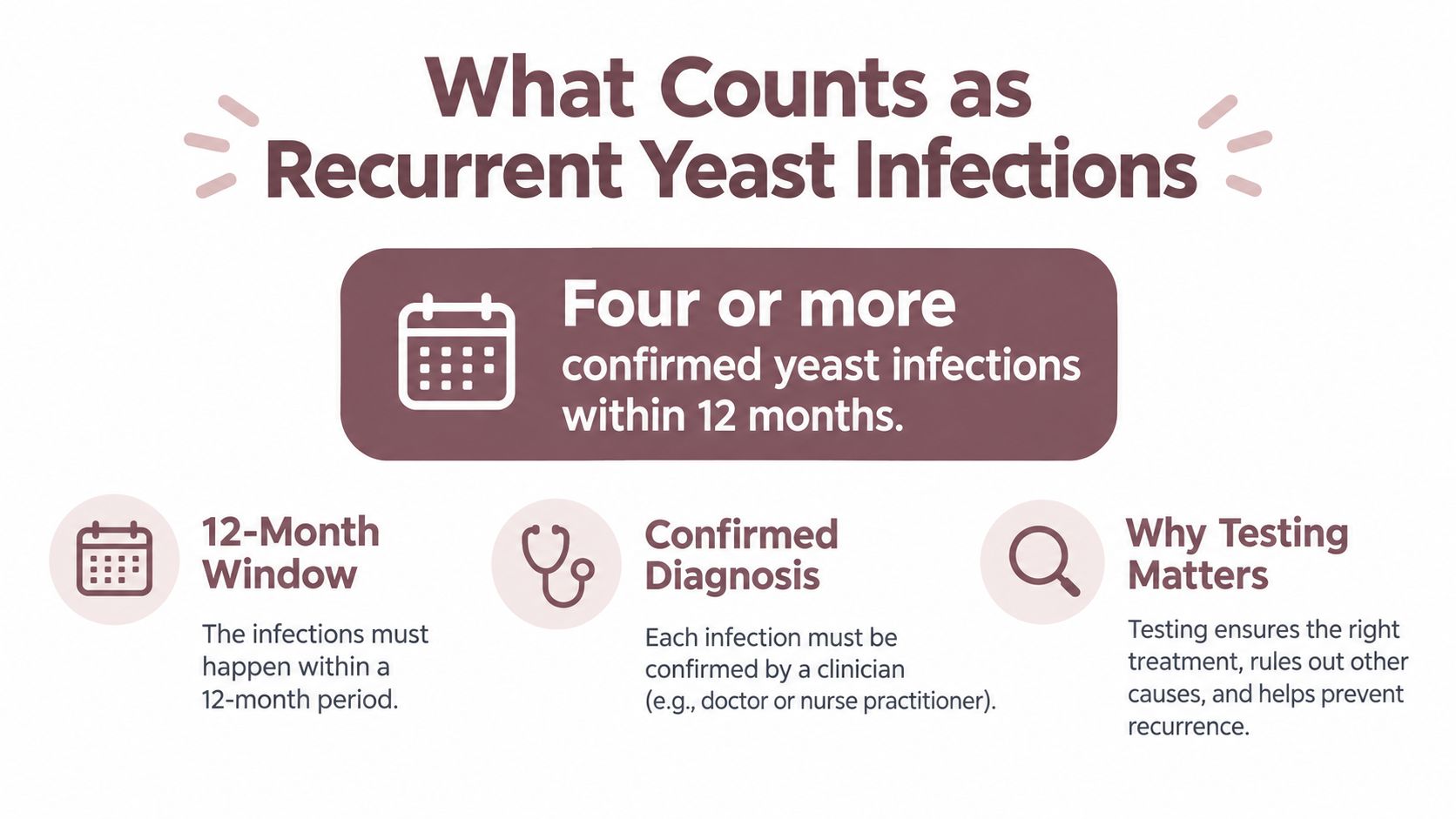
The more useful question is often not “Is this normal?” but “Has this been diagnosed correctly?” The medical term is recurrent vulvovaginal candidiasis, or RVVC. The CDC defines it as three or more symptomatic episodes within fewer than 12 months, a pattern estimated to affect fewer than 5% of women. The threshold describes frequency, not proof that every episode was yeast.
The calendar rule is straightforward. Begin with the first symptomatic episode and count the following months. If two more episodes occur before that 12-month window ends, you meet the clinical definition. A clinician still needs to confirm whether Candida caused each episode, because itching, burning, and discharge can come from several conditions.
One infection versus a recurring pattern
An isolated infection usually improves with appropriate treatment. A recurring pattern may involve symptoms that:
- Improve but return after treatment.
- Never fully settle.
- Reappear around the same time or after the same trigger.
- Do not respond as expected to standard azole treatment.
- Repeatedly involve confirmed Candida, including a species that may require a different approach.
Symptoms that return quickly can represent an infection that never fully cleared rather than a new episode. Repeating the same short treatment may therefore miss the underlying problem.
If you are arranging care and want supportive products for external comfort, the Organic Yeast Infection Treatment Bundle | Natural Relief & Prevention includes a salve, probiotic, suppository, and tonic intended for supportive care alongside, not instead of, clinical treatment. Recurrent, severe, or unexplained symptoms need testing and medical guidance.
The number of episodes is a signal, not a diagnosis. Bring a timeline showing dates, treatments, symptom improvement, and any Candida testing. That record helps a clinician distinguish separate infections from one unresolved condition and choose the right next level of care.
Common Causes and Risk Factors
Recurring symptoms can have several causes, and the pattern matters more than any single risk factor. Frequent antibiotic use, diabetes, pregnancy, and immune-altering conditions may affect vaginal organisms or the body's ability to control Candida. Their presence does not guarantee recurrent infection, while their absence does not rule it out.
A useful self-check is to group possible contributors by mechanism:
| Category | Examples | Why It Matters |
|---|---|---|
| Medical | Frequent antibiotic use, diabetes, pregnancy, immune-altering conditions | These can change immune defenses or the balance of organisms in the vagina. |
| External irritation | Scented products, douching, damp clothing, friction | Irritated skin can cause itching and burning that resemble infection. |
| Biological and hormonal | Vaginal microbial balance, hormonal shifts, individual susceptibility | These can influence symptom flares and the response to treatment. |
Medical contributors
Antibiotics can reduce protective bacteria along with the bacteria they target. Diabetes and other conditions affecting immune or metabolic balance may make it harder to control Candida overgrowth. Pregnancy also changes treatment decisions, so recurring symptoms during pregnancy deserve clinician guidance rather than casual self-treatment.
Tell your provider if symptoms began after repeated antibiotic courses, during pregnancy, or alongside changes in blood sugar control. Those details can influence which tests are useful and which treatments are appropriate.
External contributors
Douching and fragranced products can irritate vulvar tissue and alter the local environment. Tight or damp clothing may add friction and moisture. Lubricants, pads, detergents, or topical products can also cause contact dermatitis, whose burning or itching may continue without an infection.
Keep a short symptom record that includes new products, laundry changes, exercise, sexual activity, antibiotic use, and the timing of flares. The guide to why yeast infections keep returning can help organize possible patterns, but a pattern still needs clinical confirmation.
Biological and hormonal contributors
Hormonal shifts can coincide with symptom flares, while individual immune responses may affect how well the body controls Candida. Research on recurrent vulvovaginal candidiasis suggests that some people may not control Candida's tissue-invasive form effectively. That possibility calls for testing and, when symptoms persist or return, specialist input. It is not evidence of poor hygiene.
A practical decision rule follows the symptom pattern: a mild, familiar episode may prompt self-care, repeated or atypical symptoms call for primary care testing, and persistent symptoms despite treatment justify referral to a specialist. Repeated antifungal use without confirming the cause can keep the underlying problem hidden.
Look-Alike Conditions: BV, STIs, and Dermatitis
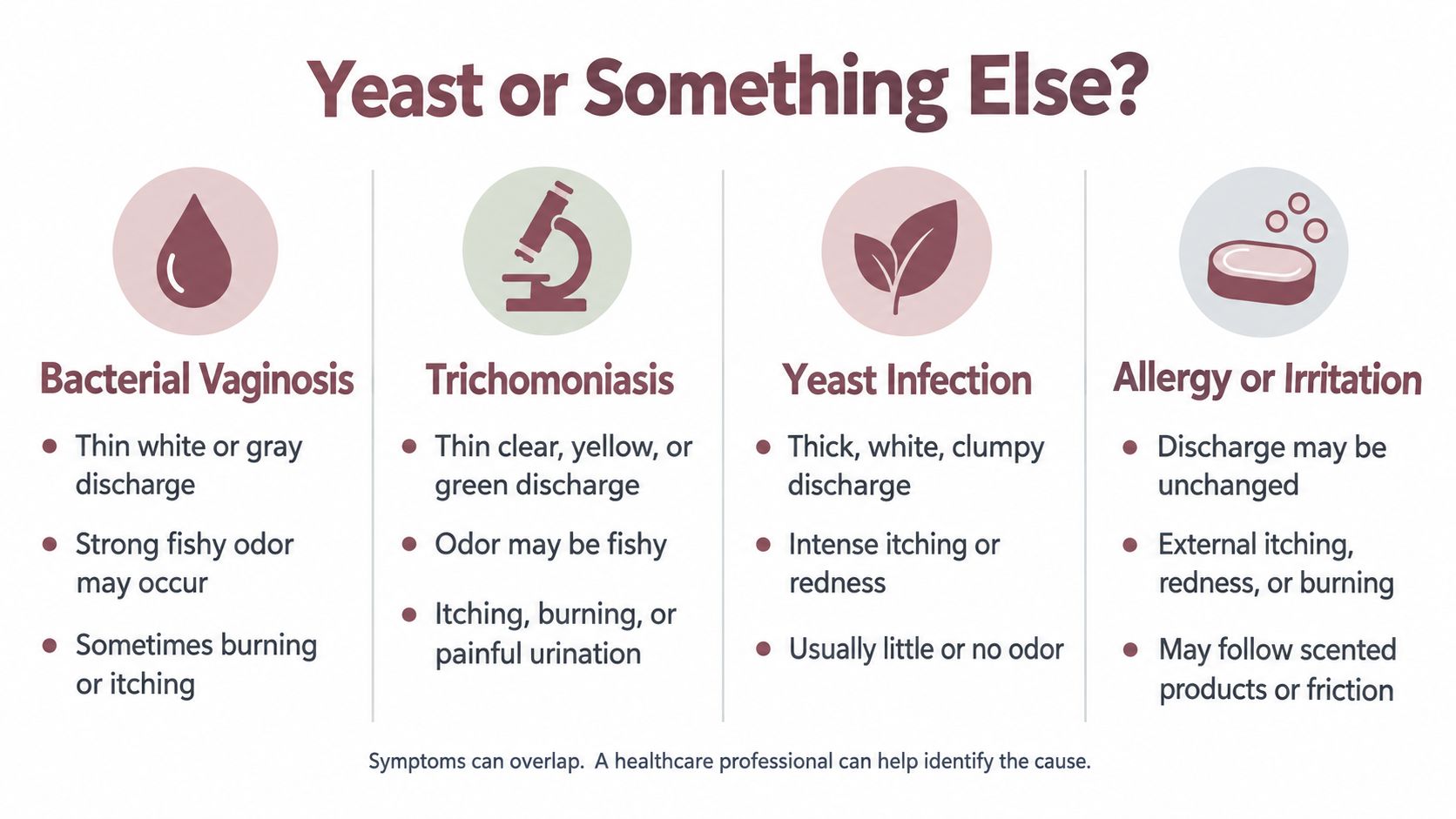
The better question is often not “Is this normal?” but “Is this being diagnosed correctly?” Itching, burning, soreness, and discharge changes do not belong exclusively to yeast infections. Bacterial vaginosis, sexually transmitted infections, dermatitis, and other conditions can produce similar symptoms.
Bacterial vaginosis may cause discharge and odor. Trichomoniasis and other sexually transmitted infections can cause irritation or changes in discharge. Contact dermatitis may begin after a new soap, pad, detergent, lubricant, or fabric, then create intense burning or itching. Each condition needs different care, so repeated antifungal treatment can delay the appropriate evaluation.
The species question
Candida can be present while the specific species affects treatment. Some non-albicans Candida species may respond poorly to standard azole medicines. For complicated or recurrent symptoms, diagnostic testing, such as culture or another laboratory test, can help identify the organism and guide treatment.
A recurring symptom loop can have several explanations: the condition may not be yeast, the organism may not respond to the medicine, or irritation may remain after the original infection has cleared. Frequency alone does not tell you which explanation fits.
Before an appointment, record the features that accompany each episode:
- Discharge: Note whether it is thick, thin, watery, or different from your baseline.
- Odor: Record a new or strong odor, especially without the usual itching.
- Skin changes: Look for redness, swelling, cracking, sores, or a vulvar rash.
- Timing: Note links with antibiotics, sex, menstruation, product changes, or exercise.
- Treatment response: Write down what you used and whether symptoms cleared, improved briefly, or never changed.
A mild, familiar pattern may support short-term self-care. New, repeated, or unusual symptoms fit better with primary care testing, while persistent symptoms after treatment may call for specialist referral. Avoid adding several new products before testing if possible. The clinician needs to assess the current pattern, not several overlapping reactions.
Diagnosis and Treatment Pathways
The key question is not only whether symptoms recur, but whether each episode is Candida. A clinician may ask about the pattern, examine the vulva and vagina, assess discharge, and use office tests such as pH measurement or microscopy. These steps help separate yeast from conditions that need different treatment.

For recurrent or complicated symptoms, ask whether a culture or another laboratory test is appropriate. Testing can identify Candida and, when needed, clarify the species. That matters because repeated treatment for the wrong condition can prolong irritation rather than solve it.
Treatment depends on the result
The plan may depend on the organism, symptoms, pregnancy status, other health conditions, and response to previous medication. A clinician might prescribe a longer initial course, choose a different antifungal, or recommend maintenance treatment for confirmed recurrent disease. For confirmed recurrent vulvovaginal candidiasis, treatment commonly involves an induction course followed by a maintenance regimen. Ask what to do if symptoms return between doses, rather than adding medication independently.
A reduced response can reflect resistance, a less responsive Candida species, an incorrect diagnosis, or irritation that remains after infection has cleared. The clinician may review prior drugs, arrange species testing, and select treatment based on those results. Pregnancy, drug interactions, and inflamed tissue can also affect which options are appropriate.
The clinical guide to treating recurrent yeast infections can help you prepare for a provider conversation, but online guidance cannot confirm the cause of current symptoms.
A useful appointment checklist includes:
- Diagnosis: “Can we confirm whether this is Candida?”
- Testing: “Would a culture or species test help?”
- Alternatives: “Could this be bacterial vaginosis, an STI, dermatitis, or another condition?”
- Contributors: “Should we review antibiotics, diabetes, pregnancy, immune health, or medications?”
- Plan: “What should I do if symptoms return, and when should I come back?”
The video below offers general educational context about diagnostic thinking. It does not replace an examination or laboratory testing.
When to See a Specialist
Start with primary care or a general gynecologist when symptoms are new, recurring, or unclear. These clinicians can often perform an examination, order testing, review medications and health conditions, and begin appropriate treatment.
Consider specialist care when symptoms continue despite confirmed, appropriately selected treatment, when testing repeatedly identifies a difficult-to-treat organism, or when the diagnosis remains uncertain. A vulvar specialist or pelvic health clinic may be particularly helpful if the main problem is persistent skin irritation, pain, fissures, or a suspected inflammatory skin condition.
A representative patient journey
Consider someone whose symptoms return three times despite standard treatment. The next step shouldn't be an endless rotation of over-the-counter products. A specialist may review the full treatment history, obtain detailed cultures, examine the vulvar skin closely, and consider a biopsy if there are persistent or unusual skin changes. They may also coordinate evaluation for endocrine, immune, or other medical contributors.
That appointment may not produce an instant answer, especially if symptoms have several overlapping causes. Bring medication names, test results, symptom dates, photographs of visible skin changes if appropriate, and a list of products used on the area. Be direct about sexual symptoms, menstrual timing, pregnancy possibility, and any new partner or exposure. Those details are clinically relevant, not embarrassing.
Seek earlier care for warning signs
Don't wait for a routine appointment if you have severe pain, rapidly worsening swelling, sores or blisters, significant bleeding, fever, pelvic pain, or symptoms during pregnancy. New symptoms after a possible STI exposure also deserve timely testing.
Specialist referral isn't an admission that your body is failing. It means the first-line explanation hasn't answered the question, and you need more precise tools.
Everyday Habits That Help
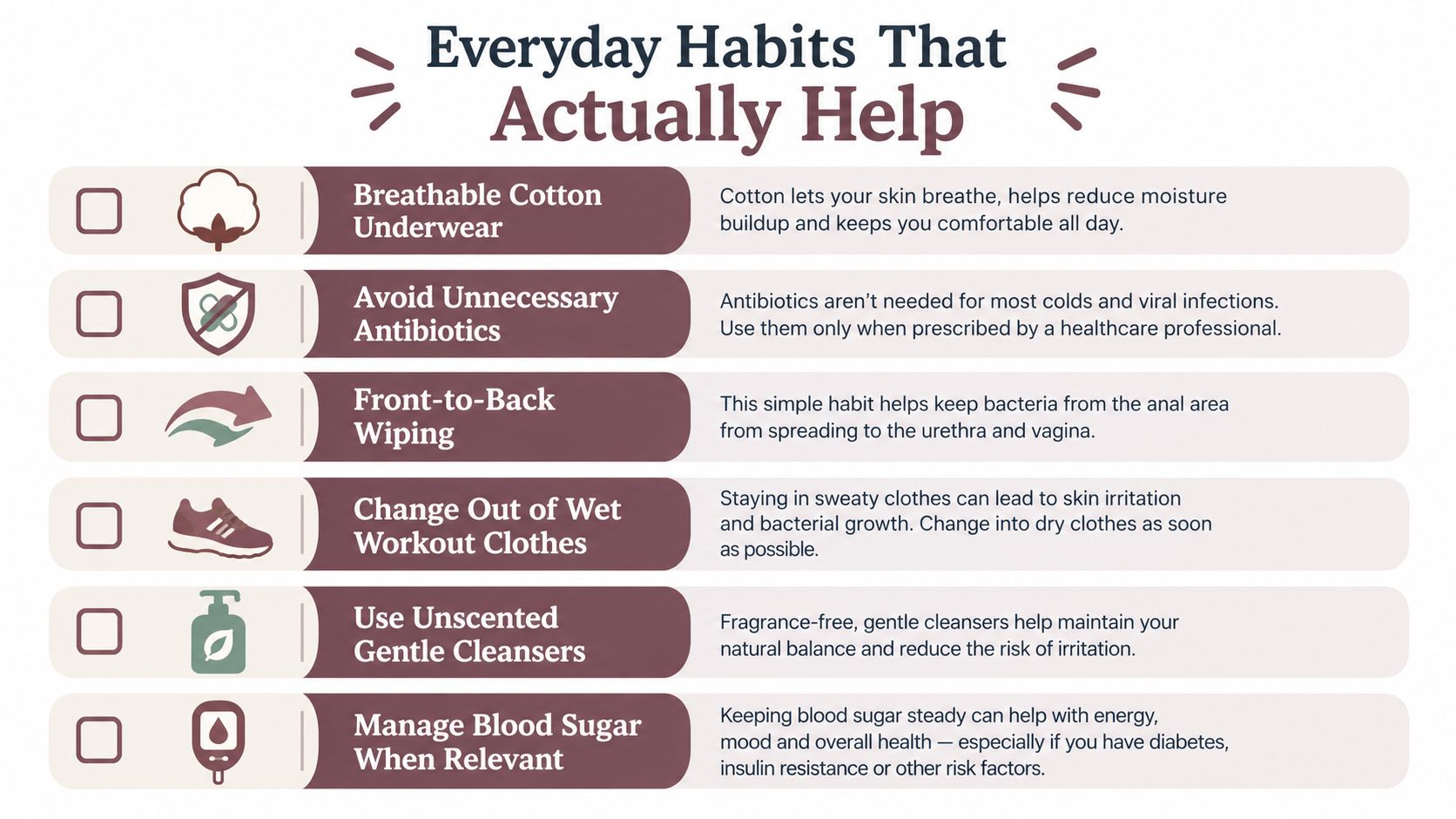
Prevention is less about controlling the body perfectly and more about lowering irritation while supporting appropriate care. Useful basics include avoiding unnecessary antibiotics, douching, and fragranced products; keeping the external genital area clean and dry; and changing out of wet clothing.
Build a low-irritation routine
- Keep cleansing gentle: Wash the vulva with water or an unscented cleanser if needed. Do not douche or place fragranced products inside the vagina.
- Reduce trapped moisture: Change out of wet workout clothes and swimsuits. Choose breathable clothing when practical.
- Use antibiotics thoughtfully: Take antibiotics only when prescribed, follow the prescribed course, and never save or share leftovers.
- Protect the skin barrier: If sex, exercise, or clothing causes external friction, reduce rubbing and avoid unfamiliar products on broken or irritated skin.
- Review blood sugar care: If you have diabetes or concerns about blood sugar, discuss management with a healthcare professional.
- Track patterns: Record symptoms, cycle timing, products, sex, antibiotic use, and treatment response. These details can help a clinician separate recurring yeast from other causes.
A symptom diary works like a map: it may show whether irritation follows a product, intercourse, antibiotics, or a particular point in the cycle. That pattern can guide the choice between a simple self-care adjustment and an appointment for examination or testing.
Diet is often presented as a cure, but no universal food rule can diagnose or prevent every recurrence. Probiotics may fit a personal wellness routine, but they are not a substitute for testing or antifungal treatment when Candida is confirmed. People considering supplements can use personalised supplement guidance from VitzAi.com to frame questions about individual needs, medications, and product choice.
Supportive topical care may improve external comfort without identifying the cause of internal symptoms. A vulvar salve, including products from Momotaro Apotheca, can be complementary care when appropriate. Follow the instructions and stop if irritation develops. Persistent, changing, or worsening symptoms call for clinical evaluation rather than repeated symptom relief. This practical guide to preventing recurring yeast infections offers routine ideas without turning vulvar care into a long list of restrictions.
Putting It All Together
An occasional yeast infection can be manageable. Repeated symptoms deserve a different question: were they correctly identified each time? Three or more symptomatic episodes within fewer than 12 months count as recurrent vulvovaginal candidiasis, so confirmation and a treatment plan matter more than automatically repeating antifungal treatment.
Frequency is only one clue. If symptoms return soon after treatment, fail to improve, or change in character, arrange an examination or testing rather than assuming Candida is responsible. Irritation from products, infections with different causes, and skin conditions can feel similar. Your goal is an explanation that matches your body.
Momotaro Apotheca offers plant-based vulvovaginal products for external comfort and supportive routines. Treat them as comfort care alongside a plan discussed with a clinician, and bring any new or changing pattern back to your provider.


